
How to Read a Factory Audit Report: A Step-by-Step Guide for Sourcing Departments
Key Takeaways
- •An audit report evaluates a supplier's adherence to social, environmental, and ethical standards such as BSCI, SMETA, and FSC.
- •Always verify the audit scope, date, and auditor credentials before analyzing the findings to ensure relevance and validity.
- •Zero-tolerance issues, including child labor and severe safety violations, require immediate action or termination of the supplier relationship.
- •The Corrective Action Plan (CAP) is the most critical section for assessing a supplier's commitment to continuous improvement.
Introduction: Decoding the Blueprint of Sustainable Sourcing
In the rapidly evolving landscape of global home decor, sustainability is no longer a mere marketing buzzword; it is the foundational pillar of B2B procurement. As interior designers and global buyers increasingly demand transparency, sourcing departments are tasked with a critical responsibility: verifying that the beautiful rattan baskets, bamboo furniture, and acacia wood accents they procure are ethically manufactured. This brings us to the ultimate tool in a buyer's arsenal: the factory audit report.
However, an audit report is often a dense, highly technical document spanning dozens of pages. For sourcing professionals, misinterpreting this data can lead to severe supply chain disruptions, brand reputation damage, and inadvertently supporting unethical labor practices. At Ngoc Dong Ha Nam, we believe that true sustainability begins with transparency. This comprehensive guide is designed to capture your attention, build your interest in ethical compliance, foster a desire for sustainable partnerships, and empower you to take decisive action when reading and evaluating factory audit reports.
Prerequisites: What You Need Before Diving In
Before you open that comprehensive PDF from a potential supplier, you must equip yourself with the right context and reference materials. Understanding the foundational frameworks of global compliance will transform a confusing compliance document into a clear roadmap for sourcing.
1. Know the Standards
Familiarize yourself with the primary audit frameworks. BSCI (Business Social Compliance Initiative) focuses on continuous improvement and rates factories from A to E. SMETA (Sedex Members Ethical Trade Audit) is a methodology that highlights non-compliances (NCs) across labor, health, safety, and environmental pillars without giving a final letter grade. FSC (Forest Stewardship Council) ensures that timber-based products, like Acacia, originate from responsibly managed forests.
2. Have Your Company's Code of Conduct Ready
Your internal Code of Conduct is your benchmark. While an audit report provides the raw data, your company's specific thresholds for acceptable risk will dictate whether a supplier passes your internal vetting process.
3. Understand the Material Context
Different natural materials carry different inherent risks. For example, processing Water Hyacinth and Seagrass often involves specific drying and anti-mold treatments, making chemical handling and wastewater management critical focus areas in the audit. Rattan and Bamboo processing requires sharp machinery, elevating the importance of Occupational Health and Safety (OHS) protocols.
Step 1: Verify the Fundamentals and Audit Scope
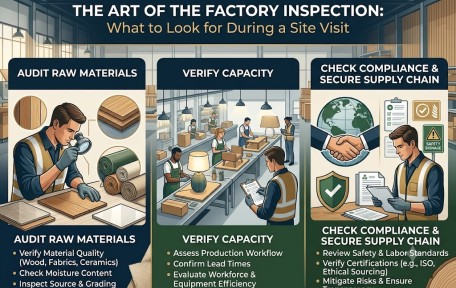
The first step in reading an audit report is to validate its authenticity and relevance. Do not skip the title pages. Start by checking the date of the audit. Compliance is a moving target, and an audit report older than 12 to 24 months is generally considered obsolete. Next, verify the auditing body. Ensure the audit was conducted by a reputable, independent third-party organization such as SGS, TUV Rheinland, Intertek, or Bureau Veritas.
Crucially, you must examine the Audit Scope. A common pitfall for sourcing departments is assuming an audit covers an entire manufacturing enterprise. A supplier might have three distinct production facilities, but the audit report may only cover one specific building. If you are ordering handwoven seagrass baskets, you must ensure the facility audited is the actual site where your goods will be woven, treated, and packed. Verify the total number of employees recorded in the audit against what the supplier claims during your negotiations; significant discrepancies can be a red flag for unauthorized subcontracting.
Step 2: Analyze the Executive Summary and Overall Rating
Once the fundamentals are verified, move to the Executive Summary. This section provides a high-level overview of the factory's performance and is crucial for quickly gauging whether to proceed with a deep dive. If you are reading a BSCI report, look at the overall rating (A, B, C, D, or E). An 'A' (Outstanding) or 'B' (Good) indicates a highly compliant supplier. A 'C' (Acceptable) is common and means the factory has minor issues but is on the right track. Ratings of 'D' (Insufficient) or 'E' (Unacceptable) require immediate, intense scrutiny.
For SMETA audits, which do not provide a letter grade, pay attention to the total number of Non-Compliances (NCs) and Observations. The Executive Summary will categorize these findings. A high number of NCs in administrative areas (like incomplete paperwork) might be manageable, whereas multiple NCs in Health and Safety or working hours signify systemic operational flaws. As a buyer, your goal here is to establish a baseline: Is this a factory that respects the rules, or one that consistently cuts corners?
Step 3: Identify Zero-Tolerance and Critical Non-Compliances
This is the most critical step for risk mitigation. You must immediately scan the report for 'Zero-Tolerance' issues or critical non-compliances. These are findings that violate fundamental human rights or pose immediate, severe danger to workers' lives. If you find these, you must typically halt the onboarding process immediately.
Key Areas to Scrutinize:
- Child Labor and Forced Labor: Ensure there are absolutely no findings related to underage workers, bonded labor, or withheld passports.
- Severe Health and Safety Risks: In the home decor industry, factories process highly flammable natural materials like dry rattan, bamboo, and seagrass. Look closely at fire safety findings. Are fire exits locked? Are fire extinguishers expired or missing? Is there adequate ventilation to handle dust from acacia wood cutting?
- Wage Violations: Check if workers are being paid at least the legal minimum wage and if overtime is compensated at premium rates. Systemic wage theft is a major red flag.
If a supplier exhibits zero-tolerance issues, it is not just a compliance failure; it is a fundamental misalignment with the ethical values of modern interior design and global retail.
Step 4: Evaluate Environmental Performance in Handicraft Production
For B2B buyers focused on sustainable home decor, the environmental pillar of the audit report is just as important as the social pillar. True sustainability means protecting both the artisans and the ecosystem. Dive into the environmental section of the SMETA or BSCI report to evaluate how the factory interacts with its surroundings.
Look for compliance in chemical management and waste disposal. When processing natural fibers like water hyacinth or bamboo, factories often use treatments to prevent mold and pests. The audit must confirm that these chemicals are stored safely, handled with appropriate PPE, and that any resulting wastewater is treated before being discharged into local waterways. Furthermore, cross-reference environmental claims with specific material certifications. If the factory claims to use sustainable wood, look for an active FSC Chain of Custody certificate mentioned in the report. At Ngoc Dong Ha Nam, we consider robust environmental management not just a compliance requirement, but a core component of our craftsmanship.
Step 5: Review the Corrective Action Plan (CAP)
No factory is perfect, and almost every audit report will contain some non-compliances. What separates a mediocre supplier from a world-class partner is how they respond to these findings. This brings us to the Corrective Action Plan (CAP), often found at the end of the report.
The CAP is a table detailing each non-compliance, the root cause, the proposed corrective action, the person responsible, and the timeline for completion. As a sourcing professional, you must evaluate the CAP for realism and commitment. Are the proposed timelines logical? Is the factory addressing the root cause, or just applying a temporary band-aid? For instance, if an aisle was blocked by rattan materials, is the solution simply 'cleared the aisle' (a band-aid), or 'implemented a new floor marking system and daily supervisor checks' (a root cause solution)? A detailed, proactive CAP demonstrates a supplier's genuine commitment to continuous improvement and long-term partnership.
Conclusion: Turning Audit Data into Sourcing Action
Reading an audit report should not be a daunting administrative chore; it is a strategic exercise in building a resilient, ethical supply chain. By methodically verifying the scope, analyzing the ratings, checking for zero-tolerance issues, evaluating environmental impact, and scrutinizing the Corrective Action Plan, sourcing departments can make informed, confident decisions. You are not just buying products; you are endorsing a manufacturing culture.
As global buyers and interior designers strive to curate spaces that reflect eco-conscious values, partnering with transparent, highly compliant suppliers is non-negotiable. At Ngoc Dong Ha Nam, we pride ourselves on our rigorous adherence to international standards like BSCI, SMETA, and FSC. We invite you to apply these analytical skills to our audit reports and discover the peace of mind that comes from sourcing premium acacia, bamboo, rattan, seagrass, and water hyacinth products from a truly sustainable partner. Take action today: elevate your sourcing strategy and build a greener future with us.
Frequently Asked Questions
What is the difference between BSCI and SMETA audits?
BSCI focuses on continuous improvement based on the amfori code of conduct, providing a final rating from A to E. SMETA is an audit methodology that provides a detailed list of non-compliances and a corrective action plan without issuing an overall pass or fail grade.
Why is FSC certification important for home decor sourcing?
FSC certification ensures that wood and natural materials, such as Acacia or Bamboo, are harvested from responsibly managed forests. This guarantees that your sourcing practices protect biodiversity, prevent deforestation, and support local communities.
How often should a factory be audited?
Factories should typically be audited annually to ensure ongoing compliance. However, high-performing facilities that achieve A or B ratings in BSCI may qualify for bi-annual audits, depending on the buyer's specific risk management policies.
What is a Corrective Action Plan (CAP)?
A CAP is a critical section of the audit report detailing how a factory will address identified non-compliances. It outlines the specific actions to be taken, the root cause analysis, the personnel responsible, and the strict timelines for resolving the issues.