
Beyond Teak: Why Acacia Wood is the Ultimate Economical Choice for Sustainable Kitchenware Collections
The Shifting Landscape of Premium Kitchenware: A Buyer's Dilemma
In the dynamic world of global home decor and premium kitchenware, sourcing the right materials is an ongoing balancing act. For decades, interior designers and retail buyers have revered Teak as the gold standard for wooden culinary tools, cutting boards, and serving platters. Its reputation for water resistance and rich color made it a staple in high-end kitchens. However, as global supply chains evolve and the demand for sustainable, competitively priced luxury grows, a significant shift is occurring. The modern buyer is faced with a critical dilemma: how to maintain premium quality and aesthetic appeal while navigating the soaring costs and environmental concerns associated with traditional Teak sourcing.
The Rising Cost of Tradition
Teak wood, while undeniably beautiful, presents substantial challenges in today's market. The slow growth rate of Teak trees, often taking decades to mature, has led to a constrained global supply. This scarcity, coupled with strict export regulations from primary growing regions, has driven FOB prices to unprecedented highs. For B2B buyers and wholesalers, this translates to squeezed profit margins and higher retail price points that can alienate the eco-conscious, value-driven consumer. Furthermore, the modern interior design landscape—heavily influenced by organic modernism, Japandi, and biophilic design—demands high volumes of natural wood accents. Relying solely on Teak makes scaling these collections financially unviable for many brands.
Enter Acacia: The Disruptor in Natural Materials
This is where Acacia steps into the spotlight. As a sustainable supply chain consultant, I have witnessed firsthand the strategic pivot leading global retailers are making toward Acacia wood. It is no longer viewed merely as a substitute, but rather as a superior strategic choice for comprehensive kitchenware lines. Acacia offers an irresistible combination of durability, striking visual character, and compelling economics. By capturing the attention of the industry, Acacia is redefining what it means to offer accessible luxury in the home decor space, providing a pathway for brands to scale their collections without compromising on quality or their commitment to green living.
Acacia vs. Teak: Unpacking the Economics and Aesthetics
To truly understand why Acacia is outperforming Teak in the B2B procurement space, we must analyze the core attributes that drive purchasing decisions: material performance, supply chain economics, and aesthetic versatility. When evaluating Acacia versus Teak, the data heavily favors the former for scalable, sustainable kitchenware collections.
Growth Rates and Supply Chain Economics
The primary driver of Acacia's economic advantage is its exceptional growth cycle. While a Teak tree requires 40 to 80 years to reach a harvestable size for high-quality timber, many species of Acacia can reach maturity in just 10 to 15 years. This rapid growth rate ensures a robust, continuous, and highly renewable supply chain. For global buyers, a stable supply chain means predictable pricing. The abundance of Acacia significantly lowers raw material costs, allowing manufacturers like Ngoc Dong Ha Nam to offer highly competitive wholesale pricing. This economic efficiency empowers retailers to achieve healthier profit margins or pass the savings onto the consumer, creating a highly competitive retail offering.
Uncompromising Durability and Performance
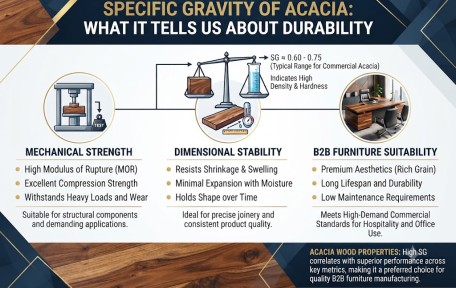
A common misconception is that a lower price point equates to inferior quality. In the case of Acacia, this couldn't be further from the truth. Acacia is a genuine hardwood, boasting a high ranking on the Janka hardness scale—often surpassing even Oak and Hickory.
- Scratch Resistance: Its dense grain structure makes it incredibly resistant to deep knife grooves, which is crucial for cutting boards as it prevents bacteria from harboring in the wood.
- Water Resistance: Like Teak, Acacia contains natural oils that provide excellent resistance to moisture and decay, making it perfectly suited for the demanding environment of a kitchen.
- Longevity: With minimal maintenance, such as occasional oiling with food-safe mineral oil, Acacia kitchenware can last a lifetime, ensuring high customer satisfaction and low return rates for retailers.
Aesthetic Brilliance for Interior Design
From a design perspective, Acacia is a dream material. Interior designers are increasingly drawn to its dynamic, contrasting grain patterns. While Teak offers a uniform, golden-brown hue, Acacia features a spectacular spectrum of colors—from pale yellows and rich golds to deep, chocolate browns. This natural variation ensures that every single bowl, serving tray, or utensil is a unique work of art. In an era where consumers crave bespoke, artisanal touches in their homes, the distinct visual identity of Acacia provides a significant competitive edge on the retail shelf.
Meeting Global Standards: The Sustainable Edge of Acacia Wood
Today's consumers demand more than just functionality and beauty; they demand ethical sourcing and environmental stewardship. The desire for eco-friendly products is no longer a niche market—it is a baseline expectation. This is where Acacia truly solidifies its position as the ultimate choice for forward-thinking brands.
The Power of FSC Certification
Because Acacia grows rapidly and flourishes in various climates, it is highly suitable for sustainable plantation farming. This drastically reduces the pressure on old-growth forests, a persistent issue associated with illegal Teak logging. At Ngoc Dong Ha Nam, we champion the use of FSC (Forest Stewardship Council) certified Acacia. When B2B buyers source FSC-certified products, they are purchasing peace of mind. It guarantees that the wood is harvested from forests that are responsibly managed, socially beneficial, environmentally conscious, and economically viable. Promoting FSC-certified Acacia kitchenware allows brands to build deep trust with their eco-conscious customer base, transforming a simple purchase into a statement of environmental responsibility.
Ethical Manufacturing: BSCI and SMETA Compliance
Sustainability extends beyond the forest; it encompasses the people who craft the products. As an industry leader, Ngoc Dong Ha Nam strictly adheres to international labor and ethical standards, including BSCI (Business Social Compliance Initiative) and SMETA (Sedex Members Ethical Trade Audit).
- BSCI: Ensures fair remuneration, decent working hours, and occupational health and safety across our supply chain.
- SMETA: Provides rigorous auditing of labor standards, environmental performance, and business ethics.
Creating the 'Desire' for Conscious Consumerism
By partnering with a manufacturer that aligns with these global standards, buyers can confidently market their Acacia kitchenware collections as 100% ethically produced. This powerful narrative—combining the breathtaking natural beauty of Acacia with an unyielding commitment to the planet and its people—creates a profound desire among end-consumers. They are not just buying a salad bowl; they are investing in a sustainable lifestyle. For interior designers curating eco-friendly luxury spaces, Acacia provides the perfect blend of organic warmth and ethical integrity.
Elevate Your Next Collection with Responsibly Sourced Acacia
The transition from Teak to Acacia is more than just a cost-saving measure; it is a strategic upgrade for your brand. By embracing Acacia, you are choosing a material that offers superior supply chain stability, remarkable durability, stunning aesthetic appeal, and an unimpeachable sustainability profile. The economics of Acacia allow you to expand your product lines, increase your margins, and meet the rigorous ethical demands of the modern global market.
Partner with Ngoc Dong Ha Nam
At Ngoc Dong Ha Nam, we are more than just a manufacturer; we are your strategic partner in sustainable supply chain management. With decades of expertise in working with natural materials—including Acacia, Bamboo, Seagrass, Rattan, and Water Hyacinth—we possess the technical mastery and production capacity to bring your bespoke designs to life. Our state-of-the-art facilities are fully compliant with FSC, BSCI, and SMETA standards, ensuring that every piece of kitchenware we produce meets the absolute highest global benchmarks for quality and ethics.
Take the Next Step
Are you ready to optimize your procurement strategy and captivate your customers with world-class, sustainable kitchenware? Contact our B2B sourcing specialists today. Let us provide you with a comprehensive consultation, share our latest Acacia product catalogs, and discuss how we can tailor our OEM/ODM manufacturing capabilities to suit your brand's unique vision. Elevate your next home decor collection with the smart, sustainable, and economical choice. Reach out to Ngoc Dong Ha Nam and secure your competitive advantage in the global market.
Frequently Asked Questions
Is Acacia wood as durable as Teak for daily kitchen use?
Yes, Acacia is a dense hardwood known for its exceptional durability. It ranks highly on the Janka hardness scale, making it highly resistant to scratches, dents, and wear. Its natural density prevents deep knife grooves, making it a sanitary and long-lasting choice for cutting boards and utensils.
How does the cost of Acacia compare to Teak for wholesale buyers?
Acacia is significantly more cost-effective than Teak. Because Acacia trees grow much faster (reaching maturity in 10-15 years compared to Teak's 40-80 years), the raw material is more abundant and renewable. This stable supply chain translates to lower FOB prices and higher profit margins for B2B buyers.
Does Acacia wood require special maintenance compared to Teak?
Both woods require similar, straightforward care. To maintain the natural luster and water resistance of Acacia kitchenware, it should be hand-washed with mild soap and occasionally treated with food-safe mineral oil. It should not be soaked in water or placed in a dishwasher.
Are Acacia wood products from Ngoc Dong Ha Nam sustainably sourced?
Absolutely. Ngoc Dong Ha Nam is deeply committed to sustainable supply chains. We offer FSC-certified Acacia products, ensuring the wood is harvested from responsibly managed forests. Furthermore, our manufacturing facilities comply with strict international ethical standards, including BSCI and SMETA.