Behind the Scenes: A Journey Into Our Sustainable Acacia Forests in Northern Vietnam
Key Takeaways
•Ngoc Dong Ha Nam sources its premium acacia wood from FSC-certified plantations in Northern Vietnam, ensuring 100% traceability and EUDR compliance.•Our acacia wood undergoes a rigorous kiln-drying process to reduce moisture content to 8-12%, preventing warping and cracking in diverse global climates.
•By partnering directly with local Vietnamese smallholders, we secure a stable, ethical supply chain that supports community livelihoods and maintains competitive B2B pricing.
WHERE THE MIST MEETS THE SOIL: AN EARLY MORNING IN NORTHERN VIETNAM'S ACACIA FORESTS
Imagine standing on a mist-shrouded hillside in the Phu Thọ province of Northern Vietnam just as the sun begins to break through the canopy. The air is cool, crisp, and heavy with the rich, earthy fragrance of damp soil and the distinct, clean aroma of acacia leaves. This is not merely a breathtaking landscape; it is the very birthplace of our premium, sustainable homeware collections. For global B2B buyers, importers, and interior designers, the journey of a beautifully finished acacia serving tray, a rustic salad bowl, or a minimalist wooden side table does not begin on a factory assembly line or in a high-tech design studio. It starts right here, in the fertile, undulating hills of Northern Vietnam, where young acacia saplings are planted and nurtured by local farming families who have lived on this land for generations.
At Ngoc Dong Ha Nam, we believe that to design and manufacture products that truly resonate with today's conscious consumers, one must first understand and respect the land where those products are grown. This physical connection to the source is what guarantees the authenticity, exceptional quality, and unique story of every single piece we export. As international markets demand greater transparency, a simple product description is no longer enough. Modern consumers want to know where their products come from, who made them, and what impact their purchase has on the planet. By taking you behind the scenes of our sustainable acacia plantations, we invite you to share this narrative of natural beauty, meticulous care, and environmental stewardship with your own discerning clientele.
THE MODERN SOURCING DILEMMA: BALANCING GLOBAL VOLUME WITH ENVIRONMENTAL INTEGRITY
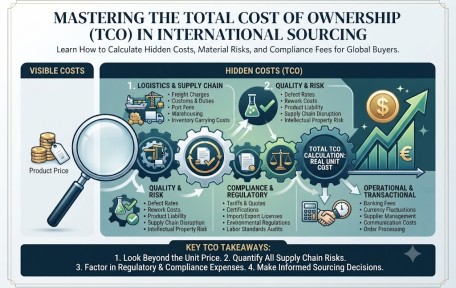
In the highly competitive world of international home decor retail and commercial interior design, sourcing wooden products has become a complex maze of ethical, environmental, and logistical challenges. Global brands and major retailers are facing unprecedented pressure from both consumers and international regulatory bodies to prove that their supply chains are entirely free from deforestation and exploitation. With the strict enforcement of regulations like the European Union Deforestation Regulation (EUDR) and the Lacey Act in the United States, unverified timber is no longer just an ethical risk—it is a massive legal and financial liability that can disrupt entire business operations overnight.
Many B2B buyers find themselves caught in a frustrating dilemma: how do you source high-quality, durable, and aesthetically pleasing acacia wood products at a competitive price point without compromising your brand's environmental integrity? Cheap, untraceable timber might offer attractive short-term margins, but it exposes your brand to severe risks, including customs seizures, heavy fines, and devastating reputational damage. Furthermore, poorly sourced wood often suffers from inadequate drying and processing, leading to warping, cracking, and high return rates once the products reach their destination markets. The global home decor industry desperately needed a reliable partner who could bridge the gap between raw natural beauty, consistent high-volume production, and rigorous, certified compliance.
Cultivating Trust: Our Shift to 100% Certified and Socially Responsible Silviculture
Recognizing these critical industry pain points, Ngoc Dong Ha Nam made a strategic, long-term commitment to fundamentally transform our timber supply chain. We realized that true sustainability could not be achieved by simply purchasing wood from third-party middlemen or relying on unverified certificates. We had to go directly to the roots of the tree. We established direct, mutually beneficial partnerships with local farming cooperatives in the mountainous regions of Northern Vietnam, actively helping them transition their land into FSC (Forest Stewardship Council) certified plantations.
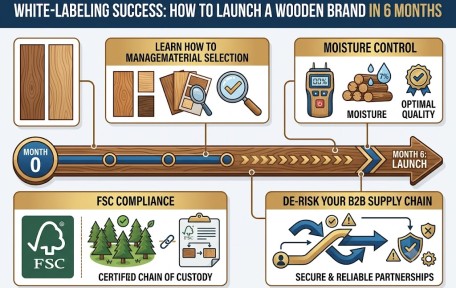
This turning point was not an easy or overnight process. It required a significant investment of time, resources, and education. We worked closely with local communities to implement sustainable silviculture practices, which include controlled harvesting cycles, maintaining biodiversity corridors, protecting local water sources, and completely eliminating harmful chemical pesticides. By securing the prestigious FSC Chain of Custody (CoC) certification, we established a fully traceable, transparent path from the forest floor to our manufacturing facility in Ha Nam. Today, every log of acacia we process can be traced back to its specific cooperative and geographic coordinates, offering our global B2B partners absolute peace of mind, bulletproof compliance with EUDR, and a powerful, verifiable story of environmental regeneration.
FROM FOREST FLOOR TO GLOBAL SHOWROOMS: CRAFTING ECO-LUXURY WITH ABSOLUTE TRANSPARENCY
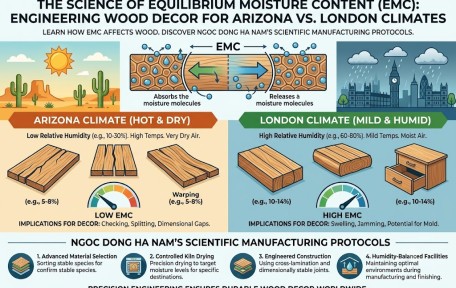
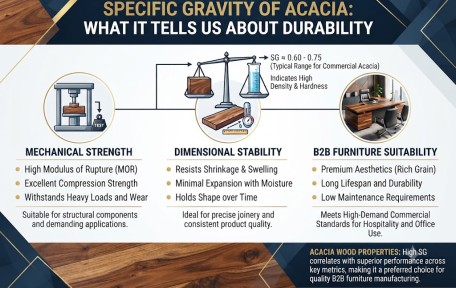
The journey that begins in the misty, sustainable forests of Northern Vietnam reaches its stunning culmination in our state-of-the-art manufacturing facility in Ha Nam. Here, traditional Vietnamese craftsmanship seamlessly merges with modern industrial precision. Once the harvested acacia wood arrives at our factory, it undergoes a meticulous and highly controlled kiln-drying process. We reduce the moisture content of the wood to an optimal 8% to 12%—a technical step that is absolutely vital to ensure the wood remains stable, preventing warping, cracking, or splitting when shipped to diverse climates in North America, Europe, or Asia.
Our skilled artisans then shape this durable, beautifully grained hardwood into elegant home decor pieces, often combining it with hand-woven natural fibers like rattan, seagrass, or water hyacinth to create unique, multi-material designs that stand out in any showroom. As a fully audited BSCI and SMETA manufacturer, Ngoc Dong Ha Nam ensures that our environmental stewardship is matched by our unwavering dedication to fair wages, safe working conditions, and gender equality in the workplace. When you partner with us, you are not simply importing high-quality products; you are importing a complete, verified story of ecological balance, community empowerment, and world-class craftsmanship that will elevate your brand and deeply connect with your customers.
FREQUENTLY ASKED QUESTIONS
Are your acacia wood products certified for international markets?
Yes, all our acacia wood is sourced from FSC-certified plantations in Northern Vietnam, ensuring complete compliance with global regulations such as EUDR and the Lacey Act. We provide full Chain of Custody (CoC) documentation for every shipment.
How does Ngoc Dong Ha Nam prevent acacia wood from cracking or warping?
We utilize advanced, computer-controlled kiln-drying chambers to reduce the moisture content of our acacia wood to an optimal 8% to 12%. This precise process guarantees maximum stability and prevents warping, cracking, or splitting in different climates.
Can we customize the designs of acacia wood and mixed-material items?
Absolutely. We specialize in OEM and ODM services. Our in-house design team can customize dimensions, shapes, finishes, and combine acacia wood with hand-woven natural fibers like rattan, seagrass, or water hyacinth to match your brand's unique aesthetic.
What is your minimum order quantity (MOQ) and lead time for wholesale orders?
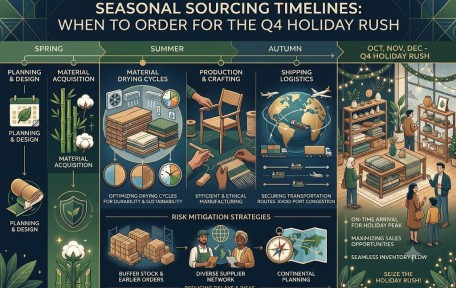
Our standard MOQ varies depending on the product category, typically starting at 500 pieces per design. Our average production lead time is 60 to 90 days from order confirmation, depending on the season and order complexity.