
B2B Sourcing & Business Strategy
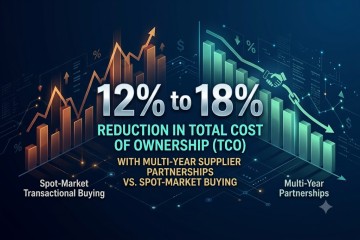
The Value of Multi-Year Partnerships vs. Transactional Sourcing in Global Home Decor Manufacturing
Essential Highlights
• Multi-year supplier partnerships reduce total cost of ownership (TCO) by 12% to 18% compared to spot-market transactional buying.
• Long-term agreements protect B2B buyers from seasonal material price volatility in acacia wood, bamboo, seagrass, and rattan.
• Dedicated manufacturing allocations drop defect rates below 1.5% and shorten production lead times by up to 25%.
• Multi-year commitments streamline audit compliance for FSC, BSCI, and SMETA standards across international supply chains.
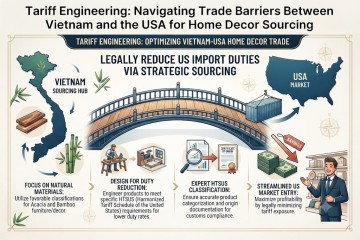
Tariff Engineering: Navigating Trade Barriers Between Vietnam and the USA for Home Decor Sourcing
Strategic Summary
• Tariff engineering legally reduces US customs duties by altering product material composition, structural design, or packaging prior to manufacturing.
• Replacing metal structural frames with woven bamboo or acacia wood can reclassify products from high-duty HTS codes to duty-free tariff lines.
• Substantial transformation in Vietnam must be documented through detailed Bill of Materials (BOM) and value-add records to pass CBP origin audits.
• Knock-down (KD) furniture designs optimize container fill rates while utilizing specific HTS classifications that carry lower baseline tariffs.
• Integrated factory audits covering FSC, BSCI, and HTS verification prevent regulatory delays and anti-circumvention penalties at US ports.
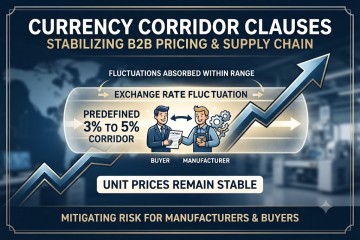
How to Stabilize Prices in Long-Term B2B Decor Sourcing Contracts Amid FX Volatility
Core Insights
• Currency corridor clauses allow buyers and manufacturers to absorb exchange rate fluctuations within a predefined 3% to 5% range without altering unit prices.
• Dual-currency indexing ties contract payments to local raw material costs, insulating handwoven rattan, bamboo, and acacia furniture orders from sharp foreign exchange shocks.
• Milestone-based deposit structures enable manufacturers to purchase raw natural fibers immediately, locking in currency exchange rates at key production phases.
• Transparent FX risk-sharing frameworks protect supply chain continuity while securing profit margins for both global retail buyers and sustainable manufacturers.
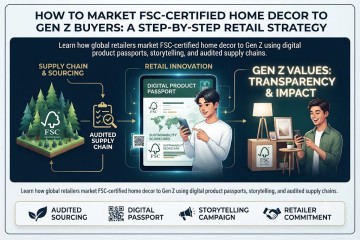
How to Market FSC-Certified Home Decor to Gen Z Buyers: A Step-by-Step Retail Strategy
Essential Highlights
• Gen Z consumers require verified proof of sustainability, making FSC Chain of Custody (CoC) certification a critical tool for retail trust and conversion.
• Transforming technical FSC compliance into engaging digital storytelling via QR codes and digital product passports increases purchasing intent among young buyers.
• Pairing FSC-certified acacia wood with natural materials like woven bamboo, rattan, and seagrass aligns with modern Japandi and biophilic interior design trends.
• Transparent supply chains and ethical manufacturing partnerships empower retailers to avoid greenwashing allegations while capturing premium market margins.
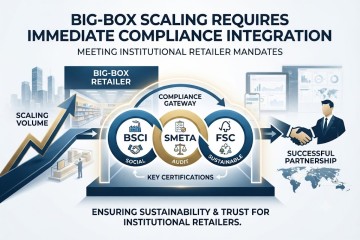
Scaling from Boutique to Big-Box: Preparing Your Home Decor Supply Chain for Global Growth
Core Insights
• Big-box scaling requires immediate compliance integration, including BSCI, SMETA, and FSC certifications, to meet institutional retailer mandates.
• Material stabilization for bamboo, rattan, water hyacinth, and acacia prevents warping and quality variation during high-volume production runs.
• AQL 2.5 quality control and ISTA 1A/3A packaging standards eliminate costly drop-ship damages and retail chargebacks.
• Tier-1 factory partnerships deliver scalable manufacturing capacity while maintaining artisanal design integrity across thousands of units.

Cutting Woodworking Lead Times by 45%: The ERP Transformation Global Furniture Buyers Need
Core Insights
• ERP systems reduce woodworking production lead times by 35% to 45% through automated dynamic scheduling and material planning.
• Automated Bill of Materials (BOM) prevents material stockouts in acacia timber, rattan, and natural fiber components.
• Integrated quality management within ERP cuts furniture defect rates below 0.8% prior to container loading.
• ERP supplier portals give global B2B buyers real-time visibility into production milestones and reliable OTIF delivery dates.
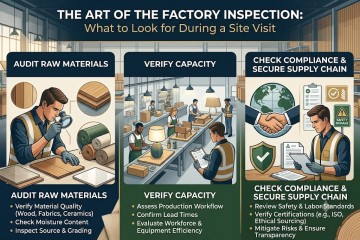
The Art of the Factory Inspection: What to Look for During a Site Visit
Key Takeaways
• On-site factory inspections reduce mass production defect rates from over 12% to under 1.5% by exposing the discrepancies between golden samples and assembly line realities.
• Moisture control is the ultimate risk-mitigation checkpoint: Acacia wood must register below 12% moisture, and natural fibers like bamboo or seagrass must register below 15% to prevent mold during maritime transit.
• B2B buyers must perform bottleneck analysis on the assembly line to verify if the factory's real throughput can meet the promised 45-day lead time.
• Physical compliance verification of BSCI, SMETA, and FSC certificates on-site prevents severe customs delays and intellectual property risks.
• Container pre-loading inspections using the 7-point check and high-absorption calcium chloride desiccants are essential to prevent container rain.
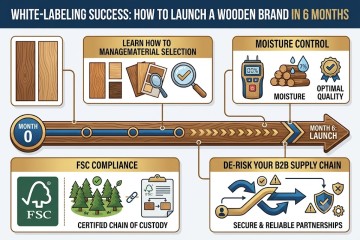
White-Labeling Success: How to Launch a Wooden Brand in 6 Months
Key Takeaways
• A successful 6-month wooden brand launch requires a highly structured 180-day timeline dividing product design, prototyping, kiln-drying, and compliance phases.
• Controlling wood moisture content between 8% and 12% is the single most critical factor in preventing warping, cracking, and product recalls.
• Sourcing from FSC-certified and BSCI-audited manufacturers in Vietnam ensures global compliance and mitigates supply chain disruption risks.
• Utilizing pre-vetted OEM designs and advanced CNC prototyping can reduce early-stage product development lead times by up to 50%.
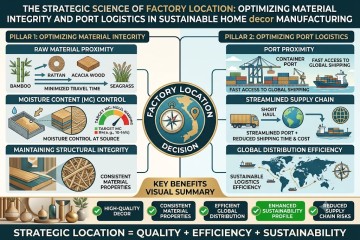
The Strategic Science of Factory Location: Optimizing Material Integrity and Port Logistics in Sustainable Home Decor Manufacturing
Key Takeaways
• Proximity to raw material sources (under 150 km) is scientifically critical to control the Equilibrium Moisture Content (EMC) of natural fibers like seagrass and water hyacinth, preventing fungal degradation.
• Locating manufacturing facilities within 120 km of deep-water ports like Haiphong reduces inland transit times to under 2 hours, minimizing exposure to fluctuating relative humidity and preventing container sweat.
• FSC-certified Acacia wood and bamboo require strict kiln-drying protocols to achieve an optimal moisture content of 8-12%, which is best maintained when processed close to harvesting sites to avoid atmospheric reabsorption.
• Optimized supply chain geography directly reduces Scope 3 greenhouse gas emissions, aligning B2B procurement with European Green Deal and corporate ESG mandates.
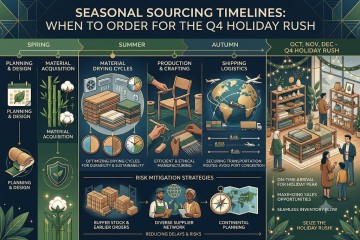
Seasonal Sourcing Timelines: When to order for the Q4 holiday rush
Key Takeaways
• To avoid peak shipping surcharges and blank sailings, B2B buyers must place purchase orders for Q4 holiday home decor by mid-April.
• Acacia wood products require a non-negotiable 15-to-20-day kiln-drying process to reduce moisture content to 8-12%, preventing warping during winter.
• Vietnamese monsoon rains from May to October demand the use of indoor, temperature-controlled drying chambers to keep woven fiber moisture below 15% and prevent mold.
• Importers must verify FSC certification and BSCI/SMETA audits early to comply with EUDR and US Lacey Act regulations, avoiding customs delays.
• Using 2 to 4 kg of calcium chloride desiccants per container and double-wall corrugated cartons is critical to mitigating container sweat during ocean transit.
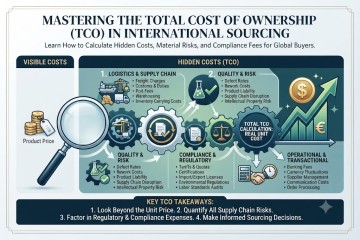
Total Cost of Ownership (TCO): Calculating Hidden Costs in International Sourcing
Key Takeaways
• FOB unit price represents only 40% to 60% of the true Total Cost of Ownership (TCO) in international home decor sourcing.
• Material-specific failures, such as incorrect moisture content in Acacia (target 8-12%) or untreated bamboo, can lead to retail rejection rates exceeding 15%.
• Strict compliance with EUDR, FSC, BSCI, and SMETA acts as a financial safeguard, preventing catastrophic customs seizures and brand damage.
• Optimizing packaging through nested designs and flat-packing can reduce volumetric shipping costs by up to 60%, directly lowering the landed cost.
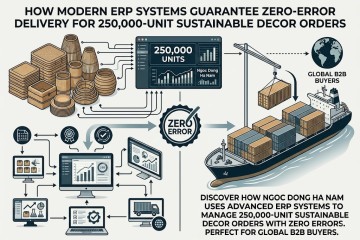
How Modern ERP Systems Guarantee Zero-Error Delivery for 250,000-Unit Sustainable Decor Orders
Key Takeaways
•Integrating ERP systems in handicraft manufacturing bridges the gap between traditional Vietnamese weaving and high-volume retail demands, ensuring 100% operational transparency.
•Real-time raw material tracking prevents production bottlenecks by monitoring natural fibers like seagrass and bamboo from FSC-certified sources to the factory floor.
•Automated QC checkpoints within the ERP system eliminate human error, guaranteeing that massive 250,000-unit orders meet strict international quality and moisture standards.
•ERP-driven supply chain management secures compliance with global standards including BSCI, SMETA, and FSC, giving international buyers complete peace of mind.

How to Negotiate with Direct Home Decor Manufacturers: A Step-by-Step Guide for Global B2B Buyers
Key Takeaways
•Prepare a comprehensive Tech Pack specifying material grades, moisture content, and compliance standards before starting negotiations.
•Focus on Total Cost of Ownership (TCO) rather than squeezing the FOB unit price to avoid compromising on quality and product safety.
•Leverage international certifications like BSCI, SMETA, and FSC to align on quality standards and reduce product defect risks.
•Structure negotiations around mutual growth, offering predictable forecast volumes in exchange for favorable payment terms and priority production slots.

The State of Smart Woodworking: How AI in Design and Predictive Inventory Management is Transforming the B2B Home Decor Supply Chain
Key Takeaways
•AI-driven generative design reduces product development cycles by up to 50%, allowing interior designers and buyers to rapidly customize eco-friendly furniture.
•Predictive inventory systems powered by machine learning minimize raw material waste and optimize the sourcing of sustainable woods like FSC-certified Acacia and Bamboo.
•Smart nesting algorithms in modern woodworking factories can increase material yield by 15-20%, directly lowering production costs and reducing environmental footprints.
•Global B2B buyers must prioritize manufacturing partners that blend advanced AI planning technologies with verified ethical standards like BSCI and SMETA.
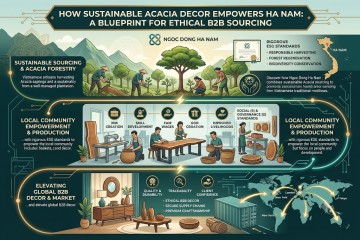
How Sustainable Acacia Decor Empowers Ha Nam: A Blueprint for Ethical B2B Sourcing
Key Takeaways
•Acacia wood is a highly renewable, durable, and eco-friendly hardwood that supports soil rehabilitation and carbon sequestration.
•Ngoc Dong Ha Nam ensures a fully traceable and ethical supply chain backed by FSC, BSCI, and SMETA certifications.
•Sourcing from Ngoc Dong Ha Nam directly supports the Ha Nam community by providing fair wages, empowering female artisans, and preserving traditional craft heritage.
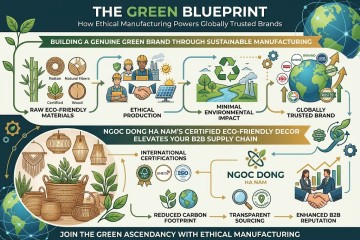
Branding from the Roots: How Global B2B Buyers Build Bulletproof Green Identities Through Certified Sustainable Manufacturing
Key Takeaways
•Sustainable manufacturing is the only way to comply with the upcoming EU Deforestation Regulation (EUDR) taking effect on December 30, 2026.
•Rapidly renewable natural materials like seagrass, water hyacinth, rattan, and FSC-certified acacia form the foundation of authentic green branding.
•International certifications such as FSC, BSCI, and SMETA are critical for mitigating regulatory risks and proving supply chain integrity to global B2B buyers.
•Integrating traditional craftsmanship with sustainable supply chains allows brands to command premium pricing and foster long-term customer loyalty.
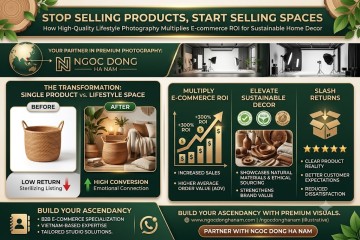
Stop Selling Products, Start Selling Spaces: How High-Quality Lifestyle Photography Multiplies E-commerce ROI for Sustainable Home Decor
Key Takeaways
•High-quality lifestyle photography increases e-commerce conversion rates by up to 40% by providing essential contextual and spatial reference for consumers.
•Using lifestyle imagery in product listings significantly reduces return rates by accurately depicting product scale, texture, and natural color variations.
•Premium visual storytelling justifies higher price points and communicates brand commitment to sustainability and ethical manufacturing practices.
•Partnering with manufacturers that provide turnkey marketing assets, like Ngoc Dong Ha Nam, dramatically accelerates time-to-market for global retailers.
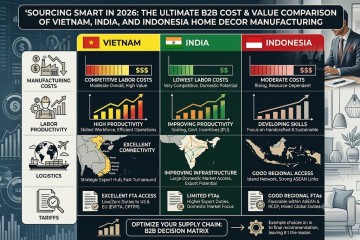
Sourcing Smart in 2026: The Ultimate B2B Cost & Value Comparison of Vietnam, India, and Indonesia Home Decor Manufacturing
Key Takeaways
•Vietnam offers superior total landed cost efficiency for home decor due to its extensive network of free trade agreements, such as the EVFTA providing 0% duty to the EU, and high labor productivity compared to India and Indonesia.
•While India boasts lower raw hourly wages in certain regions, its fragmented infrastructure and lack of comprehensive Western trade agreements often result in higher overall shipping times and hidden logistical costs.
•Indonesia is a leading source for raw rattan, but its archipelagic geography drives up domestic shipping costs, and high statutory labor severance liabilities increase operational risks for international buyers.
•Vietnam's integrated craft village ecosystems, combined with international compliance certifications like BSCI, FSC, and SMETA, make it the premier hub for scalable, sustainable home decor manufacturing.
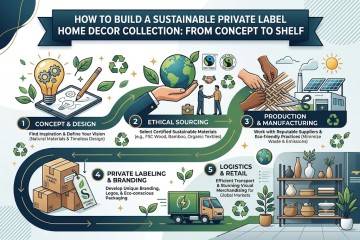
How to Build a Sustainable Private Label Home Decor Collection: From Concept to Shelf
Key Takeaways
•A successful private label home decor collection requires selecting rapidly renewable natural materials like Acacia, bamboo, seagrass, rattan, and water hyacinth to meet global B2B demand for eco-friendly luxury.
•Ensuring social and environmental compliance through recognized third-party certifications like BSCI, SMETA, and FSC is essential to mitigate supply chain risks and appeal to modern conscious consumers.
•Strict moisture control, keeping levels strictly between 12% and 14%, is critical to prevent mold and quality degradation during long-distance ocean transit of natural fiber products.
•Optimizing product design for nesting and flat-packing dramatically reduces ocean freight costs and minimizes the carbon footprint of global logistics.

Beyond Aesthetics: Why Sustainability is Now the Ultimate Decision-Maker for Modern Home Decor Buyers
Key Takeaways
•Sustainability has evolved from a niche preference to the primary purchasing driver, with over 70% of global consumers actively choosing brands that prioritize environmental and social responsibility.
•Strict international regulations, such as the EU Deforestation Regulation (EUDR) and ESG mandates, make certified supply chains (FSC, BSCI, SMETA) essential for mitigating legal and operational risks.
•Utilizing rapidly renewable, natural materials like Bamboo, Seagrass, Rattan, Water Hyacinth, and FSC-certified Acacia allows brands to meet both aesthetic demands and decarbonization targets.
•Partnering with established, ethically compliant manufacturers like Ngoc Dong Ha Nam guarantees B2B buyers high-volume production capacity without compromising on ecological standards.