
Tariff Engineering: Navigating Trade Barriers Between Vietnam and the USA for Home Decor Sourcing
Strategic Summary
• Tariff engineering legally reduces US customs duties by altering product material composition, structural design, or packaging prior to manufacturing.• Replacing metal structural frames with woven bamboo or acacia wood can reclassify products from high-duty HTS codes to duty-free tariff lines.
• Substantial transformation in Vietnam must be documented through detailed Bill of Materials (BOM) and value-add records to pass CBP origin audits.
• Knock-down (KD) furniture designs optimize container fill rates while utilizing specific HTS classifications that carry lower baseline tariffs.
• Integrated factory audits covering FSC, BSCI, and HTS verification prevent regulatory delays and anti-circumvention penalties at US ports.
STRATEGIC TARIFF ENGINEERING: OPTIMIZING VIETNAM-TO-US FURNITURE & HOME DECOR IMPORTS
Tariff engineering is the legal re-specification of materials and structural designs during the pre-production phase to qualify products for lower Harmonized Tariff Schedule (HTS) duty rates upon US entry. US importers utilizing strategic tariff engineering can systematically cut landed costs by 4% to 15% without sacrificing design integrity or product utility. In an environment shaped by shifting Section 301 tariffs and fluctuating global shipping rates, mastering customs classification rules is a fundamental supply chain discipline.
US Customs and Border Protection (CBP) enforces import duty classification using the General Rules of Interpretation (GRIs). Under GRI 3(b), composite goods containing multiple materials—such as a storage basket combining steel framing, woven seagrass, and cotton lining—are classified by the single material that imparts its essential character. Identifying whether essential character is defined by weight, market value, or structural function allows sourcing teams to modify specifications before production begins.
|
Product Category |
Standard Construction |
Standard HTS & Duty Rate |
Engineered Alternative |
Engineered HTS & Duty Rate |
Duty Savings |
|
Storage Basket |
Steel frame with seagrass weave |
HTS 7323.99.00 (3.4% + 25% Sec 301) |
Woven bamboo inner structure with seagrass |
HTS 4602.11.09 (Duty Free) |
28.4% Net Savings |
|
Dining Chair |
Upholstered plywood shell with metal legs |
HTS 9401.71.00 (Duty Free + 25% Sec 301) |
Solid Acacia wood frame with woven rattan seat |
HTS 9401.69.60 (Duty Free) |
25.0% Net Savings |
|
Decorative Tray |
MDF body with lacquer finish |
HTS 4420.90.80 (3.2%) |
100% Solid Acacia wood with natural oil finish |
HTS 4419.90.90 (Duty Free) |
3.2% Baseline Savings |
Sourcing from Vietnam provides a distinct structural advantage for US buyers. By leveraging Vietnam's rich supply of natural fibers like water hyacinth, rattan, seagrass, and sustainably harvested FSC-certified acacia wood, brands can pivot away from synthetic or metal-heavy builds that carry aggressive tariff burdens. Precision planning at the prototype phase converts supply chain vulnerability into a measurable profit margin boost.
MATERIAL SUBSTITUTION STRATEGIES: RECLASSIFYING BAMBOO, RATTAN, AND ACACIA
Strategic material substitution alters a product's primary tariff heading under the US Harmonized Tariff Schedule by adjusting the weight or value ratio of its primary components. Shifting a furniture or home organization piece from Chapter 94 (Furniture) or Chapter 73 (Articles of Iron/Steel) to Chapter 46 (Manufactures of Straw, Esparto or Other Plaiting Materials) can instantly eliminate 25% tariffs. Executing this requires strict bill-of-materials (BOM) management during factory sampling.
For instance, an accent table constructed with an iron base and a rattan top often falls under HTS code 9403.20.00 (Other metal furniture), attracting high duty penalties if steel dominates the weight and manufacturing cost. Re-engineering the unit with a solid FSC-certified acacia structural base and a hand-woven rattan tray top shifts the essential character to plaiting materials or wooden furniture under HTS 9403.60.80 or 4602.11.00, achieving a 0% duty rate.
- Bamboo Structural Reinforcement: Replacing heavy tubular steel frames with high-density laminated bamboo reduces unit weight by 35% while retaining load capacity over 120 kg.
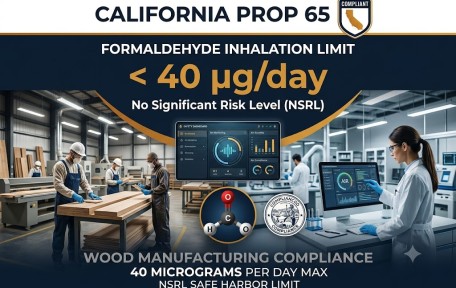
- Acacia Wood Over MDF Core: Replacing engineered wood boards (MDF/particle board) with solid plantation acacia eliminates formaldehye off-gassing compliance overheads (TSCA Title VI) and reduces custom duty variances.
- Natural Fiber Weaving Ratios: Ensuring woven water hyacinth or seagrass accounts for at least 60% of total product component cost locks in Chapter 46 duty-free classification.
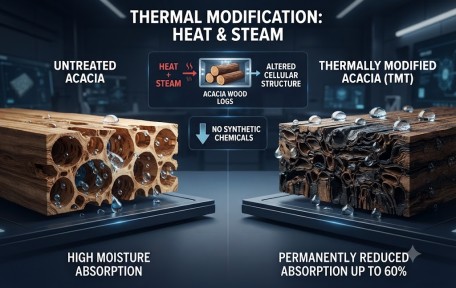
Will changing materials degrade structural stability? No. Modern factory engineering in Vietnam utilizes kiln-drying technology to bring acacia wood moisture content down to 8-12%, matching US climate requirements while maintaining full structural strength.
SUBSTANTIAL TRANSFORMATION & RULES OF ORIGIN: PREVENTING CBP PENALTIES
Substantial transformation occurs when raw or semi-finished materials undergo manufacturing in Vietnam that results in a new article of commerce with a distinct name, character, and use. US Customs strictly investigates country-of-origin (COO) claims to catch illegal transshipment from neighboring countries. Importers must establish documented proof that raw inputs underwent genuine processing within Vietnamese factories.
Simply assembling imported Chinese metal components or pre-cut panels in a Vietnamese facility does not constitute substantial transformation under US law. To qualify for a legitimate 'Made in Vietnam' COO tag, processing must involve core conversion operations such as raw wood drying, planing, joinery, hand-weaving, chemical-free mold prevention treatments, and final structural assembly.
|
Manufacturing Operation |
CBP Transformation Status |
Compliance Risk Level |
Required Factory Audit Documentation |
|
Simple assembly of imported pre-finished parts |
Non-Compliant (Origin remains source country) |
CRITICAL (Subject to seizure & fines) |
Import declarations of raw components showing foreign origin |
|
Imported raw rattan core woven onto local wood frames |
Compliant (Substantial Transformation met) |
LOW |
Labor logs, weaving time-sheets, frame manufacturing records |
|
Raw Acacia logs milled, kiln-dried, and crafted in-house |
Compliant (100% Local Transformation) |
ZERO RISK |
FSC chain of custody, mill receipts, kiln-drying logs |
Risk mitigation requires verifiable audit trails. Foreign buyers must partner with manufacturers capable of providing complete traceability down to the raw material harvest location. Detailed production logs, labor hour reports, and raw material purchase invoices must be maintained for a minimum of five years post-importation.
KNOCK-DOWN (KD) ENGINEERING: MAXIMIZING CONTAINER YIELD & DUTY EFFICIENCY
Knock-Down (KD) product architecture optimizes tariff compliance while reducing international ocean freight overhead by up to 60% per unit shipped. Shipping fully assembled home decor or accent furniture leads to paying premium ocean freight rates to transport empty air inside shipping containers. Precision-engineered KD designs compress packaging volume, directly lowering the per-unit freight component of landed cost calculations.
Under US customs rules, shipping unassembled items under HTS provisions requires evaluating whether the components presented together constitute a complete or finished article under GRI 2(a). If an item is imported as a complete KD kit with all assembly hardware, it enters under the finished article tariff code. However, shipping structural components separately or unbundled across distinct purchase orders can alter duty exposure legally when supported by specialized legal counsel.
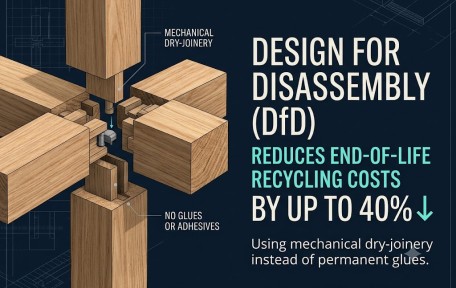
- Tool-Free Smart Assembly: Designing acacia wood tables with precision drop-in joint systems eliminates hardware pack costs while ensuring end-consumers assemble units in under two minutes.
- Flat-Pack Volumetric Gains: Converting a rigid woven storage basket into a collapsible water hyacinth basket with foldable metal internal rings boosts container loading capacity from 800 units to 2,800 units per 40ft HQ container.
- Protection Against Freight Volatility: Tripling the unit count per container dampens the impact of sudden container rate surges on landed profit margins.
How does KD packaging impact product returns? Precision CNC machining in modern Vietnamese factories guarantees zero-tolerance joint fitting, preventing stability issues or customer assembly frustration after purchase.
CASE STUDY: CUTTING DUTY COSTS FROM 12% TO 0% ON NATURAL MATERIAL STORAGE SOLUTIONS
A major North American home organization retailer restructured its storage basket line, cutting total import duties from 12.8% to 0% through targeted material re-engineering in Vietnam. The retailer initially sourced wire storage baskets wrapped in synthetic poly-cord from East Asia. The combination of high baseline metal duties, synthetic weaving tariffs, and Section 301 penalties yielded a landed duty burden of nearly 30%.
Ngoc Dong Ha Nam re-engineered the product architecture by introducing a hybrid natural build. The heavy steel wire frame was replaced with a light, rigid frame derived from locally sourced bamboo. The synthetic cord was completely replaced with hand-woven Vietnamese water hyacinth and natural seagrass. This structural modification yielded dramatic regulatory and economic benefits.
- HTS Reclassification: The product moved from HTS 7323.99.00 (Metal articles, 3.4% + 25% tariff) to HTS 4602.11.09 (Plaiting materials of vegetable origin), securing a 0% baseline customs duty.
- Container Capacity Surge: A redesign incorporating tapered nestable stacking expanded container capacity from 1,200 units to 3,400 units per 40ft HQ container.
- Annual Financial Savings: The retailer saved $340,000 USD in duty payouts across an initial 100,000-unit order run while reducing per-unit ocean freight costs by 52%.
Can natural materials maintain uniform quality in mass retail? Yes. Utilizing standardized moisture testing, automated bleaching, and UV finishing ensures 100% color consistency and dimensional stability across mass production batches.
INTEGRATED GOVERNANCE: FSC, BSCI, AND SMETA AUDITS IN DUTY-ENGINEERED SUPPLY CHAINS
Tariff engineering strategies fail if imports are detained at US ports due to environmental non-compliance or supply chain labor violations. CBP and the US Department of Agriculture (USDA) enforce strict oversight over imported wooden and natural fiber products. Importers must combine tariff optimization with rigorous environmental and social compliance frameworks.
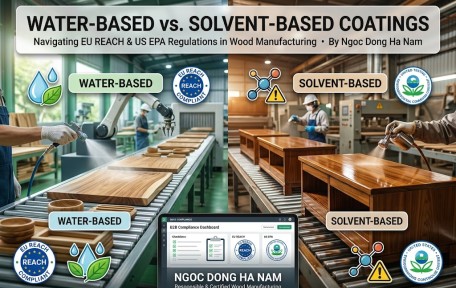
When importing acacia wood or bamboo decor from Vietnam, buyers must ensure compliance with the US Lacey Act, which prohibits trade in illegally sourced timber. Sourcing FSC-certified (Forest Stewardship Council) wood guarantees that timber originates from responsibly managed plantations. Simultaneously, international social audits like BSCI (Business Social Compliance Initiative) and SMETA ensure factory labor practices meet strict ethical standards.
|
Compliance Standard |
Regulatory Focus |
Impact on US Customs Clearance |
Ngoc Dong Ha Nam Verification |
|
Lacey Act / FSC Chain of Custody |
Legality of timber harvesting and supply chain origin |
Prevents shipment seizure under illegal logging legislation |
Full FSC Chain-of-Custody (CoC) certification on all Acacia products |
|
BSCI / SMETA Audits |
Ethical labor practices, working hours, and fair compensation |
Guarantees compliance with US ESG vendor requirements |
A/B rated social compliance audit reports updated annually |
|
USDA APHIS Fumigation |
Pest control for biological natural fibers (Bamboo, Rattan) |
Prevents quarantine rejections or immediate destruction order at port |
MB/Heat treatment certificates issued per shipment container |
At Ngoc Dong Ha Nam, our 25+ years of operational excellence combines master craftsmanship with rigorous international compliance. By linking tariff engineering directly with certified sustainable manufacturing, we empower global buyers to build resilient, high-margin supply chains with zero compliance risk.
This piece is written by Thong Nguyen, Co-owner & Sales Director at Ngoc Dong Ha Nam Co., Ltd. Drawing on 25+ years of expertise in manufacturing export handicrafts, our team delivers premium bamboo, rattan, water hyacinth, and acacia solutions tailored for global retailers.
FREQUENTLY ASKED QUESTIONS
What is tariff engineering in the context of US home decor imports?
Tariff engineering is the legal practice of designing or specifying a product's material composition, structure, or packaging specifically to qualify for lower baseline duties or tariff exemptions under the US Harmonized Tariff Schedule (HTS).
Is tariff engineering legal under US Customs and Border Protection (CBP) rules?
Yes, tariff engineering is completely legal and recognized by US courts and CBP, provided that the product is honestly described and genuinely manufactured according to the specifications associated with the lower tariff classification.
How does replacing metal frames with bamboo affect import duty rates?
Replacing metal structural frames with natural woven bamboo or acacia wood reclassifies products from high-duty metal headings (which incur Section 301 tariffs) to natural plaiting material headings under HTS Chapter 46, often reducing total duties from over 28% to 0%.
What documentation is needed to prove Country of Origin (COO) in Vietnam?
Importers require a complete audit trail including supplier raw material invoices, factory labor time-sheets, production logs, FSC chain-of-custody documentation, and official Certificates of Origin (Form B or VC) issued by authorized bodies.