
Water-Based vs. Solvent-Based Coatings: Navigating EU REACH and US EPA Regulations in Wood Manufacturing
Essential Highlights
• Water-based coatings (WBC) reduce VOC emissions below 100 g/L, enabling complete compliance with EU REACH and US EPA standards.• Solvent-based coatings (SBC) pose high risks of SVHC contamination and frequently fail US TSCA Title VI formaldehyde emission limits.
• Modern 2K water-based PUD finishes match solvent coatings in durability, achieving 2H–3H pencil hardness and ISO Class 0 cross-hatch adhesion.
• Water-based food-safe finishes meet LFGB Section 30/31 and FDA 21 CFR 175.300 standards for direct food contact applications.
• Controlled factory environments (22–25°C, 50–60% RH) are required to ensure optimal film formation on natural Acacia wood and woven rattan.

EXECUTIVE SUMMARY & TABLE OF CONTENTS: WOOD COATING COMPLIANCE
Water-based coatings (WBC) are replacing traditional solvent-based coatings (SBC) in modern export-grade wood manufacturing to meet strict EU REACH and US EPA environmental regulations. Transitioning from high-solvent formulations reduces Volatile Organic Compound (VOC) emissions from over 650 g/L down to under 100 g/L while maintaining critical physical durability standards. For global B2B buyers importing Acacia, bamboo, and rattan interior products, compliance with EU Regulation (EC) No 1907/2006 (REACH) and US TSCA Title VI is mandatory to eliminate chemical liability and customs friction.
Table of Contents
- 1. Executive Summary & Table of Contents
- 2. Chemistry and Performance: Water-Based vs. Solvent-Based Wood Coatings
- 3. Regulatory Landscape: EU REACH and US EPA Compliance Frameworks
- 4. Technical Comparison Matrix and Food-Contact Testing Standards
- 5. Factory Integration, Quality Assurance, and Contextual Glossary
CHEMISTRY AND PERFORMANCE: WATER-BASED VS. SOLVENT-BASED COATINGS
Water-based wood coatings utilize water as the primary carrier solvent, whereas solvent-based coatings rely on organic solvents such as toluene, xylene, and butyl acetate. This fundamental chemical difference directly dictates VOC emission profiles, drying kinetics, and film-forming characteristics. How do these two coating technologies perform on dense hardwoods like Acacia or porous natural fibers like rattan?
Solvent-based coatings form films through the rapid evaporation of volatile organic solvents, achieving high gloss and rapid surface dry times within 15 to 30 minutes at 25°C. However, their high solvent content yields VOC levels between 450 g/L and 750 g/L, emitting hazardous air pollutants (HAPs). Solvent coatings offer excellent moisture barrier properties but are prone to yellowing over time due to aromatic resin degradation.
Water-based acrylic and polyurethane dispersions (PUD) cure through a two-step process: water evaporation followed by polymer particle coalescence. Modern 2K water-based PUD coatings achieve pencil hardness ratings of 2H to 3H and cross-hatch adhesion rating ISO Class 0 / ASTM 5B on Acacia wood. VOC content in water-based formulations remains strictly below 100 g/L, making them non-flammable and structurally safer for factory application environments.
[Image Description: High-magnification cross-sectional diagram comparing a 50-micron water-based PUD coating film against a solvent-based polyurethane coating on Acacia wood substrate, showing polymer coalescence, wood pore penetration depth (15–25 µm), and interfacial adhesion bonding.]
REGULATORY LANDSCAPE: EU REACH AND US EPA COMPLIANCE FRAMEWORKS
Compliance with EU REACH and US EPA regulations requires strict verification of chemical substances and low-emission manufacturing thresholds across the entire supply chain. Importers selling wood furniture into European and American markets face severe penalties if finished goods exceed legal chemical limits or contain Substances of Very High Concern (SVHC). Are your suppliers providing verified third-party laboratory test reports for every batch?
Under EU REACH Regulation (EC) No 1907/2006, furniture coatings must not contain SVHCs listed on the European Chemicals Agency (ECHA) candidate list above 0.1% weight by weight (w/w). Key restricted substances in traditional wood finishes include phthalate plasticizers (e.g., DEHP, DBP), organic tin compounds, and short-chain chlorinated paraffins. Furthermore, EU Directive 2004/42/EC restricts VOC emissions in topcoats to a maximum of 140 g/L for interior wood finishes.
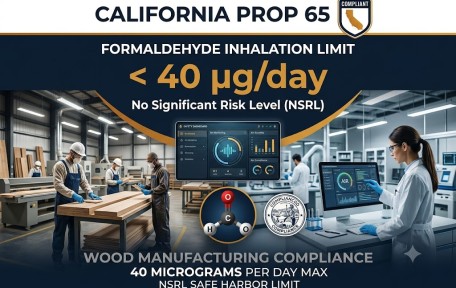
In the United States, the Environmental Protection Agency (EPA) enforces strict VOC thresholds under Method 24 and limits formaldehyde emissions through TSCA Title VI (40 CFR Part 770). Hardwood plywood and composite wood products finished with solvent coatings frequently fail TSCA Title VI chamber emission tests (threshold ≤ 0.05 ppm). Additionally, California Proposition 65 mandates clear warning labels if coatings contain detectable levels of chemicals like toluene or formaldehyde.
TECHNICAL COMPARISON MATRIX AND FOOD-CONTACT TESTING STANDARDS
Water-based coatings deliver comparable physical durability to solvent-based finishes while meeting international food-contact safety standards including LFGB and FDA regulations. When applied to kitchenware, serving trays, or tabletop furniture, non-toxic chemical crosslinking ensures that zero harmful compounds migrate into food products. What specific parameters differentiate these coating systems in rigorous laboratory testing?
|
Technical Parameter |
Water-Based Coating (PUD/Acrylic) |
Solvent-Based Coating (NC/PU) |
Test Method Standard |
|
VOC Content (g/L) |
< 80 - 120 g/L |
550 - 750 g/L |
EPA Method 24 / ISO 11890-2 |
|
Cross-Hatch Adhesion |
Class 0 (No flaking) |
Class 0 to 1 |
ISO 2409 / ASTM D3359 |
|
Pencil Hardness |
2H - 3H |
H - 2H |
ASTM D3363 |
|
MEK Double Rubs (Solvent Resistance) |
> 150 cycles |
> 200 cycles |
ASTM D5402 |
|
Formaldehyde Emissions |
Non-detectable (< 0.01 ppm) |
0.05 - 0.30 ppm |
EN 717-1 / ASTM E1333 |
|
EU REACH SVHC Compliance |
100% Compliant |
High Risk of Non-Compliance |
ECHA Screening Method |
|
Food Contact Approval |
LFGB Section 30/31, FDA 21 CFR 175.300 |
Non-compliant for direct food contact |
DIN EN 1186 / FDA Protocol |
Food-contact items such as Acacia salad bowls or bamboo cutting boards must comply with German LFGB (Lebensmittel-, Bedarfsgegenstände- und Futtermittelgesetzbuch) Section 30 and 31. Under LFGB sensory testing and overall migration testing (using 3% acetic acid and 10% ethanol simulants at 40°C for 10 days), water-based food-grade coatings maintain overall migration limits below 10 mg/dm², ensuring total safety for global consumers.
FACTORY INTEGRATION, QUALITY ASSURANCE, AND CONTEXTUAL GLOSSARY
Ngoc Dong Ha Nam integrates fully automated water-based spraying and UV-curing lines equipped with climate-controlled flash-off tunnels maintaining 22–25°C and 50–60% relative humidity. Controlled ambient conditions prevent micro-bubbling and ensure optimal chemical film formation across natural Acacia wood, bamboo, and woven rattan surfaces. How can buyers verify sustainable supply chain integrity before placing bulk purchase orders?
Every batch of finished furniture undergoes rigorous internal quality checks including 24-hour water immersion tests, thermal shock resistance (-10°C to +60°C for 5 cycles), and cross-hatch adhesion testing before shipment. We provide complete REACH compliance documentation, EPA TSCA Title VI certification, and FSC-certified wood sourcing traceable directly to responsibly managed forests.
Contextual Glossary of Technical Terms
- VOC (Volatile Organic Compounds): Carbon-based chemicals that evaporate easily at room temperature, contributing to indoor air pollution and photochemical smog.
- REACH SVHC: Substances of Very High Concern listed by the ECHA that may cause cancer, mutations, or bioaccumulation in ecological systems.
- PUD (Polyurethane Dispersion): Water-borne polymer coatings where polyurethane particles are suspended in water, delivering high abrasion and scratch resistance.
- TSCA Title VI: US EPA standard limiting formaldehyde emissions from composite wood products and finished goods.
- LFGB Section 30/31: German federal food and commodities act regulating chemical transfer limits from contact materials to foodstuffs.
- Cross-Hatch Adhesion (ISO 2409): A standardized test method to evaluate coating adhesion by cutting a lattice pattern into the film and checking tape detachment.
Authored by Thong Nguyen, Co-owner at Ngoc Dong Ha Nam Co., Ltd. We leverage over two decades of manufacturing experience to provide global retail partners with superior-quality, sustainable handicrafts and furniture solutions crafted from bamboo, rattan, water hyacinth, and acacia wood.
FREQUENTLY ASKED QUESTIONS
What is the primary difference in VOC levels between water-based and solvent-based wood coatings?
Water-based wood coatings maintain low VOC levels between 80 and 120 g/L, whereas solvent-based coatings contain high VOC concentrations ranging from 550 to 750 g/L.
How do water-based coatings comply with EU REACH regulations?
Water-based coatings eliminate aromatic solvents, heavy metals, and toxic plasticizers, ensuring zero SVHC substances above the 0.1% w/w threshold required by REACH Regulation (EC) No 1907/2006.
Are water-based coatings durable enough for heavy commercial furniture use?
Yes, modern 2K water-based Polyurethane Dispersions (PUD) achieve 2H to 3H pencil hardness, pass over 150 MEK double rubs, and achieve ISO Class 0 adhesion on dense Acacia wood.
Can water-based coatings be used for food-contact wooden items like bowls and boards?
Yes, certified water-based food-grade coatings pass LFGB Section 30/31 and FDA 21 CFR 175.300 overall migration testing, making them completely non-toxic for food contact.