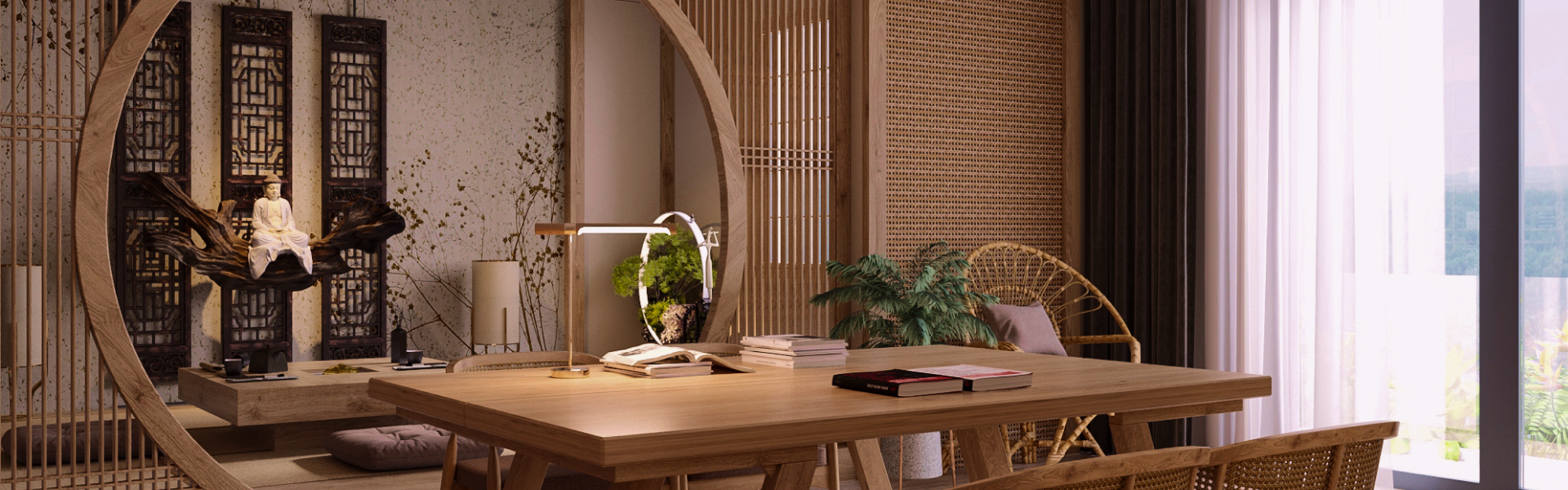
Preserving Cultural Heritage: Modernizing Ancient Vietnamese Woodcraft for Global B2B Markets
Executive Brief
• Modernizing ancient Vietnamese woodcraft transforms centuries-old carving techniques into scalable, ESG-compliant production using FSC-certified Acacia and sustainable bamboo.• A hybrid manufacturing workflow combining CNC precision with master hand-carving enables high-volume output while preserving authentic artisan detail.
• International social and environmental certifications like BSCI, FSC, and SMETA bridge the gap between traditional craft villages and global retail compliance.
• Fast-growing Acacia wood provides commercial buyers with a durable, climate-resilient alternative to endangered tropical hardwoods.
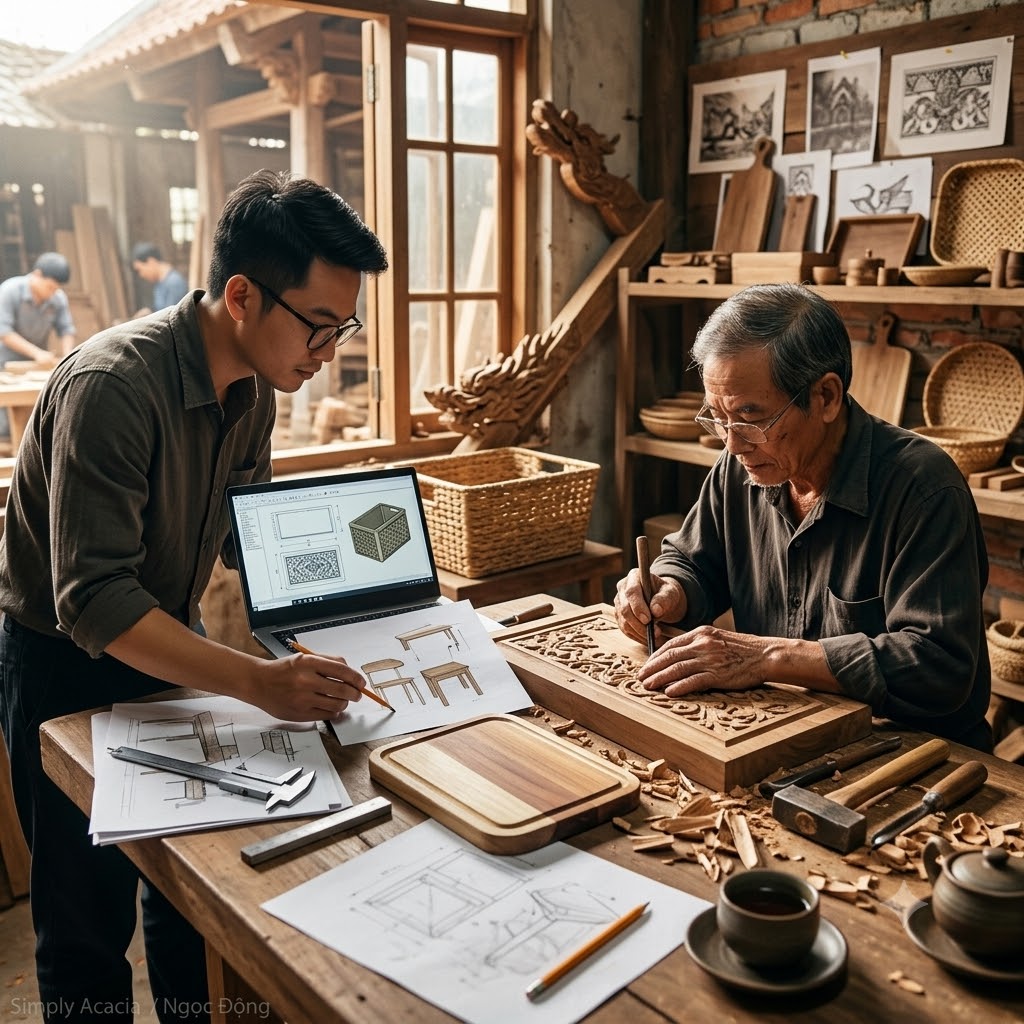
THE EVOLUTION OF VIETNAMESE WOODCRAFT: BRIDGING HERITAGE AND GLOBAL SCALE
Preserving Cultural Heritage: Modernizing Ancient Vietnamese Woodcraft
Modernizing ancient Vietnamese woodcraft transforms historic artisan carving into scalable, ESG-compliant manufacturing using FSC-certified Acacia and bamboo for international B2B buyers. Sourcing teams across North America and Europe require certified sustainability, predictable lead times, and rigorous quality control. Can ancient handcraft traditions satisfy these modern commercial demands?
Vietnamese woodworking spans over ten centuries, rooted in craft villages throughout the Red River Delta. Historically, master artisans created intricate carvings for royal palaces and local temples using slow-growing tropical hardwoods. Today, this rich heritage is re-engineered for modern interior architecture and global commercial supply chains.
By pairing traditional hand-tool mastery with modern kiln-drying and factory management systems, Vietnamese manufacturers deliver high-end natural decor at commercial scale. This evolution preserves rich cultural identity while adhering strictly to global retail compliance standards.
HYBRID MANUFACTURING: BLENDING CNC PRECISION WITH ARTISAN HAND-CARVING
Hybrid manufacturing combines automated CNC machinery for precise baseline shaping with traditional hand-finishing by master artisans to deliver high volume alongside authentic craft quality. This dual approach eliminates structural inconsistencies while retaining the organic warmth that machine-only production fails to replicate. Sourcing managers achieve tight dimensional tolerances required for flat-pack distribution without losing artisanal distinction.
Computerized roughing handles heavy material removal, timber sizing, and primary joining processes. Skilled artisans then execute delicate surface texturing, edge softening, and relief carving. How does this structural combination perform when evaluated against pure handicraft or full automation?
|
Manufacturing Aspect |
Traditional Village Craft |
Fully Automated Production |
Modernized Hybrid Craft |
|
Production Volume |
Low (Bespoke) |
Very High (Mass Market) |
Scalable B2B Volume |
|
Dimensional Consistency |
Variable |
Exact |
High (Precision Base + Hand Detail) |
|
Artisanal Uniqueness |
Very High |
None |
High (Hand-Finished Texture) |
|
Lead Time Predictability |
Low |
Very High |
High (Standardized Workflows) |
|
ESG & FSC Compliance |
Rare |
Standard |
Fully Integrated (BSCI / FSC) |
This balanced manufacturing model empowers global furniture brands to offer unique, heritage-rich collections backed by dependable industrial capacity.
SUSTAINABLE MATERIAL SELECTION: WHY ACACIA AND BAMBOO LEAD MODERN INTERIOR DESIGN
Acacia wood and bamboo are replacing traditional slow-growing hardwoods due to their rapid renewability, structural stability, and full FSC supply chain traceability. Sourcing decisions in modern commercial design prioritize low embodied carbon and responsible forestry. Vietnamese Acacia, grown in managed commercial plantations, offers exceptional grain density and natural moisture resistance.
Acacia Wood: The Renewable Hardwood Powerhouse
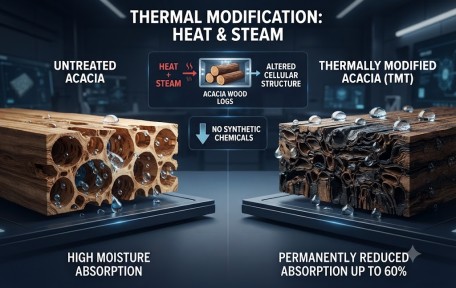
Acacia trees reach harvest maturity in just seven to ten years, making them one of the most efficient hardwood crops available. Advanced vacuum kiln-drying techniques reduce internal moisture content to 8–12%, preventing warping or cracking during ocean transit. This technical processing converts plantation Acacia into durable furniture, wall panels, and heavy tabletop displays.
Engineered Bamboo: Architectural Strength and Rapid Growth
Bamboo regenerates naturally without replanting and matures in under five years. Modern Vietnamese processing turns raw culms into high-density laminated bamboo boards suitable for sleek architectural fixtures. Combining Acacia frames with woven bamboo or rattan inserts yields lightweight, highly durable decor pieces tailored for eco-conscious hotel groups and retail lines.
- FSC Certification: Full chain-of-custody tracking from plantation forest to finished product shipment.
- Carbon Sequestration: Fast-growing species absorb carbon dioxide significantly faster than traditional old-growth timber.
- Circular Design: Natural finishes and non-toxic bonding agents ensure complete product biodegradability.
NAVIGATING SOURCING STANDARDS: CERTIFICATION, COMPLIANCE, AND BUYER READINESS
Sourcing modernized Vietnamese woodcraft requires verifying social and environmental certifications, including BSCI, SMETA, and FSC chain-of-custody protocols. International buyers cannot risk supply chain disruptions or compliance violations. Working with established export manufacturers ensures seamless integration into international retail distribution channels.
Leading factories in Vietnam operate under structured ethical frameworks that protect artisan welfare while maintaining modern occupational health and safety standards. Workplace auditing guarantees fair wages, safe dust-extraction environments, and zero forced labor across rural craft networks. Is your manufacturing partner fully prepared for tier-one retail audits?
Partnering with experienced manufacturing facilities streamlines product development, sample prototyping, and bulk shipping logistics. By combining cultural preservation with rigorous industrial standards, Vietnam stands as a premier destination for sustainable, high-end woodcraft manufacturing.
This piece is written by Thong Nguyen, Co-owner & Sales Director at Ngoc Dong Ha Nam Co., Ltd. Drawing on 25+ years of expertise in manufacturing export handicrafts, our team delivers premium bamboo, rattan, water hyacinth, and acacia solutions tailored for global retailers.
FREQUENTLY ASKED QUESTIONS
How does modernizing Vietnamese woodcraft ensure compliance with international ESG standards?
Modernization integrates audited supply chains using FSC-certified Acacia and bamboo alongside SMETA and BSCI social compliance protocols. This guarantees legally sourced timber, fair labor practices, and full traceability for global buyers.
Can Vietnamese woodcraft manufacturers meet high-volume B2B orders without losing artisan quality?
Yes, top factories combine automated CNC roughing with manual hand-carving by skilled artisans. This hybrid workflow ensures dimensional consistency across thousands of units while preserving authentic hand-finished details.
Why is Acacia wood preferred over traditional hardwoods for modernized Vietnamese craft?
Acacia is fast-growing, highly durable, climate-resilient, and abundantly available in FSC-certified Vietnamese plantations. It provides the density and rich grain of slow-growing hardwoods without contributing to deforestation.
What lead times should international buyers expect for modernized woodcraft production?
Standard production lead times typically range between 45 and 60 days post-sample approval, depending on order volume, seasonal harvesting, and customization complexity.