
Sourcing Smart in 2026: The Ultimate B2B Cost & Value Comparison of Vietnam, India, and Indonesia Home Decor Manufacturing
Key Takeaways
•Vietnam offers superior total landed cost efficiency for home decor due to its extensive network of free trade agreements, such as the EVFTA providing 0% duty to the EU, and high labor productivity compared to India and Indonesia.•While India boasts lower raw hourly wages in certain regions, its fragmented infrastructure and lack of comprehensive Western trade agreements often result in higher overall shipping times and hidden logistical costs.
•Indonesia is a leading source for raw rattan, but its archipelagic geography drives up domestic shipping costs, and high statutory labor severance liabilities increase operational risks for international buyers.
•Vietnam's integrated craft village ecosystems, combined with international compliance certifications like BSCI, FSC, and SMETA, make it the premier hub for scalable, sustainable home decor manufacturing.
THE GLOBAL SOURCING SHIFT: WHERE SHOULD YOUR NEXT HOME DECOR COLLECTION BE MADE?
In the highly competitive landscape of global B2B home decor and furniture retail, sourcing managers and interior designers face a permanent paradigm shift. The days of relying solely on a single manufacturing powerhouse are gone. Driven by the 'China Plus One' strategy, global brands are aggressively diversifying their supply chains to mitigate geopolitical risks, escape punitive tariffs, and meet the growing consumer demand for ethically made, sustainable products.
As a result, three Asian nations have emerged as the frontrunners in the race to capture the global home decor market: Vietnam, India, and Indonesia. Each country presents a unique set of capabilities, raw material strengths, and labor dynamics. However, for a discerning B2B buyer, choosing the right manufacturing hub is not as simple as comparing basic factory-gate unit prices. A short-sighted decision based purely on the lowest hourly wage can quickly be erased by hidden logistical bottlenecks, low labor productivity, unexpected import tariffs, or compliance failures.
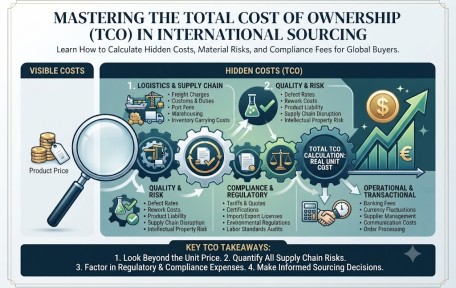
To build a truly resilient, high-margin supply chain, you must analyze the Total Landed Cost and the strategic value each country offers. This comprehensive guide provides an objective, data-driven cost and capability comparison between Vietnam, India, and Indonesia, focusing on the specialized needs of the global home decor, handicraft, and furniture sectors. Whether you are sourcing woven seagrass baskets, rattan furniture, or FSC-certified acacia wood kitchenware, this analysis will guide you to the most profitable and sustainable decision for your brand.
BREAKING DOWN THE NUMBERS: COST, LABOR, AND LOGISTICS IN VIETNAM, INDIA, AND INDONESIA
To understand the true cost of manufacturing in these three powerhouse nations, we must look beyond basic economic indicators and analyze the practical, on-the-ground factors that impact your bottom line. Below, we break down the three most critical components of the B2B cost equation: labor cost versus productivity, infrastructure and logistics, and trade tariffs.
1. Labor Cost vs. The 'Efficiency Tax'
At first glance, labor rates in India and Indonesia look highly attractive. In India, manufacturing labor costs in less-industrialized states can range from $1.50 to $3.00 per hour. Similarly, Indonesia offers competitive base rates, particularly in Central Java, where wages hover between $1.10 and $1.60 per hour. However, these figures do not tell the whole story. In India, the manufacturing sector often suffers from high attrition rates and fragmented factory management. This creates a hidden 'efficiency tax'—meaning buyers must spend more on on-ground quality control and management oversight to achieve the same output and quality as more mature hubs.
In Indonesia, while base wages are low, the legal framework introduces significant financial liabilities for employers. The mandatory 'THR' (religious holiday bonus equivalent to one month's salary) and exceptionally high statutory severance pay regulations—which can require up to 32 months of salary upon termination—greatly inflate the long-term, real cost of operations. Furthermore, the workforce is less concentrated in specialized export manufacturing.
Vietnam, by contrast, offers the optimal sweet spot. With manufacturing wages averaging $2.50 to $3.50 per hour, it is slightly more expensive than India or Indonesia on a raw hourly basis. However, Vietnam's workforce is highly disciplined, boasts a 95%+ literacy rate, and possesses specialized expertise in high-speed, repetitive assembly and complex hand-weaving techniques. This superior productivity translates to lower defect rates, faster turnaround times, and ultimately, a lower per-unit production cost.
2. Infrastructure, Lead Times, and Domestic Logistics
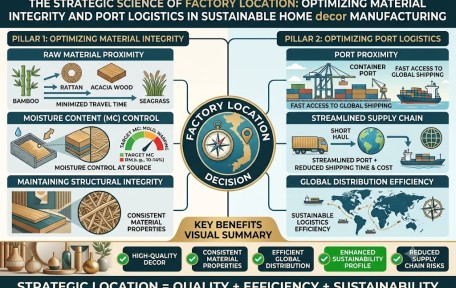
A beautiful product is worthless if it is stuck at a port or delayed on a highway. Vietnam's geography provides a massive competitive advantage. Its long coastline is dotted with modern, deep-water ports, such as Hai Phong in the North and Cat Lai in the South, which sit directly on major global shipping lanes. This allows for rapid, direct shipping routes to North America and Europe, minimizing transit times and reducing container shipping costs.
India's logistics network, despite massive government investments, remains highly fragmented. Inland transport from major handicraft manufacturing hubs like Rajasthan or Uttar Pradesh to the nearest sea ports can take days, exposing cargo to weather damage and unpredictable delays. Indonesia faces an even greater logistical hurdle: its geography. As an archipelago of over 17,000 islands, raw materials and finished goods must often undergo multiple inter-island shipments. This complex transit network leads to high domestic shipping fees, port congestion in Jakarta and Surabaya, and extended lead times that can disrupt tight retail calendars.
3. The Tariff Advantage: Why FTAs Matter
Import duties can instantly make or break your product margins. This is where Vietnam holds an absolute monopoly over its regional competitors. Thanks to the landmark EU-Vietnam Free Trade Agreement (EVFTA), European buyers enjoy a gradual reduction of import tariffs to 0% on a wide array of home decor, kitchenware, and furniture items. Vietnam is also a signatory to the CPTPP and RCEP, offering seamless, duty-free trade across the Asia-Pacific region.
In contrast, India and Indonesia lack comprehensive free trade agreements with major Western markets. Buyers sourcing from India or Indonesia are subject to standard Most-Favored-Nation (MFN) tariffs or limited GSP schemes, which typically add an extra 4% to 12% in duty costs at the port of entry. When calculating your total landed cost, Vietnam's tariff advantages often completely offset any minor differences in factory-gate pricing.
|
Key Metric (2026) |
Vietnam |
India |
Indonesia |
|
Avg. Labor Cost |
$2.50 - $3.50 / hour |
$1.50 - $3.00 / hour |
$1.10 - $1.60 / hour (Base) |
|
Labor Productivity |
High (Disciplined, skilled) |
Moderate (Fragmented) |
Moderate (High statutory overhead) |
|
Logistics & Ports |
Excellent (Deep-water ports, strategic lanes) |
Developing (Prone to inland delays) |
Challenging (High inter-island costs) |
|
Key Trade Agreements |
EVFTA (0% to EU), CPTPP, RCEP |
Standard MFN, fragmented bilateral FTAs |
Standard MFN, limited regional FTAs |
|
Sustainability Standards |
Highly developed (BSCI, FSC, SMETA) |
Variable (Artisanal, less certified) |
Good for rattan, but certification is slow |
BEYOND THE PRICE TAG: WHY VIETNAM AND SUSTAINABLE CRAFT VILLAGES OFFER THE ULTIMATE VALUE
For high-end interior designers and global retail category managers, a product’s story, material integrity, and compliance are just as critical as its financial metrics. Modern consumers demand transparency, ethical labor, and environmental responsibility. When sourcing home decor made from natural materials like seagrass, water hyacinth, rattan, bamboo, and acacia wood, Vietnam’s unique craft village ecosystem offers an unmatched strategic advantage.
Unlike the highly fragmented and often unregulated artisanal networks in India or Indonesia, Vietnam has successfully modernized its historical craft heritage. In provinces like Ha Nam, entire communities have specialized in specific weaving and woodworking techniques for generations. This deep-rooted expertise has been seamlessly integrated with modern industrial standards.
At Ngoc Dong Ha Nam, we have spent decades perfecting this hybrid model. We leverage the incredible skill of local artisans while maintaining strict, factory-level control over the entire supply chain. This allows us to offer:
- Sustainably Sourced Materials: We utilize fast-growing, renewable local resources such as seagrass and water hyacinth, and our acacia wood products are fully FSC (Forest Stewardship Council) certified, ensuring responsible forest management.
- World-Class Compliance: Unlike many suppliers in India or Indonesia who struggle with international audits, our facilities are fully certified under BSCI (Business Social Compliance Initiative) and SMETA (Sedex Members Ethical Trade Audit). This guarantees to your legal and marketing teams that every item is produced ethically, under safe working conditions, and with fair wages.
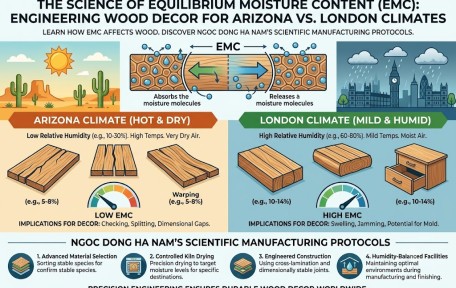
- Consistent Quality at Scale: By combining traditional hand-weaving with modern drying, mold-prevention, and finishing technologies, we eliminate the quality variations and moisture-related defects that frequently plague natural-fiber imports from tropical regions like Indonesia.
By choosing a compliant Vietnamese manufacturer, you protect your brand from supply chain disruptions, product recalls, and reputational risks, while offering your customers beautifully crafted, eco-friendly pieces that stand the test of time.
FUTURE-PROOF YOUR SUPPLY CHAIN: PARTNER WITH NGOC DONG HA NAM FOR UNRIVALED QUALITY AND COMPLIANCE
As you plan your sourcing roadmap, the decision between Vietnam, India, and Indonesia becomes clear. While India offers scale and Indonesia possesses unique raw materials, Vietnam stands out as the ultimate export-driven platform—delivering the perfect harmony of competitive labor, superior infrastructure, duty-free tariff advantages, and world-class compliance.
In the volatile global market, securing a reliable, ethical, and high-quality manufacturing partner is the single best way to protect your margins and grow your brand. At Ngoc Dong Ha Nam, we are ready to help you bring your sustainable home decor designs to life. From initial product development and rapid prototyping to mass production and seamless global logistics, our team of experts is dedicated to your success.
Don't let rising shipping costs, tariff barriers, or compliance worries hold your business back. Contact our global B2B sales division today to:
- Request a custom, comprehensive quotation for your upcoming collections.
- Order physical product samples to experience our craftsmanship firsthand.
- Schedule a virtual or in-person tour of our state-of-the-art manufacturing facilities and showroom in Ha Nam, Vietnam.
Partner with Ngoc Dong Ha Nam and build a supply chain you can be proud of. Let's create beautiful, sustainable spaces together.
FREQUENTLY ASKED QUESTIONS
How do import duties compare between Vietnam, India, and Indonesia for EU buyers?
Vietnam holds a significant tariff advantage through the EU-Vietnam Free Trade Agreement (EVFTA), which reduces import duties on most home decor and furniture items to 0%. India and Indonesia do not have comparable comprehensive FTAs with the EU, meaning buyers are subject to standard GSP or MFN tariffs ranging from 4% to 12%.
Why is labor productivity in Vietnam considered superior to India despite higher hourly wages?
Vietnam's manufacturing workforce is highly disciplined, literate, and specialized in high-speed, repetitive assembly and precision weaving. This high industrial efficiency reduces the 'efficiency tax' often found in India's more fragmented manufacturing sectors, leading to faster lead times and lower defect rates.
What are the hidden logistical costs of sourcing home decor from Indonesia?
Indonesia's archipelagic nature means raw materials and finished goods often require multiple inter-island shipments before reaching an export port. This complex domestic transit, combined with port congestion in Jakarta and Surabaya, significantly inflates domestic shipping costs and extends production timelines.
Are factories in Vietnam compliant with Western sustainability and social standards?
Yes, leading Vietnamese manufacturers like Ngoc Dong Ha Nam are fully certified under global frameworks such as BSCI, SMETA, and FSC. This guarantees to global retailers that every item is produced ethically, under safe working conditions, and with responsibly sourced natural materials.