
Total Cost of Ownership (TCO): Calculating Hidden Costs in International Sourcing
Key Takeaways
• FOB unit price represents only 40% to 60% of the true Total Cost of Ownership (TCO) in international home decor sourcing.• Material-specific failures, such as incorrect moisture content in Acacia (target 8-12%) or untreated bamboo, can lead to retail rejection rates exceeding 15%.
• Strict compliance with EUDR, FSC, BSCI, and SMETA acts as a financial safeguard, preventing catastrophic customs seizures and brand damage.
• Optimizing packaging through nested designs and flat-packing can reduce volumetric shipping costs by up to 60%, directly lowering the landed cost.
THE FOB ILLUSION: WHY UNIT PRICE IS A DANGEROUS METRIC IN GLOBAL HOME DECOR SOURCING
For global procurement directors, category managers, and high-end interior design firms, the allure of a low Free on Board (FOB) quote is a familiar temptation. A beautifully crafted Acacia wood serving tray at $6.50 FOB or a hand-woven seagrass basket at $3.20 FOB looks exceptional on a preliminary margin sheet. However, relying solely on the unit cost is one of the most critical errors in international supply chain management. In reality, the initial FOB price represents only a fraction of the Total Cost of Ownership (TCO).
Consider a real-world scenario: A mid-sized European home decor retailer sourced 15,000 units of woven seagrass storage bins from an unverified supplier, attracted by a unit price that was 15% below market average. Due to inadequate post-harvest drying and poor container loading supervision, the shipment experienced "container sweat" during its 35-day transit through equatorial waters. Upon arrival at the Port of Rotterdam, over 35% of the shipment was contaminated with black mold. The ensuing crisis resulted in immediate customs quarantine, costly third-party sorting fees, a 25% product write-off, and demurrage charges of $250 per day. The true landed cost per salable unit skyrocketed from an estimated $7.80 to $14.10, completely erasing the projected retail margin and causing severe stockouts during peak season.
This is the FOB illusion. To protect your margins, secure your supply chain, and guarantee product integrity, you must shift from a transaction-based purchasing model to a comprehensive TCO calculation framework. This guide deconstructs the hidden costs of international sourcing and provides a pragmatic, risk-mitigated strategy for sourcing home decor and furniture from Vietnam.
DECONSTRUCTING THE TCO FORMULA FOR NATURAL MATERIAL SOURCING
The Math Behind True Landed Cost
To establish an accurate procurement budget, B2B buyers must utilize a comprehensive TCO formula. The Total Cost of Ownership is not merely a theoretical concept; it is a precise mathematical model that accounts for every variable from the raw material harvest to the final retail shelf. The foundational formula is structured as follows:
TCO = Landed Cost + Quality Failure Costs + Compliance & Regulatory Costs + Inventory & Administrative Overhead
Let us break down each of these major cost pillars to understand where hidden expenses typically accumulate:
1. Landed Cost (The Baseline)
- FOB Origin Price: The cost of the product loaded onto the vessel at the export port (e.g., Hai Phong or Cat Lai, Vietnam).
- Ocean & Inland Freight: The cost of Full Container Load (FCL) or Less than Container Load (LCL) shipping, including fuel surcharges (BAF) and destination port handling fees (THC).
- Customs Duties & Tariffs: Based on specific HS Codes. For example, importing wooden furniture (HS Code 9403) or woven basketware (HS Code 4602) carries different duty rates depending on the bilateral trade agreements (such as the EVFTA for European buyers).
- Marine Insurance: Typically 0.2% to 0.5% of the CIF value, safeguarding against catastrophic cargo loss.
2. Quality Failure Costs (The Margin Killers)
- Defect and Rejection Rates: The cost of products that arrive damaged, warped, moldy, or out of specification. A standard 2% defect rate must be factored into the initial financial model.
- Rework and Sorting: If a shipment has localized quality issues, hiring local third-party logistics (3PL) providers to inspect, clean, or repack products can cost between $25 and $50 per hour.
- Customer Returns and Chargebacks: Major retailers like Target, IKEA, or John Lewis enforce strict vendor compliance guidelines. Failing to meet quality or packaging specs results in automatic administrative chargebacks that can wipe out entire profit margins.
3. Compliance & Regulatory Costs (The Legal Safeguards)
- Testing and Certification: Ensuring compliance with regional safety standards, such as REACH in Europe or California Proposition 65 in the United States.
- Social and Environmental Audits: The cost of verifying that your manufacturing partner adheres to ethical labor standards (BSCI, SMETA) and sustainable forestry (FSC).
- Import Penalties: Fines associated with non-compliance, such as failing to provide accurate Lacey Act declarations in the US or violating the EU Deforestation Regulation (EUDR).
4. Inventory & Administrative Overhead (The Hidden Friction)
- Lead Time Deficits: Longer lead times tie up working capital. If a manufacturer requires 60 days for production and ocean transit takes 45 days, your cash is locked for nearly four months.
- Communication and Management Overhead: The administrative cost of managing a supplier, including midnight conference calls, language barrier friction, and the necessity of hiring third-party quality inspectors (e.g., QIMA, SGS) at $300 to $500 per man-day.
THE HIDDEN COSTS OF MATERIAL FAILURE: ACACIA, BAMBOO, AND WOVEN FIBERS
Material Science: The Root of Sourcing Risk
In the home decor and furniture sector, material science is directly linked to financial risk. Natural materials behave dynamically based on environmental conditions. Understanding how different materials react during transit and retail display is critical to mitigating TCO inflation.
Acacia Wood: The Danger of Poor Kiln-Drying
Acacia is a highly durable, beautifully grained hardwood popular for cutting boards, serving trays, and small furniture. However, it is highly susceptible to moisture-related structural failures. Freshly harvested Acacia has a moisture content (MC) of over 50%. For export to dry climates like North America or Northern Europe, the wood must be kiln-dried to a precise target of 8% to 12% MC.
If a manufacturer rushes this process to meet a tight shipping deadline, the core of the wood remains damp. When the product enters an air-conditioned retail store or a dry home in winter, the rapid evaporation of internal moisture causes the wood to contract unevenly, resulting in severe warping, splitting, and cracking. A single split renders the product unsalable. Partnering with a manufacturer like Ngoc Dong Ha Nam, which utilizes state-of-the-art, computer-controlled kiln drying facilities, ensures that every batch of Acacia is stabilized before production, reducing the risk of post-delivery cracking to virtually zero.
Bamboo: Carbonization and Pest Prevention
Bamboo is a fast-growing, highly sustainable material, but its high starch content makes it a prime target for powder-post beetles and mold. Untreated bamboo products can degrade rapidly in humid shipping containers. To prevent this, professional manufacturers subject the bamboo to a rigorous carbonization process. This high-temperature steam treatment caramelizes the natural starches, stripping away the nutrients that pests and mold spores feed on.
Cheap, uncertified workshops often skip carbonization, opting instead for superficial chemical sprays that wash off or fail to penetrate the fibers. The hidden cost of sourcing uncarbonized bamboo is not realized until months later when customers return products infested with wood-boring insects—a disaster that can trigger expensive recalls and permanently damage a brand's reputation.
Seagrass, Water Hyacinth, and Rattan: Moisture Control and Volumetric Freight
Woven natural fibers are the cornerstone of modern bohemian and coastal interior design. However, materials like seagrass and water hyacinth are highly hydrophilic. If they are harvested during the rainy season and not dried properly, they will harbor mold spores. During ocean transit, the temperature inside a steel container can exceed 50°C (122°F) with relative humidity reaching 90%. This creates a perfect incubator for mold.
To prevent this, quality-focused manufacturers implement a strict multi-step drying protocol, finishing with an oven-drying phase to ensure the moisture content of the woven fibers is strictly under 15%. Furthermore, high-absorption silica gel desiccants (minimum 100 grams per master carton) must be strategically placed, and containers must be lined with moisture-barrier kraft paper. Skipping these steps to save pennies on packaging can result in a total loss of the shipment upon arrival.
Another hidden cost of woven goods is volumetric weight. Because baskets are filled with air, shipping them unnested means you are paying high ocean freight rates for empty space. Designing products that "nest" inside one another (e.g., sets of 3 or 5) can reduce the total shipping volume by up to 60%, drastically reducing the freight component of your TCO.
COMPLIANCE AS A PROFIT SHIELD: NAVIGATING EUDR, FSC, BSCI, AND SMETA
The Financial Impact of Regulatory Non-Compliance
In the modern regulatory landscape, compliance is no longer an optional ethical checkbox; it is a critical financial safeguard. Governments worldwide are enforcing unprecedented transparency and sustainability standards on imported consumer goods. Non-compliance can lead to catastrophic financial penalties that instantly bankrupt a product line.
The EU Deforestation Regulation (EUDR) and FSC Certification
The European Union Deforestation Regulation (EUDR) mandates that any importer bringing wood, bamboo, or paper products into the EU must prove that the materials did not originate from recently deforested land. Importers must provide precise geographic coordinates of the plots of land where the raw materials were harvested, alongside verifiable proof of legality.
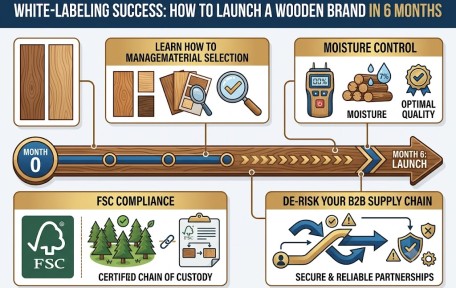
The penalties for non-compliance are severe: immediate confiscation of the goods, exclusion from public procurement contracts, and administrative fines of up to 4% of the importer's annual EU turnover. Sourcing wood or bamboo without FSC (Forest Stewardship Council) Chain of Custody (CoC) certification is now an unacceptable financial risk. A certified partner like Ngoc Dong Ha Nam provides a fully transparent, documented supply chain, ensuring your shipments pass through EU customs seamlessly, eliminating the risk of costly delays, seizures, or legal penalties.
Social Audits: BSCI and SMETA
Major global retailers and hospitality groups cannot afford the brand damage associated with unethical labor practices in their supply chains. Conducting independent factory audits is a standard procurement requirement. If you source from unverified workshops, you face the high administrative cost of hiring third-party auditors (ranging from $1,500 to $3,000 per audit) or, worse, having your products pulled from retail shelves due to an undercover exposé on labor violations.
By partnering with a manufacturer that maintains active, high-scoring BSCI (Business Social Compliance Initiative) and SMETA (Sedex Members Ethical Trade Audit) certifications, you leverage an existing compliance infrastructure. This pre-verified status eliminates audit overhead, accelerates vendor onboarding times from months to days, and protects your brand equity from reputational crises.
A STRATEGIC ACTION PLAN TO OPTIMIZE TCO IN YOUR SOURCING OPERATIONS
How to Mitigate Risk and Protect Your Margins
To successfully transition your procurement strategy from unit-cost focused to TCO-optimized, implement the following operational framework:
1. Implement Design-for-Manufacturing (DFM) and Packaging Optimization
Work closely with your manufacturer's R&D team during the design phase. For woven products, prioritize nested designs. For wooden and metal furniture, design for knock-down (KD) or flat-pack assembly. By minimizing the volumetric footprint of your packaging, you maximize container utilization (fitting more units per 40ft HC container), which directly dilutes the ocean freight cost per unit.
2. Establish a Rigorous 3-Tier Quality Assurance Protocol
Do not rely solely on a final pre-shipment inspection. Implement a structured quality gate system:
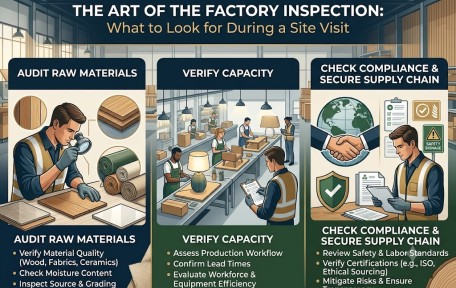
- In-Line Inspection: Verify raw material moisture content (MC) and structural framing before mass weaving or assembly begins. This is the only stage where structural defects can be corrected without wasting material.
- Pre-Shipment Inspection (PSI): Conducted when production is 80% complete, testing structural strength, finish quality, and packaging integrity against an agreed-upon AQL (Acceptable Quality Limit) standard (typically AQL 1.5 for major defects, 4.0 for minor defects).
- Container Loading Supervision (CLS): Ensure the shipping container is dry, free of holes, and that the cargo is loaded securely with adequate desiccant bags to prevent shifting and moisture damage during transit.
3. Consolidate Your Supply Chain with Vertically Integrated Manufacturers
Sourcing raw materials from one workshop, sending them to a separate weaving facility, and using a third-party exporter introduces massive administrative friction and quality control gaps. When a quality issue arises, suppliers often pass the blame, leaving the buyer with the financial loss.
Consolidating your production with a vertically integrated manufacturer like Ngoc Dong Ha Nam eliminates these points of failure. With in-house kiln drying, metal frame fabrication, weaving workshops, finishing lines, and a dedicated compliance department, we maintain complete control over the entire production lifecycle. This integration reduces communication overhead, ensures consistent quality, shortens lead times, and ultimately delivers the lowest possible Total Cost of Ownership.
FREQUENTLY ASKED QUESTIONS
What is the difference between FOB price and Landed Cost?
FOB (Free on Board) price only includes the cost of the product loaded onto the vessel at the port of origin. Landed Cost is the comprehensive sum of the FOB price, ocean freight, marine insurance, import customs duties, local port handling fees, and inland trucking to your distribution center. Landed cost is the true financial baseline for calculating retail margins.
How does moisture content affect the quality and cost of wooden home decor?
Moisture content (MC) is critical for wood stability. If Acacia wood is not kiln-dried to a target of 8-12% MC, it will warp, split, or crack when exposed to dry, climate-controlled indoor environments. These structural failures lead to high retail rejection rates, customer returns, and administrative chargebacks, significantly inflating the Total Cost of Ownership.
Why is EUDR compliance essential for European home decor importers?
The EU Deforestation Regulation (EUDR) legally requires importers to prove that wood and bamboo products did not originate from deforested land. Non-compliance can result in the immediate seizure of shipments at EU ports, exclusion from public contracts, and severe administrative fines of up to 4% of the company's annual EU turnover. Sourcing FSC-certified materials from compliant manufacturers is the only way to mitigate this risk.
How can nested packaging designs lower my shipping costs?
Woven home decor products like baskets and storage bins are highly volumetric, meaning they take up significant space relative to their weight. By designing products that nest inside one another (e.g., set of 3), you maximize the utilization of a shipping container. This allows you to ship up to 60% more units per container, drastically reducing the ocean freight cost allocated to each individual unit.