Porosity and Bacteria: A microscopic look at wood fibers vs. plastic.
Key Takeaways
• Wood possesses natural capillary action that draws bacteria deep into its fibrous matrix, depriving them of moisture and oxygen, resulting in rapid bacterial desiccation and death within hours.• Plastic surfaces, while initially non-porous, rapidly develop microscopic scratches during standard B2B commercial use, creating highly sheltered reservoirs where bacteria form resilient biofilms that resist standard sanitization.
• Natural hardwoods like Acacia and engineered Bamboo contain natural antimicrobial extractives (tannins and quinones) that actively inhibit bacterial cellular replication, offering superior hygiene profiles for food-contact applications.
• Compliance with international standards such as LFGB, FDA, FSC, and SMETA is crucial for global B2B buyers to guarantee food safety, sustainable sourcing, and social compliance in high-volume supply chains.
EXECUTIVE SUMMARY AND TECHNICAL TABLE OF CONTENTS
In the global commercial housewares, hospitality, and home decor sectors, material selection has shifted from purely aesthetic and cost considerations to rigorous, science-based evaluations of hygiene, durability, and environmental impact. For decades, synthetic polymers like polypropylene (PP) and high-density polyethylene (HDPE) were marketed as the hygienic standard due to their non-porous surfaces. However, advanced microscopic analysis and microbiological testing have debunked this surface-level assumption. This whitepaper provides a comprehensive, comparative analysis of the microscopic behavior of wood fibers (specifically Acacia and Bamboo) versus synthetic plastics, focusing on porosity, capillary action, and bacterial colonization dynamics. By examining how these materials perform under real-world mechanical wear, global B2B buyers, product developers, and hospitality procurement managers can make data-driven decisions that align with international safety standards and corporate sustainability mandates.
TECHNICAL TABLE OF CONTENTS
- 1. Executive Summary & Technical Table of Contents: An overview of the material science debate and guide to the research.
- 2. The Microscopic Reality: Porosity and Capillary Action in Wood Fibers: Deep-dive into cellular anatomy, xylem vessels, tracheids, and the physical mechanism of bacterial desiccation.
- 3. The Plastic Paradox: Non-Porous Surfaces and Micro-Scratch Biofilms: How mechanical wear transforms smooth polymers into high-risk bacterial reservoirs through biofilm formation.
- 4. Quantitative Comparison: Material Specifications and Bacterial Survival Rates: Empirical data comparing density, moisture absorption, and microbial persistence across materials.
- 5. Applied Science of Sustainable Wood Species: Acacia and Bamboo: Material properties of premium hardwoods, kiln-drying precision, and natural antimicrobial extractives.
- 6. Regulatory Compliance and Global Supply Chain Standards: Navigating FDA, LFGB, FSC, BSCI, and SMETA certifications for risk mitigation.
- 7. Physical Limits, Maintenance Protocols, and Lifecycle Analysis: Operational parameters, commercial maintenance, and circular economy considerations.
- 8. Contextual Technical Glossary: Key scientific and regulatory terminology defined for procurement specialists.
THE MICROSCOPIC REALITY: POROSITY AND CAPILLARY ACTION IN WOOD FIBERS
To understand why natural wood fibers outperform synthetic polymers in long-term hygienic applications, one must examine wood at the cellular level. Wood is not a solid, inert block; it is a complex, highly organized biological composite composed of cellulose microfibrils embedded in a matrix of hemicellulose and bound together by lignin. This structural arrangement creates a network of microscopic pathways, including xylem vessels, tracheids, and fibers, which originally functioned to transport water and nutrients within the living tree.
The Mechanics of Capillary Action and Bacterial Desiccation
When a wooden surface, such as an Acacia cutting board or a Bamboo serving tray, is exposed to bacterial contamination (e.g., Escherichia coli or Salmonella enterica) suspended in moisture, the material's inherent hygroscopic nature initiates a process known as capillary action. The microscopic pores and vessels on the wood's surface act as capillary tubes. Through adhesive and cohesive forces, the bacterial suspension is rapidly drawn away from the outer surface and deep into the inner cellular matrix of the wood.
Once the bacteria are pulled into these microscopic conduits, they are subjected to a highly hostile environment. Unlike plastic, which traps moisture on its surface, wood fibers absorb the surrounding water, effectively dehydrating the bacterial cells. This rapid loss of moisture, combined with the lack of oxygen deep within the tight cellular structure, deprives the bacteria of the basic elements required for cellular division and metabolic function. Consequently, the bacteria undergo desiccation and die within a timeframe of 30 minutes to two hours, depending on ambient humidity and wood species.
Natural Antimicrobial Extractives
Beyond the physical mechanism of capillary-driven desiccation, hardwoods like Acacia and grass-hybrids like Bamboo possess chemical defenses. These materials contain rich deposits of natural secondary metabolites, known as extractives. These include tannins, quinones, flavonoids, and essential oils. In Acacia, these polyphenolic compounds act as natural biocides. When moisture enters the wood, it dissolves small quantities of these extractives, which then disrupt the bacterial cell membrane, inhibit enzyme activity, and prevent replication. In Bamboo, a natural bio-agent often referred to as 'Bamboo Kun' provides a similar, inherent resistance to microbes, preventing fungal and bacterial growth even in humid environments.
Visualizing the Micro-Structure: If one were to examine a transverse cross-section of Acacia wood under a scanning electron microscope (SEM) at 500x magnification, they would observe large, open vessel elements (ranging from 100 to 250 micrometers in diameter) surrounded by dense networks of wood fibers (10 to 20 micrometers in diameter). These vessels serve as the entry points for rapid liquid absorption, while the surrounding dense fibers act as the moisture-wicking engine that starves surface microbes of water.
THE PLASTIC PARADOX: NON-POROUS SURFACES AND MICRO-SCRATCH BIOFILMS
In contrast to the complex cellular structure of wood, synthetic polymers such as polypropylene (PP) and high-density polyethylene (HDPE) are petroleum-based materials characterized by a continuous, non-porous molecular structure. On a pristine, newly manufactured plastic surface, liquids and bacteria remain entirely on the surface. Because there are no pores to absorb moisture, it is widely assumed that these surfaces are easier to sanitize using chemical agents. This assumption, however, represents the 'Plastic Paradox': it is only true under sterile, laboratory conditions where the material is completely free of wear.
The Generation of Micro-Scratches and Biofilm Reservoirs
In commercial kitchens, retail displays, and daily household use, surfaces are subjected to continuous mechanical stress. Knife cuts, abrasive cleaning pads, and contact with hard utensils cause immediate physical degradation of plastic surfaces. Because polymers have lower shear strength and surface hardness compared to dense hardwoods, they easily deform, creating microscopic grooves, scratches, and crevices. These micro-scratches typically measure between 10 and 50 micrometers in width and depth—dimensions that are perfectly scaled to harbor microscopic pathogens.
When bacteria enter these micro-scratches, they are shielded from physical wiping and chemical sanitizers. The hydrophobic nature of plastic prevents water-based cleaning solutions from fully penetrating the deep, narrow crevices due to surface tension. Within these sheltered environments, surviving bacteria begin to multiply and secrete a sticky, protective matrix composed of extracellular polymeric substances (EPS), including proteins, glycoproteins, and glycolipids. This matrix forms what is scientifically known as a biofilm.
The Resilience of Biofilms to Sanitization
Once a biofilm is established within a plastic micro-scratch, the bacteria become up to 1,000 times more resistant to standard sanitizing agents (such as chlorine bleach or quaternary ammonium compounds) than free-floating (planktonic) bacteria. The EPS matrix acts as a physical barrier that neutralizes chemical disinfectants before they can reach the viable bacterial cells underneath. Furthermore, when food residues (such as proteins and lipids) accumulate within these scratches, they provide a continuous nutrient source, allowing the bacterial colony to persist and periodically shed pathogens back onto the food-contact surface. Over time, worn plastic boards and utensils become permanent vectors for cross-contamination, a risk that increases exponentially with the age and wear of the plastic item.
Visualizing the Micro-Structure: Under an SEM at 1000x magnification, a worn HDPE plastic surface reveals a chaotic topography of jagged micro-canyons filled with clusters of rod-shaped bacteria embedded in a web-like biofilm matrix. Physical wiping merely glides over the top of these canyons, leaving the bacterial colonies undisturbed and active.
QUANTITATIVE COMPARISON: MATERIAL SPECIFICATIONS AND BACTERIAL SURVIVAL RATES
To provide global procurement teams with actionable, empirical data, the following table synthesizes the physical properties and performance metrics of premium natural wood fibers (Acacia and Bamboo) against common commercial polymers (PP and HDPE). This data is compiled from peer-reviewed materials science and microbiological research, reflecting performance under standard commercial conditions.
|
Technical Parameter |
Acacia Wood (Kiln-Dried) |
Compressed Bamboo |
Polypropylene (PP) |
High-Density Polyethylene (HDPE) |
|
Density (kg/m³) |
750 - 850 |
850 - 1,000 |
900 - 910 |
940 - 960 |
|
Surface Porosity (Pristine) |
Micro-capillaries present |
Micro-capillaries present |
Zero (Impermeable) |
Zero (Impermeable) |
|
Surface Porosity (Worn/Scratched) |
Stable (Self-shedding fibers) |
Stable (High density) |
High (Deep micro-grooves) |
High (Deep micro-grooves) |
|
Moisture Absorption Rate (%) |
8.0 - 12.0 (Equilibrium) |
6.0 - 10.0 (Equilibrium) |
< 0.01 |
< 0.01 |
|
Bacterial Survival (E. coli / 2h) |
< 10% survival (Rapid decline) |
< 15% survival (Rapid decline) |
> 90% survival (Stable/Growing) |
> 90% survival (Stable/Growing) |
|
Bacterial Survival (E. coli / 24h) |
0% survival (Undetectable) |
0% survival (Undetectable) |
Viable colonies present |
Viable colonies present |
|
Tensile Strength (MPa) |
90 - 120 |
120 - 180 |
30 - 40 |
20 - 35 |
|
Hardness (Janka / Shore D) |
1,750 lbf (Janka) |
1,300 - 1,400 lbf (Janka) |
70 - 75 Shore D |
60 - 70 Shore D |
|
Regulatory Food-Contact Approval |
FDA, LFGB compliant |
FDA, LFGB compliant |
FDA, LFGB compliant |
FDA, LFGB compliant |
Data Interpretation and B2B Procurement Insights
The quantitative data reveals a critical divergence in material performance over time. While PP and HDPE feature near-zero moisture absorption in their pristine states, their low tensile strength (20-40 MPa) and low surface hardness make them highly susceptible to deep gouging under mechanical load. Once gouged, their lack of moisture absorption becomes a liability: water and nutrients are trapped inside the scratch without any wicking mechanism, sustaining bacterial life for over 24 hours.
Conversely, Acacia wood and Compressed Bamboo exhibit high density (750-1,000 kg/m³) and superior tensile strength (90-180 MPa), which provide excellent resistance to deep knife scarring. When surface cuts do occur, the materials' structural integrity remains intact. The controlled moisture absorption (6-12% equilibrium moisture content) ensures that any introduced liquid is immediately distributed through the capillary network, drying out the surface and reducing the bacterial survival rate to 0% within a 24-hour cycle. For high-use environments like commercial food service or premium retail, natural wood fibers provide a self-sanitizing margin of safety that synthetic polymers simply cannot match.
APPLIED SCIENCE OF SUSTAINABLE WOOD SPECIES: ACACIA AND BAMBOO
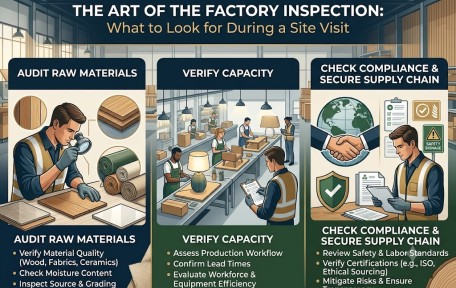
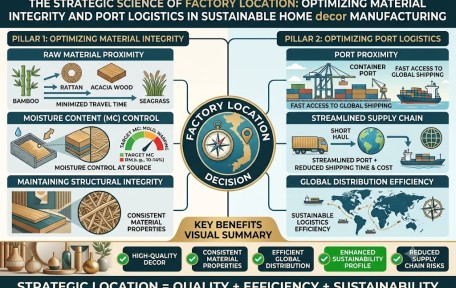
For B2B buyers sourcing home decor, kitchenware, and hospitality displays, understanding the specific properties of Acacia and Bamboo is essential for selecting products that deliver long-term hygiene, structural stability, and aesthetic appeal. Ngoc Dong Ha Nam leverages advanced manufacturing processes to optimize these natural materials for global markets.
Acacia Wood: The Premium Hardwood Standard
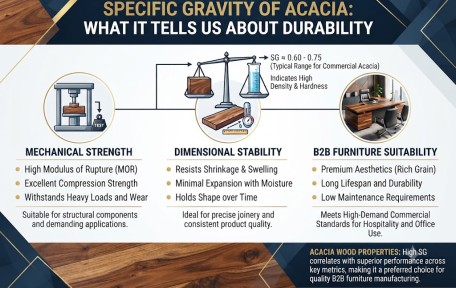
Acacia is a dense hardwood characterized by a highly interlocked grain structure, which gives it exceptional dimensional stability and impact resistance. From a chemical perspective, Acacia is rich in heartwood extractives, primarily tannins. Tannins are polyphenolic compounds that act as natural astringents and antimicrobial agents. They bind to bacterial proteins, disrupting the cell membrane and inhibiting metabolic enzymes.
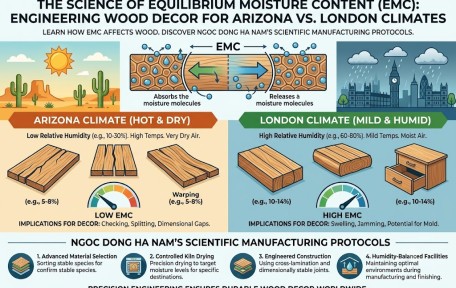
To ensure that Acacia products maintain their structural integrity and natural hygienic properties, Ngoc Dong Ha Nam utilizes a precise kiln-drying process. Raw Acacia lumber is dried in computerized kilns to achieve an equilibrium moisture content (EMC) of 8% to 12%. This precise range is critical: if the moisture content is too high, the wood is susceptible to fungal growth; if it is too low, the fibers become brittle and prone to checking (cracking). By maintaining this optimal EMC, the wood's microscopic capillary network remains functional, facilitating the rapid wicking and desiccation of surface bacteria without compromising structural stability.
Bamboo: The Engineered Grass with High-Speed Regeneration
Technically classified as a grass, Bamboo is one of the most sustainable and physically resilient raw materials available. Its cell walls are heavily reinforced with cellulose and lignin, giving compressed bamboo a tensile strength that rivals steel. Bamboo contains an inherent antimicrobial bio-agent known as 'Bamboo Kun'. This natural compound is bound within the bamboo fibers and remains active even after industrial processing, providing continuous resistance to microbes, mildew, and odor-causing bacteria.
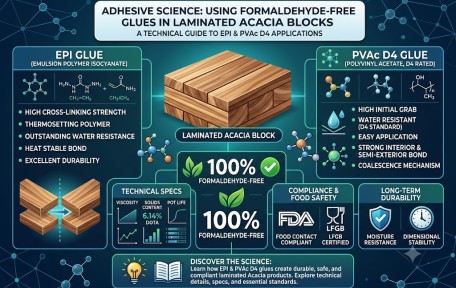
In our manufacturing facilities, bamboo is processed into laminated or compressed blocks using food-grade, low-emission adhesives. The bamboo culms are split into strips, planed, carbonized (heated to caramelize sugars and prevent pest infestation), and compressed under high pressure. This process increases the density of the material to over 900 kg/m³, reducing the pore size while maintaining the micro-capillaries necessary for natural moisture regulation. The result is a highly durable, water-resistant, and naturally hygienic surface ideal for heavy-duty commercial applications.
REGULATORY COMPLIANCE AND GLOBAL SUPPLY CHAIN STANDARDS
In the global market, compliance with international safety, environmental, and social standards is non-negotiable for B2B buyers. Sourcing products that directly contact food or are used in high-traffic residential and commercial spaces requires rigorous certification verification to protect brand reputation and ensure consumer safety.
Food-Contact Safety: FDA and LFGB Compliance
For kitchenware, cutting boards, and serving vessels, materials must comply with strict food-contact regulations. In the United States, the Food and Drug Administration (FDA) regulates materials under Title 21 of the Code of Federal Regulations (CFR), ensuring that no harmful chemicals migrate from the product into food. In Europe, the German Food, Commodities and Feed Code (LFGB) represents the gold standard for food safety, with standards that are even more stringent than FDA regulations, particularly regarding the migration of heavy metals, plasticizers, and volatile organic compounds (VOCs).
Ngoc Dong Ha Nam ensures that all wooden and bamboo products destined for food-contact applications are manufactured using non-toxic, food-safe adhesives and finished with natural, food-grade oils (such as mineral oil or beeswax) that comply with both FDA and LFGB standards. This guarantees that the natural capillary action of the wood is preserved while ensuring zero chemical contamination of food products.
Environmental and Social Governance: FSC, BSCI, and SMETA
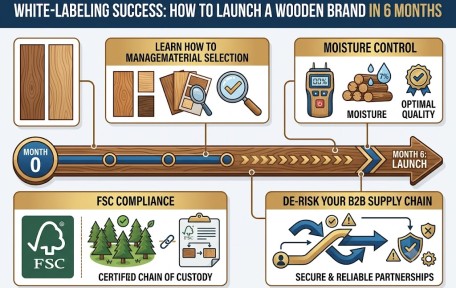
Beyond food safety, global brands must verify the ethical and environmental integrity of their supply chains. The Forest Stewardship Council (FSC) certification ensures that wood and bamboo are harvested from responsibly managed forests that provide environmental, social, and economic benefits. Sourcing FSC-certified materials guarantees that your products do not contribute to deforestation or illegal logging.
Furthermore, social compliance audits such as the Business Social Compliance Initiative (BSCI) and the Sedex Members Ethical Trade Audit (SMETA) verify that manufacturing facilities adhere to fair labor practices, safe working conditions, and ethical business conduct. Ngoc Dong Ha Nam is fully certified with FSC, BSCI, and SMETA, providing global buyers with complete transparency and peace of mind. By partnering with a fully compliant manufacturer, B2B buyers can confidently market their products to eco-conscious consumers and meet stringent corporate social responsibility (CSR) targets.
PHYSICAL LIMITS, MAINTENANCE PROTOCOLS, AND LIFECYCLE ANALYSIS
To maintain transparency and ensure product longevity, it is vital to acknowledge the physical limitations of natural wood fibers and establish proper commercial maintenance protocols. While wood outperforms plastic in hygiene and sustainability, it is a living, organic material that requires specific care to prevent physical degradation.
Physical Limits of Wood and Bamboo
Because wood and bamboo are hygroscopic materials, they continuously seek moisture equilibrium with their surrounding environment. This characteristic imposes certain physical limits:
- Thermal Limits: Exposure to extreme heat (above 70°C / 158°F) or rapid temperature fluctuations can dry out wood fibers too quickly, leading to warping or splitting.
- Moisture Limits: Prolonged submersion in water (e.g., soaking in a commercial sink) saturates the capillary network, causing the wood to swell. When it subsequently dries, the uneven contraction can cause cracking. Wood should never be placed in a commercial dishwasher, as the combination of high heat, prolonged moisture, and harsh chemical detergents will strip natural oils and destroy the cellular structure.
- UV Exposure: Continuous exposure to direct ultraviolet (UV) light can degrade lignin, leading to discoloration and surface dry-out.
Commercial Maintenance Protocols
To maximize the service life of premium wood and bamboo products in hospitality and retail environments, the following maintenance protocol should be enforced:
1. Sanitization: Wash immediately after use with warm water and a mild, pH-neutral dish soap. Use a soft sponge or non-abrasive brush to remove surface debris. Wipe dry immediately with a clean cloth.
2. Air Drying: Store products vertically in a well-ventilated drying rack. Vertical storage allows air to circulate freely around all surfaces, ensuring even drying and preventing moisture accumulation on the underside.
3. Reconditioning: Periodically (every 2 to 4 weeks depending on use intensity), apply a thin layer of food-grade mineral oil or a beeswax blend. This restores the protective barrier, prevents moisture from penetrating too deeply, and keeps the fibers flexible and resistant to cracking.
Lifecycle and Circular Economy Analysis
When evaluating the total cost of ownership and environmental impact, natural wood fibers represent a superior choice for the circular economy. At the end of its functional life, a wooden or bamboo product is 100% biodegradable and compostable, returning nutrients to the soil without leaving toxic residues. In contrast, synthetic plastic products (PP and HDPE) cannot be easily recycled once they are heavily scratched and contaminated with biofilms. They ultimately end up in landfills or incinerators, or degrade into microplastics that persist in the biosphere for centuries. Choosing certified sustainable wood from Ngoc Dong Ha Nam is a direct investment in reducing carbon footprints and eliminating plastic pollution from the global supply chain.
CONTEXTUAL TECHNICAL GLOSSARY
To assist technical procurement officers and quality assurance teams, this glossary defines the key scientific and regulatory terms used throughout this document:
- Capillary Action: The physical phenomenon where liquid is drawn into narrow spaces, such as microscopic wood vessels, due to the forces of adhesion, cohesion, and surface tension, operating independently of gravity.
- Biofilm: A structured community of microorganisms adhered to a surface and embedded in a self-produced matrix of extracellular polymeric substances (EPS), which exhibits high resistance to cleaning and sanitization.
- Extracellular Polymeric Substances (EPS): A complex mixture of polymers (proteins, polysaccharides, DNA) secreted by bacteria that forms the structural scaffold of a biofilm, protecting the microbes from environmental stress.
- Hygroscopic: The physical property of a material to readily absorb or release moisture from and to the surrounding atmosphere in response to changes in relative humidity.
- Equilibrium Moisture Content (EMC): The moisture content at which a hygroscopic material neither gains nor loses moisture from the surrounding air, achieving physical stability.
- LFGB (Lebensmittel-, Bedarfsgegenstände- und Futtermittelgesetzbuch): The German Food, Commodities and Feed Code, which sets the strictest standards in Europe for food-contact materials to prevent chemical migration.
- FSC (Forest Stewardship Council): An international non-profit organization that promotes responsible management of the world's forests through rigorous certification standards.
- SMETA (Sedex Members Ethical Trade Audit): One of the most widely used social audit formats in the world, assessing labor standards, health and safety, environmental performance, and business ethics in supply chains.
FREQUENTLY ASKED QUESTIONS
Why is wood more hygienic than plastic for food-contact surfaces?
Wood draws bacteria deep into its internal capillary network through capillary action, where they are deprived of moisture and oxygen, leading to rapid desiccation and death. Plastic, once scratched, harbors bacteria in micro-grooves that standard washing cannot sanitize.
What makes Acacia wood particularly resistant to bacterial growth?
Acacia is a dense hardwood rich in natural polyphenolic compounds called tannins. These extractives act as natural biocides, disrupting bacterial cell membranes and inhibiting metabolic enzymes when moisture is present.
Can wooden kitchenware be washed in commercial dishwashers?
No. Commercial dishwashers expose wood to extreme heat, prolonged water immersion, and harsh chemicals. This strips natural oils, saturates the capillary network, and causes severe warping, cracking, and structural degradation.
How does Ngoc Dong Ha Nam ensure the food safety of its wood and bamboo products?
We kiln-dry our materials to an optimal 8-12% moisture content, use non-toxic, food-safe adhesives, and apply natural, food-grade oil finishes that comply fully with FDA (US) and LFGB (Germany) regulations.