
B2B Sourcing & Business Strategy

The Art of the Factory Inspection: What to Look for During a Site Visit
Key Takeaways
• On-site factory inspections reduce mass production defect rates from over 12% to under 1.5% by exposing the discrepancies between golden samples and assembly line realities.
• Moisture control is the ultimate risk-mitigation checkpoint: Acacia wood must register below 12% moisture, and natural fibers like bamboo or seagrass must register below 15% to prevent mold during maritime transit.
• B2B buyers must perform bottleneck analysis on the assembly line to verify if the factory's real throughput can meet the promised 45-day lead time.
• Physical compliance verification of BSCI, SMETA, and FSC certificates on-site prevents severe customs delays and intellectual property risks.
• Container pre-loading inspections using the 7-point check and high-absorption calcium chloride desiccants are essential to prevent container rain.
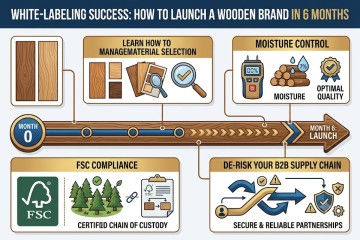
White-Labeling Success: How to Launch a Wooden Brand in 6 Months
Key Takeaways
• A successful 6-month wooden brand launch requires a highly structured 180-day timeline dividing product design, prototyping, kiln-drying, and compliance phases.
• Controlling wood moisture content between 8% and 12% is the single most critical factor in preventing warping, cracking, and product recalls.
• Sourcing from FSC-certified and BSCI-audited manufacturers in Vietnam ensures global compliance and mitigates supply chain disruption risks.
• Utilizing pre-vetted OEM designs and advanced CNC prototyping can reduce early-stage product development lead times by up to 50%.
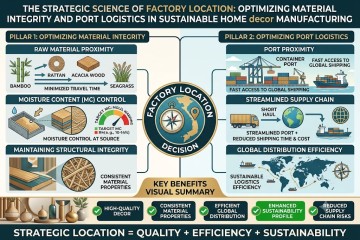
The Strategic Science of Factory Location: Optimizing Material Integrity and Port Logistics in Sustainable Home Decor Manufacturing
Key Takeaways
• Proximity to raw material sources (under 150 km) is scientifically critical to control the Equilibrium Moisture Content (EMC) of natural fibers like seagrass and water hyacinth, preventing fungal degradation.
• Locating manufacturing facilities within 120 km of deep-water ports like Haiphong reduces inland transit times to under 2 hours, minimizing exposure to fluctuating relative humidity and preventing container sweat.
• FSC-certified Acacia wood and bamboo require strict kiln-drying protocols to achieve an optimal moisture content of 8-12%, which is best maintained when processed close to harvesting sites to avoid atmospheric reabsorption.
• Optimized supply chain geography directly reduces Scope 3 greenhouse gas emissions, aligning B2B procurement with European Green Deal and corporate ESG mandates.
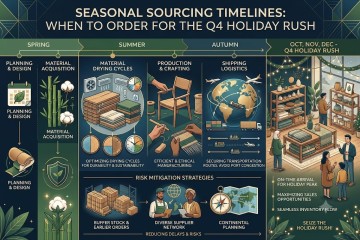
Seasonal Sourcing Timelines: When to order for the Q4 holiday rush
Key Takeaways
• To avoid peak shipping surcharges and blank sailings, B2B buyers must place purchase orders for Q4 holiday home decor by mid-April.
• Acacia wood products require a non-negotiable 15-to-20-day kiln-drying process to reduce moisture content to 8-12%, preventing warping during winter.
• Vietnamese monsoon rains from May to October demand the use of indoor, temperature-controlled drying chambers to keep woven fiber moisture below 15% and prevent mold.
• Importers must verify FSC certification and BSCI/SMETA audits early to comply with EUDR and US Lacey Act regulations, avoiding customs delays.
• Using 2 to 4 kg of calcium chloride desiccants per container and double-wall corrugated cartons is critical to mitigating container sweat during ocean transit.
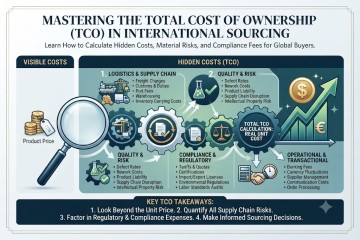
Total Cost of Ownership (TCO): Calculating Hidden Costs in International Sourcing
Key Takeaways
• FOB unit price represents only 40% to 60% of the true Total Cost of Ownership (TCO) in international home decor sourcing.
• Material-specific failures, such as incorrect moisture content in Acacia (target 8-12%) or untreated bamboo, can lead to retail rejection rates exceeding 15%.
• Strict compliance with EUDR, FSC, BSCI, and SMETA acts as a financial safeguard, preventing catastrophic customs seizures and brand damage.
• Optimizing packaging through nested designs and flat-packing can reduce volumetric shipping costs by up to 60%, directly lowering the landed cost.