White-Labeling Success: How to Launch a Wooden Brand in 6 Months
Key Takeaways
• A successful 6-month wooden brand launch requires a highly structured 180-day timeline dividing product design, prototyping, kiln-drying, and compliance phases.• Controlling wood moisture content between 8% and 12% is the single most critical factor in preventing warping, cracking, and product recalls.
• Sourcing from FSC-certified and BSCI-audited manufacturers in Vietnam ensures global compliance and mitigates supply chain disruption risks.
• Utilizing pre-vetted OEM designs and advanced CNC prototyping can reduce early-stage product development lead times by up to 50%.
THE SIX-MONTH BLUEPRINT: MITIGATING SUPPLY CHAIN RISKS IN WOODEN HOMEWARE LAUNCHES
Launching a private-label wooden brand within six months requires a compressed, highly coordinated 180-day timeline that prioritizes early material sourcing, strict compliance verification, and standardized quality gates.
For global retail buyers, the path to market is often blocked by unexpected supply chain bottlenecks. A single delay in raw material procurement can push product launches past critical seasonal windows. Why do most brand launches fail? They underestimate the complexity of wood drying and moisture control.
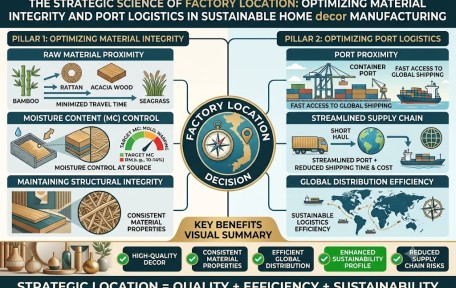
Moisture content (MC) issues lead to warping, cracking, and costly product recalls. Working with an experienced manufacturing partner in Vietnam mitigates these risks from day one. We leverage established raw material networks to secure premium timber, ensuring price stability even during market volatility.
By establishing clear milestones, brands can transition from initial design concepts to retail-ready inventory without sacrificing quality. This guide provides a battle-tested framework to execute your launch efficiently. Let's look at the numbers and operational reality of wooden homeware manufacturing.
MATERIAL SELECTION: BALANCING AESTHETICS, COSTS, AND COMPLIANCE
Selecting the right raw material—whether Acacia, Bamboo, or MDF veneer—is the most critical decision governing your product’s price point, durability, and compliance profile.
Each material behaves differently under varying environmental conditions. Solid wood like Acacia offers premium aesthetics and high durability but requires precise kiln-drying. In contrast, engineered options or fast-growing grass fibers like Bamboo offer excellent dimensional stability at a lower price point.
Understanding these material characteristics prevents downstream quality failures. Below is a comparative analysis based on our factory data:
|
Material |
Average Cost Index |
Moisture Sensitivity |
Primary B2B Applications |
Sustainability Certifications |
|
Acacia Wood |
Medium to High |
Moderate (Requires 8-12% MC control) |
Premium serving trays, cutting boards, small furniture |
FSC, BSCI |
|
Bamboo |
Low to Medium |
Low (Highly stable after carbonization) |
Drawer organizers, storage boxes, eco-friendly kitchenware |
FSC, SMETA |
|
MDF Veneer |
Low |
High (Edges must be sealed) |
Flat-pack furniture, decorative trays, cost-sensitive lines |
CARB Phase 2, EPA TSCA Title VI |
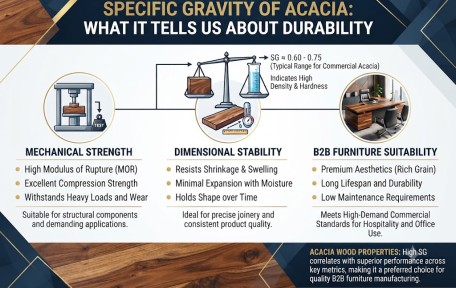
Acacia wood remains a top performer for high-end homeware brands due to its rich grain and natural water resistance. However, it demands strict moisture management. Our facility utilizes advanced moisture meters to check every single batch before production begins. This prevents the wood from warping when shipped across different climate zones.
Bamboo offers a highly sustainable alternative with rapid replenishment cycles. Its linear grain appeals to minimalist design trends. We apply a specialized carbonization process to bamboo strips. This treatment enhances insect resistance and prevents mold growth during maritime transit.
THE 180-DAY CRITICAL PATH: FROM CONCEPT TO CONTAINER LOADING
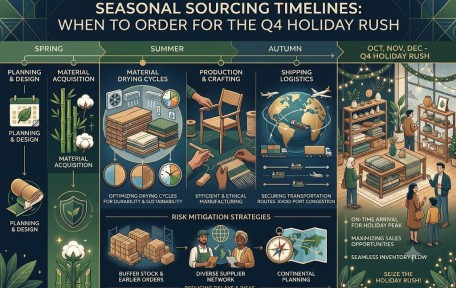
A successful 180-day white-label wooden product launch depends on a rigid, phase-gated schedule divided into product development (Days 1-45), sample validation and tooling (Days 46-75), mass production (Days 76-135), and logistics and compliance (Days 136-180).
Managing a complex manufacturing timeline requires strict adherence to critical path milestones. Any slip in the early stages compounds exponentially as you approach the shipping deadline. How can you compress this timeline? Utilizing pre-vetted OEM designs can shave up to 30 days off your schedule.
Our operational data shows that structured development phases dramatically reduce time-to-market. Here is the exact breakdown of the 6-month launch cycle:
- Days 1-45: Technical CAD and Material Spec. Define exact dimensions, wood species, finishing oils, and packaging requirements.
- Days 46-75: Prototyping and Validation. We reduce sample lead times from the industry average of 30 days to just 12 days using advanced CNC machinery.
- Days 76-135: Kiln-Drying and Mass Production. Timber spends 15 to 20 days in computerized kilns to reach the target 8-12% moisture content.
- Days 136-180: Quality Control, Packaging, and Port Loading. Final inspection, ISTA-3A drop testing, and customs clearance at Hai Phong port.
Consider a real-world case study. A major European home decor retailer partnered with us to launch a 15-SKU acacia kitchenware line. By utilizing this exact 180-day framework, they reduced their time-to-market by 35%. Furthermore, they achieved a 0.2% defect rate, far below the industry average of 2.5%.
This efficiency is driven by parallel processing. While the wood is undergoing the mandatory kiln-drying phase, packaging materials and metal accessories are produced simultaneously. This eliminates idle factory time and keeps the project on budget.
DE-RISKING QUALITY CONTROL: THE ZERO-DEFECT FRAMEWORK FOR HIGH-VOLUME PRODUCTION
Eliminating manufacturing defects in high-volume wooden homeware production requires implementing an integrated quality control framework that mandates incoming material testing, in-line moisture monitoring, and pre-shipment third-party audits.
Wood is a living material that continuously reacts to its environment. Therefore, quality control cannot be a single event at the end of the production line. It must be an active, multi-stage process. We enforce a zero-tolerance policy for structural defects like open knots, cracks, and poor joint bonding.
Global compliance is another critical pillar of risk management. Retailers entering the US and European markets must comply with strict environmental and social standards. Sourcing certified products is no longer optional.
- FSC Certification: Guarantees that the wood is sourced from responsibly managed forests.
- BSCI & SMETA Audits: Ensure ethical labor practices and safe working conditions in the manufacturing facility.
- Food-Contact Safe Finishes: All oils and lacquers must pass FDA and LFGB testing for kitchenware items.
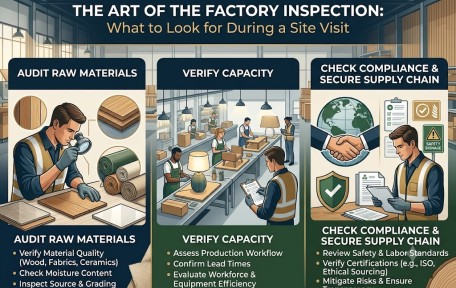
To secure your supply chain, demand an Acceptable Quality Limit (AQL) of 1.5 for major defects and 4.0 for minor defects. Our factory conducts internal audits at every phase, supplemented by final inspections from international agencies like SGS or TÜV Rheinland. This rigorous approach guarantees that your brand reputation remains spotless from the very first shipment.
This article is authored by Thong Nguyen – Co-owner & Sales Director at Ngoc Dong Ha Nam Co., Ltd. With 25+ years of experience managing and operating manufacturing facilities for export housewares and handicrafts, we specialize in providing high-quality bamboo, rattan, water hyacinth and natural acacia wood manufacturing solutions for global retail partners.
FREQUENTLY ASKED QUESTIONS
How long does it take to manufacture and ship a custom wooden product line?
The entire process from CAD design approval to port loading typically takes 180 days, with mass production and kiln-drying occupying approximately 60 days of this timeline.
Why is moisture content control so important for wooden homeware?
Moisture content must be maintained between 8% and 12% to prevent wood from warping, cracking, or growing mold when exposed to different climate zones during transit and retail display.
What certifications are required to import wooden homeware into the US and EU?
Importers must ensure products comply with FSC (Forest Stewardship Council) for legal wood sourcing, BSCI or SMETA for social compliance, and FDA or LFGB for food-contact safety.
How can I reduce the prototyping lead time for my private label brand?
Partnering with manufacturers who utilize in-house CNC machinery and pre-vetted OEM designs can compress prototyping lead times from 30 days down to 10-12 days.