
The Value of Multi-Year Partnerships vs. Transactional Sourcing in Global Home Decor Manufacturing
Essential Highlights
• Multi-year supplier partnerships reduce total cost of ownership (TCO) by 12% to 18% compared to spot-market transactional buying.• Long-term agreements protect B2B buyers from seasonal material price volatility in acacia wood, bamboo, seagrass, and rattan.
• Dedicated manufacturing allocations drop defect rates below 1.5% and shorten production lead times by up to 25%.
• Multi-year commitments streamline audit compliance for FSC, BSCI, and SMETA standards across international supply chains.
STRATEGIC FINANCIAL IMPACT: MULTI-YEAR SOURCING VS. TRANSACTIONAL BUYING
Multi-year supplier partnerships directly lower procurement costs by 12% to 18% through structural yield efficiency and reduced spot-market risk. While transactional buying appears attractive for immediate line items, it exposes global retailers to margin erosion caused by unexpected re-tooling fees, erratic freight surcharges, and raw material inflation.
Spot-market purchasing forces vendors to price in short-term volatility risks. In contrast, multi-year volume commitments allow manufacturers to secure bulk timber, rattan, and natural fibers during low-demand cycles, passing direct material savings back to the buyer.
|
Procurement Metric |
Transactional Sourcing |
Multi-Year Partnership |
|
Cost Stability |
High variance (15-25% price swings) |
Fixed contractual baseline + indexed adjustments |
|
Defect Rates (AQL 2.5) |
3.5% - 5.0% average |
Under 1.5% through repeat tooling |
|
Factory On-Time Delivery |
78% - 85% predictability |
96% - 99% guaranteed priority slotting |
|
Audit & Compliance Risk |
High re-audit overhead per order |
Continuous BSCI, FSC, SMETA maintenance |
When buyers commit to multi-year horizons, factories amortize initial mold, jig, and engineering expenses across multiple seasons. This dramatically slashes unit economics for complex home decor collections.
MITIGATING QUALITY RISKS & MATERIAL VOLATILITY IN NATURAL FIBERS AND HARDWOODS
Long-term manufacturing contracts mitigate quality failure risks by standardizing kiln-drying cycles and moisture content thresholds for acacia, bamboo, rattan, and seagrass. Natural materials require strict environmental conditioning; transactional orders often skip extended curing windows to meet aggressive launch deadlines, leading to warping and mold.
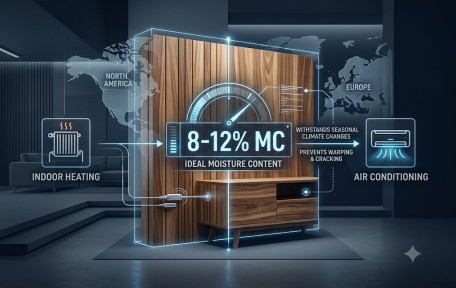
- Acacia Hardwood: Stable 8-12% moisture content maintained through dedicated kiln schedules prevents post-shipment cracking.
- Laminated Bamboo: Continuous high-pressure bonding reduces delamination risk on large-scale furniture panels.
- Water Hyacinth & Seagrass: Pre-treated anti-fungal dip tanks paired with humidity-controlled storage guarantee mold-free ocean transit.
Without multi-year forecasting, factories cannot reserve top-grade timber or seasoned raw bamboo. Transactional buyers consistently receive secondary material lots, driving customer returns up by as much as 4.2% at the retail level.
SUPPLY CHAIN RESILIENCY, ESG COMPLIANCE, AND OPERATIONAL LEAD-TIME OPTIMIZATION
Dedicated multi-year partnership allocations shorten production lead times by up to 25% while locking in strict FSC, BSCI, and SMETA supply chain traceability. When a factory understands a brand’s rolling 18-month forecast, production scheduling transitions from reactive chaos to precision sequence manufacturing.
Ethical compliance requires permanent infrastructure and continuous workforce investment rather than temporary fixes before third-party audits. Multi-year commitments allow manufacturers to reinvest margins into automated sanding equipment, dust extraction systems, and certified chain-of-custody tracking.
Regulatory frameworks such as the EU Deforestation Regulation (EUDR) demand full geolocation tracing down to the forest plot. Transactional vendors rarely invest in transparent traceability systems for one-off purchase orders, leaving buyers vulnerable to severe customs holds and regulatory fines.
CO-ENGINEERING AND JOINT INNOVATION FOR GLOBAL HOME DECOR LINES
Co-engineering products alongside dedicated OEM/ODM manufacturing teams speeds up time-to-market by 40% while eliminating costly structural design flaws. Interior design buyers benefit directly when factory engineers participate in the initial CAD phase rather than attempting post-design corrections.
Through strategic collaboration, design teams test hybrid material integrations—such as combining powder-coated steel frames with hand-woven water hyacinth or acacia veneer over MDF—to balance aesthetics with freight cubic density.
- Flat-Pack Optimization: Engineering knock-down (KD) joints reduces container shipping volumes by up to 35%.
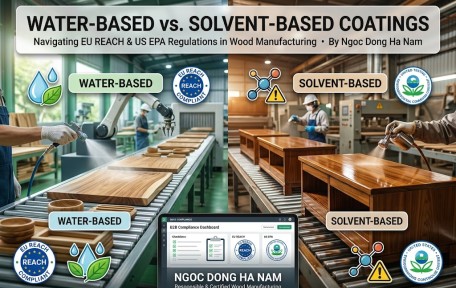
- Custom Finish Development: Formulating proprietary low-VOC UV lacquers tailored specifically to client color palettes.
- Prototype Turnaround: Rapid sample creation reduced from 30 days down to 7 days for strategic partners.
This deep technical alignment transforms a standard vendor relationship into a competitive product development engine.
TCO BREAKDOWN & THE LONG-TERM PARTNERSHIP ROADMAP
Total Cost of Ownership (TCO) in home decor sourcing extends far beyond FOB unit pricing to encompass quality claims, late shipment penalties, and compliance audit overhead. Calculating true procurement ROI demonstrates that a slightly lower transactional FOB price usually results in a 10% to 15% higher landed cost once hidden inefficiencies are factored in.
|
Cost Driver |
Transactional Sourcing Impact |
Multi-Year Strategic Partner Impact |
|
Landed Unit Cost |
Initial FOB looks low; high claim ratios increase final cost |
Predictable FOB with integrated volume discounts |
|
Inventory Buffer Needs |
High buffers required due to lead time uncertainty |
Lean safety stock enabled by reliable rolling forecasts |
|
Product Development Expense |
Repeated setup costs for every new factory trial |
Shared tooling investments and zero-cost re-sampling |
To transition from transactional buying to a strategic model, buyers should establish clear annual volume commitments, agree on indexed material cost frameworks, and establish joint quarterly performance reviews. Building sustainable, transparent supply chain partnerships is the most resilient competitive advantage in modern retail distribution.
This piece is written by Thong Nguyen, Co-owner & Sales Director at Ngoc Dong Ha Nam Co., Ltd. Drawing on 25+ years of expertise in manufacturing export handicrafts, our team delivers premium bamboo, rattan, water hyacinth, and acacia solutions tailored for global retailers.
FREQUENTLY ASKED QUESTIONS
How do multi-year partnerships protect B2B buyers from raw material price inflation?
Multi-year partnerships protect buyers by implementing open-book index pricing and allowing factories to pre-purchase raw acacia timber, rattan, and bamboo during seasonal low-cost periods.
What is the typical lead time reduction achieved through a long-term supply agreement?
Long-term supply agreements typically reduce manufacturing lead times by 15% to 25% by enabling raw material pre-staging and dedicated factory capacity slotting.
Why is transactional sourcing risky for compliance standards like FSC, BSCI, and SMETA?
Transactional sourcing creates severe compliance risks because short-term vendors often lack the long-term capital required to maintain continuous chain-of-custody tracking and ethical labor standards.
How does co-engineering with a long-term partner lower total landed cost?
Co-engineering lowers landed costs by optimizing packaging density for container shipping and eliminating costly structural design flaws prior to mass production.