
The Modern Importer’s Guide to EUDR and Global Timber Traceability
Introduction
In an era of radical transparency and tightening regulations, professional procurement officers in the US and EU markets are no longer just looking for a beautifully crafted product; they are looking for verified sustainability and legal traceability. For natural home decor—a category that bridges the gap between organic aesthetics and functional durability—understanding the nuances between the US Lacey Act and the European Union Deforestation Regulation (EUDR) is the ultimate tool for supply chain risk management.
At Ngoc Dong Ha Nam, we believe that environmental stewardship and unassailable compliance are the cornerstones of premium manufacturing. This guide provides a strategic, scientific deep dive into the regulatory traceability frameworks that govern our industry today, and exactly why mastering them is critical to protecting your bottom line in 2026 and beyond.
1. The Anatomy of 'Traceable' Home Decor: Why Supply Chain Science Matters
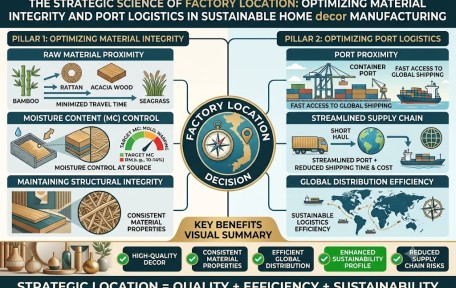
Before diving into the legalities of international trade laws, we must address the biological and geographical nature of natural materials. Unlike synthetic materials extruded in a single facility, natural materials like Acacia, Bamboo, Rattan, Seagrass, and Water Hyacinth originate from living ecosystems. Their legal safety and compliance depend on three critical vectors:
- The Forest or Farm Origin (Geolocation): Can the exact plot of land where the raw material was harvested be pinpointed using GPS coordinates? The era of simply naming a country of origin is over; modern regulations demand precise geospatial data to prove the land was not subjected to recent deforestation.
- The Chain of Custody: From the smallholder farmer to the local aggregator, the sawmill, the treatment facility, and finally the manufacturing floor, is there an unbroken, documented trail of ownership and processing?
- Material Composition: For mixed-material products, such as an Acacia wood table with Rattan weaving, each distinct biological component must be individually traced and verified against its specific regulatory requirements.
For a global buyer, a failure in any of these traceability vectors leads to Customs Seizures, massive financial liability, devastating fines, and irreparable brand damage in an increasingly eco-conscious consumer market. Traceability is no longer a marketing buzzword; it is the fundamental science of modern procurement.
2. The US Standard: The Lacey Act Framework
In the United States, the Animal and Plant Health Inspection Service (APHIS) enforces the Lacey Act, a pioneering piece of legislation that was amended to include plant and timber products, making it a criminal offense to trade in illegally harvested wood and plant materials.
2.1. The Concept of 'Due Care'
The Lacey Act operates on the legal principle of 'Due Care'. It does not explicitly prescribe a single checklist of documents you must hold; rather, it requires importers to exercise the degree of care that a reasonably prudent person would exercise under the same circumstances to ensure the legality of their supply chain. Ignorance of the origin of your Acacia or Rattan is not a valid legal defense.
2.2. Plant and Plant Product Declarations (PPQ 505)
For natural home decor products exported to the US, compliance hinges on accurate documentation. Importers must file a declaration detailing the scientific name (genus and species) of the plant, the value of the importation, the quantity of the plant, and the name of the country from which the plant was harvested.
The Benchmark: The raw material must have been harvested in complete accordance with the laws of the origin country. If an Acacia tree was logged without the proper local permits in Vietnam or elsewhere, importing that wood into the US constitutes a federal violation, regardless of the importer's direct involvement in the harvest.
3. The EUDR Standard: The 'Gold Standard' of European Traceability
While the US focuses on the legality of the harvest based on local laws, the European Union's Deforestation Regulation (EUDR)—which fully replaced the EUTR and is now strictly enforced across all member states—is arguably the most stringent and technologically demanding traceability standard in the world.
3.1. Beyond Legality: The Deforestation-Free Mandate
EUDR shifts the paradigm entirely. It is no longer enough for timber to be legally harvested according to local laws; it must be proven that the harvest did not contribute to deforestation or forest degradation after the strict cut-off date of December 31, 2020. Even if a country legally permits clearing a forest for agriculture, products derived from that land cannot enter the EU.
3.2. Geolocation and The Due Diligence Statement (DDS)
This is where many legacy manufacturers fail. EUDR requires importers to submit a Due Diligence Statement to the EU Information System before the product enters the market. This statement must include precise Geolocation Data. For plots of land under 4 hectares, a single GPS point (latitude and longitude in decimal degrees) is required. For plots over 4 hectares, a complete geospatial polygon mapping the exact perimeter of the harvest area must be provided.
3.3. Strict Penalties and Inspections
The EUDR categorizes producing countries into high, standard, and low risk, dictating the frequency of customs checks. Non-compliance results in immediate confiscation of goods, confiscation of revenues gained from those goods, and fines of up to 4% of the operator's total annual EU turnover. The technological burden of proof is absolute.
4. Competitive Analysis: Lacey Act vs. EUDR
To successfully navigate global procurement, buyers must understand the distinct differences between these two dominant frameworks.
- Philosophy: The Lacey Act (USA) is based on the legality of the harvest according to the origin country's laws. EUDR (Germany/EU) is based on absolute deforestation-free status, regardless of local legality.
- Traceability Requirements: The Lacey Act requires genus, species, and country of origin. EUDR requires exact GPS coordinates (points or polygons) of the specific plot of land.
- Difficulty Level: Lacey Act compliance is considered Moderate. EUDR compliance is considered Very High, requiring advanced geospatial mapping and digital supply chain integration.
- Global Acceptance: While the Lacey Act is specific to North America, EUDR is rapidly becoming recognized globally as the ultimate mark of supply chain integrity and environmental protection.
The Ngoc Dong Ha Nam Edge: We manufacture our products and map our supply chains to meet the EUDR standard by default. If a product's supply chain possesses the geospatial polygons and strict chain-of-custody required to pass EUDR, it inherently exceeds the requirements of the US Lacey Act, giving our partners total peace of mind for global distribution.
5. Beyond Deforestation: Managing Holistic Legal Risks
A professional buyer must look beyond timber tracking to cover the full spectrum of modern compliance. Environmental traceability is deeply intertwined with social and ethical manufacturing standards.
5.1. BSCI and SMETA Compliance
Knowing where your materials come from is only half the equation; knowing how the people who harvested and processed them were treated is the other. Platforms like the Business Social Compliance Initiative (BSCI) and Sedex Members Ethical Trade Audit (SMETA) ensure that the rigorous environmental tracking of EUDR is matched by equally rigorous protections for human rights, fair wages, and safe working conditions.
5.2. FSC® Certification as a Strategic Tool
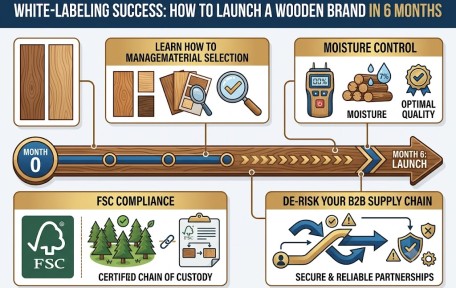
The Forest Stewardship Council (FSC) has actively aligned its standards to support EUDR compliance. While an FSC certificate alone does not automatically grant a 'green lane' through EU customs, sourcing FSC-certified timber is the most robust way to guarantee that the required risk assessments, geolocations, and chain-of-custody audits have already been performed by accredited third parties.
5.3. REACH and Chemical Safety
Once the legal timber reaches the factory, the finishes and adhesives applied must meet the EU's REACH regulation. A truly compliant product is legally sourced, ethically manufactured, and chemically safe for the end consumer.
6. Why Fast-Renewable Materials are the Strategic Choice for Compliance
Beyond their beautiful textures and organic appeal, the botanical classifications of natural materials dictate their regulatory burden. Smart procurement involves choosing materials that naturally mitigate compliance risks:
- Acacia (Solid Hardwood): As a regulated timber, Acacia requires full EUDR compliance and Lacey Act declarations. Its high density and durability make it ideal for furniture, but buyers must ensure their supplier has full GPS traceability. Ngoc Dong Ha Nam utilizes FSC-certified Acacia, ensuring seamless compliance.
- Bamboo & Rattan (Grasses and Climbing Palms): Botanically, Bamboo is a grass and Rattan is a climbing palm. Because they are Non-Timber Forest Products (NTFPs), they often fall outside the strictest wood-specific regulations of EUDR, making them brilliant strategic choices for buyers wanting highly sustainable, fast-renewable materials with a lower bureaucratic overhead, while still offering incredible structural integrity.
- Water Hyacinth & Seagrass (Aquatic and Agricultural Plants): These materials represent the ultimate eco-friendly choice. As aquatic weeds that require regular clearing to maintain river health, harvesting Water Hyacinth actually benefits the ecosystem. They carry zero deforestation risk and bypass timber regulations entirely, providing a flawless sustainability narrative for home decor brands.
7. The Procurement Checklist: How to Verify Your Supplier
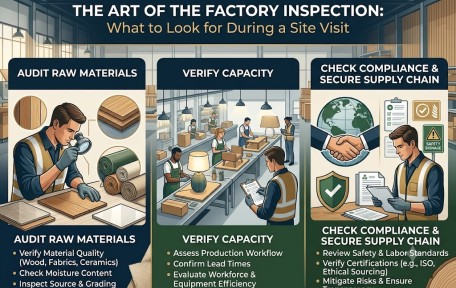
When auditing a factory in Vietnam or elsewhere for natural home decor, a professional buyer should demand a Traceability Technical File containing the following verified documents:
- 1. Due Diligence Statement (DDS) Readiness: A formal document outlining the supplier's ability to provide the required EUDR Information System reference numbers for your shipments.
- 2. Geolocation Data Files: Actual proof of mapping capabilities, including sample GeoJSON or KML files showing the polygons of their raw material sourcing areas.
- 3. Valid Chain of Custody Certificates: Up-to-date FSC® certificates (if applicable to the wood species) that can be instantly verified on the public FSC database.
- 4. Social Compliance Audit Reports: Recent, third-party verified BSCI or SMETA audit reports dated within the last 12 months, proving holistic supply chain integrity.
Conclusion: Partnering for Global Excellence
Compliance is not a cost; it is an investment in brand equity. For natural home decor crafted from Acacia, Bamboo, Rattan, and Seagrass, navigating the complexities of the Lacey Act, EUDR, and holistic social standards requires a manufacturer that speaks the language of science, law, and high-end design.
At Ngoc Dong Ha Nam, we don't just create beautiful, trend-forward interior pieces; we engineer sustainability and legal safety. By choosing a partner who prioritizes these rigorous global standards, you ensure that your products move seamlessly through customs, avoid costly regulatory delays, and arrive safely into the homes of consumers worldwide, carrying a story of true environmental stewardship.
Frequently Asked Questions
What is the primary difference between the US Lacey Act and the EUDR?
The Lacey Act focuses on the legality of the timber harvest according to the laws of the origin country. The EUDR (EU Deforestation Regulation) requires proof that the harvest did not contribute to deforestation after December 31, 2020, regardless of whether the deforestation was considered legal locally. EUDR also requires exact GPS geolocation data, which the Lacey Act generally does not.
Are bamboo and rattan subject to the strict EUDR geolocation requirements?
Botanically, bamboo is a grass and rattan is a climbing palm. They are generally classified as Non-Timber Forest Products (NTFPs) and currently fall outside the strictest wood-specific annexes of the EUDR. This makes them highly strategic, low-risk, and fast-renewable alternatives for global buyers.
How does Ngoc Dong Ha Nam ensure EUDR compliance for its Acacia wood products?
We integrate FSC-certified timber into our supply chain and maintain rigorous digital traceability. We map our sourcing areas to secure the necessary GPS polygons and coordinate with accredited third parties to ensure all Due Diligence Statements (DDS) can be seamlessly filed in the EU Information System.
What happens if a shipment fails to meet EUDR requirements at EU customs?
Non-compliant shipments face immediate confiscation at the border. Furthermore, operators can face severe financial penalties of up to 4% of their total annual EU turnover, confiscation of revenues, and temporary exclusion from public procurement processes.