The Professional’s Guide to Acacia Kitchenware Finishes: Oil vs. Lacquer vs. Wax
In the global houseware market, the "first touch" is often the "final decision." When a buyer at a retail giant or a discerning consumer picks up an Acacia wood bowl, they aren't just feeling the wood; they are feeling the finish.
For a sourcing manager, the choice of finish is a strategic balance between three critical pillars: Food Safety (Compliance), Durability (Longevity), and Aesthetics (Sales Appeal). Using the wrong finish on a premium piece of Vietnamese Acacia can lead to disastrous results—from mold growth and wood cracking to failed FDA/LFGB laboratory tests.
This comprehensive guide breaks down the three most prevalent finishing methods in the industry—Food-Grade Mineral Oil, Nitrocellulose (NC) Lacquer, and Natural Beeswax—to help you decide which is the "ROI winner" for your next 2026 collection.
Chapter 1: The Function of a Wood Finish – Beyond the Surface
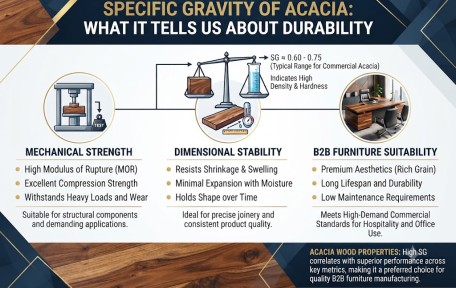
Before choosing a finish, we must understand the "Biological Reality" of Acacia wood. As a dense hardwood with a specific gravity of 0.65 to 0.80, Acacia is naturally resilient. However, even the finest wood is porous. Without a professional finish, wood acts like a sponge, absorbing moisture, fats, and bacteria from food.
A professional finish serves three primary functions:
1. The Moisture Barrier: It maintains the wood’s equilibrium moisture content at the critical 8-12% range, preventing warping and cracking.
2. The Hygienic Shield: It seals the wood fibers so that food particles and juices cannot penetrate and rot within the grain.
3. The Visual Amplifier: It brings out the erratic, "chatoyancy" effect of the Acacia grain, turning a dull piece of timber into a luxury home decor item.
Chapter 2: Food-Grade Mineral Oil – The "Breathable" Standard
Mineral oil is the industry standard for products that involve heavy "knife-to-wood" contact, such as cutting boards and butcher blocks.
2.1. The Pros: Safety and Repairability
- Total Food Safety: Pure, food-grade mineral oil is odorless, tasteless, and colorless. It is the safest option for direct food contact and is universally recognized by the FDA and EU food safety authorities.
- Penetrating Protection: Unlike lacquer, oil penetrates deep into the wood fibers, keeping the wood "supple" and hydrated from the inside out.
- End-User Repairability: If a customer scratches an oiled Acacia board, they can easily sand it down and re-apply oil at home. This "lifetime value" is a major selling point for eco-conscious brands.
2.2. The Cons: High Maintenance
- The "Wash-Out" Factor: Mineral oil is not a permanent finish. With every wash, a small amount of oil is removed.
- Buyer Education: Retailers must include care instructions, as the product will eventually look "dry" if not re-oiled by the consumer every 1–2 months.
Chapter 3: NC Lacquer – The Industrial Powerhouse
Nitrocellulose (NC) lacquer is the preferred finish for high-volume serving items like salad bowls, fruit trays, and coasters, where "zero maintenance" is the priority.
3.1. The Pros: Waterproof and Aesthetic Control
- The Ultimate Barrier: Lacquer creates a hard, non-porous film on the surface of the wood. This makes the product effectively waterproof and highly resistant to staining from acidic foods (like balsamic vinegar or citrus).
- Gloss Level Precision: Lacquer allows manufacturers to achieve specific "looks"—from a trendy "Super Matte" (5% gloss) that looks like raw wood to a "High Gloss" for luxury settings.
- Zero Consumer Maintenance: Once finished with lacquer, the item never needs to be re-oiled. It remains shiny and protected for years, which is ideal for the "mass-market" consumer who wants convenience.
3.2. The Cons: Technical Complexity
- Compliance Risk: This is where many low-cost factories fail. Standard industrial lacquers contain high VOCs (Volatile Organic Compounds) and lead. A Tier-1 factory like Simply Acacia uses only certified, lead-free, and phthalate-free lacquers that meet REACH and LFGB standards.
- Brittleness: If a lacquered bowl is dropped or subjected to extreme heat (like a dishwasher—which is a strictly forbidden practice for wood), the lacquer can chip or peel.
Chapter 4: Natural Beeswax & Blends – The Luxury Hybrid
Beeswax finishes are often a blend of natural wax and mineral oil, representing the "Premium/Organic" tier of the market.
4.1. The Pros: The "Silk Touch"
- Tactile Superiority: A beeswax finish provides a soft, satin-like feel that oil alone cannot match. It feels "warm" and expensive to the touch.
- Enhanced Water Repellency: Wax fills the microscopic pores of the wood more effectively than oil, providing a better initial barrier against liquids.
- Marketing Story: For brands focused on "all-natural" or "heritage" storytelling, a beeswax finish is a powerful marketing tool.
4.2. The Cons: Cost and Heat Sensitivity
- Production Cost: Applying a wax finish is more labor-intensive, often requiring hand-buffing to achieve the desired luster.
- Low Melting Point: Beeswax can become tacky if exposed to high heat or direct sunlight, making it less ideal for hot-food serving vessels compared to high-grade lacquer.
Chapter 5: Comparative Decision Matrix for B2B Buyers
|
Feature |
Food-Grade Oil |
NC Lacquer (Food-Safe) |
Natural Beeswax Blend |
|
Primary Use |
Cutting Boards, Butcher Blocks |
Salad Bowls, Trays, Decor |
Luxury Gifts, High-End Decor |
|
Food Safety |
100% (Natural) |
High (Requires Certification) |
100% (Natural) |
|
Durability |
High (Internal) |
Very High (Surface) |
Medium |
|
Maintenance |
Regular Re-oiling |
None |
Occasional Buffing |
|
Surface Feel |
Natural Wood Texture |
Smooth/Coated |
Silky/Satin |
|
Best For |
Professional Chefs |
Big-Box Retail (Costco/Target) |
Boutique Brands |
Chapter 6: The "Simply Acacia" Finishing Protocol
At our 12,000m2 facility in Ha Nam, we treat finishing as a science, not just a final step. Our 30-year legacy has allowed us to refine a protocol that ensures every piece leaves the factory in "Retail-Ready" condition.
6.1. Multi-Stage Sanding (The Foundation)
A finish is only as good as the surface beneath it. We utilize automated and manual sanding stages, progressing from 180 grit up to 400 grit. This creates a "glass-smooth" surface that allows the finish to bond perfectly with the Acacia fibers.
6.2. Humidity-Controlled Finishing Rooms
Vietnam's tropical climate can be a challenge. We apply our finishes in climate-controlled environments to prevent "blushing" (cloudiness in the lacquer) and ensure that the oil penetrates evenly without being blocked by surface moisture.
6.3. Rigorous Compliance Testing
We understand that for giants like Walmart and Costco, a single failed chemical test is a deal-breaker.
- Every batch of finish we use is pre-tested for Heavy Metals, Phthalates, and Formaldehyde.
- We provide full LFGB (Germany) and FDA (USA) documentation for every export project.
Chapter 7: 2026 Trends – What are Global Buyers Asking For?
As we move through 2026, we are seeing three distinct shifts in finishing preferences:
1. The "Raw Wood" Look: Buyers are moving away from yellowed, glossy finishes. There is a massive demand for Dead-Matte NC Lacquers that protect the wood while making it look completely unfinished and natural.
2. Vegetable-Based Oils: As an alternative to petroleum-derived mineral oil, many high-end brands are asking for Linseed or Tung oil blends for a "Vegan-friendly" marketing story.
3. Two-Tone Finishing: A trend where the interior of a bowl is finished with food-safe oil (for utility) and the exterior is lacquered or painted (for design).
Conclusion: Choosing the Right Finish for Your Brand
The finish you choose is the final word in your brand’s promise to the consumer.
- If you are building a utility-focused line (cutting boards), stick to the Professional Oil standard.
- If you are targeting mass retail with high-volume serving sets, Food-Safe NC Lacquer is the only way to ensure consumer satisfaction and zero returns.
- If you are a boutique player in the luxury space, a Beeswax blend will provide the sensory experience your customers crave.
At Simply Acacia (Ngoc Dong Ha Nam), we don't just provide wood; we provide expertise. Our leadership team—with backgrounds in IT and AI—uses data-driven quality control to ensure that whether you choose Oil, Lacquer, or Wax, the result is consistent across 250,000 units.
Ready to see the difference?
Contact our samples department at simplyacacia.com. We can provide a "Finish Comparison Kit" featuring the same Acacia product in all three finishes, allowing your sourcing team to feel the quality first-hand.
Let’s finish your next project with perfection.