THE STRATEGIC GUIDE TO SUPPLY CHAIN DIVERSIFICATION: THE "CHINA PLUS ONE" STRATEGY
In an era of global volatility, the "China Plus One" (C+1) strategy has evolved from a cautious contingency plan into a fundamental prerequisite for corporate survival. For global sourcing leads and Category Managers at giants like Walmart, Target, Costco, and Lidl, the question is no longer if they should diversify their manufacturing footprint, but how fast they can do it without sacrificing quality or ethical standards.
At Simply Acacia (Ngoc Dong Ha Nam), we have witnessed this tectonic shift firsthand. Operating from Ha Nam, Vietnam, we have positioned our facility as the premier destination for international retailers seeking to mitigate risk while scaling their sustainable woodware collections.
This guide provides a high-level strategic roadmap for implementing a "China Plus One" strategy, focusing on why Vietnam—and specifically the artisan-industrial hub of Ha Nam—is the most resilient anchor for your diversified supply chain.
THE STRATEGIC GUIDE TO SUPPLY CHAIN DIVERSIFICATION: THE "CHINA PLUS ONE" STRATEGY
A Global Manual for Resilient Sourcing and De-Risking in the Woodware Industry
I. THE GENESIS OF THE "CHINA PLUS ONE" MANDATE
For decades, the global supply chain was built on a single pillar: China. The "World’s Factory" offered unparalleled scale and infrastructure. However, the landscape has fundamentally changed. A convergence of "Black Swan" events—from trade wars and pandemic-induced lockdowns to soaring labor costs and geopolitical friction—has exposed the fragility of over-reliance on a single source.
1.1. Geopolitical De-Risking and Tariffs
The imposition of Section 301 tariffs and the tightening of trade regulations have made "Made in China" increasingly expensive for US-bound goods. The C+1 strategy allows firms to maintain their existing Chinese operations for the domestic or Asian market while building a secondary, duty-efficient hub for Western markets.
1.2. The "China-Lite" Manufacturing Culture
One of the reasons the shift toward Vietnam has been so successful is the cultural and operational synergy. Vietnam offers a manufacturing environment that feels familiar to those used to Chinese industrial discipline but with the added benefits of a younger workforce and a more favorable trade status.
II. WHY VIETNAM IS THE LOGICAL "PLUS ONE"
Among all the contenders in Southeast Asia, Vietnam stands out as the most mature alternative to China, particularly in the handicraft and wood manufacturing sectors.
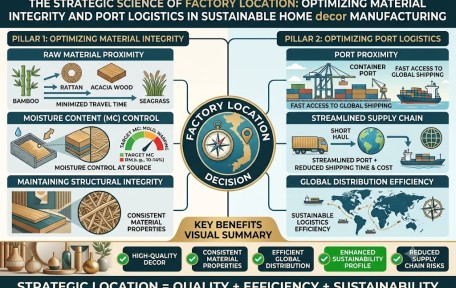
2.1. Strategic Logistics and Proximity
Vietnam’s geography is a logistical miracle for C+1 strategies.
- Proximity to China: Being neighbors allows for the easy transfer of raw materials, machinery, and technical expertise.
- Haiphong Port: For factories in Northern Vietnam like Simply Acacia, the proximity to Haiphong Port ensures that transit times to the US West Coast and Europe remain competitive.
2.2. A Powerhouse of Free Trade Agreements (FTAs)
Vietnam is one of the most integrated economies in the world.
- EVFTA (EU-Vietnam Free Trade Agreement): Virtually eliminates tariffs for woodware entering the European market.
- CPTPP: Provides a massive advantage for exporters to Canada, Australia, and Japan.
- US-Vietnam Trade Relations: Continued growth in bilateral trade makes Vietnam a preferred "Most Favored Nation" status partner.
III. THE WOODWARE SECTOR: VIETNAM'S COMPETITIVE EDGE
While many countries can assemble electronics, very few possess the centuries-old heritage of woodworking found in Vietnam.
3.1. Artisanal Heritage Meets Industrial Scale
In provinces like Ha Nam, woodworking is not just an industry; it is a legacy.
- The Simply Acacia Model: We have bridged the gap between the "Handmade" feel that consumers crave and the "Industrial Scale" that retailers like Costco demand.
- Case Study: Our ability to ship 85 containers in a single window for a US seasonal rollout demonstrates that Vietnam can match the throughput of large Chinese facilities.
3.2. Sustainable Resource Abundance
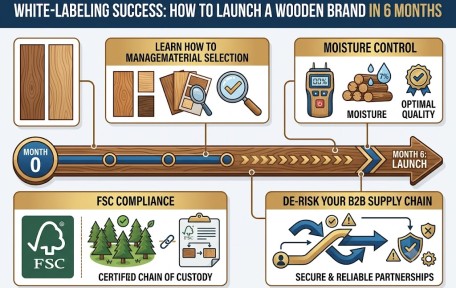
Vietnam is a global leader in FSC-certified Acacia. Unlike regions that rely on old-growth timber, the Vietnamese model is built on rapid-growth, regenerative plantations. This aligns perfectly with the EUDR (EU Deforestation Regulation) requirements that are now non-negotiable for global buyers.
IV. TACTICAL STEPS TO IMPLEMENTING A C+1 STRATEGY
Transitioning production is a complex surgical operation. It requires a phased approach to ensure that "Plus One" doesn't lead to "Minus Quality."
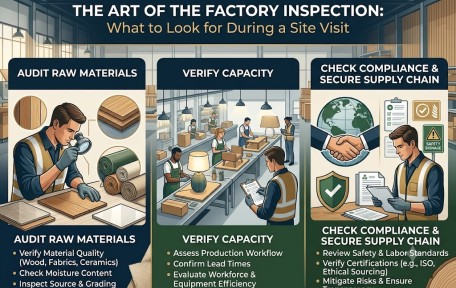
4.1. Step 1: The Vendor Audit and Onboarding
Diversification is only as good as the partner you choose. A "China Plus One" partner must meet the same—or higher—audit standards as your Chinese suppliers.
- Essential Certifications: Do not onboard a facility without BSCI, SMETA, and ISO 9001.
- Simply Acacia's Status: We maintain a "Ready-to-Ship" audit posture, ensuring that when a Category Manager moves a SKU from China to Vietnam, the compliance dossier is already complete.
4.2. Step 2: Pilot Runs and Tooling Transfer
Never move 100% of a high-volume SKU at once.
- The "Twin-Track" Approach: Run 20% of the volume in Vietnam while maintaining 80% in China. Once the quality consistency is proven (using ISO 2859-1 sampling plans), shift the balance.
- Precision Tooling: In Ha Nam, we utilize advanced Jigs and Templates to replicate the exact specifications of products previously made in China, ensuring that the consumer sees no difference in the final product.
V. MITIGATING THE "HIDDEN RISKS" OF DIVERSIFICATION
Every new frontier has its challenges. A successful C+1 strategy anticipates these before they occur.
5.1. Managing Moisture and Climate
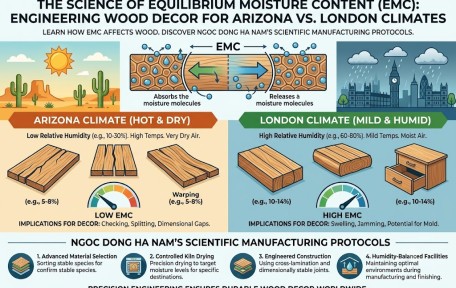
Vietnam’s tropical climate is different from the industrial centers of Northern China.
- The Risk: High humidity can lead to warping or mold during sea transit.
- The Solution: We utilize industrial-grade Kiln Drying and specialized Moisture Barriers (as detailed in our Logistics Guide) to ensure the wood remains stable.
5.2. Lead Time Synchronization
While Vietnam is closer to the US than India or Brazil, it still requires precise scheduling.
- The Simply Acacia Advantage: We provide real-time digital tracking of production milestones, ensuring that your C+1 hub in Ha Nam is perfectly synchronized with your global inventory levels.
VI. ESG AS THE ULTIMATE DE-RISKING TOOL
In 2026, diversification isn't just about geography; it's about Values. A C+1 strategy that ignores ESG (Environmental, Social, and Governance) is simply trading one risk for another.
6.1. Social Compliance (The "Social" Pillar)
Consumers are increasingly sensitive to labor conditions. Moving to Vietnam allows retailers to tap into a labor market that is highly regulated and transparent. Our BSCI and SMETA audits provide the "Social Proof" that your products are made with dignity.
6.2. Circular Manufacturing (The "Environmental" Pillar)
At Simply Acacia, our Zero-Waste model—transforming sawdust into biomass and offcuts into accessories—provides a "Green Dividend" to our partners.
- The Competitive Edge: When a retailer like Lidl asks for an ESG Impact Report, we provide data that their Chinese suppliers often cannot match, giving the retailer a powerful marketing story.
VII. THE FINANCIAL ARCHITECTURE OF C+1
Diversification often yields significant "Landed Cost" savings when executed correctly.
|
Cost Factor |
China (Typical) |
Vietnam (Simply Acacia) |
Strategic Benefit |
|
Labor Cost |
Rising (Mature) |
Competitive (Growth) |
Long-term price stability. |
|
Tariffs (US) |
25% + (Section 301) |
0% - Low |
Immediate margin improvement. |
|
FTAs (EU) |
Limited |
EVFTA (0% Duties) |
Massive advantage for EU retailers. |
|
Raw Material |
Often Imported |
Local (FSC Acacia) |
Reduced supply chain carbon footprint. |
VIII. THE ROLE OF HA NAM IN THE GLOBAL SUPPLY CHAIN
Ha Nam Province has emerged as a specialized industrial zone for high-quality woodware. Its combination of traditional artisan skills and modern infrastructure makes it the "Silicon Valley" of Vietnamese handicrafts.
For a global buyer, sourcing from Ha Nam via Simply Acacia means:
1. Direct Access to Masters: Our facility is staffed by artisans who have spent decades perfecting the turn of a bowl or the weave of a hyacinth basket.
2. Infrastructure Support: Reliable power, high-speed logistics networks, and a pro-business local government.
3. Scalability: The ability to grow from a 1-container "specialty" order to a 100-container "core" program.
IX. CONCLUSION: BUILDING A FORTRESS-LIKE SUPPLY CHAIN
The "China Plus One" strategy is no longer a luxury for the adventurous; it is a strategic imperative for the resilient. By diversifying into Vietnam, specifically with a partner like Simply Acacia, global retailers can achieve the holy grail of sourcing: Lower Risk, Lower Cost, and Higher ESG Performance.
We don't just act as your "Plus One" factory; we act as your strategic consultants on the ground. From the first pilot run to the 100th container, we ensure that your transition to Vietnam is seamless, profitable, and planet-friendly.
Ready to Diversify Your 2026 Strategy?
Move your supply chain forward. Contact our Strategic Sourcing team for a C+1 Feasibility Audit and see how our Ha Nam facility can become your most reliable global hub.
Global Site: