
The Ultimate Comparison: Acacia vs. Bamboo vs. Rubberwood for Home Decor
Material selection is more than just an aesthetic choice in the global housewares and home decor market. For professional procurement officers at major retailers, it is a complex equation involving technical specifications, environmental compliance, and perceived consumer value.
Three materials dominated the Southeast Asian supply chain: Acacia, Bamboo, and Rubberwood. At Simply Acacia, we believe that understanding the core scientific and economic differences between these three is essential for making informed sourcing decisions that protect your brand’s reputation.
1. Acacia Wood: The Premium Hardwood Alternative
Acacia is not just a material; it is a strategic alternative to expensive hardwoods like Teak or Walnut.
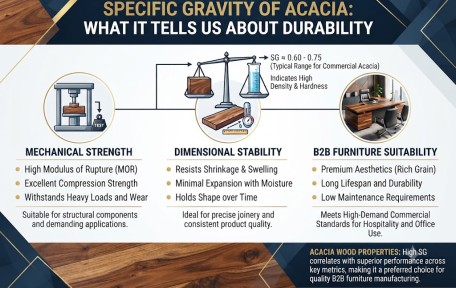
- Durability: With a high wood density and natural tannin content, Acacia offers superior resistance to rot, termites, and fungal decay.
- Aesthetics: Acacia’s greatest strength is its dramatic, variegated grain and warm color palette, providing a "high-end" look that Bamboo or Rubberwood simply cannot replicate.
- Best Use Cases: Premium cutting boards, salad bowls, luxury serving trays, and statement furniture pieces where grain beauty is a selling point.
2. Bamboo: The Rapidly Renewable Resource
It is important to remember that Bamboo is a grass, not a wood, which dictates its physical behavior.
- Sustainability: Bamboo grows incredibly fast, making it the #1 choice for "Eco-friendly" mass-marketing campaigns.
- Technical Profile: While very hard, Bamboo is brittle. Due to its linear fiber structure, it is prone to delamination (splitting layers) if the adhesive and lamination processes do not meet strict international humidity standards.
- Aesthetics: It offers a uniform, modern look but lacks the "warmth" and visual depth of natural hardwood grains.
- Best Use Cases: Budget kitchenware, high-volume serving trays, and short-lifecycle disposable items.
3. Rubberwood: The Budget-Friendly Utility
Often called "Hevea" or "Parawood," Rubberwood is considered eco-friendly because it is a byproduct of the latex industry.
- Cost Efficiency: Generally the lowest-priced option of the three, making it ideal for mass-market furniture and accessories.
- Technical Profile: Rubberwood has fair stability but is highly susceptible to mold and staining if not treated with preservatives immediately after milling. However, it takes stains and paint exceptionally well.
- Aesthetics: The grain is very subtle and the natural color is a pale, neutral cream. It often requires artificial staining to look "premium."
- Best Use Cases: Ready-To-Assemble (RTA) furniture, painted kitchen gadgets, and small household utility items.
4. Deep Dive: Comparative Performance Matrix
Here is a performance breakdown based on the criteria that matter most to professional B2B buyers:
|
Criteria |
Acacia (Simply Acacia) |
Bamboo |
Rubberwood |
|
Janka Hardness |
High (1,750 lbf) |
Very High (but brittle) |
Moderate (995 lbf) |
|
Water/Bacterial Resistance |
Excellent (Natural) |
Moderate (Risk of split) |
Low (Needs treatment) |
|
Grain Aesthetics |
Diverse, Luxurious |
Linear, Uniform |
Pale, Minimal |
|
Workability |
Excellent (Less cracking) |
Difficult (Splinter risk) |
Good (Easy to paint) |
|
Market Positioning |
Premium / High-Value |
Eco-Mass Market |
Budget / Functional |
5. Sustainability Analysis: Three Shades of Green
While all three are touted as sustainable, they cater to different corporate social responsibility (CSR) goals:
1. Bamboo: Fastest renewal cycle.
2. Rubberwood: Repurposing agricultural waste.
3. Acacia: Simply Acacia utilizes acacia from responsibly managed Vietnamese plantations. By choosing FSC® certified Acacia, you get the durability of a "real" hardwood with the environmental peace of mind of a plantation crop.
6. Sourcing Strategy: Which Material Wins for the US & EU?
- Targeting the Premium/Gift Segment: Acacia is the clear winner. Consumers in the US and EU are increasingly willing to pay a premium for the "authentic wood feel" and durability of Acacia over generic bamboo.
- Targeting High-Volume, Low-Price Points: Rubberwood is a safe, functional choice, especially for items that will be painted or sold as basic utility goods.
- Targeting the "Eco-Discount" Segment: Bamboo remains the most recognizable material for low-cost green marketing.
7. Conclusion: Why Simply Acacia Chooses Acacia
At Simply Acacia, we believe in long-term value. An interior or kitchen item should not just be durable; it should inspire. Acacia combines the rigor of international food-safe standards (FDA/LFGB) with the timeless beauty of luxury hardwoods.
When you choose Acacia, you are investing in a product that resists the elements, ages beautifully, and stands out on a crowded retail shelf.