5 Reasons Why Acacia Wood Cutting Boards Are the Ultimate Antimicrobial Choice for Global Kitchens
5 Reasons Why Acacia Wood Cutting Boards Are the Ultimate Antimicrobial Choice for Global Kitchens
The Dawn of a New Era in Sustainable Kitchenware
In the rapidly evolving landscape of global home decor and culinary essentials, a profound shift is taking place. Today's consumers are no longer simply looking for functional kitchen tools; they are demanding products that seamlessly blend aesthetic brilliance, environmental responsibility, and uncompromising health standards. As the Marketing Director and Sustainable Supply Chain Consultant at Ngoc Dong Ha Nam, I have witnessed firsthand how global buyers and top-tier interior designers are pivoting away from synthetic materials. They are seeking out natural, ethically sourced alternatives that elevate the modern home. At the forefront of this green revolution is the Acacia wood cutting board.
For decades, a pervasive myth dominated the culinary world: the belief that plastic cutting boards were inherently safer and more hygienic than wood. However, rigorous scientific studies and a deeper understanding of natural materials have thoroughly debunked this misconception. We now know that certain hardwoods possess remarkable natural defenses against pathogens. Acacia wood, in particular, stands out as a champion of natural antimicrobial properties. In this comprehensive guide, we will explore the top five reasons why Acacia wood cutting boards are not just a sustainable choice, but the ultimate hygienic solution for global kitchens, making them an indispensable addition to your B2B sourcing portfolio.
1. The Power of Natural Tannins: Nature's Built-in Antibacterial Agent
To truly understand the antimicrobial prowess of Acacia wood, we must look at its cellular chemistry. Acacia trees have evolved in harsh, competitive environments, developing robust defense mechanisms to protect themselves from fungi, insects, and bacteria. The secret weapon in this natural arsenal is a high concentration of tannins.
How Tannins Neutralize Pathogens
Tannins are naturally occurring polyphenolic compounds found abundantly in Acacia wood. When bacteria such as Salmonella, E. coli, or Listeria are introduced to the surface of an Acacia cutting board, the tannins immediately go to work. These compounds actively bind to the proteins in the bacterial cell walls, disrupting their structural integrity and inhibiting their ability to reproduce. Unlike plastic boards, where bacteria can sit on the surface and multiply exponentially, the natural chemistry of Acacia wood actively neutralizes these pathogens. Studies have shown that bacteria left on certain hardwood surfaces die off within a matter of hours, whereas they can survive and thrive on plastic surfaces for days.
For global buyers, this built-in hygienic property is a massive selling point. By stocking Acacia wood cutting boards, you are offering your retail customers and end-users a product that actively contributes to a safer, healthier food preparation environment.
2. Superior Density and Moisture Resistance
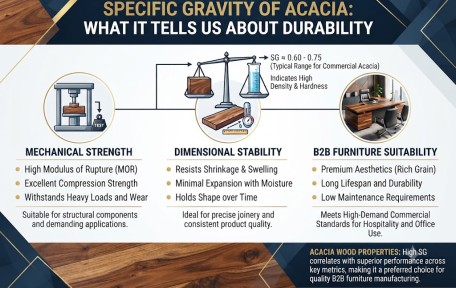
Beyond its chemical defenses, the physical structure of Acacia wood plays a critical role in its antimicrobial capabilities. Acacia is renowned for its exceptional density and hardness. On the Janka hardness scale, many species of Acacia score significantly higher than traditional woods like oak or maple. This dense, tight-grained structure provides a formidable physical barrier against bacterial infiltration.
The Science of Capillary Action
When moisture from raw meat or washed vegetables interacts with a cutting board, the risk of bacterial growth increases. However, Acacia's tight grain minimizes water absorption. Furthermore, the natural capillary action of the wood fibers pulls any surface moisture down into the deeper layers of the wood. Because bacteria require moisture to survive and multiply, this capillary action effectively deprives surface-level pathogens of the water they need. Once drawn into the wood, the bacteria are trapped and subsequently destroyed by the natural tannins. This combination of moisture resistance and internal neutralization makes Acacia wood an incredibly sanitary surface for food preparation.
For interior designers curating high-end culinary spaces, specifying Acacia wood means providing clients with a surface that is not only visually stunning but structurally engineered by nature to remain hygienic over years of heavy use.
3. Self-Healing Capabilities That Outperform Synthetic Materials
One of the most significant drawbacks of plastic cutting boards is their susceptibility to permanent scarring. Every time a knife strikes a plastic board, it creates a microscopic groove. Over time, these grooves become deep, jagged scars that are virtually impossible to clean thoroughly. These crevices become the perfect breeding ground for bacteria, shielding them from dish soap and sponges.
The Resilience of Wood Fibers
Acacia wood, particularly when crafted in an end-grain or high-quality edge-grain construction, exhibits remarkable self-healing properties. When a knife blade slices into the wood, it passes between the wood fibers rather than severing them completely. As the blade is lifted, the natural elasticity of the wood fibers allows them to close back up, minimizing the depth and severity of the cut. This self-healing action prevents the formation of deep, bacteria-harboring grooves.
At Ngoc Dong Ha Nam, our master artisans understand the importance of grain orientation and meticulous finishing. By optimizing the natural resilience of Acacia wood, we produce cutting boards that maintain their smooth, hygienic surfaces far longer than synthetic alternatives. This longevity and sustained safety are key value propositions for B2B distributors looking to build trust and brand loyalty with their customer base.
4. Ethical Sourcing and Uncompromising Global Standards
In today's global market, a product's origin story and the ethics of its supply chain are just as critical as its physical properties. Global buyers are under increasing pressure to meet stringent Environmental, Social, and Governance (ESG) criteria. A cutting board can only be considered truly premium if it is sourced and manufactured responsibly.
Ensuring Compliance with FSC, BSCI, and SMETA
Acacia is a fast-growing, highly renewable resource, making it an inherently sustainable choice. However, at Ngoc Dong Ha Nam, we take sustainability several steps further. We ensure that our Acacia wood is sourced from responsibly managed forests, adhering to the rigorous standards of the Forest Stewardship Council (FSC). This guarantees that our ecological footprint is minimized and that biodiversity is protected.
Furthermore, our manufacturing processes are fully compliant with the Business Social Compliance Initiative (BSCI) and SMETA (Sedex Members Ethical Trade Audit). This means that every Acacia cutting board we produce is the result of fair labor practices, safe working conditions, and ethical business operations. For B2B buyers, partnering with a fully certified supplier like Ngoc Dong Ha Nam eliminates supply chain risks and provides a powerful, transparent narrative that resonates deeply with conscious consumers.
5. Unmatched Aesthetic Appeal for Modern Interior Design
While the antimicrobial and sustainable properties of Acacia wood are paramount, we cannot overlook its profound aesthetic impact. Interior designers and home decor buyers understand that today's kitchens are no longer just utilitarian spaces; they are the heart of the home, places of gathering, and expressions of personal style. Kitchenware must perform flawlessly while doubling as functional art.
Warm Tones and Unique Grain Patterns
Acacia wood is celebrated for its breathtaking visual complexity. It features a rich tapestry of colors, ranging from deep, chocolate browns to warm golds and vibrant ambers. The grain patterns are naturally undulating and highly distinctive, meaning no two cutting boards are exactly alike. This unique character brings a touch of organic warmth and rustic elegance to any kitchen setting, whether it is a sleek, minimalist modern space or a cozy, farmhouse-inspired home.
Beyond food preparation, these boards are increasingly utilized as stunning serving platters and charcuterie boards, seamlessly transitioning from the kitchen counter to the dining table. By sourcing premium Acacia wood products, B2B buyers can cater to the booming trend of 'cottagecore' and biophilic design, offering products that interior designers eagerly specify for their high-end residential and commercial projects.
Take Action: Elevate Your B2B Portfolio with Ngoc Dong Ha Nam
The evidence is clear: Acacia wood cutting boards represent the perfect convergence of nature's antimicrobial brilliance, sustainable forestry, and exquisite design. From the bacteria-neutralizing power of natural tannins to the self-healing resilience of its dense fibers, Acacia outperforms synthetic alternatives on every front. For global buyers and interior designers, these products offer a compelling narrative of health, environmental stewardship, and uncompromising quality.
As a leader in the sustainable supply chain, Ngoc Dong Ha Nam is your trusted partner in bringing these world-class products to your market. Our deep expertise in natural materials, combined with our unwavering commitment to international standards like FSC, BSCI, and SMETA, ensures that you receive products of the highest caliber. Do not miss the opportunity to meet the growing consumer demand for safe, sustainable, and beautiful home decor.
Contact Ngoc Dong Ha Nam today to request our latest catalog, discuss custom B2B sourcing solutions, and discover how our premium Acacia wood cutting boards can elevate your product offerings and drive your business forward.
Frequently Asked Questions
Are Acacia wood cutting boards naturally antibacterial?
Yes, Acacia wood contains high levels of natural tannins, which are polyphenolic compounds that actively disrupt bacterial cell walls. Combined with the wood's dense structure and capillary action that deprives bacteria of moisture, Acacia cutting boards naturally neutralize pathogens like Salmonella and E. coli much faster than plastic boards.
How does Acacia wood compare to plastic cutting boards in terms of hygiene?
Plastic boards easily develop deep knife grooves where bacteria can hide and multiply, even after washing. Acacia wood has self-healing properties; its fibers part and close back up, preventing deep scratches. Furthermore, the natural chemistry of Acacia actively kills bacteria, whereas plastic offers no natural defense, making Acacia significantly more hygienic over time.
What certifications should B2B buyers look for when sourcing Acacia wood products?
Global buyers should ensure their suppliers hold FSC (Forest Stewardship Council) certification for sustainable wood sourcing. Additionally, social compliance certifications like BSCI and SMETA are crucial to guarantee ethical labor practices and safe working conditions throughout the supply chain. Ngoc Dong Ha Nam proudly adheres to all these international standards.
Is Acacia wood sustainable and eco-friendly?
Absolutely. Acacia is a fast-growing hardwood species, making it highly renewable compared to slower-growing woods. When sourced from FSC-certified forests, it represents one of the most eco-friendly materials available for kitchenware and home decor, perfectly aligning with modern ESG goals.
How should end-users care for Acacia wood cutting boards to maintain their antimicrobial properties?
To maintain optimal hygiene and longevity, Acacia boards should be hand-washed with mild soap and warm water, then dried immediately. They should never be soaked or put in a dishwasher. Regular oiling with food-safe mineral oil will keep the wood fibers hydrated, preventing cracking and preserving the board's natural self-healing and moisture-resistant properties.