
Acacia vs. Rubberwood: Sourcing the Superior Sustainable Cutting Board for Your Global Brand
The Evolution of the Modern Kitchen and the Demand for Sustainable Excellence
In the contemporary home, the kitchen has transcended its traditional role as a mere culinary workspace to become the vibrant, multifunctional heart of the household. For global interior designers and retail buyers, this shift represents a profound opportunity. Today's conscious consumers demand home decor and kitchenware that seamlessly blend aesthetic brilliance, long-lasting functionality, and an unwavering commitment to sustainability. At the very foundation of this culinary space is the cutting board—an essential tool that doubles as a statement piece of natural art.
As a procurement specialist or brand manager, your sourcing decisions carry immense weight. The materials you choose directly dictate your product's market positioning, retail margin, and ultimately, your brand's reputation for quality. In the realm of eco-friendly hardwood cutting boards, two materials have risen to global prominence: Acacia and Rubberwood. Both are celebrated for their sustainable profiles and accessibility, but when the goal is to craft a premium, world-class kitchen accessory, which wood truly reigns supreme?
Welcome to the definitive B2B guide on sourcing the ultimate kitchen cutting board. In this comprehensive analysis, we will dissect the structural, aesthetic, and commercial merits of Acacia versus Rubberwood. By the end of this exploration, you will have the strategic insights necessary to elevate your next product line and meet the exacting standards of the modern, eco-conscious global market.
Deep Dive: The Anatomy of Acacia and Rubberwood
To make an informed sourcing decision, we must evaluate these materials across four critical B2B dimensions: durability, moisture resistance, aesthetic appeal, and supply chain sustainability.
1. Durability and the Janka Hardness Scale
The primary function of a cutting board is to withstand the relentless impact of sharp culinary tools without dulling the blades or deteriorating prematurely. This is where the Janka Hardness Scale becomes our most vital metric.
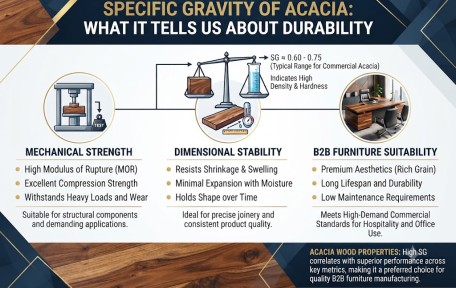
- Acacia Wood: Depending on the specific species (such as Acacia mangium), Acacia boasts a remarkable Janka hardness rating that typically ranges from 1,700 to 2,200 lbf (pounds-force). This places it firmly in the category of robust hardwoods, offering exceptional resistance to deep knife scarring, gouging, and daily wear-and-tear.
- Rubberwood: Also known as plantation hardwood or Hevea brasiliensis, Rubberwood has a Janka rating of approximately 960 lbf. While it is certainly harder than softwoods and adequate for light-duty tasks, it falls significantly short of Acacia's resilience. In a commercial or high-use domestic kitchen, Rubberwood cutting boards are far more susceptible to deep scratches, which can harbor bacteria over time.
2. Moisture Resistance and Hygienic Properties
Kitchen environments are inherently wet and humid. A cutting board's ability to repel moisture is directly linked to its hygienic safety and structural longevity.
- Acacia Wood: Acacia is naturally rich in natural oils and resins. This intrinsic characteristic makes it highly non-porous and naturally water-resistant. It repels liquid absorption, significantly reducing the risk of warping, cracking, or bacterial proliferation. This natural antibacterial quality is a massive selling point for health-conscious consumers.
- Rubberwood: Rubberwood is considerably more porous and lacks the high natural oil content found in Acacia. If not meticulously treated and maintained with regular oiling, it is prone to absorbing moisture from washed vegetables or raw meats. This absorption can lead to dangerous bacterial growth and structural failures like cupping or splitting, increasing your product return rates.
3. Aesthetic Versatility and Market Appeal
For interior designers and retail buyers, the visual impact of a product is just as crucial as its functionality. A cutting board often doubles as a charcuterie platter or a permanent display piece on a kitchen island.
- Acacia Wood: Acacia is globally renowned for its breathtaking, multidimensional grain patterns. It features a striking contrast of deep, rich chocolate heartwood and lighter, golden sapwood. This rustic yet sophisticated appearance makes every single cutting board a unique piece of natural art, perfectly aligning with premium, organic home decor trends.
- Rubberwood: Rubberwood offers a very uniform, pale blonde to medium-tan appearance with minimal grain variation. While this homogeneous look can suit minimalist or mass-market designs, it lacks the luxurious, high-end visual weight that commands a premium retail price.
4. Environmental Impact and Sourcing
Both woods offer compelling eco-friendly narratives, but they operate differently within the supply chain.
- Acacia Wood: Acacia is exceptionally fast-growing, making it a highly renewable resource. When sourced from responsibly managed plantations with FSC (Forest Stewardship Council) certification, it represents the pinnacle of sustainable forestry.
- Rubberwood: Rubberwood is an excellent example of upcycling; the trees are harvested for timber only after they have exhausted their latex-producing lifecycle. While eco-friendly, the wood requires extensive chemical treatment immediately after harvesting to prevent fungal attacks and insect infestations, which can be a concern for brands prioritizing 100% natural processing.
Elevating Your Brand with Premium Acacia: The Strategic Advantage
As a Marketing Director and Sustainable Supply Chain Consultant, I have witnessed firsthand how material selection transforms a brand's market trajectory. While Rubberwood serves a purpose in the entry-level, mass-market segment, Acacia is unequivocally the superior choice for brands aiming to capture the premium, high-margin sector of the global home decor and kitchenware market.
Why Global Buyers Are Shifting to Acacia
Choosing Acacia is not merely a design preference; it is a strategic business decision that yields measurable dividends.
- Commanding Premium Price Points: The undeniable visual luxury of Acacia's contrasting grain, combined with its substantial weight and robust feel, creates a high perceived value. Consumers are willing to pay a premium for a product that serves as both a durable culinary tool and an elegant serving centerpiece.
- Reducing Return Rates and Enhancing Brand Trust: The structural integrity of Acacia—its resistance to deep scarring, warping, and moisture damage—ensures longevity. For B2B buyers, this translates directly to lower defect rates, fewer customer returns, and a sterling reputation for quality.
- Aligning with Global Sustainability Mandates: Today's market is driven by conscious consumerism. By sourcing FSC-certified Acacia, your brand aligns with the highest global standards for environmental stewardship. This is no longer a niche selling point; it is a prerequisite for entry into major international retail networks.
The Ngoc Dong Ha Nam Guarantee
Understanding the superiority of Acacia is only the first step; partnering with the right manufacturer is what guarantees your success. At Ngoc Dong Ha Nam, we do not just supply products; we engineer sustainable supply chain solutions tailored for world-class brands.
Our Acacia cutting boards are crafted with an unwavering commitment to quality and ethical manufacturing. We are proud to operate under the strictest international standards, holding comprehensive certifications including BSCI (Business Social Compliance Initiative), FSC (Forest Stewardship Council), and SMETA (Sedex Members Ethical Trade Audit). When you source from us, you are guaranteed a product that is not only ecologically responsible but also manufactured under fair, safe, and transparent labor conditions.
By integrating Ngoc Dong Ha Nam's premium Acacia cutting boards into your portfolio, you are offering your clients a product that embodies the perfect synthesis of nature's resilience and masterful Vietnamese craftsmanship.
Take the Next Step: Partner with a World-Class Sustainable Manufacturer
The global demand for premium, sustainable kitchenware is accelerating. Do not let your brand fall behind by compromising on material quality. Transitioning to high-grade, FSC-certified Acacia wood is the definitive move to elevate your product line, secure higher profit margins, and captivate the eco-conscious consumer.
Are you ready to redefine your kitchenware collection with the superior durability and breathtaking aesthetics of natural Acacia? We invite global buyers, procurement officers, and interior design firms to experience the Ngoc Dong Ha Nam difference.
Contact our expert sourcing team today to request a comprehensive product catalog, order bespoke material samples, or schedule a consultation for your custom OEM/ODM design requirements. Let us collaborate to build a resilient, ethical, and highly profitable supply chain for your brand.
Connect with Ngoc Dong Ha Nam – Where Sustainable Materials Meet Global Excellence.