Circular Economy in Wood: Designing Products for Easy Recycling & Sustainable Living
Key Takeaways
- The Core of Circular Design: Integrating circular economy principles into wood manufacturing means designing housewares and furniture that prioritize longevity, easy disassembly, and end-of-life recycling.
- Sustainable Materials First: Utilizing FSC-certified Acacia wood and mixed eco-materials (bamboo, rattan, seagrass) ensures a renewable, low-impact foundation for global retail products.
- Zero-Waste Manufacturing: Advanced CNC machining and strictly controlled production processes maximize material yield and significantly reduce industrial waste.
- Global Compliance: Meeting the strict environmental and quality standards (ISO14001, FSC, BSCI) required by top-tier retailers like Walmart, Costco, Target, and Nitori.
- Future-Proofing Home Decor: Transitioning from a linear "take-make-dispose" model to a closed-loop system is essential for the future of eco-friendly home decor and kitchen accessories.
The Circular Economy Revolution in Wooden Housewares
The traditional linear manufacturing model—take, make, and dispose—is rapidly becoming obsolete in the global home decor and housewares industry. As climate change accelerates and consumer awareness peaks, the shift towards a "circular economy" is no longer optional; it is a critical business imperative. At its core, the circular economy in wood manufacturing focuses on eliminating waste and the continual use of resources. For leading manufacturers, this means rethinking the entire product lifecycle from the drawing board to the end-of-life phase. Designing wooden products for easy recycling is the ultimate step in creating a sustainable, eco-friendly future for homes worldwide.
In a true circular system, a wooden cutting board, serving tray, or piece of small furniture is designed to be easily repaired, repurposed, or naturally biodegraded without leaving harmful residues. By utilizing renewable resources like FSC-certified Acacia wood and integrating smart design principles, the industry can drastically reduce its carbon footprint. Ngoc Dong Ha Nam Co., a premier manufacturer and exporter in Vietnam with over two decades of international experience, stands at the forefront of this sustainable transition, delivering high-quality, eco-conscious products to the world's largest retailers.
Designing for Disassembly and Recyclability
The inverted pyramid of circular design starts with the most crucial element: how a product is built. To ensure easy recycling, products must be designed for disassembly. This means avoiding permanent industrial glues, toxic synthetic finishes, and inseparable mixed materials that make recycling impossible.
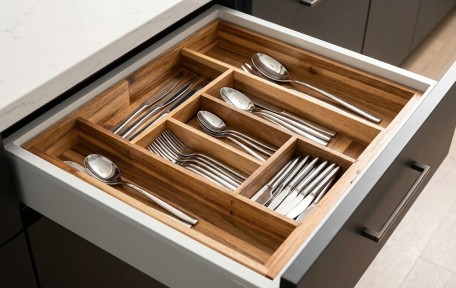
Instead, sustainable wood manufacturing relies on mechanical joints, eco-friendly adhesives, and natural finishes that protect the wood without compromising its biodegradability. For instance, when crafting a complex flatware caddy or a multi-tiered shoe rack, using modular designs allows consumers to easily separate wooden components from any essential metal hardware at the end of the product's life. The wood can then be chipped for biomass energy, composted, or upcycled into new composite materials.
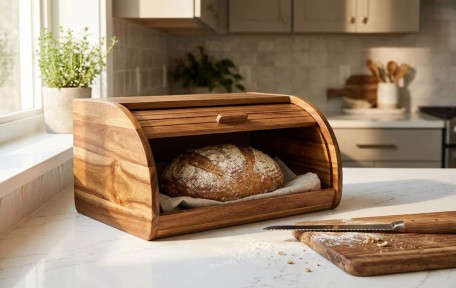
Furthermore, material selection plays a massive role. Acacia wood, the strongest material in our production line, is not only incredibly durable and water-resistant—making it perfect for kitchen accessories like platters, bowls, and charger plates—but it is also a fast-growing, highly renewable resource. When sourced responsibly under FSC (Forest Stewardship Council) guidelines, Acacia represents the pinnacle of sustainable material choice.
Advanced Manufacturing: Zero-Waste and Precision Engineering
Moving down the pyramid, the actual production process is where circular design concepts are brought to life. A sustainable product loses its eco-friendly status if the manufacturing process is highly wasteful. Implementing advanced technology is essential to maximize material yield.
At our 12,000-square-meter facility, we deploy state-of-the-art machinery, including precision CNC machines, 4-head lathes, and industrial planers. This technology allows for exact cuts, ensuring that every inch of the Acacia wood is utilized efficiently, minimizing offcuts and sawdust. The waste that is generated is not sent to landfills; instead, it is repurposed within the facility or utilized by local agricultural partners, effectively closing the loop on manufacturing waste.
Moreover, the drying and finishing processes are strictly controlled. With three high-capacity electrical drying rooms and an expansive thermal insulation warehouse capable of storing over 40 containers of finished goods for up to six months, we ensure that every product maintains its structural integrity. This meticulous quality control, backed by our ISO9001 and ISO14001 certifications, guarantees that products last longer in the consumer's home, thereby delaying their entry into the waste stream and fulfilling the core tenet of the circular economy: longevity.
Meeting Global Standards for Top-Tier Retailers
The demand for circular and sustainable products is driven heavily by the world's largest retail chains. Mid-to-high-end and mass-market retailers such as Walmart, Target, Costco, Lowes, CTS, At Home, Lidl, Aldi, Kmart Australia, and Nitori have implemented rigorous sustainability mandates for their suppliers. They require absolute transparency, ethical labor practices, and uncompromising environmental stewardship.
To meet and exceed these demands, robust international certifications are required. By maintaining SCAN, BSCI, SMETA, and FSC certifications, we provide our global partners with the assurance that our supply chain is socially responsible and environmentally sound. Whether we are producing mixed-material storage baskets utilizing bamboo, rattan, and water hyacinth, or solid Acacia wood kitchen organizers, our partners know that every container exported from our factory aligns with global sustainability goals. Our capacity to export 40-50 40-foot containers monthly demonstrates that sustainable, circular manufacturing can be successfully executed on a massive, industrial scale without sacrificing quality or ethical standards.
A Legacy of Craftsmanship Meets Modern Sustainability
At the base of the pyramid lies the foundation of our expertise. Established in 2004, and evolving from the Ngoc Dong cooperative founded in 1988, our company blends over 30 years of manufacturing heritage with modern sustainable practices. While we employ 70 skilled factory workers who operate our advanced machinery, we also support over 2,000 trained artisans across Vietnam's traditional craft villages. This localized, community-driven approach to sourcing and preliminary processing not only supports rural economies but also reduces the transportation carbon footprint associated with raw material acquisition.
The integration of traditional craftsmanship—weaving rattan, seagrass, and paper rope—with precision-milled Acacia wood creates a unique, eco-friendly product line spanning home decor, bath accessories, and small furniture. By embracing the circular economy, we are not just adapting to modern market trends; we are honoring our natural resources and ensuring that the art of Vietnamese handicraft continues to thrive in harmony with the environment for generations to come.
Ready to elevate your retail catalog with sustainable, circular-designed housewares?
Partner with Ngoc Dong Ha Nam Co. to bring premium, FSC-certified Acacia wood and eco-friendly handicrafts to your customers. With a proven track record supplying the world's largest retailers, we are your trusted source for high-volume, sustainable manufacturing.
FAQs
Q1: What is a circular economy in wood manufacturing? A: A circular economy in wood manufacturing involves designing products for longevity, utilizing renewable materials like FSC-certified Acacia wood, minimizing production waste, and ensuring the product can be easily recycled, repurposed, or safely biodegraded at the end of its lifecycle.
Q2: Why is Acacia wood considered highly sustainable for kitchenware? A: Acacia is a fast-growing, robust hardwood that can be harvested sustainably. When sourced with FSC certification, it prevents deforestation. Its natural water resistance and durability make it ideal for long-lasting kitchen accessories like cutting boards and serving trays.
Q3: Can wooden home decor and small furniture be easily recycled? A: Yes, if designed correctly. Products manufactured with circular principles avoid toxic glues and complex mixed materials, allowing the wood to be easily disassembled, composted, or chipped for upcycling when the product is no longer needed.
Q4: Does Ngoc Dong Ha Nam Co. meet international environmental standards? A: Absolutely. Our factory in Vietnam holds ISO14001, ISO9001, FSC, BSCI, SMETA, and SCAN certifications. We strictly adhere to the social and environmental compliance requirements of top global retailers like Costco, Walmart, and Target.
Q5: What is the production capacity of Ngoc Dong Ha Nam for eco-friendly products? A: With a 12,000 sqm factory, advanced CNC machinery, and a network of over 2,000 artisans, we have a stable export capacity of 40 to 50 40-foot containers per month, ensuring reliable high-volume supply.