Global Trends Report Zero-Waste Manufacturing & Clean Energy Breakthroughs from Sawdust
Key Takeaways
- Paradigm Shift: The "Zero-Waste" model is rapidly transitioning from a niche concept to a mandatory standard, fundamentally reshaping the global furniture and housewares supply chain.
- Energy Regeneration: Compacting sawdust and industrial byproducts into clean energy briquettes provides a highly efficient, sustainable alternative to traditional fossil fuels.
- Resource Optimization: Ngoc Dong Ha Nam Co. successfully integrates this technology into the processing of Acacia wood and natural materials, achieving a fully closed-loop production cycle.
- Global ESG Compliance: Achieving energy autonomy for clean drying facilities enables the factory to meet the rigorous environmental and social standards of top-tier retailers like Walmart, Costco, and Target, backed by FSC, ISO14001, BSCI, and SMETA certifications.
Market Overview: The Era of Zero-Waste Manufacturing
Amidst the escalating global climate crisis, the housewares and home decor manufacturing industries are undergoing a massive transformation. The concept of "Zero-Waste" is no longer merely a short-term public relations campaign; it has become the core operational standard for export-oriented factories. Current market analyses indicate a aggressive shift in global supply chains from linear economies to circular economies. Within this transition, the management of industrial byproducts—specifically sawdust and wood shavings from timber processing—plays a pivotal role. Instead of being treated as waste and sent to landfills, which incurs high costs and causes environmental pollution, these byproducts are now being systematically collected and converted into clean energy briquettes, providing a perfect renewable energy solution.
Driving Forces: Pressure from Global Retail Giants
This energy transition is directly driven by international legal frameworks and mounting consumer pressure. The target demographic for mid-to-mass-market housewares, which includes retail behemoths such as Walmart, Target, Costco, Lowes, WSI, CTS, At Home, Ross, Kroger, Lidl, Aldi, Kmart Australia, and Nitori, are establishing incredibly strict sustainability standards.
These retailers demand absolute transparency regarding carbon emissions, energy efficiency, and waste management strategies from their suppliers. To penetrate and maintain market share in the US, European, and Asian markets, holding international certifications such as SCAN, BSCI, SMETA, FSC, and the ISO14001 environmental standard is mandatory. Therefore, investing in a system to recycle sawdust into biomass energy is a strategic maneuver that enables manufacturers to fully satisfy these stringent ESG (Environmental, Social, and Governance) requirements.
Briquette Technology: Turning Waste into "Green Gold"
Biomass briquettes are produced by collecting sawdust and compressing it under extremely high pressure and temperature, entirely without the use of artificial chemical binders. This process yields dense fuel blocks with a high calorific value, stable combustion rates, and significantly lower greenhouse gas emissions compared to traditional coal.
In the wood processing industry, the operation of heavy machinery such as CNC routers, planers, sanders, and 4-head lathes generates enormous volumes of sawdust. Implementing a centralized extraction system to collect this sawdust not only comprehensively solves the environmental challenge and eliminates fire hazards on the factory floor but also creates a cyclical source of biomass fuel that powers the manufacturing process itself.
Sustainable Application at Ngoc Dong Ha Nam Co.
Established in 2004 (evolving from a cooperative founded in 1988), Ngoc Dong Ha Nam Co. boasts over 30 years of manufacturing heritage and more than 20 years of international export experience. We are currently recognized as one of the most reputable factories in Vietnam, pioneering the integration of the Zero-Waste model into industrial-scale production.
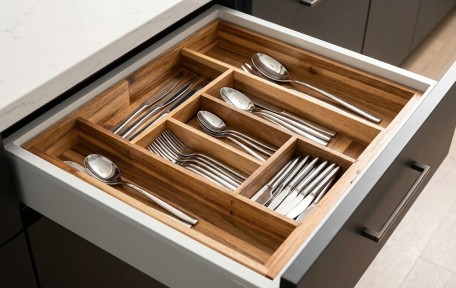
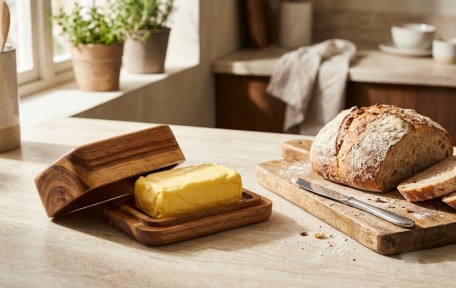
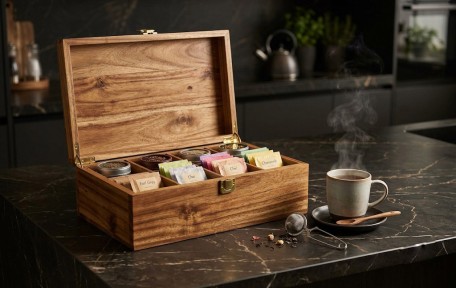
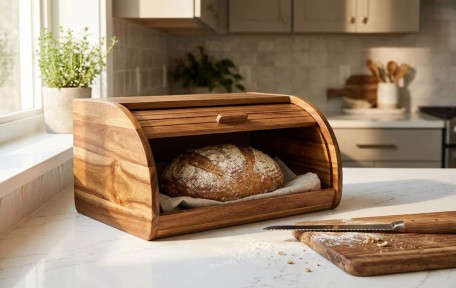
Operating a massive 12,000-square-meter facility, we specialize in processing our core materials: Acacia wood, bamboo, rattan, water hyacinth, seagrass, paper, and mixed materials. The production of our diverse product lines—ranging from Kitchen accessories (cutting boards, platters, serving trays, drawer organizers) and Home decor to Bath accessories and Small furniture (drying racks, wall shelves, benches)—requires continuous machinery operation. The sawdust generated from processing our FSC-certified Acacia wood is fully recovered to produce briquettes.
This clean energy is applied directly to provide heat for our three high-capacity industrial drying rooms, ensuring the optimal moisture content for our raw materials. Furthermore, our state-of-the-art thermal insulation warehouse (capable of holding over 40 containers of finished goods) benefits from this optimized energy, guaranteeing product quality and safety during up to six months of storage. Governed by our ISO9001 quality management system, this closed-loop energy model not only reduces operational costs but also stands as a testament to our unwavering commitment to sustainable development.
The Future of Handicraft & Furniture Manufacturing
With an export capacity reaching 40-50 40-foot containers per month, the Zero-Waste manufacturing model at Ngoc Dong Ha Nam has proven its efficacy on a large industrial scale. Our workforce of 70 skilled factory employees, alongside a network of over 2,000 artisans trained in traditional Vietnamese craft villages, directly contributes to a green and circular supply chain. Over the next decade, as the global energy transition enters a decisive phase, the trend of utilizing manufacturing byproducts for biomass energy will continue to dominate the market. Pioneering enterprises that proactively master this technology will hold an absolute competitive advantage on the international export map.
FAQs
Q1: What are the benefits of the Zero-Waste manufacturing model in wood processing? A: This model eliminates industrial waste by converting sawdust into biomass briquettes for clean energy, thereby reducing operational costs, lowering carbon footprints, and protecting the environment.
Q2: What is Ngoc Dong Ha Nam's primary material for sustainable production? A: Acacia wood is our leading core material, alongside other highly renewable natural resources such as bamboo, rattan, water hyacinth, seagrass, paper rope, and mixed materials.
Q3: How is the clean energy from sawdust utilized at the factory? A: We harness this renewable energy to power three high-capacity drying rooms and our thermal insulation systems, which helps maintain the quality of over 40 containers of finished goods for up to six months.
Q4: Can the factory handle large-volume orders? A: Absolutely. With a 12,000 sqm facility, synchronized modern machinery (CNC, pressing, and lathing machines), and thousands of skilled artisans, we maintain a stable export capacity of 40 to 50 40-foot containers every month.
Q5: How is compliance with environmental and social standards verified? A: Our quality and processes are certified by prestigious international standards including ISO9001, ISO14001, FSC, SCAN, BSCI, and SMETA, fully meeting the compliance requirements of major corporations like Walmart, Target, Costco, and Nitori.