
How to Import Wood Products from Vietnam to the US: The Ultimate Customs Documentation and Compliance Guide
Key Takeaways
- •As of January 1, 2026, all Lacey Act Declarations must be submitted electronically via the Automated Commercial Environment (ACE) or the Lacey Act Web Governance System (LAWGS), as paper PPQ Forms 505 and 505B are no longer accepted.
- •Wood packaging materials (WPM) such as pallets and crates must be treated and clearly stamped with the ISPM 15 mark (HT or MB) to avoid immediate shipment rejection and costly re-exportation by US Customs and Border Protection.
- •Accurate 10-digit HTS code classification under Chapters 44, 46, or 94 is mandatory for determining duty rates, Section 232 tariffs, and avoiding high anti-dumping duties on Vietnamese hardwood plywood.
- •A complete commercial document package—including the Bill of Lading, Commercial Invoice detailing precise material composition, Packing List, and Certificate of Origin (Form B)—must be perfectly aligned to prevent CBP entry delays.
INTRODUCTION: NAVIGATING THE COMPLEXITIES OF IMPORTING WOOD FROM VIETNAM TO THE US
In the global home decor and furniture industries, Vietnam has emerged as an undisputed powerhouse. From the rustic charm of solid acacia dining tables to the intricate elegance of hand-woven rattan baskets, global retailers, B2B buyers, and interior designers are increasingly sourcing natural-material goods from Vietnamese manufacturers. However, the path from a factory floor in Ha Nam province to a retail showroom in New York or Los Angeles is paved with stringent regulatory requirements. A single missing document, an incorrect scientific name, or a misclassified tariff code can trigger costly port delays, devastating demurrage fees, or even the outright seizure of your shipment by U.S. Customs and Border Protection (CBP).
For over 35 years, Ngoc Dong Ha Nam has been at the forefront of Vietnam's handicraft and home furnishings export sector. Operating a 12,000-square-meter facility and employing thousands of skilled local artisans, we have shipped millions of compliant, high-quality products to major global retailers like Walmart and Costco. We understand that in international B2B trade, operational excellence is just as critical as aesthetic design. This comprehensive, step-by-step guide is designed to empower global buyers with the exact knowledge required to navigate the complex landscape of U.S. customs documentation when importing wood, bamboo, rattan, and other natural fiber products from Vietnam.
PREREQUISITES: ESSENTIAL PREPARATIONS AND COMPLIANCE STANDARDS BEFORE YOU IMPORT
Before your cargo ever boards a vessel at the Port of Hai Phong or Ho Chi Minh City, several regulatory and operational foundations must be established. Skipping these prerequisites will almost certainly guarantee clearance issues upon arrival in the United States.
1. Secure a Continuous Customs Bond
All commercial imports entering the U.S. valued over $2,500 require a customs bond. If you plan to import multiple shipments throughout the year, purchasing a Continuous Customs Bond (usually valued at a minimum of $50,000) is highly recommended over a Single Entry Bond. A continuous bond covers all your import transactions across all U.S. ports of entry for a 12-month period, drastically reducing administrative delays and per-shipment costs.
2. Retain a Licensed U.S. Customs Broker
Navigating the Automated Commercial Environment (ACE) portal requires specialized expertise. Partnering with an experienced U.S. customs broker who understands the nuances of agricultural and forestry imports is critical. Your broker will act as your legal representative, filing entry summaries and communicating directly with CBP and partnering government agencies (PGAs).
3. Verify TSCA Title VI Compliance (CARB Phase 2)
If your wooden home decor or furniture utilizes engineered wood, such as Medium-Density Fiberboard (MDF), particleboard, or hardwood plywood, it must comply with the Formaldehyde Standards for Composite Wood Products Act (regulated under TSCA Title VI). U.S. law mandates that these products carry a compliance label and that the importer maintains a complete chain-of-custody record proving that formaldehyde emissions do not exceed strict statutory limits.
4. Ensure Supply Chain Certifications (FSC, BSCI, SMETA)
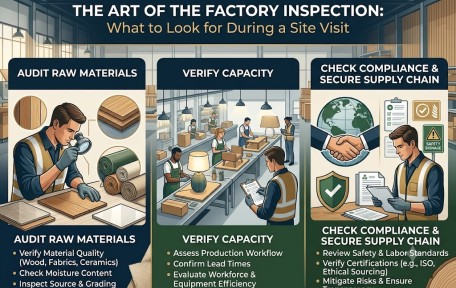
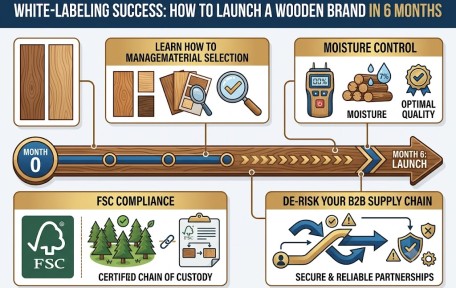
Modern B2B buyers must mitigate social and environmental risks. Sourcing from a manufacturer with Forest Stewardship Council (FSC) certification ensures that the wood (such as acacia) or bamboo used in your products is legally and sustainably harvested. Furthermore, social compliance audits like BSCI (Business Social Compliance Initiative) and SMETA (Sedex Members Ethical Trade Audit) demonstrate to customs authorities and major retail clients that your supply chain is free from forced labor and ethical violations, reducing the likelihood of CBP cargo holds under Withhold Release Orders (WROs).
STEP 1: CLASSIFY YOUR PRODUCTS WITH PRECISE HS AND HTS CODES
The first active step in preparing your customs documentation is the precise classification of your goods using the 10-digit Harmonized Tariff Schedule of the United States (HTSUS). The HTS code determines your base duty rate, eligibility for trade agreements, and whether your shipment is subject to special trade remedies.
Key HTS Chapters for Natural Home Decor and Furniture
- Chapter 44 (Wood and Articles of Wood): Covers solid wood products, including acacia cutting boards, wooden trays, and structural wood components (e.g., HTS 4419 for tableware and kitchenware of wood, HTS 4420 for wood marquetry and caskets).
- Chapter 46 (Manufactures of Straw, Esparto, or Other Plaiting Materials; Basketware and Wickerwork): This is highly relevant for handcrafted decor. It covers woven rattan baskets, seagrass laundry bins, and water hyacinth storage boxes (e.g., HTS 4602.11 for bamboo articles, HTS 4602.12 for rattan articles).
- Chapter 94 (Furniture and Bedding): Covers finished furniture pieces, such as wooden chairs, dining tables, and upholstered seating with wooden frames (e.g., HTS 9401 for seats, HTS 9403 for other wooden furniture).
Crucial Tariff Updates and Anti-Dumping Risks
Importers must stay highly vigilant regarding shifting trade policies. Under Section 232 of the Trade Expansion Act of 1962, U.S. tariffs on imported timber and processed wood remain active at rates of 10% and 25%, respectively. While a recent presidential proclamation delayed a scheduled tariff hike on certain finished wood products (like kitchen cabinets and bathroom vanities) to January 1, 2027, the baseline Section 232 duties still apply and must be calculated into your landed cost models.
Additionally, the U.S. Department of Commerce (DOC) issued its preliminary determination in the anti-dumping duty (ADD) investigation concerning hardwood and decorative plywood imported from Vietnam, establishing preliminary duty rates upwards of 191% to 194% for non-compliant or uncooperative exporters. To avoid these astronomical duties, B2B buyers must partner with verified manufacturers like Ngoc Dong Ha Nam who can provide flawless documentation proving that their products do not utilize materials subject to circumvention or anti-dumping orders.
STEP 2: MASTERING THE LACEY ACT DECLARATION AND COMPLIANCE REQUIREMENTS
For any B2B buyer importing wood, bamboo, or rattan products into the United States, the Lacey Act (16 U.S.C. §§ 3371-3378) represents the most critical regulatory hurdle. Administered by the USDA's Animal and Plant Health Inspection Service (APHIS), the Lacey Act combats illegal logging by making it unlawful to import plants or plant products harvested in violation of any domestic or foreign law.
What Information Must Be Declared?
A formal Lacey Act Declaration requires the importer to provide highly specific data for every plant-derived component in the shipment:
- Scientific Name: You must declare the exact Latin genus and species of the plant material. Generic terms like 'wood' or 'rattan' are strictly rejected. For example, if you are importing acacia kitchenware from Ngoc Dong Ha Nam, you must declare Acacia mangium. For bamboo products, use Bambusa vulgaris. For rattan, use Calamus rotang.
- Country of Harvest: This is the country where the tree or plant was physically cut down or harvested—not where it was manufactured. If a Vietnamese factory imports oak from the U.S. to manufacture furniture and then exports it back, the country of harvest is the USA, while the country of origin is Vietnam. For our sustainably grown local acacia and bamboo, the country of harvest is proudly Vietnam.
- Quantity and Unit of Measure: The metric volume or weight of the plant material.
- Value of the Import: The monetary value of the plant portion of the product.
Critical Electronic Filing Mandate
Importers must note a monumental regulatory shift: effective January 1, 2026, USDA-APHIS no longer accepts paper Lacey Act Declarations (PPQ Forms 505 and 505B). All declarations must now be filed electronically through the Automated Commercial Environment (ACE) via your customs broker, or directly through the Lacey Act Web Governance System (LAWGS). Failing to submit this electronic declaration at the time of entry will result in immediate customs rejection, leaving your container stranded at the port.
STEP 3: SECURING PHYTOSANITARY CERTIFICATES AND FUMIGATION STANDARDS
Because wood, bamboo, and natural fibers are organic materials, they are primary vectors for agricultural pests, invasive wood-boring insects, and mold. To protect U.S. agriculture and forestry, both the USDA and CBP enforce strict quarantine and treatment protocols.
1. Phytosanitary Certificate (Chứng thư kiểm dịch thực vật)
For raw, semi-processed wood, or specific unmanufactured plant materials, a Phytosanitary Certificate is required. This certificate is issued by the Vietnam Plant Protection Department (under the Ministry of Agriculture and Rural Development - MARD) after physical inspection of the cargo. It officially certifies that the shipment has been inspected and is free from quarantine pests. Fully finished, deeply processed wooden furniture or highly processed handicrafts are often exempt from this requirement, but your customs broker must verify this based on the specific HTS code.
2. ISPM 15 Compliance for Wood Packaging Materials (WPM)
Even if your actual products are made of non-wood materials (like seagrass or ceramic), the pallets, crates, dunnage, and wooden blocks used to secure your cargo in the container are subject to ISPM 15 (International Standards for Phytosanitary Measures No. 15). All non-manufactured wood packaging must be treated via one of the following approved methods:
- Heat Treatment (HT): The wood must be heated until its core temperature reaches 56°C (132.8°F) for at least 30 continuous minutes.
- Methyl Bromide (MB) Fumigation: The wood is fumigated with methyl bromide gas in a sealed chamber according to strict temperature and dosage specifications.
Once treated, the wood must be clearly stamped with the internationally recognized ISPM 15 mark, displaying the country code (VN for Vietnam), the unique producer code, and the treatment method (HT or MB). CBP inspectors routinely inspect containers with thermal imaging and physical checks; unstamped or infested pallets will result in the entire container being ordered for immediate re-export at the importer's expense.
3. Cargo Fumigation Certificates
For hand-woven products made from rattan, bamboo, water hyacinth, and seagrass, securing a Fumigation Certificate is a critical industry best practice. During the 20-to-35-day ocean transit across high-humidity maritime routes, organic fibers are highly susceptible to moisture absorption and mold growth. At Ngoc Dong Ha Nam, we subject all woven cargo to professional fumigation (typically utilizing Sulfur Dioxide or Methyl Bromide) prior to sealing the container, providing an official Fumigation Certificate that satisfies both customs authorities and quality assurance teams.
STEP 4: COMPILING CORE CUSTOMS DOCUMENTATION
With classifications determined and regulatory filings prepared, you must compile the core commercial document package. These documents must be perfectly aligned; any discrepancy in weights, values, or descriptions across different forms will trigger a red flag in the CBP's automated targeting system.
1. The Commercial Invoice (CI)
The Commercial Invoice is the primary document used by CBP to assess duties. To ensure smooth clearance, the CI must include:
- Full names and physical addresses of the exporter (e.g., Ngoc Dong Ha Nam Handicrafts Export Co., Ltd) and the importer of record.
- Detailed description of each item, including its commercial name, material composition (e.g., 'Handmade storage basket, 100% natural split bamboo'), and its designated HTS code.
- Unit price, total price, and currency of transaction (typically USD).
- The terms of sale / Incoterms (e.g., FOB Port of Hai Phong, CIF, or DDP).
2. The Packing List (PL)
The Packing List details the physical makeup of the shipment. It must specify:
- The total number of packages, cartons, or pallets.
- Exact net weight and gross weight of each package and the entire shipment.
- Precise dimensions of all packaging units.
- Container and seal numbers (for Full Container Load - FCL shipments).
3. The Bill of Lading (B/L)
Issued by the ocean carrier or freight forwarder, the Bill of Lading serves as a receipt of cargo and the contract of carriage. It can be issued as a 'Negotiable Bill of Lading' or a 'Seaway Bill' (express release). Ensure that the shipper, consignee, and notify party details on the B/L mirror the Commercial Invoice exactly.
4. The Certificate of Origin (C/O)
To prove that your goods are legally manufactured in Vietnam and are not subject to transshipment tariffs targeting other nations, you must present a Certificate of Origin. For exports to the U.S., a Certificate of Origin Form B (issued by the Vietnam Chamber of Commerce and Industry - VCCI) or a formal self-declaration of origin is required. This document is your shield against circumvention audits.
5. CBP Form 3461 & CBP Form 7501
Your customs broker will use the commercial documents to file CBP Form 3461 (Entry/Immediate Delivery) for the rapid release of the goods, followed by CBP Form 7501 (Entry Summary) within 10 working days of entry to finalize duty payments and statistical records.
STEP 5: LEVERAGE SUPPLY CHAIN SECURITY AND ETHICAL AUDITS (C-TPAT, SMETA, BSCI)
In modern international trade, compliance is not merely about avoiding fines; it is a strategic tool to accelerate your supply chain. U.S. Customs utilizes sophisticated risk-assessment algorithms to determine which containers to flag for physical examinations, which can cost importers thousands of dollars in port storage and delay shipments by weeks.
The Power of C-TPAT Participation
The Customs-Trade Partnership Against Terrorism (C-TPAT) is a voluntary joint government-business initiative. When U.S. importers participate in C-TPAT, they commit to securing their entire supply chain, from the foreign manufacturing plant to the domestic warehouse. In return, CBP grants these importers 'low-risk' status, resulting in significantly fewer cargo examinations, shorter wait times at the border, and priority access during supply chain disruptions.
Why Partnering with an Audited Manufacturer Matters
To qualify for C-TPAT benefits and satisfy the stringent vendor requirements of global retail giants, you must partner with manufacturers that maintain rigorous security and ethical standards. Ngoc Dong Ha Nam is fully certified with:
- FSC (Forest Stewardship Council): Guaranteeing 100% legal, traceable, and sustainable timber and bamboo sourcing, satisfying both the Lacey Act and consumer demands for eco-friendly home decor.
- BSCI & SMETA: Verifying that our factories adhere to international labor standards, fair wages, and safe working conditions. This eliminates the risk of your goods being detained under the U.S. Uyghur Forced Labor Prevention Act (UFLPA) or other forced labor enforcement initiatives.
- ISO 14001 & ISO 9001: Ensuring world-class environmental management and strict quality control processes, meaning zero defect rates and flawless documentation.
By sourcing from an established, fully-audited partner like Ngoc Dong Ha Nam, your customs broker can present a clean, highly documented supply chain profile to CBP, facilitating seamless green-channel clearance.
Conclusion: Streamlining Your Green Supply Chain with Ngoc Dong Ha Nam
Importing sustainable wood, bamboo, and rattan home decor from Vietnam to the United States offers an exceptional competitive advantage for global retailers, e-commerce brands, and interior designers. Vietnam's rich heritage of craftsmanship, combined with abundant renewable resources like acacia and bamboo, makes it the premier sourcing destination in Southeast Asia.
However, realizing this advantage requires a meticulous approach to customs compliance. By systematically classifying your HTS codes, transitioning to the mandatory electronic Lacey Act filings, ensuring strict ISPM 15 wood packaging compliance, and compiling flawless commercial document packages, you eliminate the threat of costly port delays and protect your business from severe legal penalties.
At Ngoc Dong Ha Nam, we do more than manufacture beautiful, sustainable home decor—we protect your supply chain. Our dedicated export logistics team works hand-in-hand with your customs brokers, providing all required certifications, precise scientific classifications, and compliant packaging to ensure your cargo moves swiftly through U.S. ports of entry. Let us help you elevate your product offerings while maintaining absolute regulatory peace of mind.
Ready to source premium, compliant, and sustainable home decor for your B2B portfolio? Contact the Ngoc Dong Ha Nam export team today to discuss your custom OEM/ODM designs, request samples, and secure your next high-volume production run.
Frequently Asked Questions
Do I need a Lacey Act Declaration for importing woven rattan or bamboo baskets?
Yes. Woven rattan and bamboo baskets fall under HTS Chapter 46 and contain plant materials, meaning they require a Lacey Act Declaration. You must provide the exact scientific names, such as Calamus rotang for rattan or Bambusa vulgaris for bamboo, along with the country of harvest.
What are the current U.S. tariff rates on wooden furniture imported from Vietnam?
Most wooden furniture imported from Vietnam is subject to standard Most-Favored-Nation (MFN) duty rates under HTS Chapter 94, which are often duty-free or carry very low rates. However, importers must account for active Section 232 tariffs (up to 25% on processed wood items) and verify that their products are exempt from anti-dumping duties targeting specific Vietnamese plywood or upholstered seating.
How can I prevent my wood and natural fiber shipments from molding during ocean transit?
To prevent mold and pest infestation during the 20-to-35-day ocean voyage, ensure your manufacturer performs professional cargo fumigation (using Sulfur Dioxide or Methyl Bromide) and provides an official Fumigation Certificate. Partnering with a manufacturer like Ngoc Dong Ha Nam guarantees that products are thoroughly dried and packed in moisture-controlled environments.
What is the difference between the country of origin and the country of harvest under the Lacey Act?
The country of origin is where the final product was manufactured (e.g., Vietnam), whereas the country of harvest is the physical location where the raw timber or plant material was grown and cut down (e.g., USA, Europe, or Vietnam). The Lacey Act strictly requires the declaration of the country of harvest.