
Mastering Millimeter Precision: How CNC Technology is Revolutionizing Sustainable Woodworking for Global B2B Buyers
Key Takeaways
- •CNC technology ensures millimeter precision in woodworking, eliminating human error and ensuring absolute consistency across large-scale B2B production runs.
- •Advanced CNC nesting software maximizes material yield from FSC-certified woods like Acacia and Bamboo, significantly reducing manufacturing waste.
- •Automated precision routing enables interior designers to execute complex, parametric geometries that are impossible to achieve through traditional handcrafting.
- •Integrating CNC machining with BSCI and SMETA compliant supply chains guarantees that high-tech manufacturing meets rigorous global ethical standards.
The dawn of flawless craftsmanship in sustainable home decor
In the highly competitive world of global home decor and interior design, the margin for error is virtually nonexistent. Global buyers, procurement managers, and visionary interior designers are constantly navigating a delicate balancing act: sourcing products that exude the warmth and authenticity of natural materials while demanding the absolute consistency and scalability of mass production. For decades, this has been the ultimate supply chain paradox. Handcrafted wooden furniture and decor pieces possess an undeniable charm, but scaling artisanal craftsmanship often introduces unacceptable variances in dimensions, joint integrity, and finish. Today, that paradigm has shifted entirely. The integration of Computer Numerical Control (CNC) technology into sustainable woodworking has fundamentally rewritten the rules of B2B sourcing, ushering in an era where millimeter precision is not just an aspiration, but a baseline guarantee.
As the Marketing Director and Sustainable Supply Chain Consultant at Ngoc Dong Ha Nam, I have witnessed firsthand how technological innovation can elevate traditional materials. We are no longer just shaping wood; we are engineering it. By marrying the timeless beauty of natural, fast-renewable resources like Acacia and Bamboo with cutting-edge CNC routing and milling, we are providing global markets with a level of exactness that was previously unimaginable. This technological evolution captures the attention of top-tier buyers because it solves the most pressing pain point in global procurement: achieving flawless, repeatable quality at scale without sacrificing the sustainable, organic ethos that modern consumers demand. The dawn of high-tech woodworking means that every single piece in a ten-thousand-unit order is structurally and aesthetically identical to the approved master sample.
Beyond Human Hands: The Mechanics of Millimeter Precision in B2B Sourcing
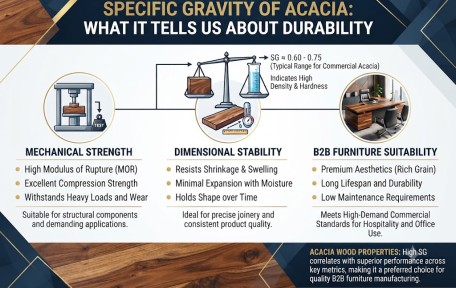
To truly appreciate the value CNC technology brings to a B2B supply chain, one must understand the mechanics of this millimeter precision. CNC machinery operates via highly sophisticated software that translates digital CAD (Computer-Aided Design) models into exact numerical coordinates. These coordinates guide automated cutting tools—routers, mills, and lasers—along multiple axes with microscopic exactitude. When working with robust, sustainable materials like Acacia wood or engineered Bamboo, this level of control is transformative. Acacia, known for its durability and striking grain patterns, and Bamboo, celebrated for its rapid renewability and tensile strength, require precise handling to prevent splintering and ensure structural integrity. CNC technology processes these materials with optimized feed rates and spindle speeds, resulting in immaculately smooth edges and perfectly calibrated components.
For the B2B buyer, the implications of this technology are profound. Consider the mechanics of flat-pack or Ready-To-Assemble (RTA) furniture, a cornerstone of efficient global logistics. The viability of flat-pack design relies entirely on the precision of its joints—mortise and tenon, dovetails, or cam-lock systems. A deviation of even a fraction of a millimeter can result in a wobbly chair, a misaligned cabinet door, or a frustrated end-consumer. CNC technology eliminates this risk entirely. Every dowel hole is drilled to the exact depth; every interlocking groove is routed to the precise width. This consistency drastically reduces defect rates, minimizes costly returns, and protects the brand reputation of global retailers. Furthermore, the scalability offered by CNC means that lead times are significantly reduced. Once a prototype is digitally perfected and programmed, the machinery can replicate it endlessly, operating around the clock to meet aggressive international shipping schedules while maintaining an uncompromising standard of quality.
Elevating Your Collections: Where Unbounded Creativity Meets Ethical Engineering
Precision and scalability are crucial, but the true desire of any interior designer or product developer lies in creative freedom. Historically, the complexity of a wooden decor piece was limited by the physical constraints of hand tools and manual labor. Intricate lattice work, sweeping parametric curves, and complex geometric hollows were either too expensive to produce at scale or entirely impossible. CNC technology shatters these creative boundaries. Designers can now envision avant-garde, complex structures, knowing that a 5-axis CNC router can execute their exact digital vision with flawless fidelity. This empowers brands to launch highly differentiated, premium collections that stand out in a saturated market. Whether it is a conceptually bold Bamboo room divider or a seamlessly contoured Acacia dining table, CNC turns visionary design into tangible reality.
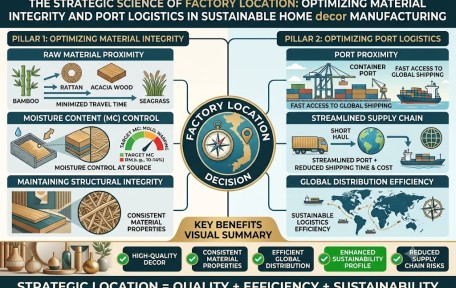
Beyond aesthetics, there is a deep, intrinsic desire among modern buyers to source responsibly. At Ngoc Dong Ha Nam, we believe that true world-class manufacturing must be inherently sustainable. CNC technology is a powerful ally in the green transition. Advanced CNC nesting software mathematically calculates the most efficient way to arrange parts on a raw sheet or block of wood. This algorithm maximizes the yield from every single piece of FSC-certified timber, drastically minimizing off-cuts and manufacturing waste. When you combine this hyper-efficient material utilization with a supply chain that is rigorously audited for ethical labor practices—holding certifications like BSCI (Business Social Compliance Initiative) and SMETA (Sedex Members Ethical Trade Audit)—you create a product that is not only physically flawless but ethically impeccable. Buyers can confidently market their collections, knowing they are backed by a transparent, eco-conscious, and technologically advanced manufacturing partner.
Partner with Precision: Transform Your Next Design Vision Today
The future of global home decor belongs to those who can seamlessly blend the raw, natural beauty of sustainable materials with the flawless execution of advanced technology. CNC woodworking is no longer a futuristic luxury; it is a critical requirement for any brand looking to scale globally while maintaining premium quality, structural integrity, and eco-conscious efficiency. The millimeter precision achieved through this technology protects your bottom line, empowers your design teams, and ultimately delights your end consumers with products that stand the test of time.
It is time to elevate your sourcing strategy and eliminate the uncertainties of traditional manufacturing. At Ngoc Dong Ha Nam, our BSCI and SMETA compliant facilities are equipped with state-of-the-art CNC technology, ready to transform your FSC-certified Acacia and Bamboo designs into flawless, market-ready collections. Do not let manufacturing limitations dictate your creative potential. Connect with our expert supply chain consultants today to discuss your next project, request a prototype, and discover how our commitment to precision engineering and sustainable practices can become your ultimate competitive advantage in the global market.
Frequently Asked Questions
How does CNC technology improve the quality of B2B furniture sourcing?
CNC (Computer Numerical Control) technology uses programmable software to direct factory machinery, ensuring that every cut, joint, and engraving is accurate to the millimeter. For B2B buyers, this means absolute consistency across high-volume orders, eliminating the variability often found in manual production and drastically reducing defect rates.
Can CNC machines work effectively with sustainable materials like Bamboo and Acacia?
Absolutely. Modern CNC routers are highly adaptable and excel at machining dense, sustainable materials like Acacia wood and engineered Bamboo. The technology optimizes cutting paths, feed rates, and spindle speeds to prevent splintering, ensuring flawlessly smooth finishes and maximizing the structural integrity of these eco-friendly materials.
Does using CNC technology align with sustainable manufacturing practices?
Yes, CNC technology is a major driver of sustainable manufacturing. It utilizes advanced nesting algorithms that calculate the most mathematically efficient way to cut parts from a single piece of wood. This maximizes material yield and drastically minimizes waste, perfectly supporting the goals of an FSC-certified supply chain.
What role does CNC play in flat-pack and RTA (Ready-To-Assemble) furniture design?
CNC is revolutionary for flat-pack furniture. It machines joints, dowel holes, and interlocking mechanisms with such exact precision that assembly is seamless and structurally robust. This exactness is critical for reducing shipping volumes, lowering logistics costs, and ensuring a positive assembly experience for the end consumer.