
Navigating Global Sourcing: Why Your Choice of Incoterms 2020 Can Make or Break Your Next Sustainable Decor Collection
Key Takeaways
- •FOB (Free on Board) offers global buyers maximum control over freight costs and logistics routing, making it the most cost-effective option for established importers sourcing sustainable home decor from Vietnam.
- •DDP (Delivered Duty Paid) transfers all customs clearance, import duties, and local delivery risks to the manufacturer, providing a hassle-free, door-to-door solution ideal for boutique retailers and interior designers.
- •Sourcing natural fiber handicrafts like seagrass, rattan, and water hyacinth requires strict climate control during transit to prevent moisture damage, which influences the ideal choice of Incoterm and insurance coverage.
- •Ngoc Dong Ha Nam supports FOB, CIF, and DDP shipping terms, backed by international certifications including BSCI, SMETA, and FSC to guarantee a compliant, secure, and sustainable global supply chain.
THE HIDDEN COST OF SHIPPING: WHY YOUR SOURCING STRATEGY STARTS LONG BEFORE THE CARGO SHIP SAILS
In the highly competitive global home decor market, sourcing premium, handwoven sustainable products is only half the battle. Imagine discovering the perfect collection of FSC-certified acacia wood serving trays, intricately woven rattan storage baskets, and elegant seagrass rugs from Vietnam. Your design team is thrilled, the purchase order is signed, and your marketing campaign is ready to launch. But weeks later, your shipment is held up at the destination port due to custom clearance discrepancies, unexpected terminal handling charges, or worse—moisture damage caused by improper transit conditions.
For global B2B buyers, procurement directors, and high-end interior designers, shipping is never just a logistical detail; it is a critical variable that directly impacts your profit margins, brand reputation, and project timelines. This is where Incoterms 2020 (International Commercial Terms) become your most powerful tool. Choosing the wrong shipping term can turn a highly profitable sustainable decor line into a logistical nightmare, while the right term can streamline your operations, minimize risks, and establish a seamless, green supply chain from Vietnam to your warehouse.
FOB vs. CIF vs. DDP: Demystifying the Three Pillars of International Trade
Understanding Your Options: FOB, CIF, and DDP Explained
To make an informed decision for your next eco-friendly home decor project, it is essential to understand how risk, cost, and responsibility shift between the buyer and the seller under the three most common Incoterms in B2B manufacturing.
1. FOB (Free on Board) - The Buyer's Control Center
Under FOB terms, the manufacturer (such as Ngoc Dong Ha Nam) is responsible for producing the goods, handling export clearance in Vietnam, and delivering the cargo safely onto the vessel at the designated port of origin (e.g., Haiphong Port or Cat Lai Port). Once the goods cross the ship's rail, all costs, risks, and liabilities transfer to you, the buyer.
- Pros: You have complete control over the freight rates, shipping routes, and transit times. This is highly advantageous if you have established relationships with global freight forwarders.
- Cons: You bear all risks during ocean transit and must handle import customs clearance and domestic delivery in your destination country.
2. CIF (Cost, Insurance, and Freight) - The Balanced Middle Ground
Under CIF, the seller pays for the ocean freight and marine insurance to transport the goods to your designated destination port. However, a critical nuance of CIF is that the transfer of risk occurs at the port of origin, even though the seller pays for the freight. If the goods are damaged at sea, you must file the insurance claim, not the manufacturer.
- Pros: Convenient for buyers who do not want to manage ocean freight logistics but still want to handle their own local customs clearance and inland transport.
- Cons: Potential for hidden port fees at the destination. Additionally, the seller chooses the carrier, which may result in longer transit times or less-than-ideal shipping routes.
3. DDP (Delivered Duty Paid) - The Ultimate Hassle-Free Solution
DDP represents the maximum obligation for the seller. The manufacturer manages the entire supply chain: production, export clearance, ocean freight, marine insurance, import customs clearance, payment of all import duties and taxes (VAT/GST), and final delivery directly to your warehouse or project site.
- Pros: Complete peace of mind. There are no hidden fees, no customs delays for you to manage, and zero logistics hassle. It is a true door-to-door service.
- Cons: Typically carries a higher upfront cost, as the manufacturer builds the logistics management, duty estimates, and risk premiums into the final quote.
RISK MITIGATION MEETS ECO-FRIENDLY DESIGN: ALIGNING INCOTERMS WITH YOUR BUSINESS MODEL
How Material Vulnerability and Business Scale Dictate Your Choice
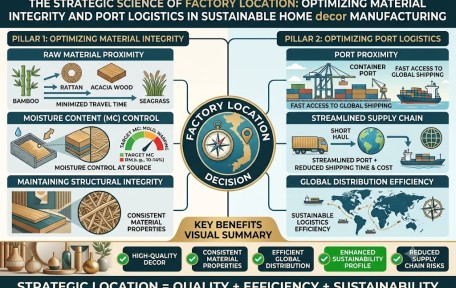
Choosing the best Incoterm is not a one-size-fits-all decision. In the sustainable home decor sector, the physical characteristics of the materials play a vital role. Natural fibers like water hyacinth, seagrass, and bamboo are highly hygroscopic, meaning they absorb moisture from the air. During long ocean transits across varying climate zones, improper container ventilation or lack of silica gel desiccants can lead to mold growth.
If you choose FOB, you must ensure your freight forwarder understands how to handle natural fiber handicrafts, utilizing dry containers with appropriate moisture control protocols. At Ngoc Dong Ha Nam, our experienced logistics team works closely with our clients' designated forwarders to guarantee that our BSCI, SMETA, and FSC-certified products are packed under strict quality control standards, ensuring they remain pristine throughout their journey.
Which Incoterm Fits Your Profile?
- The Large-Scale Retailer / Volume Importer: FOB is almost always the best choice. Your volume allows you to negotiate superior ocean freight rates, and your dedicated logistics team can seamlessly manage customs clearance and local distribution, maximizing your overall margins.
- The Boutique Brand / Mid-Sized Importer: CIF offers a practical compromise. It simplifies the international shipping leg while allowing you to utilize your local customs broker to clear the goods quickly and manage domestic transport.
- The High-End Interior Designer / Hospitality Project Manager: DDP is highly recommended. When managing a luxury hotel fit-out or a residential design project, you cannot afford to deal with customs paperwork, tariff classification codes, or port delays. DDP allows you to focus entirely on your design curation while we handle the heavy lifting, delivering finished, sustainable masterpieces directly to your project site.
STREAMLINE YOUR SUSTAINABLE SUPPLY CHAIN: PARTNER WITH NGOC DONG HA NAM
Elevate Your Sourcing Experience with a Trusted Manufacturing Partner
At Ngoc Dong Ha Nam, we understand that a successful partnership extends far beyond crafting beautiful, eco-friendly home decor. It requires operational excellence, absolute transparency, and flexible logistics solutions tailored to your unique business model. Whether you are looking to source custom-designed bamboo tableware, handwoven rattan laundry baskets, or sustainable acacia wood furniture, we are equipped to support your preferred Incoterms.
Our state-of-the-art manufacturing facilities comply with the highest global standards, including BSCI, SMETA, and FSC, ensuring that your products are not only environmentally sustainable but also ethically produced. We offer comprehensive logistics consulting as part of our B2B service, helping you analyze the cost-benefit ratio of FOB, CIF, and DDP based on your current import capabilities and destination port logistics.
Are you ready to elevate your product catalog with high-quality, ethically made Vietnamese handicrafts without the logistical stress? Contact our B2B sourcing experts today to discuss your upcoming collection and design a customized, risk-free shipping plan that protects your margins and honors the planet.
FREQUENTLY ASKED QUESTIONS
What is the main difference between FOB and CIF for B2B buyers?
Under FOB (Free on Board), the buyer assumes all costs, risks, and logistics management once the goods are loaded onto the vessel at the port of origin. Under CIF (Cost, Insurance, and Freight), the seller pays for ocean transport and marine insurance to the destination port, but the risk of damage still transfers to the buyer once the goods are loaded at the origin port.
Why is DDP highly recommended for interior designers and boutique retailers?
DDP (Delivered Duty Paid) is ideal because the manufacturer handles all export/import customs clearance, pays all duties and taxes, and manages final inland delivery. This eliminates administrative hassle, hidden fees, and logistical risks for the buyer, allowing them to focus entirely on their design projects.
How do natural materials like seagrass and rattan affect the choice of Incoterms?
Natural fiber products are sensitive to moisture and mold during long sea transits. If a buyer chooses FOB, they must ensure their freight forwarder is experienced in handling organic handicrafts and uses proper container ventilation. Under CIF or DDP, the manufacturer or their chosen carrier manages these risks and the associated marine insurance.
Does Ngoc Dong Ha Nam support FSC and BSCI compliance under all shipping terms?
Yes. Regardless of whether you choose FOB, CIF, or DDP, all products manufactured by Ngoc Dong Ha Nam maintain strict compliance with FSC, BSCI, and SMETA certifications, ensuring a fully ethical and sustainable supply chain from raw material to delivery.