The Science of Wood vs. Heat: Why Dishwashers Destroy Wooden Kitchenware (And How B2B Buyers Can Protect Their Brand Reputation)
Key Takeaways
- •Wood is a highly hygroscopic natural material, meaning it constantly absorbs and releases moisture, causing cellular-level expansion and contraction that leads to warping when exposed to dishwasher heat.
- •The combination of high-temperature water (often exceeding 60°C/140°F) and rapid heated drying cycles in dishwashers strips natural oils and ruptures wood fibers.
- •Engineered wood and bamboo kitchenware rely on adhesives that chemically break down and delaminate under the intense heat and chemical detergents of modern dishwashers.
- •Ngoc Dong Ha Nam mitigates environmental vulnerability by kiln-drying premium Acacia and Bamboo to an optimal 8-12% moisture content and applying food-safe, water-resistant sealants.
- •Educating end-consumers on proper hand-washing and oiling protocols is a powerful brand-building tool that reduces return rates and elevates customer satisfaction.
THE COSTLY MISTAKE: WHY A SINGLE DISHWASHER CYCLE CAN RUIN YOUR BRAND'S PREMIUM WOODENWARE
For global B2B buyers, hospitality procurement managers, and interior designers, sourcing premium wooden kitchenware is an investment in sustainable luxury. Beautifully grained Acacia salad bowls, minimalist Bamboo cutting boards, and hand-carved serving utensils add organic warmth to any retail portfolio or high-end dining space. However, a single consumer mistake can instantly compromise this investment: placing woodenware in the dishwasher.
When an end-consumer unloads a warped, split, or faded wooden bowl from their dishwasher, they rarely blame their own cleaning habits. Instead, they blame your brand. In the highly competitive home decor and kitchenware markets, negative reviews detailing cracked wood or mold growth can severely damage a brand's reputation and drive up return rates. Understanding the fundamental science of how wood interacts with heat and moisture is not just a technical curiosity—it is a commercial imperative for B2B professionals who want to protect their margins, maintain product longevity, and select manufacturing partners capable of producing highly resilient woodenware.
THE SCIENCE OF WOOD: WHY CELLULAR STRUCTURE HATES HIGH HEAT AND RAPID MOISTURE CYCLES
Understanding the Hygroscopic Nature of Natural Hardwoods
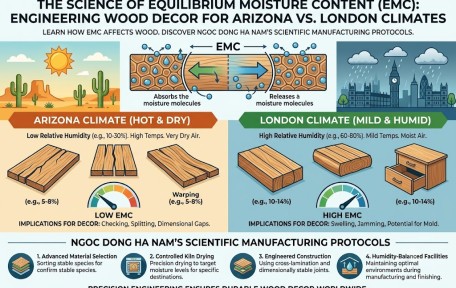
To understand why dishwashers are catastrophic to wood, we must look at the cellular level. Wood is inherently hygroscopic, meaning it acts like a natural sponge. Even after being harvested, cured, and crafted into a finished product, wood cells continue to absorb and release moisture in response to their surrounding environment. This process is governed by the Equilibrium Moisture Content (EMC).
The Double Whammy: Thermal Expansion and Extreme Hydration
A standard dishwasher cycle subjects tableware to two extreme forces in rapid succession:
- Saturated High-Heat Washing: Dishwashers spray water heated up to 60°C - 70°C (140°F - 160°F) combined with highly alkaline, abrasive detergents. This extreme heat softens the wood's natural lignin—the organic polymer that acts as a glue holding the cellulose fibers together. At the same time, the wood fibers rapidly drink in hot water, causing them to swell significantly.
- Rapid, Dry Heat Extraction: During the drying cycle, the dishwasher uses dry, intense heat to evaporate water. This forces the outer layers of the wood to dry and contract at an accelerated, unnatural rate while the inner core remains saturated.
This drastic differential pressure creates immense internal stress. Because the outer cells shrink faster than the inner cells, the wood fibers pull apart, resulting in visible warping, checking (small cracks), and deep splitting. Furthermore, the harsh alkaline detergents strip away the natural protective oils of hardwoods like Acacia, leaving the surface dry, rough, and highly vulnerable to bacterial colonization.
Bamboo and Laminated Wood: The Vulnerability of Adhesives
While Bamboo is technically a grass and highly praised for its rapid renewability, bamboo kitchenware is constructed by laminating multiple strips together using food-safe adhesives. The extreme heat of a dishwasher chemically breaks down these bonding agents. Over a few cycles, the laminated joints fail, causing the bamboo to delaminate, splinter, and split apart entirely.
CRAFTING RESILIENCE: HOW NGOC DONG HA NAM ENGINEERS SUSTAINABLE WOODENWARE FOR MODERN HOMES
The Manufacturer's Role in Minimizing Vulnerability
While no natural wood product can be truly "dishwasher safe," the quality of the manufacturing process directly determines how well woodenware withstands accidental dishwasher exposure or high-humidity environments. At Ngoc Dong Ha Nam, we combine decades of craftsmanship with advanced material science to maximize the durability of our sustainable Acacia and Bamboo collections.
1. Precision Kiln-Drying (The Foundation of Stability)
Before any shaping begins, our raw timber undergoes a highly controlled, slow kiln-drying process. We reduce the moisture content of the wood to an optimal 8% to 12%. This precise range ensures that the wood achieves maximum structural stability, making it far less prone to drastic expansion and contraction when exposed to ambient moisture changes.
2. Non-Toxic, Food-Safe Protective Sealants
We apply premium, water-resistant, food-safe finishes that penetrate deep into the wood grain. These sealants act as a barrier, significantly slowing down the rate of water absorption. This protective layer ensures that even if a consumer leaves a bowl soaking in the sink, the wood fibers are shielded from immediate saturation.
3. International Compliance and Quality Assurance
Our manufacturing facilities operate under strict international standards, including BSCI, FSC, and SMETA compliance. By sourcing FSC-certified timber, we guarantee that our Acacia and Bamboo are harvested sustainably, ensuring optimal density and grain alignment—factors that inherently improve the wood's natural resistance to warping and splitting.
Empowering Your Brand: Care Education as a Value-Add
As a leading B2B partner, we do not just supply products; we supply solutions. We help our buyers design elegant, clear, and educational care instructions to package with every product. By educating end-consumers on simple hand-washing protocols—using lukewarm water, mild soap, and occasional conditioning with food-grade mineral oil—brands can transform a potential product vulnerability into an opportunity to showcase premium, sustainable craftsmanship.
SECURE YOUR SUPPLY CHAIN: PARTNER WITH VIETNAM'S LEADING SUSTAINABLE WOODENWARE MANUFACTURER
Elevate Your Product Portfolio with Expertly Crafted Woodenware
In the global B2B marketplace, quality is the ultimate differentiator. Offering your customers beautifully designed, structurally stable, and ethically manufactured woodenware is key to building long-term brand loyalty. By partnering with Ngoc Dong Ha Nam, you gain access to high-capacity production, certified sustainable supply chains, and superior engineering designed to mitigate the real-world challenges of woodenware care.
Don't let subpar manufacturing and easily damaged wood hurt your brand's reputation. Let's collaborate to create high-durability, stunning wooden kitchenware collections that meet the rigorous standards of global consumers.
Contact our B2B sales team today to request custom samples, discuss your design specifications, or learn more about our FSC and BSCI-certified manufacturing capabilities in Vietnam.
FREQUENTLY ASKED QUESTIONS
Why does wood crack and warp when washed in a dishwasher?
Wood is a hygroscopic material that naturally expands when it absorbs water and contracts as it dries. The extreme hot water of a dishwasher forces rapid expansion, while the heated drying cycle causes rapid, uneven contraction. This intense physical stress ruptures the wood fibers, leading to warping, cracking, and splitting.
Is bamboo kitchenware more dishwasher-resistant than hardwood like Acacia?
No. In fact, bamboo kitchenware can be even more vulnerable. Since bamboo products are made of laminated strips held together by adhesives, the high heat and moisture of the dishwasher break down these chemical bonds, causing the bamboo to delaminate and splinter much faster than a solid piece of hardwood.
What manufacturing steps does Ngoc Dong Ha Nam take to make wood more durable?
Ngoc Dong Ha Nam kiln-dries all raw timber to a precise moisture content of 8-12% to ensure maximum structural stability. We also apply multiple layers of premium, non-toxic, food-safe water-resistant finishes to seal the wood grain and slow down moisture absorption, making our products highly resilient.
How should B2B brands instruct consumers to clean premium wooden kitchenware?
Brands should instruct consumers to hand-wash woodenware immediately after use with lukewarm water and a mild, non-abrasive dish soap. They should be wiped dry with a towel and allowed to air dry completely in an upright position. Additionally, applying a food-grade mineral oil every few weeks will maintain the wood's hydration and natural luster.