
The Ultimate Guide to Sourcing Acacia Woodware from Vietnam (2026 Edition)
In the rapidly evolving landscape of global supply chains, 2026 marks a pivotal year for the home decor and kitchenware industries. As retailers in the United States and Europe face increasing pressure to balance cost-efficiency with rigorous ESG (Environmental, Social, and Governance) mandates, the spotlight has shifted decisively toward Southeast Asia. Specifically, Vietnam has emerged as the global epicenter for high-quality, sustainable Acacia wood manufacturing.
This guide serves as a comprehensive roadmap for sourcing managers, category directors, and business owners looking to navigate the Vietnamese Acacia market. From understanding material science to mastering the new EUDR compliance landscape, here is everything you need to know about sourcing from the heart of Vietnam’s woodcraft heritage.
Chapter 1: Why Acacia? The Science and Market Demand
Acacia is no longer just an alternative to Teak or Oak; it has become a "hero material" for the modern household. But what makes it the preferred choice for a 2026 product lineup?
1.1. Exceptional Durability and Density
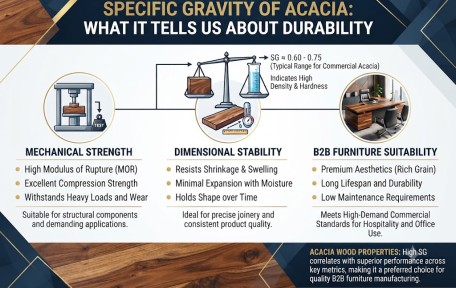
Acacia (specifically Acacia Mangium and Acacia Auriculiformis grown in Vietnam) is a dense hardwood known for its impressive Janka hardness rating. This makes it naturally resistant to scratches and heavy impacts—ideal for cutting boards, butcher blocks, and high-traffic dining furniture.
1.2. Natural Antimicrobial Properties
For kitchenware, safety is paramount. Acacia possesses natural oils that act as a barrier against moisture and bacteria. Unlike plastic, which can harbor microbes in deep knife cuts, Acacia’s fiber structure allows it to "heal" and remain hygienic for years of use.
1.3. Aesthetic Versatility
The visual appeal of Acacia lies in its erratic grain patterns and rich color palette—ranging from light amber to deep espresso. In an era where "Organic Modern" and "Japandi" styles dominate interior design, the raw, unrefined beauty of Acacia provides the "soul" that synthetic materials lack.
Chapter 2: The Vietnam Advantage in 2026
Why are global giants moving their production lines from China to Vietnam? The answer lies in a combination of geography, policy, and generational skill.
2.1. The "China Plus One" Strategy
Geopolitical stability and trade diversifications have made Vietnam the primary beneficiary of the "China Plus One" strategy. Buyers sourcing from Vietnam benefit from lower tariffs through free trade agreements like the EVFTA (EU-Vietnam Free Trade Agreement) and CPTPP.
2.2. The Northern Vietnam Woodworking Hub
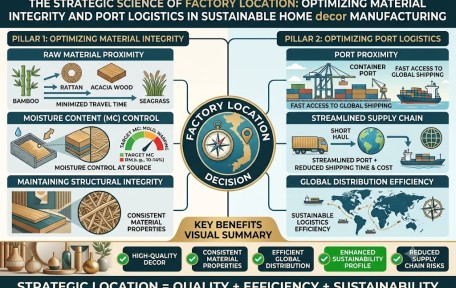
Provinces like Ha Nam, located near Hanoi, have evolved into sophisticated industrial clusters. These areas benefit from proximity to Haiphong Port, one of the most efficient shipping hubs in Southeast Asia, ensuring that lead times from factory to vessel are minimized.
2.3. A Legacy of Craftsmanship
Unlike fully automated factories, Vietnamese manufacturing retains a crucial "human element." In regions with a 30-year heritage of handicraft, artisans possess an intuitive understanding of wood behavior—how it expands, contracts, and reacts to different finishes. This expertise is the difference between a product that lasts a decade and one that warps in six months.
Chapter 3: Navigating the 2026 Compliance Landscape (EUDR & Beyond)
In 2026, "Compliance" is no longer a checkbox; it is a license to operate. The regulatory environment has become significantly more complex.
3.1. EUDR: The New Gold Standard
The European Union Deforestation Regulation (EUDR) is now in full effect. Sourcing from Vietnam requires a partner who can provide precise geolocation data of the farms where the timber was harvested.
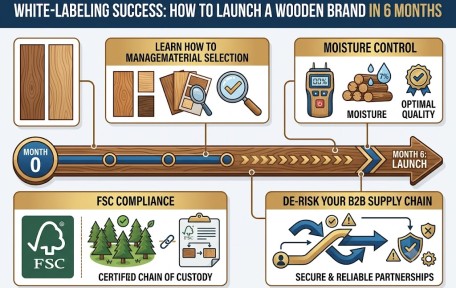
- What to look for: A supplier with a robust FSC™ (Forest Stewardship Council) chain of custody and a transparent digital tracking system.
3.2. The Lacey Act and US Customs
For US buyers, the Lacey Act remains the primary legal framework. Importers must prove that their wood was legally harvested and traded. A "Tier-1" factory in Vietnam will have pre-cleared documentation and a history of successful audits with US-based organizations like SCAN or C-TPAT.
3.3. Social and Ethical Audits (BSCI & SMETA)
Modern consumers demand to know who made their products. Standardized audits like BSCI (amfori) and SMETA ensure that the 1,000+ artisans involved in your production are treated fairly, paid living wages, and work in safe environments.
Chapter 4: Anatomy of a Tier-1 Manufacturer
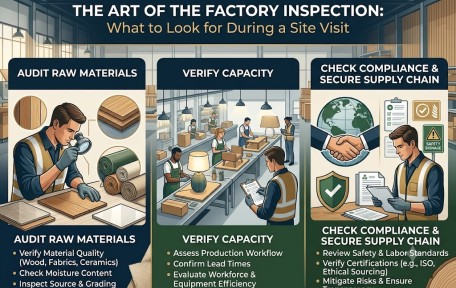
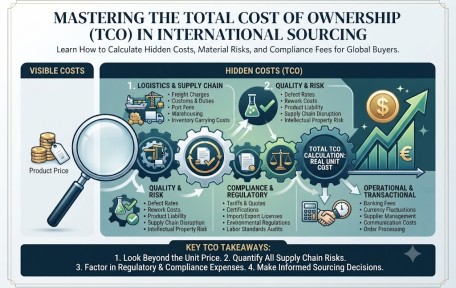
Not all factories are created equal. When vetting a partner in Vietnam, you must look beyond the price per unit. A true Tier-1 partner, such as a long-standing enterprise established in the late 1980s, should offer:
4.1. Industrial Scale & Infrastructure
A factory with a 12,000m² facility and a capacity of 20–30 containers per month demonstrates the "industrial muscle" needed to support nationwide retail launches. This scale ensures that the factory can invest in high-end machinery, such as advanced Kiln-Drying (KD) systems.
4.2. Precision Moisture Control
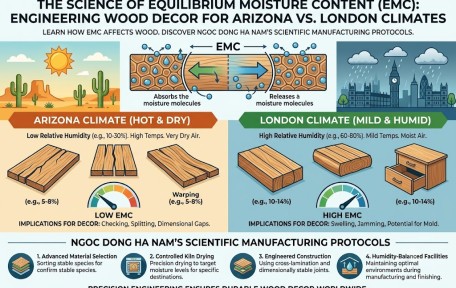
The biggest risk in woodware export is warping or cracking. A professional factory utilizes moisture meters at every stage, ensuring the wood stays within the critical 8-12% moisture content range. This is non-negotiable for products heading to dry climates like Arizona or heated homes in Northern Europe.
4.3. Tech-Integrated Quality Control
In 2026, the best factories are utilizing AI and ERP systems to track production in real-time. This digital transparency allows buyers to receive weekly status updates and ensures that the 10,000th unit is identical to the golden sample.
Chapter 5: Step-by-Step Sourcing Process
How do you go from a design sketch to a loaded container? Here is the professional workflow:
1. RFQ and Technical Drawing: Provide detailed specs, including wood grade, dimensions, and coating type (FDA-approved oils vs. NC lacquer).
2. Prototyping (The 10-Day Rule): A top-tier factory should produce a physical sample within 7-10 days.
3. On-Site or Virtual Audit: Verify the factory’s certifications (ISO 9001, BSCI, FSC).
4. Production and Inline QC: Quality control should happen during production, not just at the end.
5. Final Random Inspection (FRI): Using AQL 2.5/4.0 standards to ensure the batch meets your requirements.
6. Loading and Fumigation: Ensuring the container is moisture-protected and the wood is treated according to ISPM-15 standards.
Chapter 6: Sustainability as a Competitive Advantage
Sustainability is no longer a "marketing fluff"—it is a business strategy. In the Acacia industry, this means:
- Zero-Waste Manufacturing: Using wood offcuts to create smaller accessories like coasters or spice spoons.
- Renewable Energy: Leading Vietnamese factories are now installing solar arrays to power their sanding and cutting lines.
- Community Impact: Sourcing from traditional craft villages helps preserve local culture and provides stable income for rural communities.
Chapter 7: Why Simply Acacia (Ngoc Dong Ha Nam)?
At Simply Acacia, we represent the pinnacle of Vietnamese woodworking. Founded in 1988, our enterprise has spent over 30 years perfecting the balance between artisanal tradition and industrial precision.
- Audit-Proven Excellence: We have successfully passed rigorous audits by Costco, Walmart, Target, and Lidl.
- Ready for 2026: Our systems are fully aligned with EUDR requirements and FSC™ standards.
- Technological Leadership: With a background in IT and AI, our leadership team has integrated digital tracking into our 12,000m² facility, giving you unprecedented transparency into your supply chain.
- Artisanal Soul: We support a network of over 1,000 local artisans, ensuring that every bowl, board, and tray carries the warmth of human touch.
Conclusion: Securing Your 2026 Supply Chain
The shift toward Vietnam is more than a trend; it is a strategic realignment of the global houseware market. By choosing a partner that combines a 30-year legacy with modern compliance and technology, you aren't just buying a product—bidding for peace of mind.
As you plan your 2026 collections, ask yourself: Is your supplier ready for the new age of transparency? At Simply Acacia, we are.
Ready to elevate your product line?
Contact our Export Team today at SimplyAcacia.com to request our latest Factory Audit reports and a custom quote for your upcoming project. Let’s build a sustainable future, one Acacia piece at a time.