Unlocking the Power of Acacia Wood: The Ultimate Technical Guide for Global B2B Buyers
The Sustainable Revolution: Why Acacia Wood is Dominating Global Interior Design
In today's highly competitive global market, B2B buyers, procurement officers, and interior designers face a complex dilemma. You are constantly tasked with sourcing materials that strike the perfect balance between uncompromising durability, aesthetic brilliance, and rigorous environmental sustainability. As the Director of Marketing and Sustainable Supply Chain Consultant at Ngoc Dong Ha Nam, I have witnessed firsthand the shifting paradigms of global sourcing. The era of relying solely on traditional, slow-growing hardwoods like Oak, Mahogany, or Teak is rapidly giving way to more innovative, eco-conscious alternatives. Enter Acacia wood—a material that is not just a passing trend, but a cornerstone of modern, sustainable manufacturing and high-end home decor.
The Global Shift Towards Sustainable Hardwoods
The global supply chain is under unprecedented pressure. Fluctuating tariffs, stringent environmental regulations, and a profound shift in consumer consciousness have made sustainable sourcing a mandatory business strategy rather than an optional marketing angle. Consumers are demanding eco-friendly products, and regulatory bodies are enforcing strict guidelines on timber harvesting. Acacia wood answers this call flawlessly. Comprising over a thousand species globally, Acacia is an incredibly fast-growing tree, often reaching harvest maturity in a fraction of the time required by traditional hardwoods. This rapid growth cycle makes it a highly renewable resource, acting as a powerful carbon sink while alleviating the devastating pressures of deforestation on old-growth forests.
Why Global Buyers are Pivoting to Acacia
For large-scale B2B buyers and visionary interior designers, Acacia represents the ultimate strategic advantage. It offers the luxurious weight, rich grain patterns, and structural integrity of premium hardwoods, but with a significantly more attractive supply chain profile. Furthermore, Acacia trees are incredibly resilient, thriving in various climates without the need for toxic chemical fertilizers or excessive irrigation. By integrating Acacia wood into your product lines, you are not merely selecting a raw material; you are making a definitive statement about your brand's commitment to ESG (Environmental, Social, and Governance) principles. In the following sections, we will decode the exact technical properties that make Acacia wood an unrivaled choice for your manufacturing needs, and how it can elevate your collections to command attention in the global marketplace.
Beyond the Surface: The Technical Properties That Make Acacia Unrivaled
To truly understand the value of Acacia wood, buyers must look beyond its striking visual appeal and delve into its formidable technical specifications. As a dense, heavy hardwood, Acacia offers mechanical properties that rival, and often exceed, those of historically favored timber.
Janka Hardness and Density
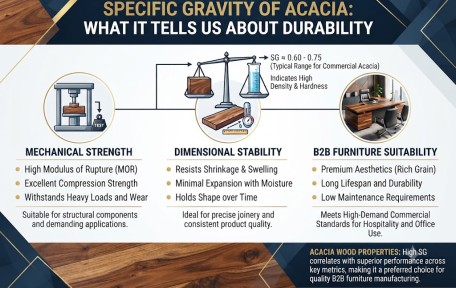
The Janka hardness test, the industry standard for measuring the resistance of wood to denting and wear, places Acacia in an elite category. Depending on the exact species—such as Acacia mangium or Acacia auriculiformis—its Janka rating spans from 1,700 to an astonishing 2,300 lbf (pounds-force). To put this into perspective, White Oak typically rates around 1,360 lbf, and Hard Maple at 1,450 lbf. This extreme hardness translates to a high-density profile, usually ranging between 600 to 800 kg/m³ at a standard 12% moisture content. For furniture manufacturers and B2B buyers, this means products crafted from Acacia are inherently highly resistant to impact, structural fatigue, and the rigorous demands of global shipping and commercial usage.
Moisture Content and Kiln Drying
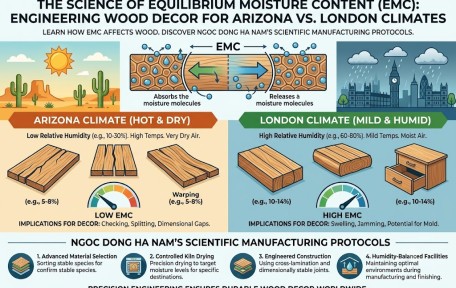
Dimensional stability is a critical concern for any global supply chain, especially when products are manufactured in tropical climates and shipped to temperate zones across North America or Europe. Acacia wood has an impressive natural defense mechanism: a high concentration of natural oils and resins that repel liquid water. However, to maximize its stability, rigorous kiln-drying protocols are mandatory. At Ngoc Dong Ha Nam, we ensure our Acacia timber is carefully kiln-dried to an optimal Moisture Content (MC) of 8% to 12%. This precise thermal processing relieves internal growth stresses, minimizes the risk of checking (surface cracking), and significantly reduces volumetric shrinkage. The result is a dimensionally stable raw material that holds its shape and integrity across wildly fluctuating seasonal humidities.
Natural Resistance to Decay and Pests
Another profound technical advantage of Acacia is its durability classification. The heartwood of the Acacia tree is highly rated for natural decay resistance. The same intrinsic oils that provide water resistance also act as a natural biocide, deterring subterranean termites, wood-boring beetles, and fungal degradation. This makes Acacia an exceptionally versatile material, equally suited for high-end indoor furniture, durable kitchenware, and weather-resistant outdoor patio collections. When properly sealed with commercial-grade UV protectants or natural wax finishes, Acacia's lifespan extends for decades, ensuring long-term satisfaction for the end consumer and reducing return rates for the retailer.
Workability and Finishing
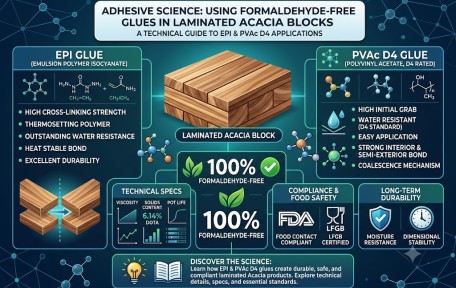
Despite its formidable density, Acacia wood maintains excellent workability when machined with sharp, carbide-tipped tooling. It holds screws and nails securely, glues exceptionally well, and can be steam-bent for curved architectural designs. Furthermore, the wood's closed-pore structure allows it to accept a wide variety of finishes, from clear matte lacquers that highlight its contrasting heartwood and sapwood, to deep, rich stains that unify its color palette for a more contemporary, uniform aesthetic.
Elevating Your Product Lines: The Business Case for FSC-Certified Acacia
Understanding the technical superiority of Acacia wood is only the first step; translating these properties into a lucrative, sustainable business model is where true market leadership is forged. For global B2B buyers, procurement directors, and interior designers, Acacia wood represents the ultimate intersection of aesthetic luxury, environmental responsibility, and supply chain reliability.
The Power of FSC Certification and Ethical Sourcing
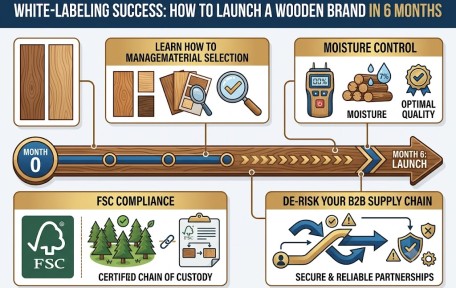
Modern consumers are acutely aware of the environmental impact of their purchases. They demand transparency, and as a buyer, you must provide it. By sourcing FSC-certified (Forest Stewardship Council) Acacia wood, you are guaranteeing that your products originate from responsibly managed forests that provide environmental, social, and economic benefits. This certification is a powerful marketing tool, allowing you to command a premium in retail markets. At Ngoc Dong Ha Nam, our commitment to sustainability goes beyond the raw material. Our supply chain operations strictly adhere to BSCI (Business Social Compliance Initiative) and SMETA (Sedex Members Ethical Trade Audit) standards. This dual commitment ensures that your Acacia products are not only ecologically sound but are also manufactured under fair, safe, and ethical working conditions—safeguarding your brand's reputation on the global stage.
Aesthetic Brilliance and Market Versatility
Beyond its ethical credentials, Acacia wood is a designer's dream. It features an irregular, interlocking grain pattern that provides a highly sought-after rustic yet sophisticated charm. The dynamic color variations—ranging from pale golden sapwood to deep, chocolate-brown heartwood—ensure that every piece of furniture or decor is uniquely bespoke. This organic beauty aligns perfectly with current global Home Decor trends that champion biophilic design and natural textures. Whether you are developing a line of minimalist Scandinavian dining tables, rugged industrial shelving, or luxury outdoor loungers, Acacia provides the visual gravitas required to captivate high-end consumers.
Synergy with Natural Fibers
As a leading consultant in sustainable supply chains, I highly recommend leveraging Acacia's structural strength as a foundation for mixed-material designs. Acacia pairs flawlessly with other sustainable materials like Bamboo, Rattan, Seagrass, and Water Hyacinth. Key benefits of sourcing Acacia include:
- Premium Pricing Power: Command a higher retail margin with certified, eco-friendly products.
- Supply Chain Security: Fast-growing species ensure consistent, reliable material availability year-round.
- Brand Reputation: Alignment with BSCI and SMETA standards protects your corporate image.
- Design Flexibility: Seamless integration with natural fibers to create multi-textural masterpieces.
Imagine a robust Acacia wood chair frame intricately woven with natural Rattan backrests, or a solid Acacia storage unit featuring hand-woven Seagrass baskets. These combinations, expertly crafted at Ngoc Dong Ha Nam, not only optimize material costs but also create unique collections that stand out in crowded B2B catalogs. By choosing Acacia, you are not just buying wood; you are investing in a versatile design ecosystem.
Secure Your Supply Chain: Partner with Ngoc Dong Ha Nam Today
The transition to sustainable, high-performance materials is no longer a future projection—it is an immediate market imperative. Acacia wood has proven itself as the undisputed champion of durability, aesthetic appeal, and ecological responsibility. Now, the critical next step is securing a manufacturing partner capable of delivering this premium material with uncompromising quality and scale.
Partner with Ngoc Dong Ha Nam
At Ngoc Dong Ha Nam, we bring decades of master craftsmanship, cutting-edge manufacturing technology, and an unwavering commitment to sustainable supply chain management. We understand the exacting standards of global B2B buyers and interior designers. Our fully certified facilities (FSC, BSCI, SMETA) are equipped to handle high-volume orders while maintaining meticulous quality control at every stage of production—from kiln-drying the raw Acacia timber to applying the final, flawless finish.
Take the Next Step in Sustainable Sourcing
Do not leave your supply chain to chance. Elevate your product offerings, meet your ESG targets, and captivate your clientele with world-class Acacia wood products. We invite you to collaborate with our expert design and engineering teams to develop custom OEM/ODM solutions tailored specifically to your brand's vision. Contact Ngoc Dong Ha Nam today to request our latest catalog, order premium material samples, or schedule a comprehensive supply chain consultation. Together, let us build a more sustainable, beautiful, and profitable future for your business.
Frequently Asked Questions
What is the Janka hardness rating of Acacia wood?
Acacia wood boasts a highly impressive Janka hardness rating that typically ranges from 1,700 to 2,300 lbf (pounds-force), depending on the specific species used. This makes it significantly harder than many traditional hardwoods like Oak or Maple, ensuring exceptional resistance to scratches, dents, and daily wear in both residential and commercial applications.
How does Acacia wood handle moisture and humidity changes?
Thanks to its naturally high concentration of inherent oils and resins, Acacia wood exhibits excellent resistance to moisture and water damage. However, like all natural woods, it requires proper kiln-drying (ideally to a moisture content of 8-12%) before manufacturing to ensure structural stability and prevent warping or cracking in varying global climates.
Is Acacia wood a sustainable choice for large-scale B2B sourcing?
Absolutely. Acacia is an incredibly fast-growing species, often reaching maturity in just a few decades compared to the centuries required for other hardwoods. When sourced from FSC-certified (Forest Stewardship Council) plantations, it represents a highly renewable, eco-friendly resource that supports global carbon reduction initiatives and responsible forestry management.
Can Acacia wood be integrated with other natural materials in furniture design?
Yes, Acacia's warm tones and robust structural integrity make it an ideal frame or base material for mixed-media designs. At Ngoc Dong Ha Nam, we frequently pair premium Acacia wood with hand-woven natural fibers such as Bamboo, Rattan, Seagrass, and Water Hyacinth to create globally sought-after, sustainable home decor collections.