The Ultimate Guide
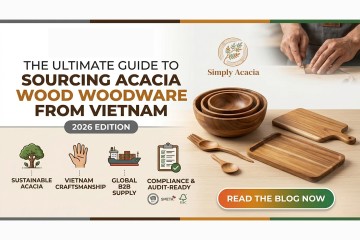
The Ultimate Guide to Sourcing Acacia Woodware from Vietnam (2026 Edition)
In the rapidly evolving landscape of global supply chains, 2026 marks a pivotal year for the home decor and kitchenware industries. As retailers in the United States and Europe face increasing pressure to balance cost-efficiency with rigorous ESG (Environmental, Social, and Governance) mandates, the spotlight has shifted decisively toward Southeast Asia. Specifically, Vietnam has emerged as the global epicenter for high-quality, sustainable Acacia wood manufacturing.
This guide serves as a comprehensive roadmap for sourcing managers, category directors, and business owners looking to navigate the Vietnamese Acacia market. From understanding material science to mastering the new EUDR compliance landscape, here is everything you need to know about sourcing from the heart of Vietnam’s woodcraft heritage.
Chapter 1: Why Acacia? The Science and Market Demand
Acacia is no longer just an alternative to Teak or Oak; it has become a "hero material" for the modern household. But what makes it the preferred choice for a 2026 product lineup?
1.1. Exceptional Durability and Density
Acacia (specifically Acacia Mangium and Acacia Auriculiformis grown in Vietnam) is a dense hardwood known for its impressive Janka hardness rating. This makes it naturally resistant to scratches and heavy impacts—ideal for cutting boards, butcher blocks, and high-traffic dining furniture.
1.2. Natural Antimicrobial Properties
For kitchenware, safety is paramount. Acacia possesses natural oils that act as a barrier against moisture and bacteria. Unlike plastic, which can harbor microbes in deep knife cuts, Acacia’s fiber structure allows it to "heal" and remain hygienic for years of use.
1.3. Aesthetic Versatility
The visual appeal of Acacia lies in its erratic grain patterns and rich color palette—ranging from light amber to deep espresso. In an era where "Organic Modern" and "Japandi" styles dominate interior design, the raw, unrefined beauty of Acacia provides the "soul" that synthetic materials lack.
Chapter 2: The Vietnam Advantage in 2026
Why are global giants moving their production lines from China to Vietnam? The answer lies in a combination of geography, policy, and generational skill.
2.1. The "China Plus One" Strategy
Geopolitical stability and trade diversifications have made Vietnam the primary beneficiary of the "China Plus One" strategy. Buyers sourcing from Vietnam benefit from lower tariffs through free trade agreements like the EVFTA (EU-Vietnam Free Trade Agreement) and CPTPP.
2.2. The Northern Vietnam Woodworking Hub
Provinces like Ha Nam, located near Hanoi, have evolved into sophisticated industrial clusters. These areas benefit from proximity to Haiphong Port, one of the most efficient shipping hubs in Southeast Asia, ensuring that lead times from factory to vessel are minimized.
2.3. A Legacy of Craftsmanship
Unlike fully automated factories, Vietnamese manufacturing retains a crucial "human element." In regions with a 30-year heritage of handicraft, artisans possess an intuitive understanding of wood behavior—how it expands, contracts, and reacts to different finishes. This expertise is the difference between a product that lasts a decade and one that warps in six months.
Chapter 3: Navigating the 2026 Compliance Landscape (EUDR & Beyond)
In 2026, "Compliance" is no longer a checkbox; it is a license to operate. The regulatory environment has become significantly more complex.
3.1. EUDR: The New Gold Standard
The European Union Deforestation Regulation (EUDR) is now in full effect. Sourcing from Vietnam requires a partner who can provide precise geolocation data of the farms where the timber was harvested.
What to look for: A supplier with a robust FSC™ (Forest Stewardship Council) chain of custody and a transparent digital tracking system.
3.2. The Lacey Act and US Customs
For US buyers, the Lacey Act remains the primary legal framework. Importers must prove that their wood was legally harvested and traded. A "Tier-1" factory in Vietnam will have pre-cleared documentation and a history of successful audits with US-based organizations like SCAN or C-TPAT.
3.3. Social and Ethical Audits (BSCI & SMETA)
Modern consumers demand to know who made their products. Standardized audits like BSCI (amfori) and SMETA ensure that the 1,000+ artisans involved in your production are treated fairly, paid living wages, and work in safe environments.
Chapter 4: Anatomy of a Tier-1 Manufacturer
Not all factories are created equal. When vetting a partner in Vietnam, you must look beyond the price per unit. A true Tier-1 partner, such as a long-standing enterprise established in the late 1980s, should offer:
4.1. Industrial Scale & Infrastructure
A factory with a 12,000m² facility and a capacity of 20–30 containers per month demonstrates the "industrial muscle" needed to support nationwide retail launches. This scale ensures that the factory can invest in high-end machinery, such as advanced Kiln-Drying (KD) systems.
4.2. Precision Moisture Control
The biggest risk in woodware export is warping or cracking. A professional factory utilizes moisture meters at every stage, ensuring the wood stays within the critical 8-12% moisture content range. This is non-negotiable for products heading to dry climates like Arizona or heated homes in Northern Europe.
4.3. Tech-Integrated Quality Control
In 2026, the best factories are utilizing AI and ERP systems to track production in real-time. This digital transparency allows buyers to receive weekly status updates and ensures that the 10,000th unit is identical to the golden sample.
Chapter 5: Step-by-Step Sourcing Process
How do you go from a design sketch to a loaded container? Here is the professional workflow:
1. RFQ and Technical Drawing: Provide detailed specs, including wood grade, dimensions, and coating type (FDA-approved oils vs. NC lacquer).
2. Prototyping (The 10-Day Rule): A top-tier factory should produce a physical sample within 7-10 days.
3. On-Site or Virtual Audit: Verify the factory’s certifications (ISO 9001, BSCI, FSC).
4. Production and Inline QC: Quality control should happen during production, not just at the end.
5. Final Random Inspection (FRI): Using AQL 2.5/4.0 standards to ensure the batch meets your requirements.
6. Loading and Fumigation: Ensuring the container is moisture-protected and the wood is treated according to ISPM-15 standards.
Chapter 6: Sustainability as a Competitive Advantage
Sustainability is no longer a "marketing fluff"—it is a business strategy. In the Acacia industry, this means:
Zero-Waste Manufacturing: Using wood offcuts to create smaller accessories like coasters or spice spoons.
Renewable Energy: Leading Vietnamese factories are now installing solar arrays to power their sanding and cutting lines.
Community Impact: Sourcing from traditional craft villages helps preserve local culture and provides stable income for rural communities.
Chapter 7: Why Simply Acacia (Ngoc Dong Ha Nam)?
At Simply Acacia, we represent the pinnacle of Vietnamese woodworking. Founded in 1988, our enterprise has spent over 30 years perfecting the balance between artisanal tradition and industrial precision.
Audit-Proven Excellence: We have successfully passed rigorous audits by Costco, Walmart, Target, and Lidl.
Ready for 2026: Our systems are fully aligned with EUDR requirements and FSC™ standards.
Technological Leadership: With a background in IT and AI, our leadership team has integrated digital tracking into our 12,000m² facility, giving you unprecedented transparency into your supply chain.
Artisanal Soul: We support a network of over 1,000 local artisans, ensuring that every bowl, board, and tray carries the warmth of human touch.
Conclusion: Securing Your 2026 Supply Chain
The shift toward Vietnam is more than a trend; it is a strategic realignment of the global houseware market. By choosing a partner that combines a 30-year legacy with modern compliance and technology, you aren't just buying a product—bidding for peace of mind.
As you plan your 2026 collections, ask yourself: Is your supplier ready for the new age of transparency? At Simply Acacia, we are.
Ready to elevate your product line?
Contact our Export Team today at SimplyAcacia.com to request our latest Factory Audit reports and a custom quote for your upcoming project. Let’s build a sustainable future, one Acacia piece at a time.

Acacia vs. Rubberwood: Sourcing the Superior Sustainable Cutting Board for Your Global Brand
The Evolution of the Modern Kitchen and the Demand for Sustainable Excellence
In the contemporary home, the kitchen has transcended its traditional role as a mere culinary workspace to become the vibrant, multifunctional heart of the household. For global interior designers and retail buyers, this shift represents a profound opportunity. Today's conscious consumers demand home decor and kitchenware that seamlessly blend aesthetic brilliance, long-lasting functionality, and an unwavering commitment to sustainability. At the very foundation of this culinary space is the cutting board—an essential tool that doubles as a statement piece of natural art.
As a procurement specialist or brand manager, your sourcing decisions carry immense weight. The materials you choose directly dictate your product's market positioning, retail margin, and ultimately, your brand's reputation for quality. In the realm of eco-friendly hardwood cutting boards, two materials have risen to global prominence: Acacia and Rubberwood. Both are celebrated for their sustainable profiles and accessibility, but when the goal is to craft a premium, world-class kitchen accessory, which wood truly reigns supreme?
Welcome to the definitive B2B guide on sourcing the ultimate kitchen cutting board. In this comprehensive analysis, we will dissect the structural, aesthetic, and commercial merits of Acacia versus Rubberwood. By the end of this exploration, you will have the strategic insights necessary to elevate your next product line and meet the exacting standards of the modern, eco-conscious global market.
Deep Dive: The Anatomy of Acacia and Rubberwood
To make an informed sourcing decision, we must evaluate these materials across four critical B2B dimensions: durability, moisture resistance, aesthetic appeal, and supply chain sustainability.
1. Durability and the Janka Hardness Scale
The primary function of a cutting board is to withstand the relentless impact of sharp culinary tools without dulling the blades or deteriorating prematurely. This is where the Janka Hardness Scale becomes our most vital metric.
Acacia Wood: Depending on the specific species (such as Acacia mangium), Acacia boasts a remarkable Janka hardness rating that typically ranges from 1,700 to 2,200 lbf (pounds-force). This places it firmly in the category of robust hardwoods, offering exceptional resistance to deep knife scarring, gouging, and daily wear-and-tear.
Rubberwood: Also known as plantation hardwood or Hevea brasiliensis, Rubberwood has a Janka rating of approximately 960 lbf. While it is certainly harder than softwoods and adequate for light-duty tasks, it falls significantly short of Acacia's resilience. In a commercial or high-use domestic kitchen, Rubberwood cutting boards are far more susceptible to deep scratches, which can harbor bacteria over time.
2. Moisture Resistance and Hygienic Properties
Kitchen environments are inherently wet and humid. A cutting board's ability to repel moisture is directly linked to its hygienic safety and structural longevity.
Acacia Wood: Acacia is naturally rich in natural oils and resins. This intrinsic characteristic makes it highly non-porous and naturally water-resistant. It repels liquid absorption, significantly reducing the risk of warping, cracking, or bacterial proliferation. This natural antibacterial quality is a massive selling point for health-conscious consumers.
Rubberwood: Rubberwood is considerably more porous and lacks the high natural oil content found in Acacia. If not meticulously treated and maintained with regular oiling, it is prone to absorbing moisture from washed vegetables or raw meats. This absorption can lead to dangerous bacterial growth and structural failures like cupping or splitting, increasing your product return rates.
3. Aesthetic Versatility and Market Appeal
For interior designers and retail buyers, the visual impact of a product is just as crucial as its functionality. A cutting board often doubles as a charcuterie platter or a permanent display piece on a kitchen island.
Acacia Wood: Acacia is globally renowned for its breathtaking, multidimensional grain patterns. It features a striking contrast of deep, rich chocolate heartwood and lighter, golden sapwood. This rustic yet sophisticated appearance makes every single cutting board a unique piece of natural art, perfectly aligning with premium, organic home decor trends.
Rubberwood: Rubberwood offers a very uniform, pale blonde to medium-tan appearance with minimal grain variation. While this homogeneous look can suit minimalist or mass-market designs, it lacks the luxurious, high-end visual weight that commands a premium retail price.
4. Environmental Impact and Sourcing
Both woods offer compelling eco-friendly narratives, but they operate differently within the supply chain.
Acacia Wood: Acacia is exceptionally fast-growing, making it a highly renewable resource. When sourced from responsibly managed plantations with FSC (Forest Stewardship Council) certification, it represents the pinnacle of sustainable forestry.
Rubberwood: Rubberwood is an excellent example of upcycling; the trees are harvested for timber only after they have exhausted their latex-producing lifecycle. While eco-friendly, the wood requires extensive chemical treatment immediately after harvesting to prevent fungal attacks and insect infestations, which can be a concern for brands prioritizing 100% natural processing.
Elevating Your Brand with Premium Acacia: The Strategic Advantage
As a Marketing Director and Sustainable Supply Chain Consultant, I have witnessed firsthand how material selection transforms a brand's market trajectory. While Rubberwood serves a purpose in the entry-level, mass-market segment, Acacia is unequivocally the superior choice for brands aiming to capture the premium, high-margin sector of the global home decor and kitchenware market.
Why Global Buyers Are Shifting to Acacia
Choosing Acacia is not merely a design preference; it is a strategic business decision that yields measurable dividends.
Commanding Premium Price Points: The undeniable visual luxury of Acacia's contrasting grain, combined with its substantial weight and robust feel, creates a high perceived value. Consumers are willing to pay a premium for a product that serves as both a durable culinary tool and an elegant serving centerpiece.
Reducing Return Rates and Enhancing Brand Trust: The structural integrity of Acacia—its resistance to deep scarring, warping, and moisture damage—ensures longevity. For B2B buyers, this translates directly to lower defect rates, fewer customer returns, and a sterling reputation for quality.
Aligning with Global Sustainability Mandates: Today's market is driven by conscious consumerism. By sourcing FSC-certified Acacia, your brand aligns with the highest global standards for environmental stewardship. This is no longer a niche selling point; it is a prerequisite for entry into major international retail networks.
The Ngoc Dong Ha Nam Guarantee
Understanding the superiority of Acacia is only the first step; partnering with the right manufacturer is what guarantees your success. At Ngoc Dong Ha Nam, we do not just supply products; we engineer sustainable supply chain solutions tailored for world-class brands.
Our Acacia cutting boards are crafted with an unwavering commitment to quality and ethical manufacturing. We are proud to operate under the strictest international standards, holding comprehensive certifications including BSCI (Business Social Compliance Initiative), FSC (Forest Stewardship Council), and SMETA (Sedex Members Ethical Trade Audit). When you source from us, you are guaranteed a product that is not only ecologically responsible but also manufactured under fair, safe, and transparent labor conditions.
By integrating Ngoc Dong Ha Nam's premium Acacia cutting boards into your portfolio, you are offering your clients a product that embodies the perfect synthesis of nature's resilience and masterful Vietnamese craftsmanship.
Take the Next Step: Partner with a World-Class Sustainable Manufacturer
The global demand for premium, sustainable kitchenware is accelerating. Do not let your brand fall behind by compromising on material quality. Transitioning to high-grade, FSC-certified Acacia wood is the definitive move to elevate your product line, secure higher profit margins, and captivate the eco-conscious consumer.
Are you ready to redefine your kitchenware collection with the superior durability and breathtaking aesthetics of natural Acacia? We invite global buyers, procurement officers, and interior design firms to experience the Ngoc Dong Ha Nam difference.
Contact our expert sourcing team today to request a comprehensive product catalog, order bespoke material samples, or schedule a consultation for your custom OEM/ODM design requirements. Let us collaborate to build a resilient, ethical, and highly profitable supply chain for your brand.
Connect with Ngoc Dong Ha Nam – Where Sustainable Materials Meet Global Excellence.
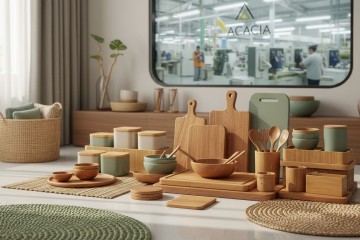
Why Acacia is the #1 Choice for Sustainable Housewares in 2026: A Comprehensive B2B Guide
The Evolution of Conscious Sourcing in 2026
As we navigate the dynamic landscape of 2026, the global home decor and housewares market has reached a definitive turning point. The era of greenwashing is over. Today's end-consumers demand absolute transparency, unparalleled durability, and authentic environmental stewardship. For global buyers, procurement officers, and interior designers, this shift presents a monumental challenge: how do you source materials that meet rigorous international sustainability standards without compromising on aesthetic brilliance or profit margins?
Enter Acacia wood. While materials like bamboo, seagrass, rattan, and water hyacinth continue to dominate the woven and soft-furnishing sectors, Acacia has rapidly emerged as the undisputed king of sustainable hard goods. As the Marketing Director and Sustainable Supply Chain Consultant at Ngoc Dong Ha Nam, I have witnessed firsthand the exponential surge in B2B demand for this extraordinary material. Retailers and designers are no longer just asking for 'wood'; they are specifically mandating FSC-certified Acacia.
Why this sudden, overwhelming preference? In a market where supply chain resilience is just as critical as the product itself, Acacia offers an unparalleled triad of benefits: rapid renewability, structural invincibility, and a breathtaking natural grain. If your 2026-2027 collections do not feature Acacia prominently, you are missing out on the most significant value-driver in the modern eco-luxury sector. Let us explore why Acacia is not just a trend, but the foundational material for the future of sustainable housewares.
Unpacking the Acacia Advantage: Durability, Renewability, and Compliance
To understand why Acacia commands the #1 spot in 2026, we must examine it through the lens of both the botanist and the global supply chain auditor. Acacia is a genus of trees and shrubs that thrives in tropical and subtropical regions. Unlike traditional hardwoods such as oak or mahogany, which can take up to fifty years to mature, many species of Acacia are fast-growing, reaching harvestable maturity in just 7 to 10 years. This rapid growth cycle makes it an incredibly efficient carbon sink and a highly renewable resource, alleviating the immense pressure placed on old-growth forests.
For the discerning B2B buyer, the true value of Acacia lies in its remarkable physical properties and the security of its supply chain:
Exceptional Janka Hardness: Acacia wood is notoriously dense and robust. It frequently outscores traditional hardwoods on the Janka hardness scale, making it highly resistant to scratches, dents, and the daily wear-and-tear expected of premium housewares. This durability translates to a lower return rate and higher customer satisfaction.
Inherent Water and Antibacterial Resistance: Naturally rich in oils, Acacia repels moisture effortlessly. This makes it the ultimate material for kitchenware, bathroom accessories, and outdoor dining sets. Its natural antibacterial properties align perfectly with the heightened global focus on home hygiene.
Ironclad Supply Chain Certifications: At Ngoc Dong Ha Nam, we understand that a material is only as sustainable as the hands that harvest and shape it. Our Acacia is strictly FSC-certified (Forest Stewardship Council), guaranteeing that the wood is sourced from responsibly managed forests that provide environmental, social, and economic benefits.
Ethical Manufacturing (BSCI & SMETA): Beyond the forest, the journey of our Acacia housewares is governed by rigorous ethical standards. Our production facilities comply fully with BSCI (Business Social Compliance Initiative) and SMETA (Sedex Members Ethical Trade Audit) frameworks. For global buyers, this means zero risk of modern slavery, guaranteed fair wages, and safe working conditions. In 2026, this level of audit-ready transparency is non-negotiable.
By integrating Acacia into your supply chain, you are not merely purchasing a commodity; you are investing in a verified, risk-free, and highly resilient procurement strategy that withstands the strictest global regulatory scrutiny.
Elevating Global Collections: The Designer's Dream Material
While supply chain compliance satisfies the procurement team, it is the sheer aesthetic magnetism of Acacia that captures the hearts of interior designers and end-consumers. In the 2026 design landscape, where trends like 'Biophilic Design', 'Japandi', and 'Warm Minimalism' reign supreme, Acacia wood serves as the perfect anchor. It brings an authentic, grounding element of nature directly into the home.
From an interior design perspective, Acacia is a masterpiece of visual texture. It features a highly distinctive, contrasting grain pattern that sweeps elegantly from light amber to deep, rich mahogany. No two pieces of Acacia are exactly alike. This inherent uniqueness allows brands to market their housewares not as mass-produced widgets, but as bespoke, artisanal creations. When a consumer purchases an Acacia serving tray, a sculptural fruit bowl, or a meticulously crafted cutting board, they are acquiring a functional piece of art.
Furthermore, Acacia's versatility is a merchandiser's dream. It pairs flawlessly with other sustainable materials. Imagine the tactile brilliance of a storage collection that combines the warm, solid foundation of Acacia wood with the organic, woven textures of Rattan, Seagrass, or Water Hyacinth. At Ngoc Dong Ha Nam, our master artisans specialize in these sophisticated multi-material integrations, creating high-margin, premium products that elevate any retail catalog.
Premium Positioning: The luxurious weight and finish of Acacia allow for premium pricing strategies, significantly boosting your ROI.
Heirloom Quality: In a push back against 'fast furniture' and disposable decor, Acacia products are marketed as heirloom pieces that age beautifully, developing a rich patina over time.
Customizable Finishes: Whether your brand identity leans towards a raw, matte organic look or a polished, contemporary sheen, Acacia readily accepts eco-friendly finishes to match your exact design specifications.
By choosing Acacia, you are empowering your brand to deliver a narrative of refined eco-luxury. You satisfy the consumer's deep-seated desire for products that are beautiful, functional, and unequivocally kind to the planet. It is the ultimate alignment of aesthetics and ethics.
Secure Your Sustainable Supply Chain with Ngoc Dong Ha Nam
The transition to hyper-sustainable, premium housewares is accelerating, and the brands that secure reliable, certified sourcing today will dominate the market tomorrow. Acacia wood is your definitive pathway to achieving both aesthetic excellence and rigorous ESG compliance in 2026.
Do not leave your supply chain to chance. Partner with Ngoc Dong Ha Nam, a globally recognized leader in sustainable manufacturing. With our deep-rooted expertise in natural materials, our unwavering commitment to FSC, BSCI, and SMETA standards, and our world-class artisanal craftsmanship, we are ready to bring your visionary collections to life.
Request our 2026-2027 Acacia Collection Catalog to see our latest, trend-forward designs.
Schedule a Supply Chain Consultation with our expert team to discuss custom OEM/ODM manufacturing, volume capabilities, and certification audits.
Order Sample Kits to experience the unparalleled quality, weight, and finish of our sustainably sourced Acacia firsthand.
Take the lead in the eco-luxury revolution. Contact Ngoc Dong Ha Nam today and let us build a more beautiful, sustainable future together.