
Market Education & Comparative Analysis
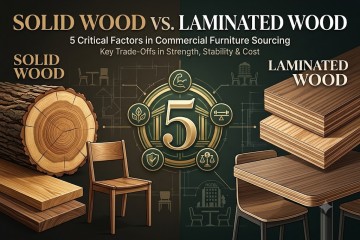
5 Critical Factors for Comparing Solid Wood vs. Laminated Wood in Commercial Furniture Sourcing
Crucial Findings
• Solid wood provides unmatched aesthetic authenticity and long-term repairability, making it ideal for luxury and heirloom furniture lines.
• Laminated wood offers superior dimensional stability, resisting warping and cracking under extreme temperature and humidity fluctuations.
• Solid acacia and bamboo components deliver high tensile strength while maintaining sustainable harvest cycles for eco-conscious global brands.
• Laminated timber maximises raw material yield, significantly reducing unit manufacturing costs for high-volume retail collections.
• B2B procurement strategies should align wood selection with end-use environment, structural load requirements, and compliance standards like FSC and BSCI.
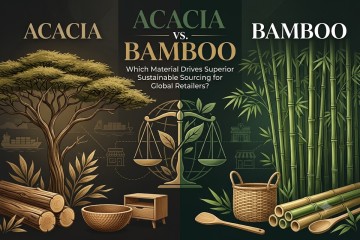
Acacia vs. Bamboo: Which Material Drives Superior Sustainable Sourcing for Global Retailers?
Essential Highlights
• Bamboo achieves harvest maturity in 3 to 5 years, yielding high renewable biomass, but laminated bamboo processing demands energy and strict chemical resin oversight.
• FSC-certified Acacia offers superior structural load durability, lower processing energy, and lower risk of warping in commercial furniture applications.
• Managing moisture content below 12% in both materials is critical to prevent container-level fungal growth and structural cracking during ocean freight.
• Auditing factory chain-of-custody certifications (FSC, BSCI, SMETA) eliminates non-compliance risks under the EU Deforestation Regulation (EUDR) and US Lacey Act.