5 Critical Factors for Comparing Solid Wood vs. Laminated Wood in Commercial Furniture Sourcing
Crucial Findings
• Solid wood provides unmatched aesthetic authenticity and long-term repairability, making it ideal for luxury and heirloom furniture lines.• Laminated wood offers superior dimensional stability, resisting warping and cracking under extreme temperature and humidity fluctuations.
• Solid acacia and bamboo components deliver high tensile strength while maintaining sustainable harvest cycles for eco-conscious global brands.
• Laminated timber maximises raw material yield, significantly reducing unit manufacturing costs for high-volume retail collections.
• B2B procurement strategies should align wood selection with end-use environment, structural load requirements, and compliance standards like FSC and BSCI.
NAVIGATING THE SOLID WOOD VS. LAMINATED WOOD SELECTION IN HIGH-VOLUME SOURCING
Solid wood consists of single continuous lumber pieces, whereas laminated wood is engineered by bonding multiple wood layers or strips with structural adhesives. Choosing between these materials dictates structural performance, aesthetic appeal, and profit margins in global retail distribution.
Which material best fits your upcoming product range? The answer depends heavily on target market pricing, climate stability needs, and manufacturing scale. Overseas buyers must carefully evaluate structural integrity alongside production costs.
Understanding these fundamental distinctions enables interior designers and commercial sourcing managers to make data-backed purchasing decisions. Below are five core operational and structural factors every furniture buyer must evaluate before placing bulk orders.
1. Structural Integrity and Long-Term Load Strength
Solid wood delivers exceptional intrinsic tensile strength, while high-grade laminated wood provides uniform strength by neutralizing natural grain defects. Natural timber possesses natural wood grain continuity, allowing it to withstand heavy static loads without layer delamination risks over time.
However, solid wood exhibits natural anisotropic behavior. It is stronger along the grain than across it. Laminated wood engineering mitigates this weakness by cross-orienting grain directions or finger-jointing kiln-dried wooden slats together.
For heavy-duty dining tables, solid acacia or solid oak remain superior choice materials. Conversely, laminated wood excels in broad surface applications like tabletop cores and shelving panels where uniform mechanical load distribution is required.
- Solid Wood Strength: High load-bearing capacity along natural grain; ideal for legs, frames, and load-bearing joints.
- Laminated Wood Strength: Consistent tensile strength across panels; eliminated structural knotholes and natural cracks.
2. Aesthetic Authenticity and Surface Refinement
Solid wood exhibits rich, unmatched grain depth and organic tactile warmth that cannot be fully replicated by engineered composites. Every solid wood slab displays unique growth rings, natural color gradients, and distinct character lines highly prized in premium home decor markets.
Laminated wood displays repeating grain patterns and visible finger-joint seams unless covered with high-grade natural veneers. While modern jointing tech creates seamless panels, subtle color variations between adjacent wood strips remain visible under clear lacquers.
Do your buyers demand luxury heritage pieces? Solid wood wins on organic luxury. If your market prioritizes clean, uniform modern minimalism, edge-glued laminated acacia or bamboo panels deliver a crisp, contemporary aesthetic at competitive prices.
3. Dimensional Stability in Variable Climates
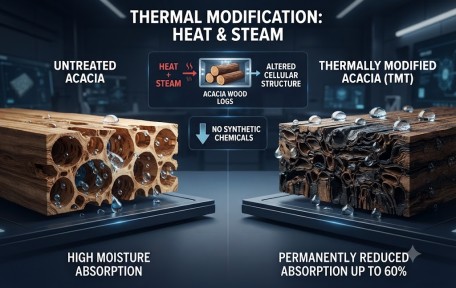
Laminated wood demonstrates superior dimensional stability compared to solid wood when exposed to severe humidity and temperature fluctuations. Solid timber absorbs moisture readily, leading to expansion, cupping, or splitting if not properly acclimated to indoor target environments.
Engineered lamination reduces internal wood tension. Alternating grain orientations and structural polyurethane adhesives lock moisture movement in check, preventing expansive warping across wide panel dimensions.
For global shipping across diverse climate zones, laminated structures minimize warranty claims. Sourcing kiln-dried solid timber with strict moisture content (MC) controls between 8% and 12% is essential if solid wood remains your primary specification.
|
Material Property |
Solid Wood |
Laminated Wood |
|
Moisture Expansion |
Moderate to High |
Very Low |
|
Warping Resistance |
Susceptible across wide spans |
Highly Resistant |
|
Repairability |
Sandable and Restorable multiple times |
Limited to veneer thickness of surface depth |
|
Best Application |
Structural frames, sculptural items |
Wide panels, tabletops, shelving, cabinet doors |
4. Cost Efficiency, Yield Optimization, and Scalability
Laminated wood maximizes raw material yield up to 85%, significantly lowering manufacturing production costs compared to solid timber processing. Solid wood conversion generates high off-cut waste during defect trimming, driving up per-unit raw material expenditure.
Can your brand scale mass-market orders on solid wood margins? High-volume retail programs require predictable cost structures and rapid container turnarounds. Laminated panels utilize smaller timber cutoffs from fast-growing species like Acacia and Bamboo, ensuring cost stability.
By choosing edge-glued acacia boards or laminated bamboo structures, B2B buyers achieve substantial landed cost reductions. This efficiency allows commercial importers to maintain aggressive retail price points while preserving healthy gross margins.
5. Environmental Compliance, FSC Certification, and Circularity
Laminated wood utilizing FSC-certified plantation acacia or sustainable bamboo supports circular economy principles by maximizing forest biomass utilization. Rapid-growth plantation materials reduce logging pressures on old-growth natural forests while guaranteeing full supply chain traceability.
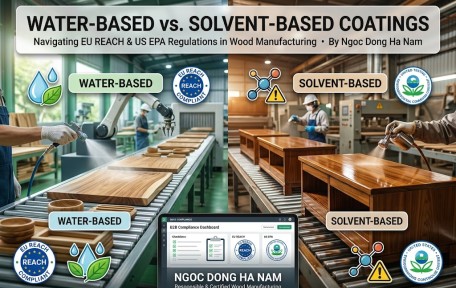
Solid wood requires larger timber diameters from mature trees, making certified sustainable sourcing strictly subject to stringent audits like SMETA, FSC, and BSCI. Responsible buyers must ensure timber logging practices comply with EUTR and US Lacey Act regulations.
Combining natural material craftsmanship with eco-certified adhesives enables OEM factories to produce sustainable home decor lines. Environmental compliance is no longer optional—it is a baseline requirement for entering major European and North American retail networks.
STRATEGIC BUYING RECOMMENDATION FOR COMMERCIAL SOURCING SUCCESS
Optimal material selection strategy combines solid wood for heavy structural framing with laminated wood for broad surface panels. This hybrid approach guarantees maximum aesthetic impact, structural reliability, and cost-effective container loads.
Partnering with experienced Vietnamese manufacturers ensures rigorous kiln-drying processes, compliant glue emissions, and ethical factory labor standards. Evaluating mock-up samples and testing load capacity prior to mass production eliminates quality risks before export shipping.
Ready to upgrade your home decor and furniture supply chain with certified sustainable acacia, bamboo, and woven natural materials? Contact our expert engineering team today to request custom technical drawings, sample kits, and factory-direct OEM quotes.
This piece is written by Thong Nguyen, Co-owner & Sales Director at Ngoc Dong Ha Nam Co., Ltd. Drawing on 25+ years of expertise in manufacturing export handicrafts, our team delivers premium bamboo, rattan, water hyacinth, and acacia solutions tailored for global retailers.
FREQUENTLY ASKED QUESTIONS
Is solid wood stronger than laminated wood?
Solid wood generally offers higher intrinsic beam strength and point load resistance along its continuous grain, making it superior for heavy structural furniture frames. However, high-quality laminated wood provides more uniform dimensional strength across wide surfaces and resists splitting or warping better than solid panels.