5 Essential Factors Comparing Oil vs. Lacquer Finishes: A Retail Buyer’s Guide to Wood Durability
Strategic Summary
• Lacquer finishes provide a hard, impervious surface shield against moisture, whereas oil finishes penetrate wood fibers to nourish and protect from within.• Oil-finished products allow easy localized spot repairs by end-consumers, while scratched lacquer surfaces require professional stripping and refinishing.
• Oil finishes feature low to zero VOC emissions, catering directly to the growing eco-conscious consumer segment seeking sustainable home decor.
• Selecting between oil and lacquer depends on the retail product category: high-moisture items favor lacquer, while premium natural items benefit from oil.
CHOOSING THE RIGHT WOOD FINISH DETERMINES PRODUCT RETURNS AND CUSTOMER LIFETIME VALUE
Selecting between an oil finish and a lacquer finish directly dictates how a wooden product resists daily wear, maintains visual appeal, and performs under varying climate conditions. For B2B retail buyers and furniture designers, this choice impacts post-purchase product return rates, brand reputation, and profit margins. Will your customers accept minor patina over time, or do they demand a glossy, scratch-resistant surface straight out of the box?
Wood finishes serve two core purposes: protection and aesthetics. Understanding the technical behavior of penetrating oils versus film-forming lacquers enables commercial sourcing teams to specify the exact coating required for target markets.
Here is a detailed breakdown of 5 critical factors that define the durability, maintenance, and commercial viability of oil versus lacquer finishes for retail inventory.
1. Protection Mechanism: Deep Penetration vs. Surface Barrier
Oil finishes protect wood by absorbing deeply into the grain, whereas lacquer forms a hard protective surface barrier on top of the timber. This fundamental difference determines how each finish handles physical contact and environmental changes.
Penetrating oils, such as linseed, tung, or specialized hardwax oils, cure inside the wood's cellular structure. They enhance the natural grain and texture without creating a plastic-like film. Consequently, the wood retains its natural feel and tactile warmth. However, because the surface remains porous, prolonged exposure to standing liquids can cause staining if not wiped promptly.
In contrast, lacquer forms a clear, continuous shell over the wood surface. Modern acrylic or polyurethane lacquers create an impenetrable shield against water, alcohol, and mild household chemicals. The trade-off? The synthetic layer seals away the authentic tactile feel of natural timber, giving items a sealed, smooth, and sometimes reflective appearance.
2. Repairability and Maintenance in Consumer Homes
Oil finishes allow effortless, localized spot repairs by consumers, while damaged lacquer finishes require comprehensive sanding and professional refinishing. Maintenance protocols play a massive role in long-term customer satisfaction.
When an oil-finished table suffers a minor scratch or water mark, fixing it is straightforward. The end-user simply sands the affected spot lightly and reapplies a small amount of oil with a soft cloth. The fresh oil blends seamlessly into the existing finish within hours. This ease of restoration reduces customer complaints and return claims for minor transit or handling scuffs.
Lacquer, however, presents a different challenge. If a heavy object chips or deep-scratches a lacquered surface, moisture can creep beneath the coat, causing flaking or cloudiness. Spot-repairing lacquer without leaving visible halo marks is nearly impossible for average consumers. Retailers often face higher replacement request rates for damaged lacquer items because the entire piece must be stripped and recoated in a factory setting.
3. Environmental Compliance, Sustainability, and VOC Standards
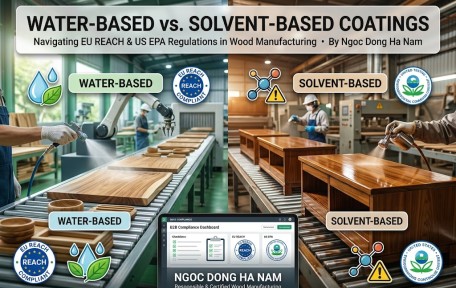
Oil finishes generally contain lower Volatile Organic Compounds (VOCs) compared to conventional solvent-based lacquers, making them ideal for eco-certified product lines. Global regulations like EU REACH and US EPA guidelines strictly monitor chemical emissions from home furnishings.
Natural oil and hardwax formulations align effortlessly with ESG (Environmental, Social, and Governance) purchasing criteria. They preserve wood as a bio-degradable, circular material without contaminating it with synthetic resins. For retailers targeting eco-conscious demographics, highlighting natural oil finishes provides a strong sales story.
While water-based lacquers have significantly reduced VOC emissions in recent years, traditional solvent lacquers still emit higher levels of fumes during manufacturing and curing. Oversea buyers must ensure their suppliers use certified, low-VOC or water-borne lacquers to comply with stringent import safety standards.
4. Comparative Durability Performance Matrix
Evaluating durability requires comparing specific performance metrics directly across real-world commercial scenarios. The optimal finish depends entirely on the intended usage environment of the furniture or decor piece.
Here is a direct technical comparison between Oil Finish and Lacquer Finish across key retail evaluation criteria:
|
Performance Metric |
Oil Finish |
Lacquer Finish |
|
Water Resistance |
Moderate (requires prompt wiping) |
High (impervious surface shield) |
|
Scratch Resistance |
Low surface hardness (absorbs into wood) |
High surface hardness (tough film) |
|
UV & Color Stability |
Develops natural patina over time |
Can yellow over time if non-acrylic |
|
Tactile Quality |
Warm, natural, textured wood feel |
Smooth, sealed, synthetic finish |
|
Repairability |
Very High (easy DIY spot repair) |
Low (requires factory refinishing) |
|
Production Cycle Time |
Longer curing time required |
Fast drying, rapid factory throughput |
As shown in the table, lacquer excels in liquid and scratch protection, making it ideal for high-moisture zones like bathrooms or dining tabletops. Oil excels in aesthetic authenticity, eco-friendliness, and long-term maintainability, making it ideal for bedroom furniture, accent pieces, and premium decor accessories.
5. Production Economics and Commercial Sourcing Strategy
Lacquer finishes enable faster factory throughput and lower unit costs for mass production, whereas oil finishes demand skilled labor and controlled curing environments. Sourcing managers must balance manufacturing lead times against consumer demand for natural finishes.
Spray application of lacquer can be automated easily on high-speed factory lines, drying in minutes under UV or heat lamps. This speed makes lacquer the standard choice for high-volume, price-sensitive retail ranges. However, mass-market lacquer items face stiff price competition.
Oil finishing, particularly with multi-coat hardwax systems, involves hand-buffing and extended drying periods between coats. While this adds to lead times and initial labor costs, it positions the product in a higher price tier. Retailers often achieve superior profit margins on oil-finished acacia and bamboo collections due to their perceived artisan craftsmanship.
CONCLUSION: HOW TO ALIGN FINISH SELECTION WITH YOUR BRAND PORTFOLIO
Choosing between oil and lacquer is not about determining which finish is universally superior, but rather selecting the right finish for your target category and customer profile. Use lacquer for heavy-use, liquid-exposed items like dining tables and bathroom organizers. Choose oil for accent tables, shelving, acacia bowls, and sustainable home decor lines where natural texture drives buyer conversion.
Partnering with an experienced manufacturer ensures your finish specifications meet international compliance, durability tests, and aesthetic standards. At Ngoc Dong Ha Nam, we rigorously test all finish applications—from natural hardwax oils to water-based eco-lacquers—to guarantee flawless performance for global retail chains.
This piece is written by Thong Nguyen, Co-owner & Sales Director at Ngoc Dong Ha Nam Co., Ltd. Drawing on 25+ years of expertise in manufacturing export handicrafts, our team delivers premium bamboo, rattan, water hyacinth, and acacia solutions tailored for global retailers.
FREQUENTLY ASKED QUESTIONS
Which finish is more durable for outdoor wooden furniture?
Specialized exterior penetrating oils or marine-grade polyurethane lacquers are required for outdoor furniture, as standard indoor lacquer will crack and peel under continuous UV and rainfall exposure.
Can food-contact items like acacia salad bowls use lacquer finish?
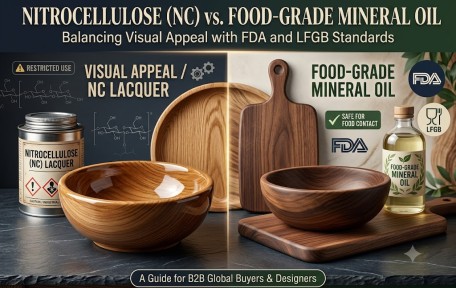
Food-contact woodenware requires certified food-safe finishes; while mineral oils and beeswax are standard, food-grade water-based lacquers or polyurethane coatings can be used if fully cured and tested to FDA or LFGB standards.
How often do oil-finished wooden items require re-oiling?
In residential settings, oil-finished wooden furniture typically requires re-oiling once or twice a year, whereas light accent decor may only need re-application every 18 to 24 months.
Which finish dries faster during mass manufacturing?
Lacquer dries significantly faster, curing within minutes under heat or UV systems, making it the preferred choice for high-volume automated production lines.