Mastering Wood Sourcing: The Ultimate Hardwood vs. Softwood Guide for Global Home Decor Buyers
Key Takeaways
• Hardwoods like Acacia offer superior cellular density and scratch resistance for commercial home decor, whereas softwoods provide lightweight structural versatility for budget-conscious lines.• Botanical classification rather than surface touch determines wood type, with angiosperm hardwoods possessing complex vessel structures that minimize moisture warping.
• Sourcing FSC-certified Acacia hardwood combined with natural fibers yields durable, compliant product lines tailored for modern eco-conscious retail markets.
• Verifying kiln-dried moisture levels between 8% and 12% is mandatory to prevent fungal decay and structural deformation during international maritime transit.
THE SOURCING DILEMMA: WHY SELECTING THE WRONG WOOD SPECTRUM DEVASTATES B2B MARGINS
Selecting the wrong wood classification for home decor manufacturing directly triggers elevated return rates, unexpected structural warping during maritime transit, and severe profit margin erosion for global B2B procurement teams. Every retail catalog launch hinges on choosing materials that withstand varying humidity levels, international transport rigors, and daily consumer use. When buyers misjudge the mechanical properties of timber, the financial fallout extends far beyond initial unit costs.
Have you ever experienced unexplained surface cracking on imported tabletop trays or structural sagging in display shelves after delivery? These failures typically stem from a fundamental misalignment between material selection and functional application. Softwoods specified for high-wear accent furniture often dent under light impact, while unconditioned hardwoods can split under ambient climate changes. Matching the exact timber profile to your product design is non-negotiable for retail scalability.
By understanding the core physical and botanical differences between hardwood and softwood species, international buyers can proactively protect inventory value. Sourcing success requires balancing aesthetic grain appeal with quantifiable density, moisture resistance, and ethical compliance standards like FSC and BSCI. Let us examine the precise engineering characteristics that distinguish these two essential material categories.
HARDWOOD VS. SOFTWOOD UNCOVERED: BOTANICAL SCIENCE, STRUCTURAL PERFORMANCE, AND MATERIAL METRICS
Hardwoods originate from broad-leaved angiosperm trees characterized by dense cellular structures, whereas softwoods derive from coniferous gymnosperms featuring lighter, needle-bearing wood profiles. This botanical distinction directly influences pore structure, grain density, and surface hardness across home decor applications. Physical touch alone does not determine classification; microscopic cell architecture defines how each timber variety responds to manufacturing techniques and ambient moisture.
Hardwoods such as Acacia, Oak, and Teak possess specialized vessel elements that transport sap, creating intricate grain patterns and dense fiber networks. This structural arrangement delivers high Janka hardness ratings, rendering hardwoods exceptionally resistant to impacts, scratches, and load-bearing stress. Softwoods like Pine, Cedar, and Spruce rely on open tracheid cells, yielding lighter material weights and excellent workability, though at the expense of surface impact resistance.
COMPARATIVE TECHNICAL SPECIFICATIONS FOR HOME DECOR PROCUREMENT
Evaluating raw materials requires clear comparison metrics across structural performance, durability, and commercial viability:
|
Property Header |
Hardwood (e.g., Acacia Wood) |
Softwood (e.g., Radiata Pine) |
|
Botanical Source |
Angiosperm (Broad-leaved, flowering) |
Gymnosperm (Coniferous, evergreen) |
|
Cellular Density |
High density (550 to 800 kg/m³) |
Low to moderate density (350 to 500 kg/m³) |
|
Janka Hardness Rating |
High (1,100 - 1,750 lbf) |
Low to medium (380 - 700 lbf) |
|
Scratch & Impact Resistance |
Superior impact resilience |
Prone to surface indentations |
|
Moisture Stability |
High stability when kiln-dried |
Moderate; prone to swelling |
|
Ideal Decor Applications |
Serving trays, furniture, cutting boards |
Picture frames, wall panels, budget items |
Which material dynamic best serves your upcoming decor lineup? While softwoods offer rapid renewable growth cycle advantages and budget flexibility, hardwoods remain the undisputed standard for high-end accent decor and durable utility items.
ELEVATING PRODUCT CATALOGUES: SUSTAINABLE ACACIA, NATURAL HYBRIDS, AND CERTIFIED SUPPLY CHAINS
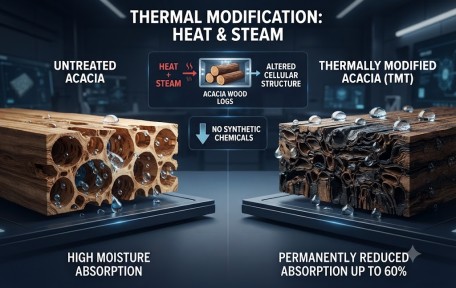
Integrating fast-growing hardwoods like sustainable Acacia alongside natural woven fibers creates high-margin, eco-compliant decor collections that captivate modern retail consumers. Acacia wood stands out as an exceptional hardwood choice for B2B buyers seeking rich grain aesthetics, natural weather resistance, and responsible plantation harvesting. Its high density ensures structural integrity across heavy-use household items while supporting intricate carving and polished finishing techniques.
Synergizing Hardwood with Woven Natural Materials
Global consumer demand favors multi-material home decor pieces that blend solid natural wood with textural organic weaves. Combining solid Acacia frames with woven bamboo, rattan, seagrass, or water hyacinth panels delivers lightweight structural balance with premium sensory appeal. Consider these proven hybrid decor configurations for upcoming collections:
- Acacia & Rattan Storage Furniture: Solid hardwood framing provides rigid stability, complemented by breathable rattan door panels for modern boho aesthetics.
- Hardwood Trays with Seagrass Accents: Durable Acacia bases paired with woven seagrass handles offer dual-texture functionality for hospitality and retail settings.
- Woven Bamboo & Wood Decorative Bowls: Precision-milled hardwood rims anchor hand-woven bamboo bodies for artisanal dining presentation.
Ethical compliance remains paramount when scaling natural material supply chains. Global retail brands must verify that manufacturing partners maintain rigorous audit credentials, including BSCI for social accountability, SMETA for supply chain transparency, and FSC for responsible timber sourcing. Validating these standards mitigates legal exposure while reinforcing brand reputation in demanding European and North American markets.
STREAMLINING YOUR SOURCING STRATEGY: HOW TO PROCURE CERTIFIED WOOD DECOR AT SCALE
Procuring commercial-grade wood decor requires auditing vendor manufacturing standards, verifying precise kiln-drying moisture levels, and executing rigorous sample evaluations before placing mass purchase orders. Ensuring timber moisture content is stabilized between 8% and 12% prior to production prevents post-export warping, wood splitting, and mold growth during container shipping across diverse climate zones.
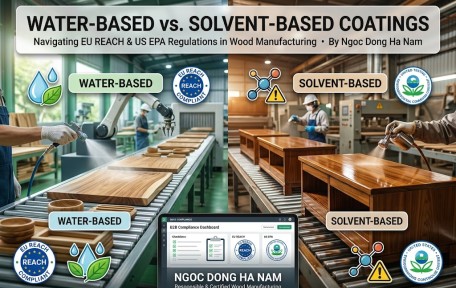
To guarantee seamless batch production, establish clear technical specifications during contract negotiations. Specify exact Janka hardness thresholds, acceptable grain variation limits, surface finish non-toxicity standards, and packaging drop-test requirements. Partnering with experienced export manufacturers ensures your custom designs are executed with precision jigs, professional sanding protocols, and eco-friendly protective coatings.
Are you ready to elevate your home decor portfolio with sustainably crafted hardwood and natural hybrid collections? Contact our procurement team today to request custom material swatches, review audit documentation, and receive a competitive wholesale quotation for your upcoming seasonal line.
This piece is written by Thong Nguyen, Co-owner & Sales Director at Ngoc Dong Ha Nam Co., Ltd. Drawing on 25+ years of expertise in manufacturing export handicrafts, our team delivers premium bamboo, rattan, water hyacinth, and acacia solutions tailored for global retailers.
FREQUENTLY ASKED QUESTIONS
What is the main physical difference between hardwood and softwood in home decor?
The primary difference lies in cellular structure and density rather than physical touch. Hardwoods come from flowering angiosperm trees with tight vessel cells that offer higher scratch resistance and structural durability, whereas softwoods derive from coniferous trees with open cellular structures that are lighter and softer.
Why is Acacia wood preferred for B2B home decor manufacturing?
Acacia is a highly durable hardwood with excellent water resistance, rich grain aesthetics, and rapid plantation growth. It provides global buyers with a sustainable, FSC-certified timber option that resists warping and surface damage in high-use applications.
How do climate conditions during ocean freight affect wood decor imports?
Fluctuations in temperature and humidity inside ocean containers can cause wood to absorb or release moisture, leading to warping or cracking if unconditioned. Manufacturers must kiln-dry wood to 8%-12% moisture content and apply protective seals to ensure product stability during transport.
What compliance certifications should international buyers look for in wood manufacturers?
Buyers should mandate FSC (Forest Stewardship Council) for legal, sustainable timber sourcing, along with BSCI (Business Social Compliance Initiative) or SMETA audits to ensure fair labor practices and ethical manufacturing standards.