The 2026 Global Design Report: Mastering Mixed Wood Tones with Sustainable Acacia, Oak, and Walnut
Key Takeaways
- Successful wood tone mixing relies on establishing a clear dominant species representing 60% of visible wood and introducing secondary and accent species at 30% and 10% respectively to create depth and visual hierarchy.
- Matching wood temperature (warm, cool, or neutral undertones) rather than exact colors ensures a cohesive aesthetic, preventing visual clash between species like dynamic Acacia, rich Walnut, and classic Oak.
- Integrating natural fiber bridges, such as handwoven rattan, seagrass, or water hyacinth accessories, provides a visual buffer that softens transitions between contrasting wood tones.
- For B2B buyers, sourcing mixed-wood collections requires working with certified manufacturers (FSC, BSCI, SMETA) to guarantee legal, sustainable forestry and ethical labor compliance under strict global regulations like EUDR.
EXECUTIVE ANALYSIS: THE EVOLUTION OF MULTI-TONE WOOD SPACES IN MODERN HOSPITALITY AND RESIDENTIAL DESIGN
In the contemporary global design landscape, the era of monochromatic, perfectly matched furniture sets has officially come to a close. High-end residential developers, commercial hospitality procurers, and international interior designers are increasingly rejecting the flat, uninspired aesthetics of single-species wood environments. Instead, the market is demanding layered, organic, and "collected-over-time" spaces that evoke authenticity, depth, and biophilic warmth. This structural shift has elevated the art of mixing wood tones from a daring design choice to an industry-standard practice. However, executing this strategy successfully requires a sophisticated understanding of material science, wood anatomy, and color theory.
For B2B buyers and supply chain managers, this shift presents both a significant opportunity and a complex logistical challenge. On one hand, offering collections that seamlessly blend diverse wood species—such as durable Acacia, luxurious Walnut, and timeless Oak—allows brands to command premium price points and appeal to design-conscious consumers. On the other hand, sourcing and manufacturing mixed-material products require stringent quality control, consistent moisture management, and ethical supply chain validation. As a leading Vietnamese manufacturer specializing in sustainable home decor and furniture, Ngoc Dong Ha Nam is uniquely positioned to guide global enterprises through this evolving landscape. This report provides an analytical, forward-looking exploration of how to pair Acacia with Walnut or Oak, offering strategic insights to optimize your product sourcing and design portfolios for the upcoming seasons.
The move toward multi-tone wood interiors is deeply intertwined with the rise of "quiet luxury" and sustainable living. Monochromatic spaces often feel sterile and mass-produced, reminiscent of cheap, laminate-heavy modular showrooms. In contrast, a room that thoughtfully integrates the distinct grains of Oak, Walnut, and Acacia tells a story of craftsmanship and curated taste. Global procurement teams are recognizing that hospitality spaces—such as boutique hotel lobbies, executive suites, and upscale restaurants—gain a competitive edge when they feel residential and lived-in rather than institutional. By understanding how to mix these premium hardwoods, B2B buyers can create versatile product catalogs that cater to this high-margin market segment, ensuring their offerings remain highly relevant to the world's most demanding interior designers.
THE MATERIAL LANDSCAPE: UNDERSTANDING THE UNIQUE DNA OF ACACIA, WALNUT, AND OAK
To successfully mix wood tones, designers and procurers must first master the physical and aesthetic characteristics of the component materials. Each wood species possesses a distinct "DNA" defined by its grain pattern, hardness, natural luster, and chemical undertones. Acacia is a highly dynamic, fast-growing hardwood celebrated for its exceptional durability and striking visual variance. Naturally characterized by a medium-to-dark brown heartwood bordered by a lighter, golden sapwood, Acacia features an interlocking grain pattern that reflects light in multi-dimensional ways. This natural variation makes Acacia a highly versatile "bridge wood" that can connect lighter and darker species within a single environment. From a sustainability standpoint, Acacia is a premier choice; it matures rapidly and absorbs carbon efficiently, making FSC-certified Vietnamese Acacia a cornerstone of eco-conscious product lines.
In terms of physical performance, Acacia boasts a Janka hardness rating of approximately 1,750 lbf, making it significantly harder than both Oak and Walnut. This exceptional density ensures that Acacia furniture can withstand heavy wear and tear in high-traffic commercial environments without scratching or denting. In contrast, Walnut represents the pinnacle of quiet luxury and classical elegance. Known for its rich chocolate-brown to deep espresso hues, Walnut typically exhibits a straight, fine grain with occasional dramatic swirls or curls. With a Janka hardness of 1,010 lbf, Walnut is softer than Acacia but highly valued for its stability and luxurious finish. Its undertones are uniquely complex, often leaning toward cool, ash-brown, or subtle violet-gray, rather than the warm amber tones found in other dark woods. This cool-toned richness gives Walnut a commanding visual weight, making it ideal for statement pieces, executive desks, or architectural wall panels.
Oak, on the other hand, is the ultimate chameleon of the hardwood world. Available primarily as White Oak or Red Oak, its aesthetic is defined by a prominent, open grain with beautiful "cathedral" patterns and medullary rays. White Oak, with a Janka hardness of 1,360 lbf, leans neutral-to-cool with wheat and pale yellow undertones, while Red Oak features warm, pink-to-amber undertones. Understanding these subtle color temperatures is critical; pairing a warm, reddish Oak with a cool, gray-brown Walnut can create immediate visual friction if not managed with a deliberate transitional element. By profiling these three distinct species, we can establish a clear framework for how they can coexist harmoniously in a single space.
MICRO-TRENDS IN WOOD INTEGRATION: CONTRAST, DOMINANCE, AND THE ROLE OF NATURAL FIBER BRIDGES
As interior designers push the boundaries of mixed-material environments, several key trends have emerged that dictate how Acacia, Walnut, and Oak are paired. The first is the strict application of the "60-30-10 Rule" to wood finishes. In this framework, 60% of the room's visible wood surfaces—typically the flooring, large cabinetry, or wall paneling—are dedicated to a single, dominant wood tone, such as a light, neutral White Oak. This establishes a clean, grounding foundation. The secondary wood tone, making up 30% of the space, introduces contrast and depth. This is where Acacia excels; an Acacia dining table or sideboard placed on an Oak floor provides a stunning, warm contrast without overwhelming the senses. The remaining 10% is reserved for high-impact accent pieces, such as a deep Walnut console, picture frames, or sculptural stools, which punctuate the room with sophisticated dark notes.
Navigating Grain Scales and Undertone Temperatures
When mixing these woods, designers must balance both grain scale and color temperature. Acacia has a highly active, interlocking grain, while Oak features prominent, wide cathedral patterns. To prevent visual chaos, it is essential to pair a "loud" grain with a "quiet" grain. If the room features wide-plank Oak flooring with a highly visible grain, the Acacia furniture should feature a cleaner, more streamlined grain selection, and Walnut accents should be kept straight-grained. Furthermore, matching the undertone temperature is paramount. Warm Acacia (with golden or amber undertones) pairs beautifully with warm Red Oak or a warm-stained Walnut. Conversely, if you are sourcing natural, unstained Walnut with cool, gray-violet undertones, it should be paired with cool-toned White Oak or a neutralized, light-stained Acacia to maintain a cohesive color palette.
The Strategic Deployment of Natural Fiber Bridges
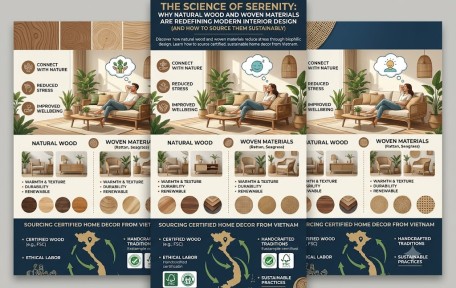
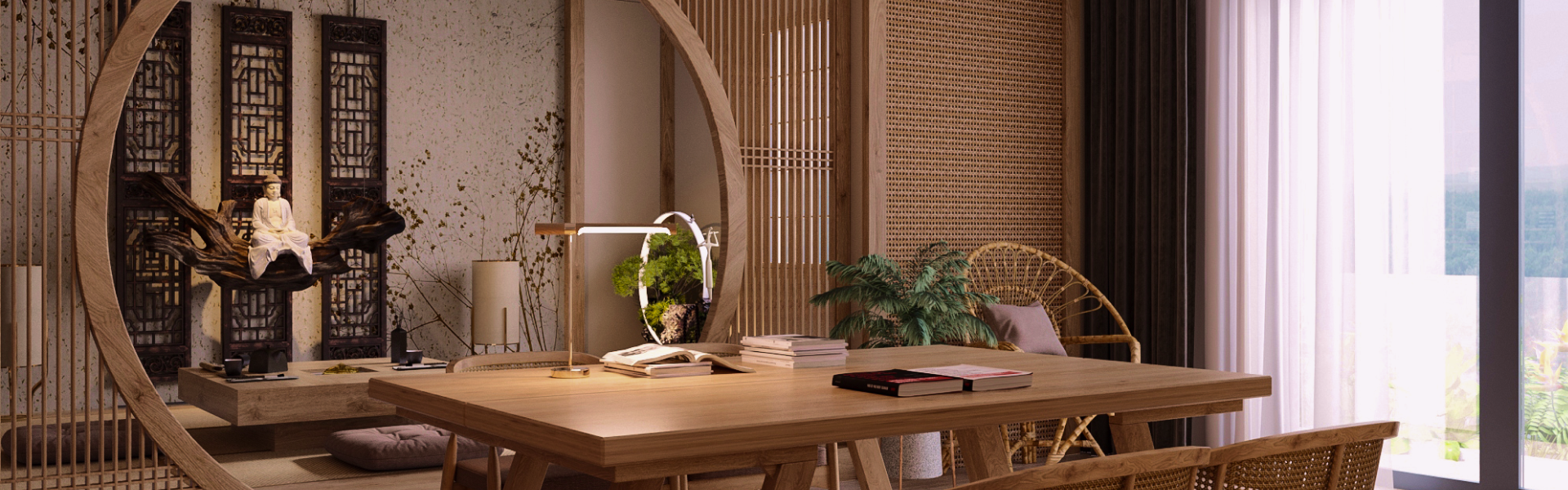
Another major trend is the integration of "natural fiber bridges" to soften the transitions between contrasting wood species. When a dark Acacia table sits directly on a light Oak floor, the visual jump can sometimes feel too abrupt. Leading designers are resolving this by inserting tactile, handwoven materials as visual buffers. Incorporating woven rattan dining chairs, seagrass area rugs, or water hyacinth storage baskets creates a physical and visual layer that diffuses the contrast. These natural fibers, which are core specialties of Ngoc Dong Ha Nam's sustainable manufacturing facility, carry neutral, earthy undertones that harmonize beautifully with both the warm amber of Acacia and the cool ash of Walnut. By utilizing these organic textures, B2B buyers can curate cohesive "lifestyle bundles" that encourage end-consumers to purchase matching woven accessories alongside their mixed-wood furniture collections, driving higher average order values and creating a more harmonious interior aesthetic.
THE FUTURE OF SUSTAINABLE AESTHETICS: ECO-CERTIFICATIONS AND CIRCULARITY IN HIGH-END INTERIOR SOURCING
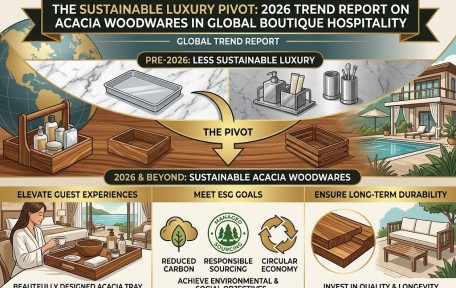
Looking toward the future, the global regulatory environment is rapidly shifting the parameters of wood sourcing. With the implementation of stringent regulations such as the EU Deforestation Regulation (EUDR) and the Lacey Act in the United States, global buyers can no longer afford to source timber from unverified or high-risk supply chains. The future of high-end interior design belongs to brands that can guarantee absolute transparency, circularity, and ethical manufacturing. This is particularly relevant when dealing with species like Acacia, which is widely cultivated across Southeast Asia. B2B buyers must partner with manufacturers who hold robust international certifications, including the Forest Stewardship Council (FSC) chain-of-custody certification, which ensures that the wood is harvested from responsibly managed forests that provide environmental, social, and economic benefits.
Furthermore, social compliance audits such as BSCI (Business Social Compliance Initiative) and SMETA (Sedex Members Ethical Trade Audit) have become non-negotiable requirements for major global retailers and hospitality groups. These certifications serve as a powerful risk-mitigation tool, protecting brand reputation and ensuring that every piece of mixed-wood furniture is produced under safe, fair, and legal working conditions. At Ngoc Dong Ha Nam, our manufacturing processes are fully aligned with these global standards. We integrate traditional Vietnamese craftsmanship with state-of-the-art, ethically audited production facilities. By combining FSC-certified Acacia with certified natural fibers like bamboo, rattan, and seagrass, we offer global buyers a fully compliant, low-risk, and highly marketable product portfolio that meets the strict ESG (Environmental, Social, and Governance) criteria of modern corporate buyers and discerning consumers alike.
By leveraging certified sustainable materials, B2B brands can also tap into the growing demand for carbon-neutral interior solutions. Acacia plantations in Vietnam play a critical role in local reforestation and carbon sequestration. When global buyers choose FSC-certified Vietnamese Acacia over high-impact, slow-growing hardwoods, they drastically reduce the embodied carbon of their product lines. This environmental metric is becoming a key selling point for contract designers working on LEED-certified commercial projects or green hospitality developments. Merchandising these products with clear sustainability labeling not only satisfies regulatory mandates but also builds deep brand trust with eco-conscious consumers who view their purchasing power as a tool for positive environmental impact.
THE GLOBAL BUYER’S PLAYBOOK: STRATEGIC GUIDELINES FOR SOURCING AND MERCHANDISING MIXED-MATERIAL COLLECTIONS
For global B2B buyers, product developers, and merchandising directors looking to capitalize on the mixed-wood trend, we recommend a multi-faceted sourcing strategy. First, curate your product catalogs with clear "temperature-matched" collections. Ensure that the Acacia and Oak pieces you offer share a compatible undertone—either leaning entirely warm (honey and amber) or entirely neutral-to-cool (wheat and ash). This makes it incredibly easy for interior designers and retail consumers to mix and match your products with confidence, reducing return rates and increasing customer satisfaction. Second, invest in product lines that inherently combine wood with woven natural fibers. By manufacturing furniture collections that feature Acacia wood frames with inlaid rattan webbing or handwoven bamboo details, you deliver a pre-designed, cohesive product that solves the mixing dilemma for the consumer while highlighting artisanal craftsmanship.
Technical Sourcing: Moisture Control and Precision Engineering
From a technical and manufacturing perspective, partner with suppliers who demonstrate advanced moisture control capabilities. Mixing wood species in single furniture items—such as an Acacia tabletop with Oak legs—requires precise kiln-drying to match the equilibrium moisture content (EMC) of both species. If the moisture levels are mismatched, the different expansion and contraction rates of the woods will inevitably lead to warping, cracking, and joint failure. Ngoc Dong Ha Nam utilizes advanced kiln-drying technology and rigorous quality control protocols to ensure that our mixed-material collections maintain structural integrity across diverse global climates. Furthermore, our engineering team designs specialized joints, such as sliding dovetails and breadboard ends, which allow the wood to breathe and move naturally without compromising the structural integrity of the piece.
Logistics, Packaging, and Supply Chain Resilience
Finally, B2B buyers must optimize their logistics and packaging to protect mixed-wood products during long-distance maritime transit. Fluctuations in humidity during ocean freight can subject furniture to severe moisture shock, leading to mold growth or structural warping. Sourcing from a vertically integrated manufacturer like Ngoc Dong Ha Nam ensures that products are packed using specialized, moisture-absorbing desiccants and eco-friendly, high-density packaging materials that shield the wood from environmental stressors. By partnering with a supplier that offers comprehensive quality control from the forest floor to the shipping container, global brands can secure a resilient, high-margin supply chain that delivers flawless, sustainably certified, and beautifully mixed wood and natural fiber collections to markets worldwide.
FREQUENTLY ASKED QUESTIONS
Can you mix Acacia with Oak and Walnut in the same room?
Yes, you can beautifully mix Acacia, Oak, and Walnut in one room by applying the 60-30-10 rule. Use a dominant wood (like Oak for floors) at 60%, a secondary wood (like Acacia for major furniture) at 30%, and an accent wood (like Walnut for small details) at 10%.
How do you match the undertones of different wood species?
To match undertones, identify whether the wood has warm (yellow, red, orange), cool (gray, blue-gray), or neutral (wheat, beige) undertones. Ensure your mixed woods share the same temperature family to maintain visual harmony.
Why is moisture control critical when manufacturing mixed-wood furniture?
Different wood species expand and contract at different rates. Precise kiln-drying to a matching equilibrium moisture content (typically 8% to 12%) is critical to prevent joint separation, warping, or cracking when different woods are joined.
How do natural fibers help when mixing wood tones?
Natural fibers like rattan, seagrass, and bamboo act as visual buffers. A handwoven rug or chair breaks up the direct contact of contrasting wood grains, softening the transition and adding rich biophilic texture to the space.