The 2026 Global Market Report: How the QUIET LUXURY Aesthetic is Redefining High-End Kitchen Accessories
Key Takeaways
• The 'Quiet Luxury' trend in 2026 kitchen design shifts focus from industrial, high-shine stainless steel to warm, tactile, and natural materials like Acacia wood and Bamboo.• High-end consumers are driving a demand for 'quietly dramatic' kitchens, where hidden appliances are balanced by premium, artisan-crafted countertop accessories.
• Global B2B buyers must prioritize international certifications such as FSC, BSCI, and SMETA to comply with tightening environmental regulations like the EUDR.
• Sourcing directly from certified manufacturers in Vietnam, such as Ngoc Dong Ha Nam, protects B2B profit margins while ensuring scalable, high-quality production.
EXECUTIVE SUMMARY: THE RISE OF QUIET LUXURY IN THE MODERN CULINARY SPACE
The global luxury landscape is undergoing a profound transformation. The era of ostentatious branding, high-shine surfaces, and loud, industrial aesthetics is rapidly giving way to a more refined, understated philosophy: 'Quiet Luxury'. Often characterized as 'stealth wealth' or 'understated confidence,' this design movement has successfully transitioned from the runways of high fashion into the core of premium residential interiors. Nowhere is this shift more evident than in the modern kitchen—a space that has evolved from a purely functional, closed-off culinary workspace into the social and aesthetic heart of the home.
For global B2B buyers, high-end hospitality procurement managers, and interior designers, this transition presents both a significant challenge and an unprecedented commercial opportunity. Today's affluent consumers are rejecting mass-produced, synthetic, and over-engineered kitchenware. Instead, they are seeking tactile warmth, organic textures, and impeccable artisan craftsmanship. The modern luxury kitchen accessory is no longer defined by its price tag alone, but by its origin, its material integrity, and its ability to foster a sense of calm, grounded elegance.
As a leading direct-from-factory manufacturer in Vietnam, Ngoc Dong Ha Nam is at the forefront of this movement. By specializing in premium kitchen accessories crafted from responsibly sourced Acacia wood, Bamboo, and natural fibers like Rattan, Seagrass, and Water Hyacinth, we enable global brands to capture this growing market segment. This report explores the core drivers of the Quiet Luxury trend in high-end kitchenware, details the essential materials shaping the aesthetic, and provides strategic recommendations for B2B buyers looking to optimize their product portfolios for 2026 and beyond.
CURRENT LANDSCAPE: UNDERSTANDING THE SHIFT FROM INDUSTRIAL TECH TO TACTILE ECO-MINIMALISM
To understand the current dominance of Quiet Luxury, one must examine the evolution of high-end kitchen design over the past decade. For years, the ultimate status symbol in residential kitchens was the 'professional-grade' culinary space. This aesthetic was heavily reliant on cold, commercial-grade stainless steel, massive exposed appliances, heavy professional ranges, and stark, sterile minimalism. While highly functional, these spaces often felt industrial, uninviting, and disconnected from the rest of the living environment.
In 2026, the design paradigm has completely shifted. The modern kitchen is now viewed as an extension of the living room—a warm, welcoming sanctuary where families gather and entertain. High-performance technology has not disappeared; rather, it has retreated discreetly into the background. Refrigerators, dishwashers, and wine coolers are now concealed behind panel-ready cabinetry that matches the surrounding woodwork down to the exact grain. Small countertop appliances are tucked away in dedicated appliance garages, and electrical outlets are flush-mounted out of sight.
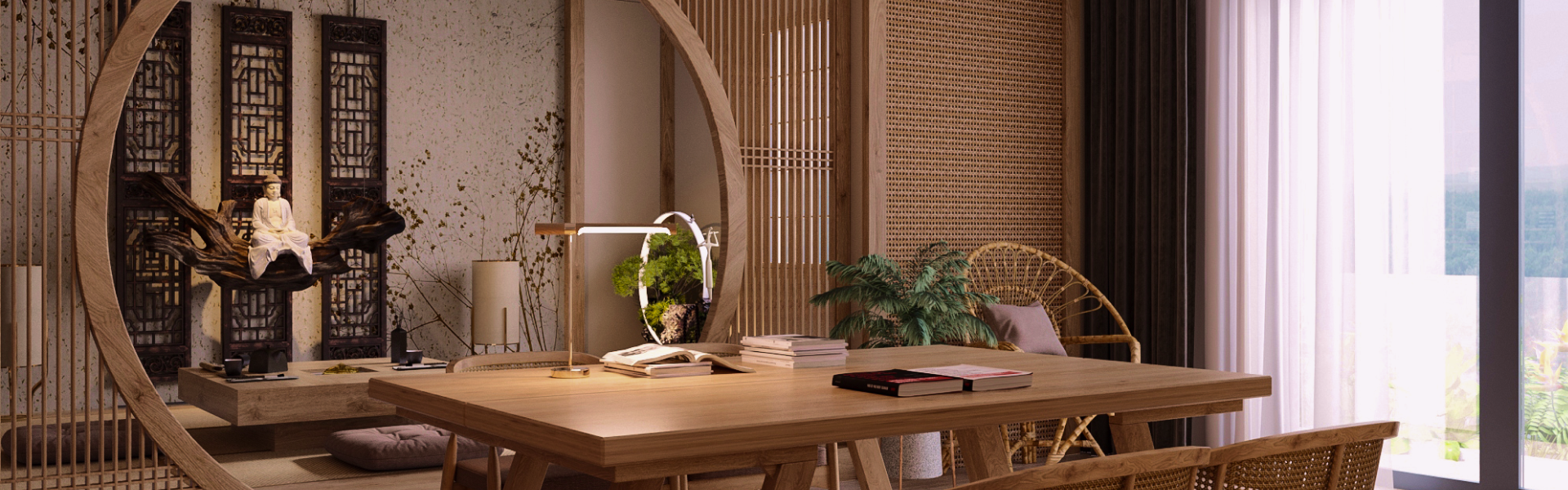
As the hard, technical elements of the kitchen disappear, the visual and physical focus naturally shifts to the remaining visible elements: the countertops, shelving, and tabletop accessories. This has given rise to the 'quietly dramatic' kitchen. In this aesthetic, the design relies on subtle statements made through rich, natural materials and layered, organic textures rather than flashy fixtures. Earthy neutrals—such as mushroom browns, clay taupes, and soft sage greens—have replaced stark whites and cold grays, creating a grounding, restorative atmosphere.
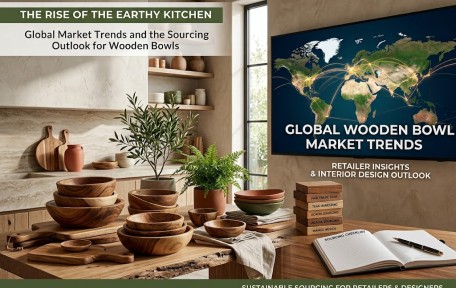
In this newly softened landscape, premium kitchen accessories serve as the 'quiet jewelry' of the space. A hand-carved Acacia wood charcuterie board resting on a marble countertop, a hand-woven Seagrass placemat framing a ceramic dinner plate, or a minimalist Bamboo flatware caddy organizing artisanal cutlery are no longer mere utilitarian tools. They are critical design elements that inject essential warmth, texture, and humanity into the minimalist architectural frame. For B2B buyers, sourcing products that fulfill this desire for tactile eco-minimalism is essential to capturing the interest of contemporary designers and consumers.
KEY TRENDS: MATERIALS, CRAFTSMANSHIP, AND THE STANDARDS OF SUSTAINABLE LUXURY
The essence of Quiet Luxury lies in the uncompromising quality of its materials and the integrity of its production. In the high-end kitchen accessories segment, this translates to a reliance on natural, renewable, and biodegradable elements. Below, we analyze the primary materials driving this movement and the manufacturing standards required to satisfy the premium global market.
1. Acacia Wood: The Epitome of Organic Elegance
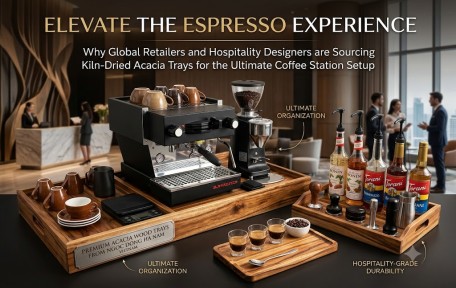
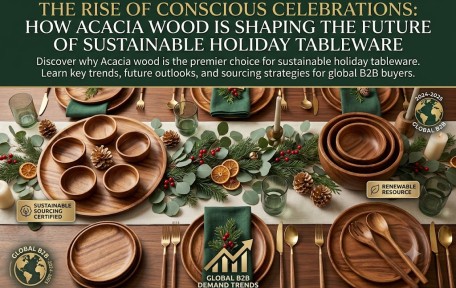
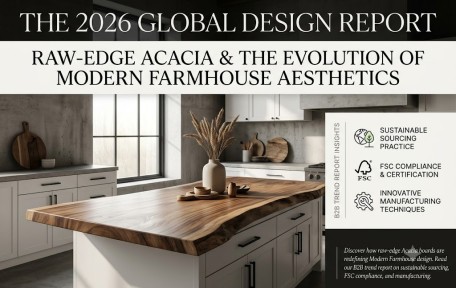
Acacia wood has emerged as the premier material for luxury cutting boards, serving platters, and charcuterie boards. Known for its rich, variegated grain patterns that range from warm amber to deep chocolate brown, Acacia offers an immediate visual depth that synthetic materials simply cannot replicate. Beyond its aesthetic appeal, Acacia is highly durable, scratch-resistant, and possesses natural water-resistant properties due to its dense cellular structure. This makes it exceptionally suited for food preparation and presentation, aging beautifully over years of use and developing a unique patina that enhances its character.
2. Bamboo: Sleek, Linear, and Highly Renewable
Bamboo represents the perfect synergy of modern engineering and ecological sustainability. With its rapid growth cycle, bamboo is one of the most renewable resources on the planet. In high-end kitchen design, bamboo is processed to showcase its clean, linear grain, aligning seamlessly with the popular Japandi (Japanese-Scandinavian) design aesthetic. Premium bamboo kitchen organizers, bread baskets, and flatware caddies provide a sense of structured, lightweight order without the coldness of plastic or metal organizers. When finished with food-safe, non-toxic oils, bamboo accessories offer a clean, hygienic, and visually soothing storage solution.
3. Woven Natural Fibers: Rattan, Seagrass, and Water Hyacinth
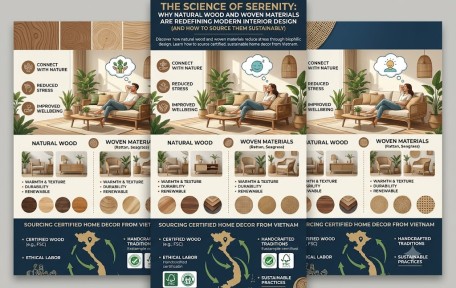
To break up the hard, flat surfaces of modern kitchen countertops and dining tables, designers are increasingly turning to woven natural fibers. Rattan, Seagrass, and Water Hyacinth bring a highly tactile, three-dimensional quality to tabletop accessories. Hand-woven charger plates, placemats, napkin holders, and fruit baskets introduce an organic rhythm and a sense of relaxed luxury. These materials are lightweight, highly durable, and completely biodegradable, offering an elegant alternative to synthetic table linens and plastic organizers.
4. The Artisan Touch and Supply Chain Compliance
A critical component of Quiet Luxury is the story behind the product. High-end consumers want to know that their kitchenware was crafted by skilled artisans who are paid fair wages and work in safe, ethical conditions. For B2B buyers, this means that sourcing from unverified, low-cost manufacturers poses a severe brand risk. To successfully enter the premium market, products must be backed by rigorous international certifications:
- FSC (Forest Stewardship Council) Certification: Ensures that all wood and bamboo utilized in production are harvested from responsibly managed forests that provide environmental, social, and economic benefits.
- BSCI (Business Social Compliance Initiative) & SMETA (Sedex Members Ethical Trade Audit): These audits verify that the manufacturing facilities adhere to strict social compliance standards, ensuring fair labor practices, safe working conditions, and environmental responsibility throughout the supply chain.
At Ngoc Dong Ha Nam, we combine our deep artisan heritage with a modern, fully compliant manufacturing facility. Our production processes are fully certified under FSC, BSCI, and SMETA, giving our global B2B partners complete peace of mind and a powerful narrative of ethical luxury to share with their customers.
FUTURE OUTLOOK: THE INTERSECTION OF GREEN REGULATIONS AND MARKET GROWTH (2026-2030)
As we look toward the late 2020s, the momentum behind Quiet Luxury and sustainable design is projected to accelerate. This growth is driven not only by shifting consumer aesthetics but also by a tightening global regulatory environment. Governments worldwide are implementing aggressive measures to curb plastic pollution and deforestation, forcing a fundamental restructuring of consumer goods supply chains.
The European Union's Deforestation Regulation (EUDR) and expanding corporate ESG (Environmental, Social, and Governance) reporting mandates are making supply chain transparency non-negotiable. Importers and retailers must be able to trace the origin of every wood and agricultural product back to its source. In this regulatory climate, uncertified timber and non-compliant manufacturing operations will face severe penalties and import bans. Consequently, B2B buyers who proactively shift their sourcing to certified, sustainable manufacturers like Ngoc Dong Ha Nam will secure a significant competitive advantage.
Furthermore, the 'plastic-free kitchen' movement is transitioning from a niche lifestyle choice to a mainstream consumer standard. High-end consumers are actively eradicating single-use plastics, melamine tableware, and synthetic organizers from their homes due to growing concerns over microplastics and chemical leaching. This shift is driving a sustained compound annual growth rate (CAGR) in the eco-friendly kitchenware segment. By investing in premium, durable, and biodegradable natural fiber and wood accessories today, brands can future-proof their product lines and protect their long-term retail margins against the inevitable decline of synthetic alternatives.
STRATEGIC RECOMMENDATIONS: A B2B BLUEPRINT FOR SOURCING HIGH-END SUSTAINABLE ACCESSORIES
To successfully capitalize on the Quiet Luxury trend and navigate the evolving regulatory landscape, global B2B buyers, category managers, and interior designers should adopt a highly strategic approach to product sourcing. Below is an actionable blueprint for integrating sustainable luxury into your culinary collections:
1. Curate Texture-Rich, Cohesive Collections
Modern interior designers rarely source kitchen accessories in isolation; they look for cohesive collections that tell a unified design story. When developing your product catalog, curate collections that blend complementary natural materials. For example, pair the rich, dark grains of Acacia wood serving boards with the soft, organic weave of Rattan placemats and Seagrass fruit baskets. This multi-material approach creates a layered, visually interesting table setting that perfectly embodies the Quiet Luxury aesthetic.
2. Partner Directly with Certified Manufacturers
Protect your profit margins and ensure consistent quality by bypassing intermediaries and sourcing directly from established manufacturers. Partnering with a direct-from-factory manufacturer like Ngoc Dong Ha Nam offers several critical advantages:
- Competitive Factory-Direct Pricing: Eliminates middleman markups, allowing you to maintain healthy margins while offering premium retail pricing.
- Scalable Production Capacity: Ensures that your high-volume seasonal orders are fulfilled on time, with consistent structural integrity and finish across every single piece.
- Guaranteed Compliance: Access to fully audited facilities (FSC, BSCI, SMETA) to meet your corporate ESG goals and comply with international import regulations.
3. Leverage the Narrative of Heritage and Sustainability
In the premium market, consumers are not just purchasing a physical product; they are investing in a story. Work with your manufacturing partner to document the journey of your products—from the sustainable harvesting of Acacia and Bamboo in Vietnam to the meticulous hand-weaving techniques of local artisans. Highlighting this heritage in your marketing collateral, product packaging, and digital channels adds immense perceived value, justifying premium price points and fostering deep brand loyalty among eco-conscious consumers.
In conclusion, the Quiet Luxury trend represents a permanent shift toward intentional, sustainable, and beautifully crafted living spaces. By aligning your sourcing strategy with certified, high-capacity manufacturers like Ngoc Dong Ha Nam, your brand can lead this market evolution, delivering the exquisite quality and ethical assurance that modern luxury consumers demand.
FREQUENTLY ASKED QUESTIONS
What materials are most popular in the Quiet Luxury kitchen trend?
Acacia wood, bamboo, rattan, seagrass, and water hyacinth are the leading natural materials, valued for their warmth, durability, and organic textures.
Why are certifications like FSC, BSCI, and SMETA crucial for B2B buyers?
These certifications guarantee that materials are sustainably sourced (FSC) and manufactured under ethical, safe labor conditions (BSCI/SMETA), mitigating regulatory and brand reputation risks.
How does Ngoc Dong Ha Nam support global B2B buyers in this trend?
Ngoc Dong Ha Nam offers direct-from-factory manufacturing in Vietnam, providing premium, certified, and customizable kitchen accessories with scalable production capacity.
What is the 'quietly dramatic' kitchen aesthetic?
It is a 2026 design trend that balances warm minimalism with subtle, high-quality natural textures and earthy tones, moving away from stark, sterile modernism.