The Japandi Evolution: How Acacia Wood is Shaping the Future of Japanese-Scandinavian Fusion in Global Home Decor
Key Takeaways
•Japandi style blends Scandinavian functionality with Japanese minimalism, driving massive global demand for warm, sustainable, and organic home decor materials.•Acacia wood offers a rapid 5-to-7-year harvest cycle, making it a highly sustainable, carbon-efficient alternative to slow-growing hardwoods like Oak and Teak.
•With a Janka hardness rating exceeding 1,100 lbf and rich natural oils, Acacia wood provides exceptional durability, scratch resistance, and moisture protection for indoor and outdoor furniture.
•Combining solid Acacia wood with woven natural fibers like bamboo, rattan, and seagrass optimizes shipping weight, reduces production costs, and enhances tactile Japandi aesthetics.
•Partnering with certified Vietnamese manufacturers holding FSC, BSCI, and SMETA compliance ensures seamless regulatory clearance under strict international forestry laws like the EUDR.
EXECUTIVE SUMMARY: THE CONVERGENCE OF MINIMALISM, WARMTH, AND SUSTAINABILITY
In the highly competitive global home decor industry, the "Japandi" design movement has emerged as a powerhouse, combining the sleek, functional minimalism of Scandinavian design with the warm, organic serenity of Japanese aesthetics. This fusion is more than a fleeting aesthetic; it is a profound reflection of a global shift toward wellness, mindfulness, and ecological responsibility in the home. As procurement managers, global buyers, and interior designers navigate this evolving market, the choice of raw materials has become the ultimate differentiator. This Trend Report analyzes the rise of Japandi and demonstrates how Acacia wood has become the cornerstone material for this design fusion, offering unmatched structural integrity, visual warmth, and supply chain viability.
Historically, slow-growing hardwoods like European Oak and Burmese Teak have been the standard-bearers of premium furniture. However, modern sourcing realities—including the implementation of the European Union Deforestation Regulation (EUDR) and rising consumer demands for carbon-neutral products—have forced a reevaluation of traditional materials. Acacia wood, particularly species like Acacia Mangium and Acacia Hybrid grown in the managed plantations of Vietnam, presents a highly competitive solution. With a rapid harvest cycle of just 5 to 7 years, Acacia sequesters carbon at a vastly accelerated rate compared to traditional hardwoods, while its natural Janka hardness rating of over 1,100 lbf ensures exceptional durability.
As a leading manufacturer and exporter, Ngoc Dong Ha Nam has spent decades refining the integration of sustainable Acacia wood with traditional Vietnamese craftsmanship, such as woven bamboo, seagrass, and rattan. This report provides strategic insights into how global brands can leverage FSC-certified, BSCI-compliant Acacia products to capture the lucrative Japandi market, optimize their supply chains, and meet the strict environmental mandates of the contemporary consumer landscape.
THE CURRENT LANDSCAPE: WHY JAPANDI DOMINATES THE B2B HOME DECOR MARKET
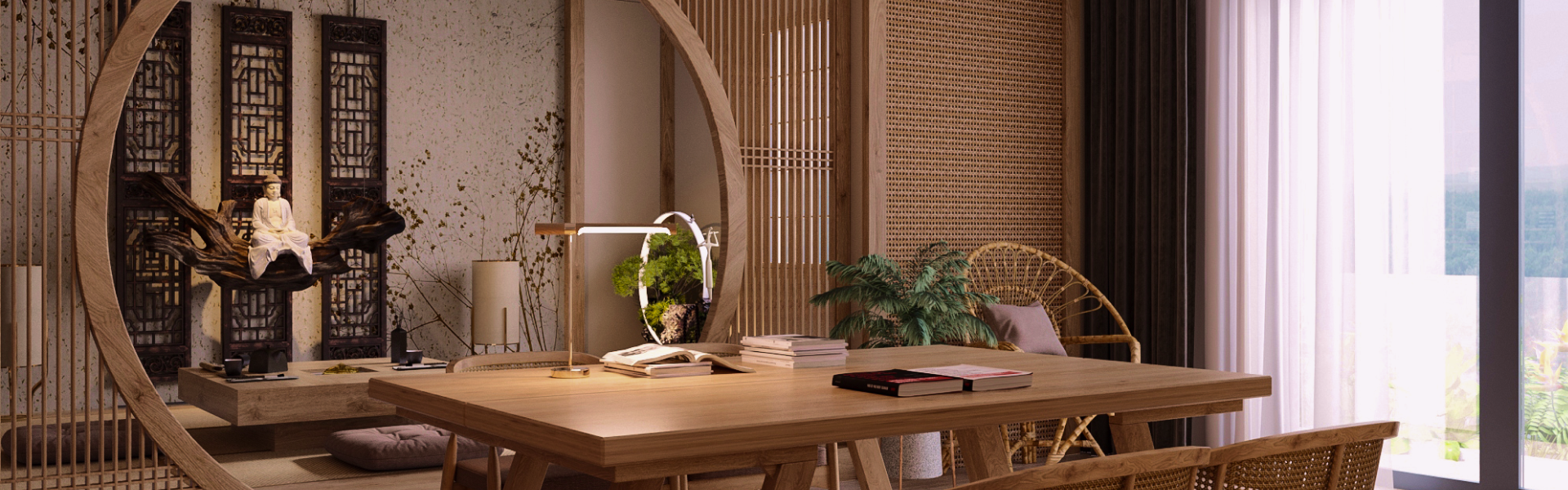
The global home decor and furniture market is undergoing a structural transformation. In a post-pandemic world, the home is no longer just a physical shelter; it is a sanctuary for mental well-being. This psychological shift has driven the meteoric rise of Japandi style, which seamlessly blends the Scandinavian concept of Hygge (coziness and contentment) with the Japanese philosophy of Wabi-Sabi (finding beauty in imperfection). The resulting aesthetic is clean, uncluttered, and deeply connected to nature, characterized by low-slung profiles, neutral color palettes, and rich, tactile organic materials.
For B2B buyers, importing Japandi-style furniture and accessories is highly profitable but requires balancing the "Iron Triangle" of sourcing: cost-efficiency, high-quality standards, and environmental compliance. Traditional supply chains are struggling to maintain this balance. Slow-growing hardwoods are becoming prohibitively expensive and logistically risky due to geopolitical tensions and strict logging bans in natural forests. Global buyers are actively seeking alternative materials that offer the same luxurious feel and structural reliability as premium woods, but with a transparent, low-carbon footprint.
This is where Acacia wood enters the spotlight. Unlike softwoods that require intensive chemical pressure treatments to prevent decay, Acacia is naturally rich in organic oils that act as a biological barrier against moisture, rot, and insect damage. This makes it highly versatile for both indoor and outdoor Japandi furniture, from minimalist dining tables to low-lying bedroom frames and bathroom organizers. By analyzing the physical properties and supply chain dynamics of Acacia, it becomes clear that this material is not just a temporary substitute for traditional hardwoods—it is a superior, future-proof choice for the modern sustainable home decor sector.
KEY TRENDS: THE STRUCTURAL ROLE OF ACACIA WOOD IN JAPANDI DESIGN
1. The Marriage of Warmth and Simplicity
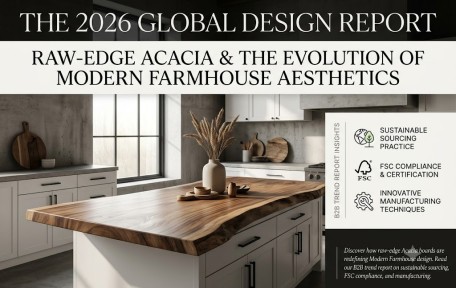
Scandinavian design has traditionally relied on very light, pale woods like birch, pine, and ash. While clean and bright, these woods can sometimes feel sterile or cold. Japanese design introduces deeper, warmer tones—such as cedar, cypress, and dark walnut—to ground the space. Acacia wood bridges this gap perfectly. Its natural color spectrum ranges from warm golden-honey hues to deep, rich amber and chocolate browns. The dramatic, wavy grain pattern of Acacia adds a layer of organic movement and visual texture that instantly warms up minimalist Scandinavian interiors, creating the harmonious balance that defines the Japandi aesthetic.
2. Wabi-Sabi Aesthetics with Industrial Durability
At the heart of Japandi is the celebration of natural materials in their most authentic state. Acacia wood is famous for its irregular, interlocking, and wavy grain patterns, which refuse to be uniform or "basic." Each piece of Acacia furniture tells a unique geological story, embracing the subtle knots and color variations that align perfectly with the Wabi-Sabi appreciation for natural imperfections. However, this artistic organicism does not compromise performance. With a Janka hardness rating that surpasses many oak species, Acacia resists scratching, denting, and daily wear-and-tear, making it ideal for high-traffic contract hospitality environments and busy residential spaces alike.
3. Multi-Material Harmonization
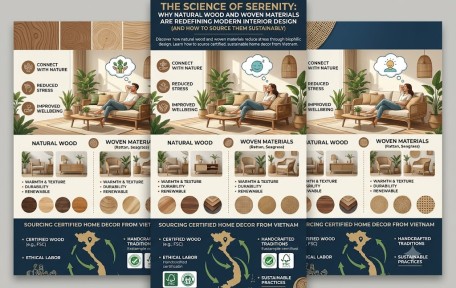
A major trend in contemporary Japandi design is the combination of solid wood with woven natural fibers to create multi-textured, lightweight products. Acacia wood acts as a robust structural frame, which can be elegantly paired with panels of woven bamboo, seagrass, rattan, or water hyacinth. This multi-material approach, pioneered by manufacturers like Ngoc Dong Ha Nam, achieves multiple strategic goals: it reduces the overall weight of the furniture (saving on ocean freight costs), lowers the raw material cost per unit, and adds a rich, handcrafted tactile quality that resonates deeply with eco-conscious consumers looking for authentic, artisanal home decor.
4. The Shift to Certified, Clean Supply Chains
Global retailers and tier-1 brands are no longer treating environmental compliance as an optional marketing highlight; it is now a strict operational prerequisite. The rise of Japandi is happening in tandem with rigorous sustainability regulations. Buyers are demanding full traceability, from the plantation to the retail shelf. Acacia wood is uniquely positioned to meet these demands because it is primarily grown on managed agricultural plantations rather than harvested from old-growth natural forests. This allows manufacturers to provide robust FSC (Forest Stewardship Council) chain-of-custody documentation, ensuring that every piece of wood is responsibly harvested and fully compliant with international forestry standards.
FUTURE OUTLOOK: CIRCULAR DESIGN AND THE NEXT WAVE OF SUSTAINABLE SOURCING
Looking ahead toward 2030, the Japandi style is projected to evolve from a purely aesthetic preference into a holistic framework for circular product design. The future of the home decor industry will be defined by products that are designed for disassembly, flat-packing, and easy recycling or biodegradation. Acacia wood is exceptionally well-suited for this circular transition. Because of its dimensional stability and resistance to warping, Acacia can be precision-cut into modular, flat-packable components that reduce shipping volumes by up to 60%, significantly lowering the carbon footprint of global maritime logistics.
Furthermore, Vietnam is rapidly cementing its position as the global hub for sustainable Acacia manufacturing and export. With advanced manufacturing capabilities—including state-of-the-art CNC machining, automated sanding, and non-toxic, food-safe water-based finishing lines—Vietnamese factories are uniquely equipped to deliver high-volume, uniform-quality Acacia products that meet the strict chemical and safety testing standards of the US, EU, and Japanese markets. As global buyers seek to diversify their sourcing away from high-tariff and high-risk regions, Vietnam's established infrastructure, competitive labor costs, and proximity to sustainably managed Acacia plantations offer a secure, highly efficient supply chain solution.
The integration of digital traceability will also shape the future of Acacia sourcing. Forward-thinking manufacturers are preparing to implement blockchain-enabled tracking systems that allow end consumers to scan a QR code on a piece of Japandi furniture and view its entire journey—from the specific Vietnamese plantation where the Acacia tree was harvested, through the BSCI-compliant manufacturing facility of Ngoc Dong Ha Nam, directly to their living room. This level of transparency will become the ultimate trust-builder for premium eco-friendly brands.
STRATEGIC RECOMMENDATIONS FOR GLOBAL BUYERS AND INTERIOR DESIGNERS
To capitalize on the sustained global demand for Japandi design while navigating increasingly complex regulatory environments, procurement directors and design professionals should adopt the following strategic actions:
- Transition to Rapid-Renewable Hardwoods: Gradually phase out slow-growing, high-risk timber species from your collections and replace them with fast-growing, plantation-harvested Acacia wood. This not only mitigates regulatory risks associated with deforestation laws but also appeals directly to the growing demographic of carbon-conscious consumers.
- Embrace Hybrid Multi-Material Designs: Collaborate with manufacturers who specialize in blending Acacia wood with natural woven fibers like bamboo, seagrass, and rattan. This hybrid design strategy creates visually stunning, lightweight, and cost-effective products that maximize container utilization and reduce shipping costs while offering the rich, textured warmth of the Japandi style.
- Partner with Certified, Socially Responsible Manufacturers: Insist on working with suppliers who hold globally recognized certifications, such as FSC for environmental forestry, and BSCI or SMETA for social and ethical labor compliance. Partnering with established, compliant manufacturers like Ngoc Dong Ha Nam protects your brand reputation and ensures seamless customs clearance in highly regulated international markets.
- Co-Design for Flat-Pack and Modular Efficiency: Engage with your manufacturing partners early in the product development phase to design furniture that can be flat-packed. Utilizing Acacia's superior dimensional stability allows for strong, durable knock-down joints that are easy for the end consumer to assemble, while drastically reducing warehouse storage costs and shipping fees.
By implementing these strategies, global home decor brands and interior design firms can position themselves at the forefront of the sustainable design revolution, delivering beautiful, high-performance Japandi-style products that resonate with modern consumers and stand the test of time.
FREQUENTLY ASKED QUESTIONS
Why is Acacia wood ideal for the Japandi interior design style?
Acacia wood is perfect for Japandi design because its warm, rich golden-to-amber tones and distinctive wavy grain bridge the gap between clean Scandinavian minimalism and the organic, rustic warmth of Japanese Wabi-Sabi aesthetics.
Is Acacia wood more sustainable than Oak or Teak?
Yes, Acacia is highly sustainable because it is a fast-growing hardwood species that reaches harvest maturity in just 5 to 7 years, compared to 75 to 100 years for Oak, enabling rapid carbon turnover and preventing old-growth deforestation.
How does Acacia wood perform in terms of durability and moisture resistance?
Acacia has a Janka hardness rating of over 1,100 lbf, making it extremely resistant to scratches and dents. Its high natural oil content provides biological protection against moisture, rot, and insect damage, making it suitable for both indoor and outdoor use.
What certifications should global buyers look for when sourcing Acacia wood products?
Global buyers should prioritize manufacturers with FSC (Forest Stewardship Council) certification for responsible timber sourcing, and BSCI (Business Social Compliance Initiative) or SMETA audits to ensure ethical and fair labor practices.