Material Science& Technical Authority
A Guide to Heat Treatment Processes: Eliminating Pests in Natural Home Decor Without Harmful Chemicals
Why Chemical-Free Pest Control is the Future of Sustainable Sourcing
In the dynamic world of global interior design and home decor sourcing, a silent revolution is taking place. As an international buyer or interior designer, you are acutely aware of the shifting demands of the modern consumer. Today's market does not just demand aesthetic brilliance; it demands absolute transparency, environmental stewardship, and uncompromising safety. Imagine curating a breathtaking collection of natural woven furniture, only to face catastrophic customs rejections or, worse, customer complaints due to pest infestations or toxic chemical odors. For decades, the industry relied on harsh chemical fumigants like Methyl Bromide to eradicate pests in natural materials. However, these volatile organic compounds (VOCs) pose severe health risks to artisans, off-gas into consumers' homes, and devastate the ozone layer. The definitive, sustainable alternative? Heat Treatment. This comprehensive guide will walk you through how Ngoc Dong Ha Nam employs advanced, chemical-free heat treatment processes to guarantee pristine, pest-free natural decor. By mastering these protocols, we ensure our Acacia, Bamboo, Seagrass, Rattan, and Water Hyacinth products meet the highest echelons of global quality, aligning perfectly with strict environmental standards and safeguarding your brand's reputation.
What You Need to Know Before Implementing Heat Treatment
Understanding the Science and Standards of Thermal Pest Eradication
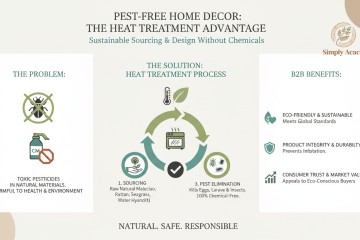
Before diving into the operational steps, it is crucial to understand the prerequisites that make heat treatment effective and compliant on a global scale. Unlike chemical dips that coat the surface of a material, heat treatment is a highly calibrated thermal process designed to penetrate the very core of natural fibers. The Materials: The approach must be meticulously tailored to the specific cellular structure of the raw material. Dense Acacia wood and thick-walled Bamboo require different thermal curves compared to porous, delicate fibers like Water Hyacinth and Seagrass. The Standards: A world-class heat treatment facility operates in strict adherence to ISPM 15 (International Standards for Phytosanitary Measures No. 15), which mandates that the core temperature of the material must reach a minimum of 56 degrees Celsius (133 degrees Fahrenheit) for at least 30 continuous minutes. The Ethical Foundation: At Ngoc Dong Ha Nam, our commitment to sustainability extends beyond the kiln. Our prerequisites include sourcing exclusively from FSC-certified forests and ensuring that all pre-treatment handling aligns with BSCI and SMETA guidelines. This guarantees that the artisans preparing the materials work in safe, ethical conditions, far removed from the hazardous chemical vats of the past.
Step 1: Sustainable Harvesting and Sun-Curing
The journey to a pest-free, chemically untainted product begins long before the raw materials reach our advanced kilns. The first critical step is strategic harvesting. Insects, particularly borers and beetles, are naturally attracted to the starches and sugars present in raw natural materials. By timing our harvests meticulously—such as cutting bamboo during specific lunar cycles or cooler seasons when sap and starch levels are at their lowest—we drastically reduce the natural appeal of the material to pests. Once harvested, materials like Rattan, Seagrass, and Water Hyacinth undergo a rigorous initial sun-curing process. Spread across vast, clean drying yards under the intense Vietnamese sun, the raw fibers begin to lose their initial water weight. This natural dehydration is a crucial preparatory phase; it stabilizes the fibers, prevents immediate fungal growth (mold and mildew), and prepares the cellular structure of the material to withstand the intense thermal dynamics of the heat treatment kiln without suffering from structural degradation or aesthetic blemishes.
Step 2: Precision Kiln Drying and Core Heat Treatment
This is the definitive stage where science meets craftsmanship. The sun-cured materials are carefully loaded into state-of-the-art industrial kilns. Unlike rudimentary drying rooms, our kilns are equipped with precision thermostatic controls and multi-point moisture sensors. The temperature is elevated gradually to prevent thermal shock, which could cause Acacia wood to warp or Bamboo to split. Once the ambient temperature stabilizes, the critical phase begins: driving the heat deep into the core of the materials. We maintain the stringent ISPM 15 standard, ensuring the absolute core of the thickest piece of wood or rattan reaches at least 56 degrees Celsius for a minimum of 30 minutes. This precise thermal threshold is biologically lethal to all known quarantine pests at every stage of their life cycle—destroying eggs, eradicating larvae, and eliminating adult insects. Because this process relies entirely on thermal energy, there are zero chemical residues left behind. Your end-consumers receive a product that is 100% natural, hypoallergenic, and safe for enclosed residential spaces.
Step 3: Moisture Equalization and Fiber Conditioning
Eliminating pests is only half the battle; maintaining the structural integrity and workability of the material is equally vital. The intense heat of the kiln inevitably drives out a significant amount of moisture, which, if left unmanaged, would render natural fibers incredibly brittle and impossible to weave. Step 3 involves a highly controlled cooling and moisture equalization process. As the temperature in the kiln is slowly reduced, we introduce specific humidity levels back into the environment. This allows materials like Water Hyacinth and Seagrass to reabsorb just enough moisture to regain their signature flexibility and tensile strength, without crossing the threshold that would invite mold. For structural materials like Acacia and Bamboo, this equalization phase relieves internal cellular stresses, establishing an Equilibrium Moisture Content (EMC) typically between 10% and 14%. This precise conditioning ensures that the final home decor products will not crack, warp, or unravel when shipped across different global climate zones, from the humid coasts of Florida to the dry interiors of Northern Europe.
Step 4: Stringent Quality Control and Secure Storage
The final step in our chemical-free pest eradication protocol is safeguarding the treated materials from re-infestation. Once the materials exit the kiln and complete the conditioning phase, they are immediately moved into secure, climate-controlled quarantine zones. Cross-contamination is a severe risk in manufacturing; therefore, treated Acacia, Bamboo, and Rattan are never stored in proximity to raw, untreated harvest. Our Quality Assurance teams, operating under the rigorous frameworks of our SMETA and BSCI certifications, conduct thorough visual and moisture-meter inspections on every batch. Before the materials are woven into exquisite baskets, furniture, or decor pieces, they are verified for optimal moisture content. When the final products are packaged for international ocean freight, we utilize high-grade silica gel desiccants and moisture-barrier packaging. This creates a micro-climate within the shipping container, ensuring that the pristine, pest-free, and chemical-free state achieved in our kilns is perfectly preserved until the moment the container doors are opened at your distribution center.
Partnering for a Greener Future: Your Next Steps in Sustainable Sourcing
Transitioning to chemically-free, heat-treated natural home decor is no longer just an ethical choice; it is a strategic business imperative. By sourcing products that utilize advanced heat treatment processes, you eliminate the risk of customs delays, protect your brand from the liability of toxic off-gassing, and cater to the booming demographic of eco-conscious consumers who demand purity in their living spaces. At Ngoc Dong Ha Nam, our mastery over the thermal treatment of Acacia, Bamboo, Seagrass, Rattan, and Water Hyacinth sets the global gold standard. We blend traditional Vietnamese weaving artistry with cutting-edge, environmentally responsible manufacturing technology. Are you ready to elevate your product lines with decor that is as safe and sustainable as it is beautiful? Connect with our B2B sourcing experts today to explore our latest collections, review our FSC, BSCI, and SMETA compliance documentation, and take the definitive step toward a greener, cleaner, and more profitable supply chain.
How Vietnam Transformed Acacia into the Worlds Premium Sustainable Timber: A Case Study in Global Supply Chain Excellence
The Sourcing Dilemma: Navigating the Global Hardwood Crisis and the Demand for Sustainable Luxury
As the Marketing Director and Sustainable Supply Chain Consultant at Ngoc Dong Ha Nam, I have spent years at the intersection of global interior design trends and raw material sourcing. In recent years, global B2B buyers, procurement officers, and elite interior designers have been confronting a profound and escalating crisis: the global hardwood dilemma. For decades, the high-end furniture and home decor industries relied heavily on traditional, slow-growing hardwoods such as Teak, Oak, Mahogany, and Walnut. These materials provided the durability and aesthetic appeal that consumers demanded, but they came at an extraordinary environmental and financial cost. Deforestation, illegal logging, and the catastrophic depletion of old-growth forests have triggered a massive ecological backlash. Today, the modern consumer is highly educated, deeply eco-conscious, and demands absolute transparency. They want the warmth, elegance, and durability of premium wood without the guilt of environmental degradation.
The Designer's and Buyer's Ultimate Challenge
This paradigm shift has placed immense pressure on global supply chains. Interior designers are tasked with creating breathtaking, luxurious spaces that adhere to strict green building standards and sustainable living philosophies. Meanwhile, B2B buyers and sourcing directors are caught in a relentless squeeze: they must secure high volumes of premium-grade timber that is structurally sound, aesthetically beautiful, ethically sourced, and economically viable. The traditional mainstays of the timber industry are failing to meet these multifaceted criteria. Teak has become prohibitively expensive and is often fraught with supply chain opacities. Oak faces severe supply constraints and long lead times. Furthermore, the rising specter of greenwashing—where products are falsely marketed as eco-friendly—has made global buyers extremely wary. They require ironclad proof of sustainability, demanding internationally recognized certifications such as FSC (Forest Stewardship Council) to verify the origin of their materials.
The Financial and Operational Bottlenecks
Beyond the environmental concerns, the operational realities of sourcing traditional hardwoods have become a nightmare for large-scale retail brands and furniture manufacturers. The extended growth cycles of traditional hardwoods—often taking 50 to 100 years to reach maturity—mean that supply cannot rapidly pivot to meet sudden spikes in global demand. This inelasticity leads to severe price volatility, making long-term financial forecasting nearly impossible for B2B enterprises. Additionally, as global shipping costs fluctuate and geopolitical tensions disrupt traditional trade routes, relying on fragmented, uncertified timber sources exposes brands to unacceptable levels of risk. If a major home decor brand is found to be using unethically sourced wood, the reputational damage is instantaneous and often irreversible in today's hyper-connected market. Buyers need a reliable, scalable, and fully certified alternative.
The Search for the Super Timber
The industry desperately needed a 'super timber'—a species that grows rapidly, sequesters carbon efficiently, regenerates soil health, and yet possesses the high density, Janka hardness, and breathtaking grain patterns of old-world hardwoods. This material needed to be versatile enough for both rugged outdoor furniture and refined indoor home decor. It needed to blend seamlessly with other rising stars of the sustainable materials world, such as Bamboo, Seagrass, Rattan, and Water Hyacinth, to cater to the booming trend of mixed-material, biophilic design. Most importantly, it needed to be backed by a transparent, ethical, and highly audited supply chain. For a long time, the industry searched in vain. Early alternatives were either too soft, prone to warping, or aesthetically unappealing. The gap between the promise of sustainable living and the reality of commercial-scale furniture manufacturing seemed unbridgeable. This was the critical problem facing the global market: how to achieve scale, sustainability, and supreme quality simultaneously. The answer, it turned out, required a masterclass in agronomy, supply chain engineering, and ethical manufacturing. The answer was found in Vietnam.
Vietnam's Strategic Masterclass: Engineering the Ultimate Sustainable Acacia Supply Chain
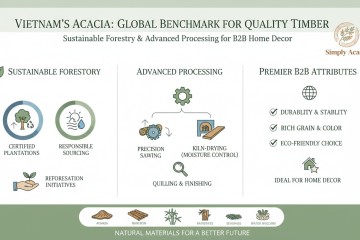
The solution to the global hardwood crisis did not emerge by accident; it was the result of a highly strategic, decades-long initiative by Vietnam to revolutionize its forestry and timber processing sectors. At Ngoc Dong Ha Nam, we have been at the forefront of this transformation, championing a holistic approach to sustainable manufacturing that elevates Vietnamese Acacia from a humble, fast-growing shrub into the world's most sought-after premium timber. Vietnam's ascent to the pinnacle of the global Acacia market is built on three foundational pillars: unparalleled geographical advantages, rigorous processing innovations, and an uncompromising commitment to international ethical standards.
The Geographic and Agronomic Advantage
Vietnam's unique topography and tropical monsoon climate create the absolute perfect storm for cultivating premium Acacia—specifically the Acacia mangium and Acacia auriculiformis species, as well as their highly resilient hybrid variants. Unlike Acacia grown in more arid or temperate zones, Vietnamese Acacia benefits from distinct wet and dry seasons. This climatic rhythm forces the trees to develop incredibly dense, tight growth rings, significantly increasing the wood's overall density, structural integrity, and Janka hardness rating. The soil composition in Vietnam's central and northern highlands is rich in essential minerals, which contributes to the wood's naturally high oil content. This natural oil acts as an intrinsic barrier against moisture, rot, and insect infestation, making Vietnamese Acacia exceptionally durable and uniquely suited for both high-end indoor furniture and robust outdoor applications. Furthermore, Acacia is a leguminous plant; it actively fixes atmospheric nitrogen into the soil, regenerating degraded landscapes and leaving the earth healthier than before it was planted. This makes Acacia a cornerstone of regenerative agriculture in Vietnam.
Advanced Processing: The Science of Perfection
However, superior raw material is only half the equation. The true differentiator of Vietnamese Acacia—and a core focus of our operations at Ngoc Dong Ha Nam—lies in the sophisticated, technologically advanced processing techniques we employ. Historically, fast-growing woods were plagued by issues of warping, cracking, and dimensional instability. Vietnam solved this through state-of-the-art kiln drying and moisture control technologies. When Acacia is harvested, it contains a high percentage of natural moisture. If not dried correctly, the wood will fail in the varied climates of North America or Europe. In Vietnam's premier facilities, the timber undergoes a meticulous, multi-stage kiln-drying process, bringing the moisture content down to a precise, globally standardized 8% to 12%. This slow, controlled drying stabilizes the cellular structure of the wood, permanently eliminating the risk of splitting or warping. Following the drying phase, the wood is treated with eco-friendly, non-toxic sealants that enhance its natural grain while adhering strictly to global chemical safety standards like REACH.
The Certification Ecosystem: FSC, BSCI, and SMETA
In the B2B world, trust is currency, and trust is built on verifiable certifications. Vietnam has aggressively pursued and secured the highest levels of international compliance, turning its Acacia supply chain into a fortress of ethical and sustainable practices. At Ngoc Dong Ha Nam, we do not just talk about sustainability; we prove it. Our Acacia is 100% FSC (Forest Stewardship Council) certified. This guarantees that every single log can be traced back to a responsibly managed forest that provides environmental, social, and economic benefits. But our commitment goes far beyond the forest. We understand that true sustainability encompasses human rights and ethical labor practices. That is why our manufacturing facilities undergo rigorous, independent audits for BSCI (Business Social Compliance Initiative) and SMETA (Sedex Members Ethical Trade Audit). These certifications ensure fair wages, safe working conditions, zero forced labor, and strict environmental management within our factories. When global buyers source Acacia from us, they are not just buying wood; they are buying peace of mind, knowing their supply chain is immune to the ethical scandals that plague lesser-regulated markets.
Synergy with Natural Materials
A crucial aspect of Vietnam's solution is the integration of Acacia with other indigenous, sustainable materials. The global home decor trend leans heavily into biophilic design—connecting indoor spaces with nature through rich textures and organic forms. Vietnamese artisans and manufacturers excel at combining the solid, robust elegance of Acacia timber with the intricate, woven beauty of Bamboo, Seagrass, Rattan, and Water Hyacinth. At Ngoc Dong Ha Nam, we leverage our deep expertise in these natural fibers to create spectacular, mixed-material product lines. An Acacia wood dining chair might feature a beautifully hand-woven Rattan backrest; an Acacia coffee table might incorporate Seagrass detailing. This synergy not only creates unique, high-value designs that captivate interior designers, but it also maximizes the use of rapidly renewable resources, further reducing the carbon footprint of the final product. Vietnam has essentially created a comprehensive, one-stop ecosystem for sustainable, luxury home decor.
Unmatched Quality, Aesthetic Brilliance, and Global Market Impact: The Results
The results of Vietnam's strategic investment in Acacia cultivation and processing have been nothing short of revolutionary for the global B2B market. By transforming a fast-growing, regenerative species into a premium, high-performance hardwood, Vietnam has completely reshaped the economics and aesthetics of the international furniture industry. The impact is visible in the showrooms of the world's leading home decor brands, in the portfolios of elite interior designers, and in the radically improved sustainability reports of major global retailers. Let us examine the tangible results and the profound impact this 'super timber' has delivered to the market.
Aesthetic Brilliance: The Look of Luxury
First and foremost, Vietnamese Acacia has shattered the misconception that sustainable, fast-growing wood must compromise on beauty. The aesthetic results are spectacular. The unique climate of Vietnam produces Acacia with a mesmerizing, interlocking grain pattern that rivals the most expensive exotic hardwoods. The wood boasts a rich, dynamic color palette, ranging from warm golden ambers to deep, luxurious mahogany tones, often featuring striking 'tiger-stripe' variations that give each piece of furniture a unique, bespoke character. Interior designers covet this visual texture because it brings immediate warmth, authenticity, and a touch of the organic into modern spaces. Whether finished with a clear, matte lacquer to highlight its natural raw beauty, or stained to match specific design palettes, Vietnamese Acacia takes finishes exceptionally well, providing a flawless, high-end surface that appeals to the most discerning global consumers.
Uncompromising Durability and Performance
Beyond its beauty, the structural results of Vietnamese Acacia are extraordinary. Thanks to the dense growth rings and advanced kiln-drying processes discussed earlier, this timber offers exceptional dimensional stability. It boasts a Janka hardness rating that frequently surpasses that of standard Oak or Teak, making it incredibly resistant to scratches, dents, and everyday wear and tear. This makes it an ideal choice for high-traffic environments like commercial hospitality projects, boutique hotels, and bustling family homes. Furthermore, its naturally high oil content provides inherent weather resistance. Global buyers who previously relied on wildly expensive Teak for their outdoor furniture collections have seamlessly transitioned to Vietnamese Acacia. When properly treated, Acacia outdoor furniture withstands rain, UV exposure, and fluctuating temperatures with remarkable resilience, offering end-consumers decades of reliable use.
Transforming the B2B Supply Chain
The operational and financial impacts for B2B buyers have been equally transformative. By partnering with certified Vietnamese manufacturers like Ngoc Dong Ha Nam, global brands have solved their most pressing supply chain headaches. The rapid growth cycle of Acacia (harvestable in 7 to 10 years, compared to 50+ years for traditional hardwoods) ensures a consistent, scalable, and reliable supply of raw material. This elasticity stabilizes pricing, allowing procurement officers to lock in long-term contracts without the fear of sudden, crippling market fluctuations. Brands that have switched to Vietnamese Acacia consistently report significant reductions in raw material costs—often up to 30%—while simultaneously upgrading their product quality and durability metrics. This powerful combination of lower costs and higher quality dramatically improves profit margins across the board.
Achieving Corporate Sustainability Goals
Perhaps the most critical result in today's market is the impact on corporate sustainability and ESG (Environmental, Social, and Governance) goals. By sourcing FSC-certified Acacia from BSCI and SMETA audited facilities in Vietnam, global brands instantly elevate their environmental credentials. They can confidently market their products as 100% sustainable, backed by the most rigorous global standards. This transparency builds immense brand loyalty among eco-conscious consumers and protects companies from the severe financial and reputational risks associated with greenwashing. The carbon sequestration of the Acacia plantations, combined with the regenerative agricultural practices, means that buyers are actively contributing to global climate solutions with every purchase order.
Your Strategic Partner: Ngoc Dong Ha Nam
In conclusion, Vietnam does not just produce Acacia; it produces the world's highest quality, most ethically sound, and technologically advanced Acacia timber. It is a triumph of sustainable engineering. For global buyers, procurement directors, and interior designers, the mandate is clear: transitioning to Vietnamese Acacia is no longer just an eco-friendly option; it is a strategic commercial imperative. At Ngoc Dong Ha Nam, we stand ready to be your definitive partner in this journey. With our deep-rooted expertise in FSC Acacia, our mastery of complementary natural materials like Bamboo, Seagrass, Rattan, and Water Hyacinth, and our unwavering commitment to BSCI and SMETA standards, we provide a seamless, risk-free pathway to sourcing the finest sustainable home decor in the world. Elevate your brand, secure your supply chain, and inspire your customers. Partner with Ngoc Dong Ha Nam today, and let us build a more beautiful, sustainable future together.
Beyond the Grain: Why Acacia Mangium is the Ultimate Choice for Sustainable Home Decor
The Hidden Truth Behind "Acacia" in Global Sourcing
In the dynamic world of global home decor, the term Acacia is frequently tossed around as a buzzword for eco-friendly elegance. But for discerning B2B buyers and visionary interior designers, a critical question remains: Are all Acacia species created equal?
The short answer is no. With over 1,000 species worldwide, the variance in quality, durability, and sustainability is staggering. Today, we are pulling back the curtain to reveal the hidden champion of sustainable sourcing: Acacia Mangium. If you are looking to elevate your product lines while maintaining uncompromising ethical standards, understanding this distinction is your first step toward market leadership.
Acacia Mangium vs. The Rest: A Comparative Deep Dive
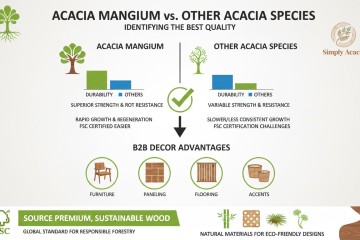
When comparing Acacia Mangium to other common commercial species like Acacia Auriculiformis or Acacia Nilotica, the differences in physical properties are profound.
Unmatched Density and Durability
Acacia Mangium boasts a remarkably high density and an impressive rating on the Janka hardness scale. This makes it exceptionally resistant to scratches, dents, and everyday wear—a crucial factor for premium furniture and high-traffic interior design projects.
Superior Moisture Resistance
Unlike softer woods that warp or crack under humidity, Acacia Mangium possesses high natural oil content. This intrinsic moisture resistance makes it a versatile choice for both indoor and outdoor decor collections.
The Sustainability Edge
Perhaps most importantly, Acacia Mangium is a fast-growing plantation species. It revitalizes degraded soils by fixing nitrogen, making its cultivation a regenerative process. When you source this specific species, you are actively contributing to global reforestation efforts.
Elevating Your Collections with FSC-Certified Excellence
Imagine offering your clients a breathtaking collection of wooden decor—from minimalist dining tables to intricate woven wood accents—that not only looks exquisite but carries a flawless ethical pedigree.
At Ngoc Dong Ha Nam, we do not just source wood; we engineer sustainable supply chains. Our Acacia Mangium is strictly FSC-certified, ensuring every grain traces back to responsibly managed forests. Furthermore, our production facilities operate under rigorous BSCI and SMETA standards. This means when you choose our Acacia Mangium products, you are guaranteeing fair labor practices, safe working conditions, and a zero-compromise approach to environmental stewardship. Your brand gains the ultimate competitive advantage: an authentic, verifiable story of green living that resonates deeply with modern, eco-conscious consumers.
Partner with Ngoc Dong Ha Nam for Premium Sustainable Wood
The shift towards sustainable, high-quality home decor is not just a trend; it is the new global standard. Do not let inferior wood species compromise your brand's reputation or your design vision.
Partner with Ngoc Dong Ha Nam today to access world-class, FSC-certified Acacia Mangium products tailored for the B2B market. Contact our sourcing experts now to request a sample, explore our latest catalog, and discover how we can build a resilient, sustainable supply chain together. Let's craft the future of eco-friendly living, one exceptional piece at a time.

7 Reasons Acacia Grain Patterns Are Redefining Modern Interior Design
7 Reasons Acacia Grain Patterns Are Redefining Modern Interior Design
The Rise of Biophilic Design in B2B Sourcing
In the dynamic and ever-evolving landscape of global interior design, the shift towards biophilic and sustainable aesthetics is no longer just a passing trend—it is a fundamental industry standard. Global buyers, procurement managers, and interior designers are constantly on the lookout for materials that not only meet rigorous durability requirements but also tell a compelling visual story. Enter Acacia wood. Known for its breathtakingly unique grain patterns and robust physical properties, Acacia is rapidly becoming the material of choice for premium B2B home decor. At Ngoc Dong Ha Nam, we have witnessed firsthand how the natural elegance of Acacia can transform a sterile commercial space into a warm, inviting sanctuary. In this comprehensive guide, we will explore seven compelling reasons why Acacia grain patterns are redefining modern interiors, and why this remarkable hardwood should be at the top of your sustainable sourcing list.
1. Captivating Swirls and Rich Color Variations
The most immediate and striking feature of Acacia wood is its mesmerizing grain pattern. Unlike more uniform woods, Acacia boasts an unpredictable, sweeping grain that features interlocked and wavy patterns. This creates a highly dynamic surface that catches the light in extraordinary ways. The color palette of natural Acacia is equally impressive, ranging from pale golden yellows in the sapwood to deep, rich mahogany and chocolate browns in the heartwood. For interior designers, this means every single piece of furniture, flooring, or decorative accent crafted from Acacia is entirely unique. There is no mass-produced monotony here; instead, Acacia offers a bespoke, artisanal aesthetic that elevates modern spaces, providing a natural focal point that commands attention without overwhelming the room.
2. Unmatched Durability Meets Elegant Design
While aesthetics are crucial to capturing the interest of end-consumers, B2B buyers and contract designers must prioritize longevity and performance. Acacia wood delivers exceptionally on both fronts. With a density that rivals and often surpasses that of traditional hardwoods like oak and hickory, Acacia is incredibly resistant to scratches, dents, and everyday wear and tear. This makes it an ideal candidate for high-traffic commercial environments, boutique hotels, and luxury residential projects. The dense nature of the wood also means it is naturally resistant to moisture and pests when properly treated. By choosing Acacia, designers do not have to compromise on elegance to achieve industrial-grade durability. The intricate grain patterns remain pristine over years of heavy use, ensuring an excellent return on investment for large-scale interior projects.
3. Seamless Integration with Modern Design Styles
Modern interior design thrives on contrast, texture, and the blending of different stylistic elements. Acacia grain patterns offer unparalleled versatility in this regard. Whether your project leans towards the minimalist tranquility of Japandi style, the organic warmth of Mid-Century Modern, or the raw edge of Industrial chic, Acacia fits seamlessly into the narrative. The bold grain provides a necessary organic contrast to sleek materials like glass, matte black metal, or polished concrete. Furthermore, Acacia pairs beautifully with other sustainable materials. At Ngoc Dong Ha Nam, we frequently combine Acacia wood frames with hand-woven Rattan, Seagrass, Bamboo, or Water Hyacinth to create multidimensional, highly textured decor pieces. This cross-material compatibility makes Acacia a highly desirable asset in any designer's toolkit.
4. FSC-Certified Sustainability and Ethical Sourcing
In today's conscientious market, the desire for beautiful interiors is inextricably linked to the demand for environmental responsibility. Global buyers are under increasing pressure to ensure their supply chains are green. Acacia is a fast-growing species that can be harvested sustainably without depleting natural forests. At Ngoc Dong Ha Nam, we take this a step further by ensuring our Acacia is FSC (Forest Stewardship Council) certified. This guarantees that the wood is sourced from responsibly managed forests that provide environmental, social, and economic benefits. Navigating the complexities of global supply chains requires a steadfast commitment to compliance. Our adherence to BSCI and SMETA standards ensures that every piece of Acacia we export is ethically produced, safeguarding human rights and fair labor practices. When you specify Acacia for your projects, you make a tangible commitment to planetary health.
5. Cost-Effective Luxury for B2B Sourcing
Securing premium materials at competitive price points is a constant challenge for procurement managers. Exotic hardwoods that offer similar visual impact to Acacia—such as teak, mahogany, or walnut—often come with prohibitive price tags and complex supply chain bottlenecks. Acacia bridges the gap between luxury and affordability. Because it grows rapidly and adapts well to various climates, it is more abundant and cost-effective to harvest than slower-growing hardwoods. This translates to significant cost savings for B2B buyers, allowing you to allocate budget to other areas of the design project without sacrificing the high-end, luxurious feel of the final product. The rich grain patterns of Acacia deliver a premium aesthetic that punches far above its weight class in terms of cost.
6. Exceptional Workability for Custom Decor Solutions
Interior designers often require bespoke solutions to bring their unique visions to life. The workability of the material is therefore a critical factor. Despite its impressive density, Acacia wood is surprisingly workable, responding well to cutting, carving, and shaping. This flexibility allows manufacturers like Ngoc Dong Ha Nam to craft intricate, custom designs—from smoothly turned table legs to intricately carved wall panels and sleek, minimalist shelving units. Furthermore, Acacia's natural oils and tight grain structure mean it takes stains and finishes exceptionally well. Whether you require a clear, natural finish to highlight the raw beauty of the grain, or a darker stain to match a specific corporate color palette, Acacia can be customized to meet exact B2B project specifications.
7. A Timeless Investment That Ages Gracefully
True luxury in interior design is defined by how a space and its materials evolve over time. Unlike synthetic materials that degrade and look worn, natural Acacia wood develops a beautiful, rich patina as it ages. The exposure to ambient light and air subtly deepens the colors within the grain, enhancing the contrast between the light sapwood and dark heartwood. This graceful aging process means that Acacia furniture and decor actually become more beautiful and characterful year after year. For global buyers and property developers, this translates to a timeless investment. Spaces outfitted with Acacia do not require frequent aesthetic updates, providing long-term value and maintaining property appeal for decades.
Transform Your Next Project with Ngoc Dong Ha Nam
The intricate, sweeping grain patterns of Acacia wood offer far more than just surface-level beauty. They represent a perfect synthesis of aesthetic appeal, rugged durability, and environmental sustainability. For global buyers and interior designers seeking to elevate their modern spaces, Acacia is an unparalleled choice. However, the true value of this exceptional material is unlocked when it is sourced ethically and manufactured to the highest global standards. At Ngoc Dong Ha Nam, we pride ourselves on being a trusted partner in your sustainable supply chain. With strict adherence to BSCI and SMETA standards, and a deep expertise in working with FSC-certified Acacia, Bamboo, Rattan, and Seagrass, we deliver world-class B2B home decor solutions that inspire. Ready to integrate the natural beauty of Acacia into your next large-scale project? Contact our expert consulting team today to explore our exclusive, sustainably crafted collections.

Mastering Moisture: How Our Scientific Kiln-Drying Process Guarantees Flawless Natural Decor
The Invisible Threat to Your Global Supply Chain: Moisture Instability
Picture this: Your latest collection of premium natural home decor has finally arrived after weeks of ocean transit. The designs are exquisite, but upon opening the containers, you are met with a buyer's worst nightmare: warped frames, cracked weaves, or worse, traces of mold. For global buyers and interior designers, moisture instability is the silent killer of both product integrity and brand reputation.
When working with breathtaking natural materials like Acacia, Bamboo, Seagrass, Rattan, and Water Hyacinth, the journey from the lush landscapes of Vietnam to a modern living room in New York or London is fraught with climatic shifts. Fluctuating humidity levels can easily compromise untreated organic fibers. At Ngoc Dong Ha Nam, we know that world-class design means nothing without world-class durability. That is exactly why we do not leave moisture control to chance.
The Science of Kiln-Drying: Precision Meets Nature
Nature provides the raw beauty, but science ensures its longevity. Traditional sun-drying, while ecologically romantic, is unpredictable. To meet rigorous international standards, we employ a highly calibrated kiln-drying process that removes the guesswork from natural material preparation.
How Our Process Works
Thermal Calibration: Materials are placed in state-of-the-art kilns where temperature and airflow are meticulously controlled. This gradual heating prevents the outer layers from drying too quickly, a common cause of internal structural damage.
Deep Moisture Extraction: By maintaining a steady, scientifically calculated environment, we extract bound moisture from deep within the cellular structure of bamboo and rattan, rather than just surface dampness.
Continuous Monitoring: Utilizing advanced digital hygrometers, our quality assurance teams monitor the process around the clock, ensuring every batch meets our exacting specifications before it ever reaches the weaving floor.
This rigorous approach ensures that our materials maintain their structural integrity, paving the way for flawless craftsmanship that aligns with BSCI and SMETA standards for responsible, high-quality manufacturing.
The Golden Standard: Why 8-12% Moisture Content Matters
In the realm of premium B2B home decor sourcing, the numbers 8-12% represent the golden standard of moisture content. But why is this specific range so critical for your inventory?
The Perfect Balance
If natural fibers are dried below 8%, they become excessively brittle. A beautifully woven rattan chair or a sleek acacia wood table could easily splinter or crack under normal usage. Conversely, if moisture levels exceed 12%, the materials become a breeding ground for fungal growth and deformation during the humid conditions of global ocean freight.
By strictly maintaining the 8-12% sweet spot, Ngoc Dong Ha Nam delivers an irresistible promise to global buyers: Zero-defect shipments and lifelong product resilience. Your customers receive eco-friendly, FSC-certified products that look as pristine on day one as they do a decade later. For interior designers, this means specifying sustainable pieces with absolute confidence, knowing they will withstand the test of time and climate.
Secure Your Sourcing with Sustainable Excellence
In today's competitive market, you cannot afford to compromise on quality or sustainability. Elevate your next interior collection by partnering with a manufacturer that treats moisture control as an exact science. At Ngoc Dong Ha Nam, we blend the timeless artistry of Vietnamese craftsmanship with cutting-edge supply chain reliability.
Are you ready to experience the difference that scientific kiln-drying brings to natural home decor? Contact our sourcing experts today to explore our latest catalog of flawlessly preserved Bamboo, Rattan, and Seagrass collections. Let us build a resilient, beautiful, and sustainable future together.
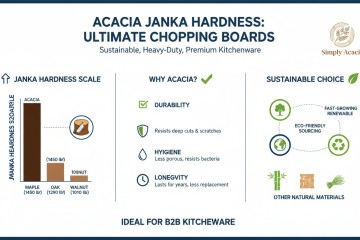
The Ultimate B2B Guide to Acacia Wood: How Its Janka Hardness Creates the Perfect Heavy-Duty Chopping Board
The Culinary World's Hidden Gem: Redefining Kitchen Durability
In the highly competitive world of premium kitchenware and home decor, global buyers and interior designers face a persistent challenge: sourcing materials that perfectly balance rugged durability, aesthetic brilliance, and uncompromising sustainability. The modern consumer is no longer satisfied with utility alone; they demand culinary tools that double as statement pieces in open-concept kitchens, all while leaving a minimal environmental footprint. Enter Acacia wood—a material that is rapidly redefining the standards of heavy-duty kitchenware.
For decades, traditional hardwoods like Maple, Walnut, and Oak have dominated the high-end chopping board market. However, as supply chains evolve and the demand for eco-conscious materials skyrockets, a new champion has emerged. Acacia wood is not just a trend; it is a scientifically superior alternative that addresses the core pain points of both professional chefs and domestic culinary enthusiasts. The secret to its rising dominance lies in a specific metric highly revered by timber experts and procurement officers alike: its impressive Janka Hardness rating.
As a Marketing Director and Sustainable Supply Chain Consultant at Ngoc Dong Ha Nam, I have witnessed firsthand how the shift toward high-performance natural materials is transforming retail catalogs worldwide. Global retailers who have integrated Acacia into their product lines are seeing elevated profit margins, reduced return rates, and enthusiastic customer reviews. But what exactly makes Acacia the ultimate choice for heavy-duty chopping boards? To understand its market appeal, we must first dive into the science of wood hardness and discover why Acacia sits in the absolute 'Goldilocks zone' of culinary materials.
Decoding the Janka Scale: How Acacia Outperforms the Classics
The Science of the Janka Hardness Test
To truly appreciate the value of an Acacia chopping board, B2B buyers must understand the Janka Hardness Scale. The Janka test measures the resistance of a sample of wood to denting and wear. It specifically measures the force required to embed a 0.444-inch (11.28 millimeters) steel ball halfway into a piece of wood. The resulting number is expressed in pounds-force (lbf). For procurement officers evaluating kitchenware, the Janka rating is the ultimate indicator of a chopping board's lifespan and performance.
The 'Goldilocks Zone' of Chopping Boards
When it comes to cutting surfaces, hardness is a delicate balancing act. If a wood is too soft (like Pine or Cedar, hovering under 900 lbf), it will easily succumb to deep knife gouges. These deep grooves are not merely cosmetic flaws; they become breeding grounds for dangerous bacteria, compromising food safety and leading to premature product failure. Conversely, if a wood is exceptionally hard (like Brazilian Walnut or Ebony, exceeding 3000 lbf), it will act like a stone surface, rapidly dulling expensive, high-carbon steel chef knives. This leads to profound customer frustration.
Acacia wood typically registers a Janka hardness rating between 1,700 and 2,220 lbf, depending on the specific species (such as Acacia mangium or Acacia koa). Let us compare this to the traditional titans of the chopping board industry:
Hard Maple: 1,450 lbf
White Oak: 1,360 lbf
Black Walnut: 1,010 lbf
Teak: 1,155 lbf
Acacia: 1,750+ lbf
As the data illustrates, Acacia is significantly harder than Maple, Oak, and Walnut. This elevated Janka rating allows Acacia chopping boards to withstand the relentless, heavy-duty chopping of meat cleavers and the rapid slicing of Santoku knives without sustaining deep, bacteria-harboring scars. Yet, it remains yielding enough to protect the razor-sharp edge of premium cutlery. This precise equilibrium is what makes Acacia an engineering marvel for kitchenware, providing buyers with a product that boasts an exceptional lifecycle and guarantees long-term consumer satisfaction.
Beyond Durability: The Sustainable and Aesthetic Edge of Acacia
The Visual Impact: A Designer's Dream
While the Janka rating secures the functional argument, the aesthetic properties of Acacia capture the consumer's heart. For interior designers curating modern, rustic, or minimalist spaces, the kitchen is increasingly viewed as an extension of the living area. Chopping boards are no longer hidden in cabinets; they are displayed proudly on marble islands and open shelving. Acacia wood is renowned for its breathtaking, high-contrast grain patterns. Ranging from pale yellows to rich, deep chocolates, the natural chatoyancy of Acacia ensures that no two boards are exactly alike. This bespoke quality allows retailers to offer artisanal-level beauty at a scalable, commercial volume.
The Ethical Supply Chain: FSC, BSCI, and SMETA Compliance
In today's global market, a product's origin story is just as critical as its physical attributes. Modern buyers are heavily scrutinized on their Environmental, Social, and Governance (ESG) commitments. This is where Acacia truly separates itself from slower-growing hardwoods. Acacia is an incredibly fast-growing species, reaching maturity in a fraction of the time it takes Oak or Maple. This rapid growth cycle makes it an inherently renewable resource.
At Ngoc Dong Ha Nam, we understand that true sustainability requires rigorous verification. When sourcing Acacia products, B2B buyers must insist on Forest Stewardship Council (FSC) certification, which guarantees that the timber is harvested from responsibly managed forests that provide environmental, social, and economic benefits. Furthermore, manufacturing facilities must adhere to strict social compliance standards, such as the Business Social Compliance Initiative (BSCI) and Sedex Members Ethical Trade Audit (SMETA). By sourcing Acacia chopping boards that meet these elite international standards, brands protect their reputation, mitigate supply chain risks, and appeal to the rapidly growing demographic of eco-conscious consumers. The high Janka hardness ensures the product lasts a lifetime, while the sustainable sourcing ensures the planet does, too.
Elevate Your Product Line: Partner with Vietnam's Sustainable Sourcing Experts
Transform Your Kitchenware Portfolio Today
The evidence is clear: Acacia wood's superior Janka hardness, combined with its stunning visual appeal and rapid renewability, makes it the ultimate material for heavy-duty chopping boards. For global buyers, procurement officers, and home decor brands, transitioning to or expanding your Acacia product line is a strategic move that promises higher margins, exceptional durability, and unassailable eco-credentials.
Why Choose Ngoc Dong Ha Nam?
Sourcing premium natural materials requires a partner who understands both the art of craftsmanship and the rigorous demands of international trade. At Ngoc Dong Ha Nam, we have spent decades perfecting the supply chain for sustainable natural materials, including Acacia, Bamboo, Seagrass, Rattan, and Water Hyacinth. Our deep-rooted expertise in Vietnam's rich manufacturing landscape allows us to deliver world-class products that meet the highest global standards.
We do not just supply products; we provide peace of mind. Our unwavering commitment to FSC-certified timber, coupled with our strict adherence to BSCI and SMETA social compliance, ensures that every Acacia chopping board you source from us is ethically produced and of the highest quality. We empower your brand to tell a compelling story of sustainability, durability, and design excellence.
Are you ready to offer your customers the culinary world's most resilient and beautiful chopping boards? Contact the sourcing experts at Ngoc Dong Ha Nam today. Let us collaborate to design and manufacture a custom line of heavy-duty Acacia kitchenware that will elevate your brand, delight your customers, and stand the test of time. Reach out to our B2B consulting team to request a catalog, discuss custom OEM/ODM designs, and secure your sustainable supply chain for the future.
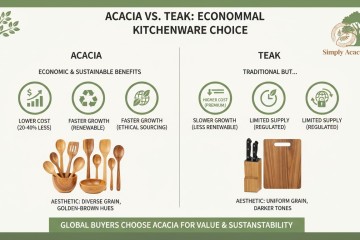
Beyond Teak: Why Acacia Wood is the Ultimate Economical Choice for Sustainable Kitchenware Collections
The Shifting Landscape of Premium Kitchenware: A Buyer's Dilemma
In the dynamic world of global home decor and premium kitchenware, sourcing the right materials is an ongoing balancing act. For decades, interior designers and retail buyers have revered Teak as the gold standard for wooden culinary tools, cutting boards, and serving platters. Its reputation for water resistance and rich color made it a staple in high-end kitchens. However, as global supply chains evolve and the demand for sustainable, competitively priced luxury grows, a significant shift is occurring. The modern buyer is faced with a critical dilemma: how to maintain premium quality and aesthetic appeal while navigating the soaring costs and environmental concerns associated with traditional Teak sourcing.
The Rising Cost of Tradition
Teak wood, while undeniably beautiful, presents substantial challenges in today's market. The slow growth rate of Teak trees, often taking decades to mature, has led to a constrained global supply. This scarcity, coupled with strict export regulations from primary growing regions, has driven FOB prices to unprecedented highs. For B2B buyers and wholesalers, this translates to squeezed profit margins and higher retail price points that can alienate the eco-conscious, value-driven consumer. Furthermore, the modern interior design landscape—heavily influenced by organic modernism, Japandi, and biophilic design—demands high volumes of natural wood accents. Relying solely on Teak makes scaling these collections financially unviable for many brands.
Enter Acacia: The Disruptor in Natural Materials
This is where Acacia steps into the spotlight. As a sustainable supply chain consultant, I have witnessed firsthand the strategic pivot leading global retailers are making toward Acacia wood. It is no longer viewed merely as a substitute, but rather as a superior strategic choice for comprehensive kitchenware lines. Acacia offers an irresistible combination of durability, striking visual character, and compelling economics. By capturing the attention of the industry, Acacia is redefining what it means to offer accessible luxury in the home decor space, providing a pathway for brands to scale their collections without compromising on quality or their commitment to green living.
Acacia vs. Teak: Unpacking the Economics and Aesthetics
To truly understand why Acacia is outperforming Teak in the B2B procurement space, we must analyze the core attributes that drive purchasing decisions: material performance, supply chain economics, and aesthetic versatility. When evaluating Acacia versus Teak, the data heavily favors the former for scalable, sustainable kitchenware collections.
Growth Rates and Supply Chain Economics
The primary driver of Acacia's economic advantage is its exceptional growth cycle. While a Teak tree requires 40 to 80 years to reach a harvestable size for high-quality timber, many species of Acacia can reach maturity in just 10 to 15 years. This rapid growth rate ensures a robust, continuous, and highly renewable supply chain. For global buyers, a stable supply chain means predictable pricing. The abundance of Acacia significantly lowers raw material costs, allowing manufacturers like Ngoc Dong Ha Nam to offer highly competitive wholesale pricing. This economic efficiency empowers retailers to achieve healthier profit margins or pass the savings onto the consumer, creating a highly competitive retail offering.
Uncompromising Durability and Performance
A common misconception is that a lower price point equates to inferior quality. In the case of Acacia, this couldn't be further from the truth. Acacia is a genuine hardwood, boasting a high ranking on the Janka hardness scale—often surpassing even Oak and Hickory.
Scratch Resistance: Its dense grain structure makes it incredibly resistant to deep knife grooves, which is crucial for cutting boards as it prevents bacteria from harboring in the wood.
Water Resistance: Like Teak, Acacia contains natural oils that provide excellent resistance to moisture and decay, making it perfectly suited for the demanding environment of a kitchen.
Longevity: With minimal maintenance, such as occasional oiling with food-safe mineral oil, Acacia kitchenware can last a lifetime, ensuring high customer satisfaction and low return rates for retailers.
Aesthetic Brilliance for Interior Design
From a design perspective, Acacia is a dream material. Interior designers are increasingly drawn to its dynamic, contrasting grain patterns. While Teak offers a uniform, golden-brown hue, Acacia features a spectacular spectrum of colors—from pale yellows and rich golds to deep, chocolate browns. This natural variation ensures that every single bowl, serving tray, or utensil is a unique work of art. In an era where consumers crave bespoke, artisanal touches in their homes, the distinct visual identity of Acacia provides a significant competitive edge on the retail shelf.
Meeting Global Standards: The Sustainable Edge of Acacia Wood
Today's consumers demand more than just functionality and beauty; they demand ethical sourcing and environmental stewardship. The desire for eco-friendly products is no longer a niche market—it is a baseline expectation. This is where Acacia truly solidifies its position as the ultimate choice for forward-thinking brands.
The Power of FSC Certification
Because Acacia grows rapidly and flourishes in various climates, it is highly suitable for sustainable plantation farming. This drastically reduces the pressure on old-growth forests, a persistent issue associated with illegal Teak logging. At Ngoc Dong Ha Nam, we champion the use of FSC (Forest Stewardship Council) certified Acacia. When B2B buyers source FSC-certified products, they are purchasing peace of mind. It guarantees that the wood is harvested from forests that are responsibly managed, socially beneficial, environmentally conscious, and economically viable. Promoting FSC-certified Acacia kitchenware allows brands to build deep trust with their eco-conscious customer base, transforming a simple purchase into a statement of environmental responsibility.
Ethical Manufacturing: BSCI and SMETA Compliance
Sustainability extends beyond the forest; it encompasses the people who craft the products. As an industry leader, Ngoc Dong Ha Nam strictly adheres to international labor and ethical standards, including BSCI (Business Social Compliance Initiative) and SMETA (Sedex Members Ethical Trade Audit).
BSCI: Ensures fair remuneration, decent working hours, and occupational health and safety across our supply chain.
SMETA: Provides rigorous auditing of labor standards, environmental performance, and business ethics.
Creating the 'Desire' for Conscious Consumerism
By partnering with a manufacturer that aligns with these global standards, buyers can confidently market their Acacia kitchenware collections as 100% ethically produced. This powerful narrative—combining the breathtaking natural beauty of Acacia with an unyielding commitment to the planet and its people—creates a profound desire among end-consumers. They are not just buying a salad bowl; they are investing in a sustainable lifestyle. For interior designers curating eco-friendly luxury spaces, Acacia provides the perfect blend of organic warmth and ethical integrity.
Elevate Your Next Collection with Responsibly Sourced Acacia
The transition from Teak to Acacia is more than just a cost-saving measure; it is a strategic upgrade for your brand. By embracing Acacia, you are choosing a material that offers superior supply chain stability, remarkable durability, stunning aesthetic appeal, and an unimpeachable sustainability profile. The economics of Acacia allow you to expand your product lines, increase your margins, and meet the rigorous ethical demands of the modern global market.
Partner with Ngoc Dong Ha Nam
At Ngoc Dong Ha Nam, we are more than just a manufacturer; we are your strategic partner in sustainable supply chain management. With decades of expertise in working with natural materials—including Acacia, Bamboo, Seagrass, Rattan, and Water Hyacinth—we possess the technical mastery and production capacity to bring your bespoke designs to life. Our state-of-the-art facilities are fully compliant with FSC, BSCI, and SMETA standards, ensuring that every piece of kitchenware we produce meets the absolute highest global benchmarks for quality and ethics.
Take the Next Step
Are you ready to optimize your procurement strategy and captivate your customers with world-class, sustainable kitchenware? Contact our B2B sourcing specialists today. Let us provide you with a comprehensive consultation, share our latest Acacia product catalogs, and discuss how we can tailor our OEM/ODM manufacturing capabilities to suit your brand's unique vision. Elevate your next home decor collection with the smart, sustainable, and economical choice. Reach out to Ngoc Dong Ha Nam and secure your competitive advantage in the global market.