
Resouces/Blog
The Essential Guide to Woodware Quality Control: Our 5-Step Inspection System
The Era of Radical Transparency in B2B Procurement
In an era of radical transparency and tightening global regulations, professional procurement officers and interior designers in the US and EU markets are no longer just looking for a beautiful product; they are looking for verified consistency. For natural home decor and woodware—a category that bridges the gap between organic aesthetics and functional durability—understanding the nuances of rigorous quality control is the ultimate tool for supply chain risk management.
At Ngoc Dong Ha Nam, we believe that unwavering quality is the cornerstone of premium manufacturing. This guide provides a scientific deep dive into our proprietary 5-Step Inspection System, the regulatory frameworks that govern our industry, and why mastering these elements matters to your bottom line.
1. The Anatomy of Flawless Woodware: Why Material Science Matters
Before diving into the inspection protocols, we must address the biological nature of our core materials. Unlike inert materials like plastic or stainless steel, natural fibers such as Acacia, Bamboo, Rattan, Seagrass, and Water Hyacinth are living, porous substrates. Their structural integrity and safety depend on three critical vectors:
The Raw Material: Is the species harvested at the right maturity to prevent natural degradation? (Our Acacia and Bamboo are globally recognized for their high density and structural stability).
Adhesives and Bindings: For woven products or edge-grained woodware, the glues and structural frames must be non-toxic, moisture-resistant, and climate-adaptable.
Surface Finishes: Whether it is a natural oil, lacquer, or water-based paint, the finish is the primary barrier between the environment and the natural fibers.
For a global buyer, a failure in any of these vectors leads to elevated defect rates, massive financial liability, and irreparable brand damage.
2. Step 1 & 2: Raw Material Verification and Moisture Calibration
In the high-stakes world of global home decor, quality control begins long before the assembly line. Our first two steps focus entirely on the foundational substrate.
2.1. Raw Material Grading (Step 1)
Every batch of Acacia, Bamboo, and natural weaving fiber (Rattan, Seagrass) undergoes strict botanical identification and visual grading. We screen for natural defects such as excessive knots, pest damage, or irregular grain patterns. Wood that does not meet our premium grade is immediately rejected or repurposed, ensuring only the highest-tier materials enter the production cycle.
2.2. Moisture Content (MC) Calibration (Step 2)
The single greatest threat to woodware exported to diverse climates is improper moisture content. When woodware travels from the humid climate of Vietnam to the dry winters of North America or Europe, it can warp or crack if not properly calibrated.
The Benchmark: We utilize state-of-the-art kiln drying technology to bring the Moisture Content of our Acacia and Bamboo down to a strict 8% to 12%. Each piece is tested with specialized digital moisture meters before it is cleared for shaping. This scientific precision prevents "micro-cracking," which is the primary site for structural failure and bacterial buildup.
3. Step 3 & 4: Structural Integrity and Surface Finishing
Once the material is stabilized, the manufacturing process begins. Our mid-line inspections ensure that the physical construction meets international ergonomic and safety standards.
3.1. Precision Assembly and Adhesives (Step 3)
During assembly, our QC engineers conduct rigorous stress tests. For woven items like Rattan and Water Hyacinth baskets, we test the tensile strength of the weave and the rust-resistance of the internal iron frames. For Acacia woodware, we inspect the joint integrity. We exclusively use LFGB and FDA-compliant, formaldehyde-free adhesives, ensuring that our laminated and edge-grained products are completely non-toxic.
3.2. Surface Finishes and Sensory Testing (Step 4)
This is where many manufacturers fail. We conduct comprehensive visual and sensory evaluations on all lacquers and oils. The finish must be uniformly applied, free of drips, and completely cured.
Furthermore, we perform a mandatory Sensory Evaluation to ensure the product does not emit volatile organic compounds (VOCs) or alter the ambient odor of the home environment. Acacia wood, characterized by its low natural odor, performs exceptionally well in these tests compared to high-tannin or highly resinous woods.
4. Step 5: Final Packaging and Global Compliance Verification
The final step in our inspection system guarantees that the product survives the arduous journey of global logistics.
4.1. The Drop Test and Micro-Climate Control (Step 5)
Before any container is sealed, the packaged goods undergo standard ISTA drop testing to verify the resilience of the master cartons. Additionally, we insert high-grade silica gel desiccants and utilize anti-mold paper to create a controlled micro-climate within the packaging, neutralizing the risk of humidity damage during ocean transit.
The Ngoc Dong Ha Nam Edge: We manufacture our products to meet the highest global standards by default. Our internal 5-Step System is designed to inherently exceed standard AQL (Acceptable Quality Limit) 2.5/4.0 requirements, giving our B2B partners total peace of mind for global distribution.
5. Beyond Basic QC: Managing Holistic Legal Risks
A professional buyer must look beyond basic defect rates to cover the full spectrum of modern compliance. In 2026, a high-quality product that is unethically sourced is a liability.
5.1. Ethical Manufacturing (BSCI & SMETA)
Quality extends to the quality of life of our artisans. Ngoc Dong Ha Nam is proudly audited under BSCI (Business Social Compliance Initiative) and SMETA (Sedex Members Ethical Trade Audit). These certifications guarantee fair labor practices, safe working conditions, and transparent supply chain management.
5.2. FSC® and Sustainability
In today's market, Safety = Sustainability. An acacia bowl or bamboo basket that is structurally perfect but illegally harvested creates a direct violation of the Lacey Act (US) or the EUDR (EU Deforestation Regulation). At Ngoc Dong Ha Nam, we integrate FSC-certified timber (Forest Stewardship Council) to ensure that your procurement strategy is legally bulletproof and environmentally regenerative.
6. Why Natural Materials are the Scientific Choice for Home Decor
Beyond their beautiful textures, the physical properties of our core materials make them superior choices for compliance-heavy markets:
Acacia Wood: High lignin content provides natural resistance to water absorption. Its structural stability makes it highly resistant to warping, ensuring long-term aesthetic value.
Bamboo: With a tensile strength rivaling steel, bamboo is an ultra-renewable resource that offers exceptional durability and a highly consistent grain structure for modern minimalist designs.
Rattan, Seagrass & Water Hyacinth: These fast-growing aquatic and climbing plants are naturally flexible yet incredibly robust when woven. They provide the highly sought-after biophilic design aesthetic while maintaining a minimal carbon footprint.
7. The Procurement Checklist: How to Verify Your Supplier
When auditing a factory in Vietnam or elsewhere, a professional buyer should demand a Technical File containing:
1. Standardized QC Reports: Detailed documentation of inline and final inspections, including precise Moisture Content readings.
2. Ethical Audit Summaries: Valid and up-to-date BSCI or SMETA audit reports.
3. Chain of Custody (CoC): Valid FSC® certificates proving the sustainable origin of the raw materials.
4. Bill of Materials (BOM): A detailed list of all glues, paints, and oils used, backed by their respective MSDS (Material Safety Data Sheets) to ensure REACH and FDA/LFGB compliance.
Conclusion: Partnering for Global Excellence
Compliance and quality control are not costs; they are investments in brand equity. For woodware and natural home decor, navigating the complexities of moisture calibration, material science, and global ethical standards requires a manufacturer that speaks the language of science and law.
At Ngoc Dong Ha Nam, we don't just create beautiful interior decor; we engineer reliability. By choosing a partner who prioritizes this rigorous 5-Step Inspection System, you ensure that your products move seamlessly through customs, onto retail shelves, and beautifully into the homes of consumers worldwide.
The Ultimate Comparison: Acacia vs. Bamboo vs. Rubberwood for Home Decor
Material selection is more than just an aesthetic choice in the global housewares and home decor market. For professional procurement officers at major retailers, it is a complex equation involving technical specifications, environmental compliance, and perceived consumer value.
Three materials dominated the Southeast Asian supply chain: Acacia, Bamboo, and Rubberwood. At Simply Acacia, we believe that understanding the core scientific and economic differences between these three is essential for making informed sourcing decisions that protect your brand’s reputation.
1. Acacia Wood: The Premium Hardwood Alternative
Acacia is not just a material; it is a strategic alternative to expensive hardwoods like Teak or Walnut.
Durability: With a high wood density and natural tannin content, Acacia offers superior resistance to rot, termites, and fungal decay.
Aesthetics: Acacia’s greatest strength is its dramatic, variegated grain and warm color palette, providing a "high-end" look that Bamboo or Rubberwood simply cannot replicate.
Best Use Cases: Premium cutting boards, salad bowls, luxury serving trays, and statement furniture pieces where grain beauty is a selling point.
2. Bamboo: The Rapidly Renewable Resource
It is important to remember that Bamboo is a grass, not a wood, which dictates its physical behavior.
Sustainability: Bamboo grows incredibly fast, making it the #1 choice for "Eco-friendly" mass-marketing campaigns.
Technical Profile: While very hard, Bamboo is brittle. Due to its linear fiber structure, it is prone to delamination (splitting layers) if the adhesive and lamination processes do not meet strict international humidity standards.
Aesthetics: It offers a uniform, modern look but lacks the "warmth" and visual depth of natural hardwood grains.
Best Use Cases: Budget kitchenware, high-volume serving trays, and short-lifecycle disposable items.
3. Rubberwood: The Budget-Friendly Utility
Often called "Hevea" or "Parawood," Rubberwood is considered eco-friendly because it is a byproduct of the latex industry.
Cost Efficiency: Generally the lowest-priced option of the three, making it ideal for mass-market furniture and accessories.
Technical Profile: Rubberwood has fair stability but is highly susceptible to mold and staining if not treated with preservatives immediately after milling. However, it takes stains and paint exceptionally well.
Aesthetics: The grain is very subtle and the natural color is a pale, neutral cream. It often requires artificial staining to look "premium."
Best Use Cases: Ready-To-Assemble (RTA) furniture, painted kitchen gadgets, and small household utility items.
4. Deep Dive: Comparative Performance Matrix
Here is a performance breakdown based on the criteria that matter most to professional B2B buyers:
Criteria
Acacia (Simply Acacia)
Bamboo
Rubberwood
Janka Hardness
High (1,750 lbf)
Very High (but brittle)
Moderate (995 lbf)
Water/Bacterial Resistance
Excellent (Natural)
Moderate (Risk of split)
Low (Needs treatment)
Grain Aesthetics
Diverse, Luxurious
Linear, Uniform
Pale, Minimal
Workability
Excellent (Less cracking)
Difficult (Splinter risk)
Good (Easy to paint)
Market Positioning
Premium / High-Value
Eco-Mass Market
Budget / Functional
5. Sustainability Analysis: Three Shades of Green
While all three are touted as sustainable, they cater to different corporate social responsibility (CSR) goals:
1. Bamboo: Fastest renewal cycle.
2. Rubberwood: Repurposing agricultural waste.
3. Acacia: Simply Acacia utilizes acacia from responsibly managed Vietnamese plantations. By choosing FSC® certified Acacia, you get the durability of a "real" hardwood with the environmental peace of mind of a plantation crop.
6. Sourcing Strategy: Which Material Wins for the US & EU?
Targeting the Premium/Gift Segment: Acacia is the clear winner. Consumers in the US and EU are increasingly willing to pay a premium for the "authentic wood feel" and durability of Acacia over generic bamboo.
Targeting High-Volume, Low-Price Points: Rubberwood is a safe, functional choice, especially for items that will be painted or sold as basic utility goods.
Targeting the "Eco-Discount" Segment: Bamboo remains the most recognizable material for low-cost green marketing.
7. Conclusion: Why Simply Acacia Chooses Acacia
At Simply Acacia, we believe in long-term value. An interior or kitchen item should not just be durable; it should inspire. Acacia combines the rigor of international food-safe standards (FDA/LFGB) with the timeless beauty of luxury hardwoods.
When you choose Acacia, you are investing in a product that resists the elements, ages beautifully, and stands out on a crowded retail shelf.
The Master Guide to Acacia Wood Grain and Natural Color Variations
In the high-end housewares markets of the US and Europe, Acacia wood has emerged as a top-tier material, prized for its unique blend of extreme durability and dramatic visual appeal. However, for professional procurement officers, the greatest challenge often lies not in technical quality, but in managing the natural variance of wood grain and color.
At Simply Acacia, we view every product as a masterpiece of geology and biology. This guide provides a deep dive into wood grain structures, color spectrums, and how procurement managers can standardize natural beauty for large-scale retail chains.
1. The Biological Foundation: Why No Two Pieces Are Identical
Acacia is a vast genus with over 1,300 species, but the varieties used in premium housewares—typically Acacia Mangium or Acacia Auriculiformis—possess a fascinating growth profile. They offer the density of slow-growth hardwoods despite being a fast-growing, sustainable resource.
1.1. Heartwood vs. Sapwood
The most striking contrast in Simply Acacia products stems from this biological division:
Heartwood: The older, inner core of the tree. It is rich in organic compounds (extractives) that create deep brown, chocolate, or mahogany hues. This is the densest and most rot-resistant part of the wood.
Sapwood: The younger, outer layer responsible for transporting nutrients. It is characterized by light cream or pale yellow tones.
Strategic Insight for Buyers: The presence of light sapwood streaks against dark heartwood is not a sign of "young wood" but a biological signature of authentic Acacia. Many "Rustic" or "Natural" collections specifically curate this high-contrast look.
2. Decoding Signature Grain Patterns
Acacia’s grain is a record of the tree's growth history. At Simply Acacia, we categorize grain into three primary groups based on milling techniques:
2.1. Straight Grain
Produced when the wood is quarter-sawn. This pattern offers a modern, minimalist aesthetic and provides the highest structural stability, making it the least prone to warping.
2.2. Interlocked Grain
This is an Acacia specialty. The wood fibers grow in zig-zagging directions. When planed smooth, it creates a Chatoyancy effect—a cat-eye-like shimmer where the wood appears to change shades when viewed from different angles.
2.3. Wavy & Curly Grain
Usually found near the base of the tree or where large branches fork. These areas possess the highest aesthetic value and are often reserved for Simply Acacia’s limited-edition or premium statement pieces.
3. The Color Spectrum: From Amber Gold to Deep Chocolate
The color of Acacia is never static. It is influenced by three core factors:
1. Soil Mineral Content: Acacia grown in mineral-rich highlands often exhibits darker, more defined color streaks.
2. Tree Maturity: Trees harvested at the optimal window (10–15 years) produce wider heartwood sections and more stable pigmentation.
3. The Kiln Drying Process: At the Simply Acacia facility, kiln drying is an art. Precise temperature control allows natural tannins to oxidize, creating that signature warm glow without the need for artificial dyes or stains.
4. Managing Expectations: What Qualifies as a "Defect"?
In international QA/QC standards, we distinguish between natural characteristics and manufacturing defects to help buyers maintain consistency:
4.1. Acceptable Natural Characteristics
Mineral Streaks: Dark longitudinal lines caused by mineral uptake from the soil.
Small Sound Knots: Tight, solid knots that do not compromise structural integrity.
Color Gradation: The natural transition from brown to yellow on a single surface.
4.2. Rejection Criteria (Manufacturing Defects)
Dead Knots: Loose or "hollow" knots that can fall out or harbor bacteria.
Blue Stain: Fungal staining occurring if the wood is not dried immediately after harvesting.
Structural Cracks: Deep splits that compromise the mechanical safety of the product.
5. The Impact of Finishing on Aesthetics
The true "soul" of Acacia wood is revealed only after the final finish. Simply Acacia prioritizes two primary methods:
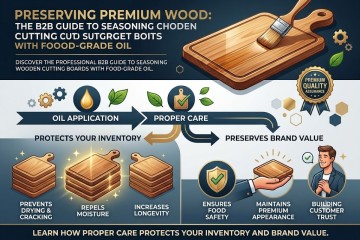
Food-grade Mineral Oil: Enhances the rustic beauty while maintaining the tactile "feel" of the grain. It deepens the natural tones by approximately one shade.
Beeswax Finish: Provides a soft matte luster, sealing the wood against moisture and softening the visual transition between high-contrast color bands.
6. Strategic Advice for Buyers: Crafting the Story
To reduce customer returns based on "color mismatch," Simply Acacia recommends that retail partners include a standard disclaimer in their marketing:
"Due to the organic nature of Acacia wood, each piece exhibits a unique tapestry of grain patterns and color hues. These natural variations are not defects but certificates of authenticity for genuine hardwood."
7. The Simply Acacia Advantage: Consistency in Nature
We understand that for global retailers, consistency is king. While wood is a product of nature, our grading process ensures:
1. Expert Color Matching: We sort and match wood slats by tone during the lamination process to ensure a harmonious aesthetic.
2. Moisture Integrity: Strict kiln-drying to 8-12% moisture content ensures the colors and grain remain stable throughout the shipping process.
At Simply Acacia, we don't just harvest wood; we curate nature’s finest textures for the modern home.
The Complete Guide to Food-Safe Standards: FDA, LFGB, and Beyond
In an era of radical transparency and tightening regulations, professional procurement officers in the US and EU markets are no longer just looking for a product; they are looking for verified safety. For acacia woodware—a category that bridges the gap between natural aesthetics and functional durability—understanding the nuances between FDA (USA) and LFGB (Germany/EU) standards is the ultimate tool for supply chain risk management.
At Simply Acacia, we believe that food safety is the cornerstone of premium manufacturing. This guide provides a scientific deep dive into the regulatory frameworks that govern our industry and why they matter to your bottom line.
1. The Anatomy of "Food-Safe" Woodware: Why Material Science Matters
Before diving into the legalities, we must address the biological nature of wood. Unlike inert materials like stainless steel, acacia is a living, porous substrate. Its safety for food contact depends on three critical vectors:
1. The Raw Material: Does the species contain natural toxins or sap that could leach into food? (Acacia is globally recognized as a safe, non-toxic hardwood).
2. Adhesives: For edge-grained or end-grained products like cutting boards and bowls, the glue must be non-toxic and moisture-resistant.
3. Surface Finishes: Whether it is a natural oil or a lacquer, the finish is the primary barrier between the food and the wood fibers.
For a buyer, a failure in any of these vectors leads to Product Recalls, massive financial liability, and irreparable brand damage.
2. The US Standard: FDA 21 CFR Framework
In the United States, the Food and Drug Administration (FDA) regulates food contact materials under Title 21 of the Code of Federal Regulations (CFR).
2.1. Wood as "GRAS" (CFR 178.3800)
The FDA generally recognizes wood as safe (GRAS) provided it is free from pesticides and harmful preservatives. However, the real scrutiny begins with CFR 175.300, which covers resinous and polymeric coatings.
2.2. Migration and Extraction Testing
For acacia products exported to the US, testing focuses on Extractives. When woodware comes into contact with different food types (acidic, alcoholic, or fatty), the lab measures the amount of chemical components that migrate from the finish into the food stimulant.
The Benchmark: Total extractives must not exceed specific limits (e.g., 0.5 mg/in² for certain coatings) to ensure no chemical transfer occurs during typical use.
3. The LFGB Standard: The "Gold Standard" of European Safety
While the US focuses on chemical lists, the German LFGB (Lebensmittel-, Bedarfsgegenstände- und Futtermittelgesetzbuch) is arguably the most stringent food-safety standard in the world.
3.1. Beyond EU 1935/2004
While Regulation (EC) No 1935/2004 provides the general framework for the EU, LFGB adds layers of testing that are specifically designed for consumer protection.
3.2. The Sensory Test (The Flavor/Odor Integrity)
This is where many manufacturers fail. LFGB requires a Sensory Evaluation to ensure the product does not alter the smell or taste of the food. Acacia wood, characterized by its low natural odor and high density, typically performs exceptionally well in these tests compared to high-tannin woods like Oak or resinous woods like Pine.
3.3. Specific Chemical Bans
PCP (Pentachlorophenol): Strictly banned under LFGB. It is often found in substandard wood preservatives.
Formaldehyde: Rigorous testing for emission levels from adhesives in laminated acacia products.
Heavy Metals: Testing for Lead, Cadmium, and Mercury in any pigments or finishes used.
4. Competitive Analysis: FDA vs. LFGB
Feature
FDA (USA)
LFGB (Germany/EU)
Philosophy
List-based compliance (permissive substances).
Performance-based (actual migration results).
Sensory Testing
Not strictly required for wood.
Mandatory (Odor and Taste test).
Difficulty Level
Moderate.
High / Very High.
Global Acceptance
Primarily North America.
Recognized globally as the ultimate mark of quality.
The Simply Acacia Edge: We manufacture our products to meet the LFGB standard by default. If a product passes LFGB, it inherently exceeds FDA requirements, giving our partners total peace of mind for global distribution.
5. Beyond Food Safety: Managing Holistic Legal Risks
A professional buyer must look beyond migration tests to cover the full spectrum of modern compliance:
5.1. REACH Compliance
The EU's REACH regulation controls chemicals in all consumer goods. For acacia woodware, this ensures that no "Substances of Very High Concern" (SVHC) are present in the packaging or the product itself.
5.2. DGCCRF (France)
France has specific guidelines (Information Note n° 2012-93) for wood. They require specific botanical identification and stricter controls on certain types of resin used in wood-composite housewares.
5.3. FSC® and Sustainability
In the 2026 market, Safety = Sustainability. An acacia bowl that is chemically safe but illegally harvested creates a violation of the Lacey Act (US) or the EUDR (EU Deforestation Regulation). At Simply Acacia, we integrate FSC-certified timber to ensure the "Safety" extends to the environment and the law.
6. Why Acacia is the Scientific Choice for Food Contact
Beyond its beautiful grain, the physical properties of acacia make it a superior choice for compliance-heavy markets:
High Lignin Content: This provides natural resistance to water absorption, reducing the risk of bacterial growth and warping.
Structural Stability: High-density acacia is less prone to "micro-cracking." Cracks are the primary site for chemical leaching and bacterial buildup.
Low Volatile Organic Compounds (VOCs): Unlike some softwoods, acacia has low natural resin levels, making it easier to pass the LFGB sensory tests.
7. The Procurement Checklist: How to Verify Your Supplier
When auditing a factory in Vietnam or elsewhere, a professional buyer should demand a Technical File containing:
1. Declaration of Compliance (DoC): A formal document where the manufacturer takes legal responsibility for compliance.
2. Recent Test Reports: Results from accredited third-party labs (SGS, Intertek, TUV, or Bureau Veritas) dated within the last 12 months.
3. Bill of Materials (BOM): A detailed list of all glues and oils used, backed by their respective MSDS (Material Safety Data Sheets).
Conclusion: Partnering for Global Excellence
Compliance is not a cost; it is an investment in brand equity. For acacia woodware, navigating the complexities of FDA, LFGB, and REACH requires a manufacturer that speaks the language of science and law.
At Simply Acacia, we don't just create beautiful kitchenware; we engineer safety. By choosing a partner who prioritizes these rigorous standards, you ensure that your products move seamlessly through customs, onto retail shelves, and safely into the homes of consumers worldwide.
The Ultimate Science of Wood Moisture Control: From Kiln-Dry to Global Shipping
Imagine this: A sourcing manager for a major US retailer opens a shipping container in a dry warehouse in Arizona. Inside are 10,000 Acacia wood salad bowls, handcrafted with precision in Vietnam. But as the doors swing open, a heartbreaking sound fills the air—the faint crack of wood fibers under stress. Within days, 30% of the shipment shows visible warping or deep structural splits.
What went wrong? The design was perfect. The branding was flawless. The finish was premium. The failure happened at the molecular level. It was a failure of Moisture Control.
In the world of high-volume B2B woodware export, moisture is "The Invisible Enemy." At Simply Acacia (Ngoc Dong Ha Nam), we believe that mastering wood moisture isn't just a manufacturing step—it is a rigorous science. This guide explores the lifecycle of water within Acacia wood, from the moment the timber is felled to its journey across the ocean, and how we ensure your ROI is protected through technical excellence.
Chapter 1: The Biology of Wood and Water – Understanding the "Bound" and the "Free"
To control moisture, we must first understand how wood "holds" water. Wood is a hygroscopic material, meaning it behaves like a living sponge, constantly seeking balance with its environment.
1.1. Free Water vs. Bound Water
Water exists in wood in two forms:
1. Free Water: Located in the cell cavities (lumens). This is the first to leave during the drying process.
2. Bound Water: Chemically bonded within the cell walls. Removing this water is where the true science begins.
The point at which all free water is gone, but the cell walls are still fully saturated, is called the Fiber Saturation Point (FSP)—typically around 30% moisture content. Any drying below this point causes the wood to shrink. If this shrinkage is not controlled with mathematical precision, internal stresses lead to the cracks that haunt sourcing managers.
1.2. Equilibrium Moisture Content (EMC)
The "Holy Grail" of wood manufacturing is reaching the Equilibrium Moisture Content (EMC). This is the state where the wood is neither gaining nor losing moisture because it is in perfect balance with the surrounding air’s humidity and temperature.
For a factory in the humid climate of Ha Nam, Vietnam (average humidity 80%), the EMC is very different from a retail store in Las Vegas (average humidity 20%). A Tier-1 partner must manufacture wood not for the environment it is in, but for the environment it is going to.
Chapter 2: The Kiln-Drying (KD) Masterclass – The Simply Acacia Standard
Air-drying (phơi tự nhiên) is sufficient for local handicrafts, but for global export to markets like the US, EU, or Australia, Kiln-Drying (Sấy lò) is non-negotiable.
2.1. Why Kiln-Drying is Vital for B2B
Sterilization: High temperatures kill insect larvae and fungal spores, ensuring compliance with international phytosanitary regulations.
Resin Setting: It "sets" the natural resins in Acacia wood, preventing them from bleeding through the finish later.
Stress Relief: A controlled kiln schedule allows wood fibers to relax as they shrink, minimizing internal tension.
2.2. Our 4-Stage Drying Protocol
At our 12,000m2 facility, we utilize advanced industrial kilns with computerized monitoring. Our schedule for Acacia Mangium typically follows these stages:
1. Pre-heating: Gradually raising the temperature to open the wood's "pores" without causing surface checks.
2. Drying: Controlled removal of water. We monitor the "Wet Bulb" and "Dry Bulb" temperatures to ensure the core of the wood dries at the same rate as the surface.
3. Equalizing: Ensuring every board in the kiln reaches the exact same moisture percentage.
4. Conditioning: Re-introducing a tiny, controlled amount of moisture to the surface to relieve any final "case-hardening" (stress).
Chapter 3: The "Gold Standard" Range: Why 8% to 12%?
For over 30 years, we have analyzed the failure rates of exported woodware. The data is clear: for Acacia wood to survive the transition from Vietnam to the global market, it must leave the factory at a moisture content (MC) of 8% to 12%.
Below 8%: The wood becomes too brittle. When it reaches a more humid environment, it may expand too aggressively, causing joints to fail.
Above 12%: The risk of mold growth and "warping" increases exponentially, especially during the 30-40 day sea transit in a hot container.
The Simply Acacia "Double-Check" System
We don't just test the wood once.
Post-Kiln: Every batch is tested using pin-type moisture meters.
Pre-Finishing: Moisture is checked again after the wood has been milled into its final shape.
Pre-Packing: A final scan ensures that the moisture has not "re-bounded" during the production process.
Chapter 4: Managing the "Micro-Climate" During Manufacturing
A common mistake in the industry is drying the wood perfectly, then leaving it in a humid finishing room for two weeks.
4.1. Climate-Controlled Production Zones
At Ngoc Dong Ha Nam, we manage the ambient humidity of our processing areas. By using industrial dehumidifiers and proper ventilation, we ensure that the "Equilibrium" achieved in the kiln is maintained while our artisans carve, sand, and finish the products.
4.2. The Finishing Barrier
As discussed in our Finishes Guide, the choice of oil or lacquer acts as a "moisture regulator." While no finish is 100% waterproof, a high-quality food-safe lacquer or a deep-penetrating mineral oil significantly slows down the rate of moisture exchange. This "slow-motion" exchange is what allows wood to adapt to a new climate without cracking.
Chapter 5: The Logistics Battle – Surviving "Container Rain"
The most dangerous part of a wood product’s life is the 30 days it spends in a steel box on the ocean.
5.1. The Phenomenon of Container Sweat
As a ship moves from the tropical waters of Southeast Asia to the colder climates of Europe or North America, the temperature inside the container fluctuates wildly. Moisture evaporates from the wood (and the wooden pallets) and condenses on the cold steel ceiling. This "Container Rain" then drips back onto the retail packaging, leading to mold and collapsed boxes.
5.2. Strategic Packaging Solutions
To protect our partners like Costco and Lidl, we employ a multi-layered defense:
Desiccant Integration: We use high-absorption silica gel or calcium chloride poles (like "Dry-Bags") inside the container to pull moisture out of the air.
Moisture Barrier Bags: For sensitive products, we utilize VCI or PE polybags to create a micro-environment for each individual unit.
Pallet Science: We ensure the wooden pallets used for shipping are also kiln-dried to the same standards as the product to prevent "cross-contamination" of moisture.
Chapter 6: The Simply Acacia Advantage – IT and AI in Moisture Management
Our leadership's background in Information Technology and AI gives us a unique edge in an industry often governed by "guesswork."
Predictive Analytics: We analyze historical weather data and shipping routes to adjust our kiln schedules. If we know a shipment is headed to a desert climate in peak summer, we may aim for the lower end of the 8-12% range.
Digital Traceability: Every batch of timber is assigned a digital ID. We log moisture readings at five different stages of production. If a customer reports an issue, we can trace back to the exact kiln load and the exact sensor data from that day. This level of transparency is why global giants trust us.
Conclusion: Trusting the Science, Securing Your Supply Chain
Moisture control is the difference between a successful product launch and a logistical nightmare. It is a science that requires expensive infrastructure, disciplined protocols, and decades of experience.
When you partner with Simply Acacia (Ngoc Dong Ha Nam), you aren't just buying wooden housewares; you are buying the peace of mind that comes with 30+ years of moisture expertise. We understand that your reputation is built on the durability of the products you sell, and we take the science of "The Invisible Enemy" as seriously as you take your brand.
Protect Your Next Collection
Don't leave your quality to chance. Contact our technical team today at simplyacacia.com to learn more about our kiln-drying protocols and how we can customize a moisture-management plan for your specific target market.
Simply Acacia: Engineered for Stability. Crafted for Beauty.
The Definitive Guide to Private Labeling (OEM/ODM) for Wooden Housewares
In the modern retail landscape of 2026, the battle for consumer loyalty is no longer fought on price alone—it is fought on Brand Identity. For major retailers and boutique home decor brands alike, Private Labeling (OEM/ODM) has shifted from a mere cost-saving tactic to a core strategic necessity.
Whether you are a category manager at a "Big-Box" giant like Costco or a founder of a premium Scandinavian-style home brand, your success depends on finding a manufacturing partner who can translate a vision into a tangible, high-quality product. This guide provides an exhaustive look at the world of Private Labeling for wooden housewares, specifically focusing on the competitive advantages of sourcing from the heart of Vietnam’s woodworking hub.
Chapter 1: Understanding the Landscape – OEM vs. ODM
In the context of wooden housewares, the terms OEM and ODM are often used interchangeably, but for a professional buyer, understanding the distinction is vital for project planning.
1.1. OEM (Original Equipment Manufacturer): The "Your Design, Our Hands" Model
In an OEM partnership, you provide the blueprints. You have specific CAD drawings, wood grade requirements, and precise finishing instructions. The manufacturer’s role is to execute your vision with industrial precision.
Best for: Established retailers with in-house design teams (e.g., Target or Walmart) who need strict adherence to global brand standards.
1.2. ODM (Original Design Manufacturer): The "Our Innovation, Your Brand" Model
In an ODM partnership, you leverage the manufacturer’s internal design expertise. At Simply Acacia, we offer a library of pre-engineered, "market-ready" designs that can be customized with your branding.
Best for: Brands looking to enter a new category quickly without the heavy R&D costs of original product development.
Chapter 2: Why Vietnam is the Global Capital for Private Label Woodware
As global supply chains realign in 2026, Vietnam has transcended its reputation as a "low-cost alternative" to become a "high-value destination."
2.1. Unmatched Artisanal Heritage Meets Industrial Scale
Vietnam, particularly regions like Ha Nam, possesses a multi-generational legacy of handicraft. When you private label here, your products benefit from an "artisanal soul" that fully automated factories in other regions cannot replicate. Combined with 12,000$m^2$ facilities, this creates a unique hybrid of "Human Touch" and "Mass Production."
2.2. Favorable Trade Ecosystems
Sourcing from Vietnam provides a significant "Tariff Shield" through agreements like the EVFTA (for European markets) and CPTPP. For a private label brand, these savings directly translate into higher margins or more competitive retail pricing.
2.3. The 2026 Sustainability Mandate
With the EUDR (EU Deforestation Regulation) in full effect, Vietnam’s established FSC™ plantation networks (especially for Acacia) offer a level of transparency that is now a mandatory requirement for global trade.
Chapter 3: The Private Labeling Workflow – From Concept to "Golden Sample"
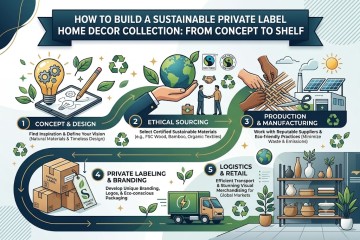
A successful OEM/ODM project is a journey of precision. Here is the Simply Acacia Protocol for a seamless launch:
Phase 1: The Design & Technical Review
We don't just accept a drawing; we audit it. Our engineering team reviews your design for "Manufacturing Feasibility."
Example: If a wood bowl wall is too thin for Acacia’s natural grain tension, we suggest micro-adjustments to prevent warping while maintaining the Minimalist/Organic Modern aesthetic you desire.
Phase 2: Material Customization
Private labeling allows you to define the "DNA" of your product.
Wood Selection: Sourcing the highest grade of Acacia (Grade A/B).
Mixed Materials: Integrating marble, slate, or metal accents—a major trend in 2026.
Custom Finishes: Choosing between matte lacquers, silk-touch beeswax, or heavy-duty food-grade oils.
Phase 3: Rapid Prototyping
In B2B commerce, speed is life. We aim to deliver a physical prototype within 7 to 10 days. This is the "Moment of Truth" where you can feel the weight, test the finish, and approve the branding.
Chapter 4: Branding Solutions – Beyond the Logo
Private labeling is the art of making a product "yours." We offer several high-precision branding methods:
Laser Engraving: Ideal for sharp, permanent logos that won't fade or peel. It provides a premium, "burnt-in" look that consumers associate with quality.
Heat Stamping: A traditional method that creates a subtle, tactile indentation in the wood.
Silkscreen Printing: Best for brands that want to incorporate specific brand colors (using food-safe, non-toxic inks).
Metal Inlays: For the ultimate luxury tier, embedding a small metal medallion with your logo directly into the Acacia wood.
Chapter 5: Retail-Ready Packaging & Logistics
For a category manager at Costco or Lidl, the product is only half the battle. The packaging must be "Supply Chain Proof."
5.1. Packaging Engineering
We offer full-service packaging development:
ISTA-3A Compliance: Designing boxes that survive the rigors of e-commerce shipping.
PDQ & Display Units: For "Big-Box" retailers, we design and pack products into ready-to-shelf display units, reducing the retailer’s labor costs.
5.2. Private Label Documentation
Every shipment comes with your brand-specific documentation:
FSC™ Chain of Custody certificates under your name.
FDA/LFGB food safety reports for your specific SKU.
Customized Care Instructions inserts in multiple languages.
Chapter 6: Quality Assurance for Global Giants
Large-scale private labeling requires a "Zero-Failure" mindset. At Simply Acacia, our 30+ years of experience have taught us that quality control must be decentralized.
1. Incoming Material QC: Testing every log for moisture before it enters the kiln.
2. Inline Production QC: Checking dimensions and branding alignment at every workstation.
3. Final Random Inspection (FRI): Applying AQL 2.5/4.0 standards to ensure that even a 250,000-unit order is consistent from the first bowl to the last.
Chapter 7: Scaling Your Brand with Simply Acacia
Why choose Simply Acacia (Ngoc Dong Ha Nam) as your OEM/ODM partner?
We Speak "Big-Box": We have successfully managed the complex requirements of Walmart, Target, and Aldi. We understand their portals, their labeling logic, and their strict delivery windows.
IT-Driven Transparency: With a leadership team rooted in IT and AI, we provide real-time production updates. You are never "in the dark" about where your brand’s inventory stands.
Ethical Manufacturing: Our BSCI and SMETA audit-ready status means your brand is protected from the reputational risks of unethical labor practices.
Industrial Capacity: With a 12,000m2 facility, we have the "room to grow" with you. As your brand goes from 1 SKU to 50, we have the infrastructure to support your expansion.
Conclusion: Building a Legacy, One Piece at a Time
Private labeling in the woodware industry is a partnership of trust. You are trusting a manufacturer in Vietnam with your brand’s most valuable asset: its reputation.
In 2026, the brands that win will be those that prioritize authenticity, sustainability, and technical excellence. By choosing a partner that combines three decades of tradition with modern digital precision, you aren't just sourcing a product—you are building a legacy.
Are you ready to bring your brand to life?
Contact the Simply Acacia OEM/ODM Team today at simplyacacia.com. Let’s discuss your 2026 collection and turn your design sketches into the next best-selling product on the global market.
The Professional’s Guide to Acacia Kitchenware Finishes: Oil vs. Lacquer vs. Wax
In the global houseware market, the "first touch" is often the "final decision." When a buyer at a retail giant or a discerning consumer picks up an Acacia wood bowl, they aren't just feeling the wood; they are feeling the finish.
For a sourcing manager, the choice of finish is a strategic balance between three critical pillars: Food Safety (Compliance), Durability (Longevity), and Aesthetics (Sales Appeal). Using the wrong finish on a premium piece of Vietnamese Acacia can lead to disastrous results—from mold growth and wood cracking to failed FDA/LFGB laboratory tests.
This comprehensive guide breaks down the three most prevalent finishing methods in the industry—Food-Grade Mineral Oil, Nitrocellulose (NC) Lacquer, and Natural Beeswax—to help you decide which is the "ROI winner" for your next 2026 collection.
Chapter 1: The Function of a Wood Finish – Beyond the Surface
Before choosing a finish, we must understand the "Biological Reality" of Acacia wood. As a dense hardwood with a specific gravity of 0.65 to 0.80, Acacia is naturally resilient. However, even the finest wood is porous. Without a professional finish, wood acts like a sponge, absorbing moisture, fats, and bacteria from food.
A professional finish serves three primary functions:
1. The Moisture Barrier: It maintains the wood’s equilibrium moisture content at the critical 8-12% range, preventing warping and cracking.
2. The Hygienic Shield: It seals the wood fibers so that food particles and juices cannot penetrate and rot within the grain.
3. The Visual Amplifier: It brings out the erratic, "chatoyancy" effect of the Acacia grain, turning a dull piece of timber into a luxury home decor item.
Chapter 2: Food-Grade Mineral Oil – The "Breathable" Standard
Mineral oil is the industry standard for products that involve heavy "knife-to-wood" contact, such as cutting boards and butcher blocks.
2.1. The Pros: Safety and Repairability
Total Food Safety: Pure, food-grade mineral oil is odorless, tasteless, and colorless. It is the safest option for direct food contact and is universally recognized by the FDA and EU food safety authorities.
Penetrating Protection: Unlike lacquer, oil penetrates deep into the wood fibers, keeping the wood "supple" and hydrated from the inside out.
End-User Repairability: If a customer scratches an oiled Acacia board, they can easily sand it down and re-apply oil at home. This "lifetime value" is a major selling point for eco-conscious brands.
2.2. The Cons: High Maintenance
The "Wash-Out" Factor: Mineral oil is not a permanent finish. With every wash, a small amount of oil is removed.
Buyer Education: Retailers must include care instructions, as the product will eventually look "dry" if not re-oiled by the consumer every 1–2 months.
Chapter 3: NC Lacquer – The Industrial Powerhouse
Nitrocellulose (NC) lacquer is the preferred finish for high-volume serving items like salad bowls, fruit trays, and coasters, where "zero maintenance" is the priority.
3.1. The Pros: Waterproof and Aesthetic Control
The Ultimate Barrier: Lacquer creates a hard, non-porous film on the surface of the wood. This makes the product effectively waterproof and highly resistant to staining from acidic foods (like balsamic vinegar or citrus).
Gloss Level Precision: Lacquer allows manufacturers to achieve specific "looks"—from a trendy "Super Matte" (5% gloss) that looks like raw wood to a "High Gloss" for luxury settings.
Zero Consumer Maintenance: Once finished with lacquer, the item never needs to be re-oiled. It remains shiny and protected for years, which is ideal for the "mass-market" consumer who wants convenience.
3.2. The Cons: Technical Complexity
Compliance Risk: This is where many low-cost factories fail. Standard industrial lacquers contain high VOCs (Volatile Organic Compounds) and lead. A Tier-1 factory like Simply Acacia uses only certified, lead-free, and phthalate-free lacquers that meet REACH and LFGB standards.
Brittleness: If a lacquered bowl is dropped or subjected to extreme heat (like a dishwasher—which is a strictly forbidden practice for wood), the lacquer can chip or peel.
Chapter 4: Natural Beeswax & Blends – The Luxury Hybrid
Beeswax finishes are often a blend of natural wax and mineral oil, representing the "Premium/Organic" tier of the market.
4.1. The Pros: The "Silk Touch"
Tactile Superiority: A beeswax finish provides a soft, satin-like feel that oil alone cannot match. It feels "warm" and expensive to the touch.
Enhanced Water Repellency: Wax fills the microscopic pores of the wood more effectively than oil, providing a better initial barrier against liquids.
Marketing Story: For brands focused on "all-natural" or "heritage" storytelling, a beeswax finish is a powerful marketing tool.
4.2. The Cons: Cost and Heat Sensitivity
Production Cost: Applying a wax finish is more labor-intensive, often requiring hand-buffing to achieve the desired luster.
Low Melting Point: Beeswax can become tacky if exposed to high heat or direct sunlight, making it less ideal for hot-food serving vessels compared to high-grade lacquer.
Chapter 5: Comparative Decision Matrix for B2B Buyers
Feature
Food-Grade Oil
NC Lacquer (Food-Safe)
Natural Beeswax Blend
Primary Use
Cutting Boards, Butcher Blocks
Salad Bowls, Trays, Decor
Luxury Gifts, High-End Decor
Food Safety
100% (Natural)
High (Requires Certification)
100% (Natural)
Durability
High (Internal)
Very High (Surface)
Medium
Maintenance
Regular Re-oiling
None
Occasional Buffing
Surface Feel
Natural Wood Texture
Smooth/Coated
Silky/Satin
Best For
Professional Chefs
Big-Box Retail (Costco/Target)
Boutique Brands
Chapter 6: The "Simply Acacia" Finishing Protocol
At our 12,000m2 facility in Ha Nam, we treat finishing as a science, not just a final step. Our 30-year legacy has allowed us to refine a protocol that ensures every piece leaves the factory in "Retail-Ready" condition.
6.1. Multi-Stage Sanding (The Foundation)
A finish is only as good as the surface beneath it. We utilize automated and manual sanding stages, progressing from 180 grit up to 400 grit. This creates a "glass-smooth" surface that allows the finish to bond perfectly with the Acacia fibers.
6.2. Humidity-Controlled Finishing Rooms
Vietnam's tropical climate can be a challenge. We apply our finishes in climate-controlled environments to prevent "blushing" (cloudiness in the lacquer) and ensure that the oil penetrates evenly without being blocked by surface moisture.
6.3. Rigorous Compliance Testing
We understand that for giants like Walmart and Costco, a single failed chemical test is a deal-breaker.
Every batch of finish we use is pre-tested for Heavy Metals, Phthalates, and Formaldehyde.
We provide full LFGB (Germany) and FDA (USA) documentation for every export project.
Chapter 7: 2026 Trends – What are Global Buyers Asking For?
As we move through 2026, we are seeing three distinct shifts in finishing preferences:
1. The "Raw Wood" Look: Buyers are moving away from yellowed, glossy finishes. There is a massive demand for Dead-Matte NC Lacquers that protect the wood while making it look completely unfinished and natural.
2. Vegetable-Based Oils: As an alternative to petroleum-derived mineral oil, many high-end brands are asking for Linseed or Tung oil blends for a "Vegan-friendly" marketing story.
3. Two-Tone Finishing: A trend where the interior of a bowl is finished with food-safe oil (for utility) and the exterior is lacquered or painted (for design).
Conclusion: Choosing the Right Finish for Your Brand
The finish you choose is the final word in your brand’s promise to the consumer.
If you are building a utility-focused line (cutting boards), stick to the Professional Oil standard.
If you are targeting mass retail with high-volume serving sets, Food-Safe NC Lacquer is the only way to ensure consumer satisfaction and zero returns.
If you are a boutique player in the luxury space, a Beeswax blend will provide the sensory experience your customers crave.
At Simply Acacia (Ngoc Dong Ha Nam), we don't just provide wood; we provide expertise. Our leadership team—with backgrounds in IT and AI—uses data-driven quality control to ensure that whether you choose Oil, Lacquer, or Wax, the result is consistent across 250,000 units.
Ready to see the difference?
Contact our samples department at simplyacacia.com. We can provide a "Finish Comparison Kit" featuring the same Acacia product in all three finishes, allowing your sourcing team to feel the quality first-hand.
Let’s finish your next project with perfection.
The Ultimate Handbook for Large-Scale Retail Sourcing
In the world of global retail, "Big-Box" sourcing is a high-stakes game where there is zero margin for error. When you are responsible for stocking 4,000+ stores across multiple continents, a 1% defect rate or a 10-day shipping delay doesn't just disrupt a category—it costs millions in lost revenue and erodes shareholder trust.
For giants like Walmart, Costco, and Target, the sourcing journey in 2026 has shifted from a search for the "lowest price" to a search for the "most resilient partner." This handbook provides a deep dive into the strategic pillars of large-scale sourcing, specifically focusing on the Vietnamese Acacia woodware sector, and how a Tier-1 manufacturer must operate to support the world’s largest retail ecosystems.
Chapter 1: The Infrastructure of Scale – Beyond the Workshop
Massive retail contracts require more than just "craftsmanship"; they require industrial capacity. A common mistake in international sourcing is partnering with a factory that lacks the physical infrastructure to scale up when a seasonal promotion goes viral.
1.1. Physical Capacity: The 12,000m² Benchmark
A Tier-1 partner in Vietnam must operate at a scale that allows for simultaneous production lines. For example, a 12,000m² facility is the industry benchmark for a factory capable of handling high-volume accounts. This space ensures:
Separation of Processes: Distinct zones for raw timber storage, kiln-drying, precision cutting, sanding, and dust-free finishing.
In-House Kiln Drying: Control over the most critical variable—moisture. Relying on third-party drying services is a major risk factor for large retailers.
1.2. Volume Throughput: The 20-30 Container Standard
Large retailers require "Continuous Replenishment." A factory must prove a consistent output of at least 20 to 30 containers per month. At Simply Acacia, our history of managing projects like the 250,000-unit Lidl bowl shipment and the 85-container Costco project proves that our infrastructure is built for "Peak Load" performance without sacrificing quality.
Chapter 2: Audit Readiness – The "Golden Ticket" to the Shelf
For a sourcing manager at Target or Walmart, the factory audit is the ultimate gatekeeper. In 2026, being "audit-ready" means more than just a clean floor; it means total transparency across three critical domains:
2.1. Social Compliance (BSCI & SMETA)
The modern consumer is hyper-aware of labor ethics. A partner must hold a valid BSCI (amfori) or SMETA (Sedex) audit with an "A" or "B" rating. These audits verify:
Fair Wages & Hours: Ensuring the 1,000+ artisans in our network are treated with dignity.
Health & Safety: Fire safety, ventilation, and PPE usage are non-negotiable for big-box approval.
2.2. Security and Chain of Custody (SCAN & C-TPAT)
Security is a primary concern for US-bound shipments. Participation in SCAN (Supplier Compliance Audit Network) or C-TPAT (Customs-Trade Partnership Against Terrorism) is essential. These protocols ensure that your cargo is protected from tampering, from the factory gate in Ha Nam to the Port of Haiphong.
2.3. Environmental Stewardship (FSC™ & EUDR)
With the EUDR (EU Deforestation Regulation) and the US Lacey Act in full force, traceability is the new currency. A Tier-1 partner must provide a digital paper trail from the specific forest plot to the final retail box. FSC 100% certification is the baseline for any serious woodware tender in 2026.
Chapter 3: Quality Control at Scale – The AQL 2.5/4.0 Reality
Maintaining consistency across 10 units is easy. Maintaining it across 250,000 units is an engineering challenge. Large retailers utilize AQL (Acceptable Quality Limit) standards, and a manufacturer must be integrated into this language.
3.1. Inline vs. Final Inspection
Waiting until the end of production to check quality is a recipe for disaster. A professional factory employs Inline QC, where products are inspected at every workstation:
Pre-Production: Testing raw timber moisture.
Milling: Checking dimensional accuracy against CAD drawings.
Finishing: Ensuring uniform oil application and surface smoothness.
3.2. Data-Driven QC via IT Integration
At Simply Acacia, we leverage our background in Information Technology and AI to manage quality data. By digitizing QC logs, we can identify "micro-trends" in production defects and correct them before they impact a single container. This level of technical sophistication is what separates a traditional workshop from a 21st-century manufacturing partner.
Chapter 4: Logistics & Supply Chain Resilience
A beautiful product that arrives late is a liability. For big-box retailers, the supply chain must be a well-oiled machine.
4.1. Proximity to Infrastructure
Efficiency starts with location. Being situated in Ha Nam Province provides a strategic advantage—direct access to the modernized highway network leading to Haiphong Port. This reduces "land transit" risk and ensures that your goods are on the water as quickly as possible.
4.2. Container Optimization and Packaging
Large retailers sell "space" as much as they sell products. A manufacturer must be an expert in Packaging Engineering:
ISTA-3A Standards: Ensuring the "Retail Color Box" survives the rigors of global shipping and the "last mile" delivery to a consumer's home.
PDQ & Palletization: Designing displays that go straight from the container to the retail floor, reducing labor costs for the retailer.
Chapter 5: ESG and the 2026 Mandate
"Sustainability" has evolved from a PR buzzword into a core procurement requirement. Big-box retailers are now setting "Net Zero" targets for their Scope 3 emissions (their suppliers).
5.1. Low-Carbon Manufacturing
In 2026, Simply Acacia is leading the way by integrating renewable energy into our 12,000m² facility. By choosing a factory that utilizes solar power and biomass from wood waste for its kilns, retailers can report significant carbon reductions in their annual ESG filings.
5.2. Natural Materials as a Strategy
Acacia, Bamboo, and Seagrass are not just "eco-friendly"; they are renewable resources that grow rapidly in Vietnam. Unlike slow-growing hardwoods from endangered forests, Acacia is a plantation-grown crop that supports local biodiversity and provides a sustainable livelihood for thousands of "satellite" artisans.
Chapter 6: Why Simply Acacia (Ngoc Dong Ha Nam) is the Partner of Choice
With a legacy dating back to 1988, our enterprise has not just witnessed the evolution of global sourcing; we have helped shape it.
6.1. Experience with the Giants
We don't just "hope" to work with Walmart or Costco—we already have. Our team understands the specific portals, the labeling requirements, and the strict delivery windows that these giants demand. We speak the language of "Tier-1 Vendor" because we live it every day.
6.2. The Innovation Edge
While our roots are in the artisanal craft of Ha Nam, our future is driven by Artificial Intelligence and IT. We use technology to optimize logistics, predict material behavior, and ensure that our communication is as precise as our woodworking.
Conclusion: Moving from Vendor to Strategic Partner
The difference between a "vendor" and a "strategic partner" is Reliability. For a sourcing manager at a global retailer, the ultimate goal is to find a partner who makes their job easier—a partner who understands audits, respects lead times, and delivers quality without constant supervision.
As you plan your 2026 sourcing strategy, consider the peace of mind that comes with 30+ years of experience and 12,000m² of industrial capacity. At Simply Acacia, we are ready to support your next global launch.
The Complete Buyer’s Guide to Acacia Wood Hardness and Durability
In the world of high-volume retail, "durability" is not just a marketing buzzword- (financial metric). For a sourcing manager at a global giant like Costco or Williams Sonoma, a product that warps, cracks, or fails in the hands of a consumer represents more than just a lost sale; it represents a cascade of returns, logistical nightmares, and brand erosion.
When it comes to wooden housewares, Acacia wood has surged to the forefront of global demand. But why? Is it merely the aesthetic appeal, or is there a hard, scientific basis for its performance? This guide dives deep into the technical specifications of Acacia wood, focusing on its Janka hardness, structural density, and long-term resilience in the global market.
Chapter 1: The Science of Strength – Understanding the Janka Scale
To discuss wood durability, we must first speak the language of the Janka Hardness Scale. This industry-standard test measures the force required to embed a 11.28mm steel ball halfway into a piece of wood.
1.1. Where Acacia Stands
Not all Acacia is created equal. The Acacia Mangium grown in the sustainable plantations of Northern Vietnam typically registers a Janka rating between 1,700 and 2,300 lbf (pounds-force).
To put this into perspective for a B2B buyer:
Acacia (~1,750+ lbf): Harder than White Oak and significantly harder than Teak.
White Oak (~1,360 lbf): Often considered the "gold standard" for flooring, yet Acacia surpasses it.
Teak (~1,070 lbf): While famous for its oils, Teak is actually a much softer wood than high-grade Acacia.
Rubberwood (~900 lbf): A common competitor that is nearly 50% softer than Acacia, leading to much higher rates of denting and scratching.
1.2. Why Janka Matters for Retailers
For a kitchenware line, a high Janka rating translates directly to surface resilience. When a consumer uses a heavy chef’s knife on an Acacia cutting board, the wood fibers resist deep scarring. This doesn't just keep the board looking new; it prevents deep grooves where bacteria can hide—a major selling point for health-conscious consumers.
Chapter 2: Density and the "Interlocked Grain" Advantage
Hardness is only one side of the coin. The other is density. Acacia is a diffuse-porous hardwood, meaning its vessels are distributed evenly throughout the wood.
2.1. Specific Gravity and Weight
Vietnamese Acacia has a specific gravity of approximately 0.65 to 0.80. This high density gives the products a "premium heft." When a customer picks up a Simply Acacia bowl, they immediately perceive quality through weight—a psychological trigger that justifies a higher retail price point.
2.2. The Interlocked Grain Structure
Acacia is famous (and sometimes feared by amateur carpenters) for its interlocked grain. In this structure, the wood fibers grow in a spiraling, crisscross pattern rather than a simple straight line.
The Durability Benefit: This interlocked grain makes the wood extremely difficult to split. While straight-grained woods might crack along the grain line when dropped or exposed to dry air, Acacia’s fibers hold onto each other like a woven fabric.
Chapter 3: Environmental Resilience – Fighting the Elements
The journey from a factory in Ha Nam, Vietnam, to a kitchen in London or a dining room in Arizona involves extreme changes in temperature and humidity. This is where most wood products fail.
3.1. Moisture Stability (The 8-12% Rule)
At Simply Acacia, we utilize advanced Kiln-Drying (KD) technology to bring our wood to an equilibrium moisture content of 8-12%.
Why this range? If wood is too wet, it will shrink and crack in the dry, heated air of Western homes. If it’s too dry, it can swell and warp in humid coastal cities. By hitting the "sweet spot" of 10%, we ensure the structural integrity of the wood across global climate zones.
3.2. Natural Resistance to Rot and Pests
Acacia is rich in natural tannins and resins. These compounds serve as the tree’s natural defense system, making the harvested timber highly resistant to wood-boring insects and fungal decay (mold). For a retailer, this means a significantly longer shelf life and lower risk of inventory loss during long-sea-freight transitions.
Chapter 4: Comparative Analysis – Acacia vs. The World
For a sourcing manager, choosing a material is a balancing act between Cost, Durability, and Sustainability. Let’s see how Acacia compares:
Feature
Acacia (Vietnam)
Bamboo (Laminated)
Rubberwood
Teak
Janka Hardness
1,750+ lbf
1,300 - 1,400 lbf
900 lbf
1,070 lbf
Construction
Solid Hardwood
Glued Strips
Solid Hardwood
Solid Hardwood
Aesthetic
Exotic, Rich Grain
Uniform, Linear
Pale, Minimal Grain
Classic Golden
Sustainability
High (Plantation)
High (Grass)
High (By-product)
Medium (Long growth)
Cost Value
Excellent
Low
Low
Very High (Expensive)
The Conclusion for Buyers: Acacia offers "Teak-level" aesthetics and "Oak-level" durability at a fraction of the cost, making it the most profitable material for mid-to-high-end retail collections.
Chapter 5: How Manufacturing Amplifies Durability
Even the hardest wood can fail if the manufacturing process is flawed. As a factory with 30+ years of experience, Simply Acacia applies industrial engineering to enhance natural durability.
5.1. The Lamination Engineering
For large items like butcher blocks or oversized salad bowls, we use finger-jointing and edge-gluing techniques. By strategically orienting the grain of different wood segments, we "cancel out" the natural internal stresses of the wood, virtually eliminating the risk of warping in large-format products.
5.2. Food-Safe Finishing as a Protective Shield
We don't just finish our wood; we protect it. Using FDA-approved mineral oils or high-grade beeswax finishes, we create a hydrophobic (water-repelling) barrier. This prevents juices, water, and oils from penetrating the wood fibers, ensuring the product remains stain-resistant and structurally sound after thousands of washes.
Chapter 6: The B2B ROI – Why Durability Sells
In the age of social media, a single photo of a cracked bowl can go viral and damage a retailer's reputation. Sourcing high-durability Acacia from a Tier-1 factory is a risk management strategy.
1. Lower Return Rates: Products that don't crack don't come back.
2. Higher "Star" Ratings: On platforms like Amazon or Target.com, durability is the #1 mentioned factor in 5-star reviews for kitchenware.
3. Sustainability through Longevity: The most sustainable product is the one that doesn't need to be replaced every two years. Acacia's durability aligns perfectly with the "Slow Consumption" trend of 2026.
Chapter 7: Trusting the Simply Acacia Standard
At Simply Acacia (Ngoc Dong Ha Nam), our understanding of wood durability comes from three decades of shipping millions of units to the world’s strictest markets.
We manage a 12,000m² facility where technical precision meets artisanal care. Our IT-driven supply chain ensures that every log is traced, every kiln cycle is logged, and every finished piece is tested for moisture consistency. When you source from us, you aren't just buying woodware; you are buying an engineered solution designed to withstand the rigors of the global retail environment.
Final Verdict for Sourcing Managers
If your goal for the 2026 season is to reduce quality-related costs while elevating the aesthetic of your home decor category, Acacia wood is the objective winner. Its unique combination of Janka hardness, interlocked grain density, and environmental stability makes it the highest-performing hardwood available for mass-scale export.
Are you ready to see the data for yourself?
Contact Simply Acacia today. We can provide detailed technical data sheets, moisture content logs, and FSC™ traceability reports to help your team make an informed, data-backed sourcing decision.
Visit us at simplyacacia.com to explore our 2026 collection.
The Ultimate Guide to Sourcing Acacia Woodware from Vietnam (2026 Edition)
In the rapidly evolving landscape of global supply chains, 2026 marks a pivotal year for the home decor and kitchenware industries. As retailers in the United States and Europe face increasing pressure to balance cost-efficiency with rigorous ESG (Environmental, Social, and Governance) mandates, the spotlight has shifted decisively toward Southeast Asia. Specifically, Vietnam has emerged as the global epicenter for high-quality, sustainable Acacia wood manufacturing.
This guide serves as a comprehensive roadmap for sourcing managers, category directors, and business owners looking to navigate the Vietnamese Acacia market. From understanding material science to mastering the new EUDR compliance landscape, here is everything you need to know about sourcing from the heart of Vietnam’s woodcraft heritage.
Chapter 1: Why Acacia? The Science and Market Demand
Acacia is no longer just an alternative to Teak or Oak; it has become a "hero material" for the modern household. But what makes it the preferred choice for a 2026 product lineup?
1.1. Exceptional Durability and Density
Acacia (specifically Acacia Mangium and Acacia Auriculiformis grown in Vietnam) is a dense hardwood known for its impressive Janka hardness rating. This makes it naturally resistant to scratches and heavy impacts—ideal for cutting boards, butcher blocks, and high-traffic dining furniture.
1.2. Natural Antimicrobial Properties
For kitchenware, safety is paramount. Acacia possesses natural oils that act as a barrier against moisture and bacteria. Unlike plastic, which can harbor microbes in deep knife cuts, Acacia’s fiber structure allows it to "heal" and remain hygienic for years of use.
1.3. Aesthetic Versatility
The visual appeal of Acacia lies in its erratic grain patterns and rich color palette—ranging from light amber to deep espresso. In an era where "Organic Modern" and "Japandi" styles dominate interior design, the raw, unrefined beauty of Acacia provides the "soul" that synthetic materials lack.
Chapter 2: The Vietnam Advantage in 2026
Why are global giants moving their production lines from China to Vietnam? The answer lies in a combination of geography, policy, and generational skill.
2.1. The "China Plus One" Strategy
Geopolitical stability and trade diversifications have made Vietnam the primary beneficiary of the "China Plus One" strategy. Buyers sourcing from Vietnam benefit from lower tariffs through free trade agreements like the EVFTA (EU-Vietnam Free Trade Agreement) and CPTPP.
2.2. The Northern Vietnam Woodworking Hub
Provinces like Ha Nam, located near Hanoi, have evolved into sophisticated industrial clusters. These areas benefit from proximity to Haiphong Port, one of the most efficient shipping hubs in Southeast Asia, ensuring that lead times from factory to vessel are minimized.
2.3. A Legacy of Craftsmanship
Unlike fully automated factories, Vietnamese manufacturing retains a crucial "human element." In regions with a 30-year heritage of handicraft, artisans possess an intuitive understanding of wood behavior—how it expands, contracts, and reacts to different finishes. This expertise is the difference between a product that lasts a decade and one that warps in six months.
Chapter 3: Navigating the 2026 Compliance Landscape (EUDR & Beyond)
In 2026, "Compliance" is no longer a checkbox; it is a license to operate. The regulatory environment has become significantly more complex.
3.1. EUDR: The New Gold Standard
The European Union Deforestation Regulation (EUDR) is now in full effect. Sourcing from Vietnam requires a partner who can provide precise geolocation data of the farms where the timber was harvested.
What to look for: A supplier with a robust FSC™ (Forest Stewardship Council) chain of custody and a transparent digital tracking system.
3.2. The Lacey Act and US Customs
For US buyers, the Lacey Act remains the primary legal framework. Importers must prove that their wood was legally harvested and traded. A "Tier-1" factory in Vietnam will have pre-cleared documentation and a history of successful audits with US-based organizations like SCAN or C-TPAT.
3.3. Social and Ethical Audits (BSCI & SMETA)
Modern consumers demand to know who made their products. Standardized audits like BSCI (amfori) and SMETA ensure that the 1,000+ artisans involved in your production are treated fairly, paid living wages, and work in safe environments.
Chapter 4: Anatomy of a Tier-1 Manufacturer
Not all factories are created equal. When vetting a partner in Vietnam, you must look beyond the price per unit. A true Tier-1 partner, such as a long-standing enterprise established in the late 1980s, should offer:
4.1. Industrial Scale & Infrastructure
A factory with a 12,000m² facility and a capacity of 20–30 containers per month demonstrates the "industrial muscle" needed to support nationwide retail launches. This scale ensures that the factory can invest in high-end machinery, such as advanced Kiln-Drying (KD) systems.
4.2. Precision Moisture Control
The biggest risk in woodware export is warping or cracking. A professional factory utilizes moisture meters at every stage, ensuring the wood stays within the critical 8-12% moisture content range. This is non-negotiable for products heading to dry climates like Arizona or heated homes in Northern Europe.
4.3. Tech-Integrated Quality Control
In 2026, the best factories are utilizing AI and ERP systems to track production in real-time. This digital transparency allows buyers to receive weekly status updates and ensures that the 10,000th unit is identical to the golden sample.
Chapter 5: Step-by-Step Sourcing Process
How do you go from a design sketch to a loaded container? Here is the professional workflow:
1. RFQ and Technical Drawing: Provide detailed specs, including wood grade, dimensions, and coating type (FDA-approved oils vs. NC lacquer).
2. Prototyping (The 10-Day Rule): A top-tier factory should produce a physical sample within 7-10 days.
3. On-Site or Virtual Audit: Verify the factory’s certifications (ISO 9001, BSCI, FSC).
4. Production and Inline QC: Quality control should happen during production, not just at the end.
5. Final Random Inspection (FRI): Using AQL 2.5/4.0 standards to ensure the batch meets your requirements.
6. Loading and Fumigation: Ensuring the container is moisture-protected and the wood is treated according to ISPM-15 standards.
Chapter 6: Sustainability as a Competitive Advantage
Sustainability is no longer a "marketing fluff"—it is a business strategy. In the Acacia industry, this means:
Zero-Waste Manufacturing: Using wood offcuts to create smaller accessories like coasters or spice spoons.
Renewable Energy: Leading Vietnamese factories are now installing solar arrays to power their sanding and cutting lines.
Community Impact: Sourcing from traditional craft villages helps preserve local culture and provides stable income for rural communities.
Chapter 7: Why Simply Acacia (Ngoc Dong Ha Nam)?
At Simply Acacia, we represent the pinnacle of Vietnamese woodworking. Founded in 1988, our enterprise has spent over 30 years perfecting the balance between artisanal tradition and industrial precision.
Audit-Proven Excellence: We have successfully passed rigorous audits by Costco, Walmart, Target, and Lidl.
Ready for 2026: Our systems are fully aligned with EUDR requirements and FSC™ standards.
Technological Leadership: With a background in IT and AI, our leadership team has integrated digital tracking into our 12,000m² facility, giving you unprecedented transparency into your supply chain.
Artisanal Soul: We support a network of over 1,000 local artisans, ensuring that every bowl, board, and tray carries the warmth of human touch.
Conclusion: Securing Your 2026 Supply Chain
The shift toward Vietnam is more than a trend; it is a strategic realignment of the global houseware market. By choosing a partner that combines a 30-year legacy with modern compliance and technology, you aren't just buying a product—bidding for peace of mind.
As you plan your 2026 collections, ask yourself: Is your supplier ready for the new age of transparency? At Simply Acacia, we are.
Ready to elevate your product line?
Contact our Export Team today at SimplyAcacia.com to request our latest Factory Audit reports and a custom quote for your upcoming project. Let’s build a sustainable future, one Acacia piece at a time.
Acacia vs. Rubberwood: Sourcing the Superior Sustainable Cutting Board for Your Global Brand
The Evolution of the Modern Kitchen and the Demand for Sustainable Excellence
In the contemporary home, the kitchen has transcended its traditional role as a mere culinary workspace to become the vibrant, multifunctional heart of the household. For global interior designers and retail buyers, this shift represents a profound opportunity. Today's conscious consumers demand home decor and kitchenware that seamlessly blend aesthetic brilliance, long-lasting functionality, and an unwavering commitment to sustainability. At the very foundation of this culinary space is the cutting board—an essential tool that doubles as a statement piece of natural art.
As a procurement specialist or brand manager, your sourcing decisions carry immense weight. The materials you choose directly dictate your product's market positioning, retail margin, and ultimately, your brand's reputation for quality. In the realm of eco-friendly hardwood cutting boards, two materials have risen to global prominence: Acacia and Rubberwood. Both are celebrated for their sustainable profiles and accessibility, but when the goal is to craft a premium, world-class kitchen accessory, which wood truly reigns supreme?
Welcome to the definitive B2B guide on sourcing the ultimate kitchen cutting board. In this comprehensive analysis, we will dissect the structural, aesthetic, and commercial merits of Acacia versus Rubberwood. By the end of this exploration, you will have the strategic insights necessary to elevate your next product line and meet the exacting standards of the modern, eco-conscious global market.
Deep Dive: The Anatomy of Acacia and Rubberwood
To make an informed sourcing decision, we must evaluate these materials across four critical B2B dimensions: durability, moisture resistance, aesthetic appeal, and supply chain sustainability.
1. Durability and the Janka Hardness Scale
The primary function of a cutting board is to withstand the relentless impact of sharp culinary tools without dulling the blades or deteriorating prematurely. This is where the Janka Hardness Scale becomes our most vital metric.
Acacia Wood: Depending on the specific species (such as Acacia mangium), Acacia boasts a remarkable Janka hardness rating that typically ranges from 1,700 to 2,200 lbf (pounds-force). This places it firmly in the category of robust hardwoods, offering exceptional resistance to deep knife scarring, gouging, and daily wear-and-tear.
Rubberwood: Also known as plantation hardwood or Hevea brasiliensis, Rubberwood has a Janka rating of approximately 960 lbf. While it is certainly harder than softwoods and adequate for light-duty tasks, it falls significantly short of Acacia's resilience. In a commercial or high-use domestic kitchen, Rubberwood cutting boards are far more susceptible to deep scratches, which can harbor bacteria over time.
2. Moisture Resistance and Hygienic Properties
Kitchen environments are inherently wet and humid. A cutting board's ability to repel moisture is directly linked to its hygienic safety and structural longevity.
Acacia Wood: Acacia is naturally rich in natural oils and resins. This intrinsic characteristic makes it highly non-porous and naturally water-resistant. It repels liquid absorption, significantly reducing the risk of warping, cracking, or bacterial proliferation. This natural antibacterial quality is a massive selling point for health-conscious consumers.
Rubberwood: Rubberwood is considerably more porous and lacks the high natural oil content found in Acacia. If not meticulously treated and maintained with regular oiling, it is prone to absorbing moisture from washed vegetables or raw meats. This absorption can lead to dangerous bacterial growth and structural failures like cupping or splitting, increasing your product return rates.
3. Aesthetic Versatility and Market Appeal
For interior designers and retail buyers, the visual impact of a product is just as crucial as its functionality. A cutting board often doubles as a charcuterie platter or a permanent display piece on a kitchen island.
Acacia Wood: Acacia is globally renowned for its breathtaking, multidimensional grain patterns. It features a striking contrast of deep, rich chocolate heartwood and lighter, golden sapwood. This rustic yet sophisticated appearance makes every single cutting board a unique piece of natural art, perfectly aligning with premium, organic home decor trends.
Rubberwood: Rubberwood offers a very uniform, pale blonde to medium-tan appearance with minimal grain variation. While this homogeneous look can suit minimalist or mass-market designs, it lacks the luxurious, high-end visual weight that commands a premium retail price.
4. Environmental Impact and Sourcing
Both woods offer compelling eco-friendly narratives, but they operate differently within the supply chain.
Acacia Wood: Acacia is exceptionally fast-growing, making it a highly renewable resource. When sourced from responsibly managed plantations with FSC (Forest Stewardship Council) certification, it represents the pinnacle of sustainable forestry.
Rubberwood: Rubberwood is an excellent example of upcycling; the trees are harvested for timber only after they have exhausted their latex-producing lifecycle. While eco-friendly, the wood requires extensive chemical treatment immediately after harvesting to prevent fungal attacks and insect infestations, which can be a concern for brands prioritizing 100% natural processing.
Elevating Your Brand with Premium Acacia: The Strategic Advantage
As a Marketing Director and Sustainable Supply Chain Consultant, I have witnessed firsthand how material selection transforms a brand's market trajectory. While Rubberwood serves a purpose in the entry-level, mass-market segment, Acacia is unequivocally the superior choice for brands aiming to capture the premium, high-margin sector of the global home decor and kitchenware market.
Why Global Buyers Are Shifting to Acacia
Choosing Acacia is not merely a design preference; it is a strategic business decision that yields measurable dividends.
Commanding Premium Price Points: The undeniable visual luxury of Acacia's contrasting grain, combined with its substantial weight and robust feel, creates a high perceived value. Consumers are willing to pay a premium for a product that serves as both a durable culinary tool and an elegant serving centerpiece.
Reducing Return Rates and Enhancing Brand Trust: The structural integrity of Acacia—its resistance to deep scarring, warping, and moisture damage—ensures longevity. For B2B buyers, this translates directly to lower defect rates, fewer customer returns, and a sterling reputation for quality.
Aligning with Global Sustainability Mandates: Today's market is driven by conscious consumerism. By sourcing FSC-certified Acacia, your brand aligns with the highest global standards for environmental stewardship. This is no longer a niche selling point; it is a prerequisite for entry into major international retail networks.
The Ngoc Dong Ha Nam Guarantee
Understanding the superiority of Acacia is only the first step; partnering with the right manufacturer is what guarantees your success. At Ngoc Dong Ha Nam, we do not just supply products; we engineer sustainable supply chain solutions tailored for world-class brands.
Our Acacia cutting boards are crafted with an unwavering commitment to quality and ethical manufacturing. We are proud to operate under the strictest international standards, holding comprehensive certifications including BSCI (Business Social Compliance Initiative), FSC (Forest Stewardship Council), and SMETA (Sedex Members Ethical Trade Audit). When you source from us, you are guaranteed a product that is not only ecologically responsible but also manufactured under fair, safe, and transparent labor conditions.
By integrating Ngoc Dong Ha Nam's premium Acacia cutting boards into your portfolio, you are offering your clients a product that embodies the perfect synthesis of nature's resilience and masterful Vietnamese craftsmanship.
Take the Next Step: Partner with a World-Class Sustainable Manufacturer
The global demand for premium, sustainable kitchenware is accelerating. Do not let your brand fall behind by compromising on material quality. Transitioning to high-grade, FSC-certified Acacia wood is the definitive move to elevate your product line, secure higher profit margins, and captivate the eco-conscious consumer.
Are you ready to redefine your kitchenware collection with the superior durability and breathtaking aesthetics of natural Acacia? We invite global buyers, procurement officers, and interior design firms to experience the Ngoc Dong Ha Nam difference.
Contact our expert sourcing team today to request a comprehensive product catalog, order bespoke material samples, or schedule a consultation for your custom OEM/ODM design requirements. Let us collaborate to build a resilient, ethical, and highly profitable supply chain for your brand.
Connect with Ngoc Dong Ha Nam – Where Sustainable Materials Meet Global Excellence.
Why Acacia is the #1 Choice for Sustainable Housewares in 2026: A Comprehensive B2B Guide
The Evolution of Conscious Sourcing in 2026
As we navigate the dynamic landscape of 2026, the global home decor and housewares market has reached a definitive turning point. The era of greenwashing is over. Today's end-consumers demand absolute transparency, unparalleled durability, and authentic environmental stewardship. For global buyers, procurement officers, and interior designers, this shift presents a monumental challenge: how do you source materials that meet rigorous international sustainability standards without compromising on aesthetic brilliance or profit margins?
Enter Acacia wood. While materials like bamboo, seagrass, rattan, and water hyacinth continue to dominate the woven and soft-furnishing sectors, Acacia has rapidly emerged as the undisputed king of sustainable hard goods. As the Marketing Director and Sustainable Supply Chain Consultant at Ngoc Dong Ha Nam, I have witnessed firsthand the exponential surge in B2B demand for this extraordinary material. Retailers and designers are no longer just asking for 'wood'; they are specifically mandating FSC-certified Acacia.
Why this sudden, overwhelming preference? In a market where supply chain resilience is just as critical as the product itself, Acacia offers an unparalleled triad of benefits: rapid renewability, structural invincibility, and a breathtaking natural grain. If your 2026-2027 collections do not feature Acacia prominently, you are missing out on the most significant value-driver in the modern eco-luxury sector. Let us explore why Acacia is not just a trend, but the foundational material for the future of sustainable housewares.
Unpacking the Acacia Advantage: Durability, Renewability, and Compliance
To understand why Acacia commands the #1 spot in 2026, we must examine it through the lens of both the botanist and the global supply chain auditor. Acacia is a genus of trees and shrubs that thrives in tropical and subtropical regions. Unlike traditional hardwoods such as oak or mahogany, which can take up to fifty years to mature, many species of Acacia are fast-growing, reaching harvestable maturity in just 7 to 10 years. This rapid growth cycle makes it an incredibly efficient carbon sink and a highly renewable resource, alleviating the immense pressure placed on old-growth forests.
For the discerning B2B buyer, the true value of Acacia lies in its remarkable physical properties and the security of its supply chain:
Exceptional Janka Hardness: Acacia wood is notoriously dense and robust. It frequently outscores traditional hardwoods on the Janka hardness scale, making it highly resistant to scratches, dents, and the daily wear-and-tear expected of premium housewares. This durability translates to a lower return rate and higher customer satisfaction.
Inherent Water and Antibacterial Resistance: Naturally rich in oils, Acacia repels moisture effortlessly. This makes it the ultimate material for kitchenware, bathroom accessories, and outdoor dining sets. Its natural antibacterial properties align perfectly with the heightened global focus on home hygiene.
Ironclad Supply Chain Certifications: At Ngoc Dong Ha Nam, we understand that a material is only as sustainable as the hands that harvest and shape it. Our Acacia is strictly FSC-certified (Forest Stewardship Council), guaranteeing that the wood is sourced from responsibly managed forests that provide environmental, social, and economic benefits.
Ethical Manufacturing (BSCI & SMETA): Beyond the forest, the journey of our Acacia housewares is governed by rigorous ethical standards. Our production facilities comply fully with BSCI (Business Social Compliance Initiative) and SMETA (Sedex Members Ethical Trade Audit) frameworks. For global buyers, this means zero risk of modern slavery, guaranteed fair wages, and safe working conditions. In 2026, this level of audit-ready transparency is non-negotiable.
By integrating Acacia into your supply chain, you are not merely purchasing a commodity; you are investing in a verified, risk-free, and highly resilient procurement strategy that withstands the strictest global regulatory scrutiny.
Elevating Global Collections: The Designer's Dream Material
While supply chain compliance satisfies the procurement team, it is the sheer aesthetic magnetism of Acacia that captures the hearts of interior designers and end-consumers. In the 2026 design landscape, where trends like 'Biophilic Design', 'Japandi', and 'Warm Minimalism' reign supreme, Acacia wood serves as the perfect anchor. It brings an authentic, grounding element of nature directly into the home.
From an interior design perspective, Acacia is a masterpiece of visual texture. It features a highly distinctive, contrasting grain pattern that sweeps elegantly from light amber to deep, rich mahogany. No two pieces of Acacia are exactly alike. This inherent uniqueness allows brands to market their housewares not as mass-produced widgets, but as bespoke, artisanal creations. When a consumer purchases an Acacia serving tray, a sculptural fruit bowl, or a meticulously crafted cutting board, they are acquiring a functional piece of art.
Furthermore, Acacia's versatility is a merchandiser's dream. It pairs flawlessly with other sustainable materials. Imagine the tactile brilliance of a storage collection that combines the warm, solid foundation of Acacia wood with the organic, woven textures of Rattan, Seagrass, or Water Hyacinth. At Ngoc Dong Ha Nam, our master artisans specialize in these sophisticated multi-material integrations, creating high-margin, premium products that elevate any retail catalog.
Premium Positioning: The luxurious weight and finish of Acacia allow for premium pricing strategies, significantly boosting your ROI.
Heirloom Quality: In a push back against 'fast furniture' and disposable decor, Acacia products are marketed as heirloom pieces that age beautifully, developing a rich patina over time.
Customizable Finishes: Whether your brand identity leans towards a raw, matte organic look or a polished, contemporary sheen, Acacia readily accepts eco-friendly finishes to match your exact design specifications.
By choosing Acacia, you are empowering your brand to deliver a narrative of refined eco-luxury. You satisfy the consumer's deep-seated desire for products that are beautiful, functional, and unequivocally kind to the planet. It is the ultimate alignment of aesthetics and ethics.
Secure Your Sustainable Supply Chain with Ngoc Dong Ha Nam
The transition to hyper-sustainable, premium housewares is accelerating, and the brands that secure reliable, certified sourcing today will dominate the market tomorrow. Acacia wood is your definitive pathway to achieving both aesthetic excellence and rigorous ESG compliance in 2026.
Do not leave your supply chain to chance. Partner with Ngoc Dong Ha Nam, a globally recognized leader in sustainable manufacturing. With our deep-rooted expertise in natural materials, our unwavering commitment to FSC, BSCI, and SMETA standards, and our world-class artisanal craftsmanship, we are ready to bring your visionary collections to life.
Request our 2026-2027 Acacia Collection Catalog to see our latest, trend-forward designs.
Schedule a Supply Chain Consultation with our expert team to discuss custom OEM/ODM manufacturing, volume capabilities, and certification audits.
Order Sample Kits to experience the unparalleled quality, weight, and finish of our sustainably sourced Acacia firsthand.
Take the lead in the eco-luxury revolution. Contact Ngoc Dong Ha Nam today and let us build a more beautiful, sustainable future together.