Resources/Blog
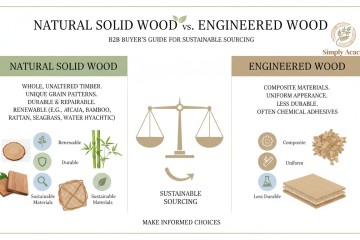
How to Tell the Difference Between Natural Solid Wood and Engineered Wood: A Guide for Global Buyers
Key Takeaways
•Natural solid wood features continuous grain patterns and visible end grains, unlike engineered wood which relies on edge banding.
•Engineered wood cannot be intricately carved without exposing its composite core, whereas solid wood offers seamless carving and robust traditional joinery.
•Solid wood contains natural imperfections such as knots and color variations that are difficult to replicate authentically in manufactured boards.
•Sourcing FSC-certified natural solid wood ensures environmental sustainability and compliance with global B2B standards like BSCI and SMETA.
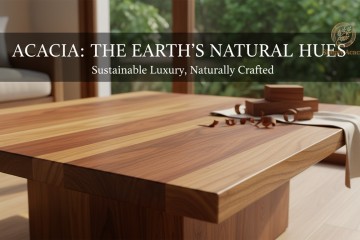
How to Master the Natural Color Palette of Acacia: A Guide from Amber to Deep Espresso
Introduction: Unlocking the Versatility of Acacia Wood in Global Decor
As the Marketing Director and Sustainable Supply Chain Consultant at Ngoc Dong Ha Nam, I have witnessed firsthand the transformative power of natural materials in global interior design. Among these, Acacia wood stands out as a true chameleon. Capturing the essence of biophilic design, Acacia offers a breathtaking natural color palette that ranges from radiant golden amber to luxurious deep espresso. For global buyers, procurement officers, and interior designers, understanding how to leverage this spectrum is critical for curating collections that resonate with today's eco-conscious consumers.
The modern consumer is moving away from uniform, synthetic finishes, instead craving the authentic, perfectly imperfect beauty of nature. Acacia wood answers this call effortlessly. Its dynamic grain patterns and rich color variations provide a unique narrative for every single SKU, turning everyday homewares and furniture into bespoke pieces of art. However, effectively merchandising and styling this diverse wood requires a strategic approach. This guide will walk you through the exact steps to source, select, and style the complete color palette of Acacia wood, ensuring your next B2B collection is both visually stunning and commercially successful.
The Value of Acacia in B2B Procurement
Before diving into the styling steps, it is essential to recognize why Acacia is dominating international trade shows. It is a highly durable, fast-growing hardwood that boasts natural water resistance and antibacterial properties. This makes it an ideal candidate for everything from high-traffic hospitality furniture to delicate kitchenware. By mastering its color palette, you can create cohesive, cross-category collections that appeal to diverse aesthetic preferences, maximizing your return on investment and solidifying your brand's reputation as a purveyor of premium, sustainable goods.
Prerequisites: Essential Sourcing Standards and Material Knowledge
Before integrating the diverse hues of Acacia into your product lines, global buyers and interior designers must establish a foundation of sustainable and ethical sourcing. At Ngoc Dong Ha Nam, we emphasize that beautiful design must always be matched by responsible supply chain practices. You cannot successfully market the natural beauty of Acacia without guaranteeing the protection of the environment from which it came.
1. Navigating Sustainability Certifications
Your first prerequisite is ensuring that all Acacia wood sourced for your collections is FSC-certified (Forest Stewardship Council). This globally recognized certification guarantees that the timber is harvested from responsibly managed forests, preserving biodiversity, preventing deforestation, and benefiting local communities. Furthermore, you must align with manufacturing partners who adhere strictly to BSCI (Business Social Compliance Initiative) and SMETA (Sedex Members Ethical Trade Audit) standards. These frameworks ensure fair labor practices, safe working conditions, and ethical supply chain management, thereby mitigating risk and protecting your brand's reputation in the global market.
2. Understanding Wood Anatomy: Sapwood vs. Heartwood
To truly master the Acacia color palette, you must understand its biological structure. The lighter, golden amber and honey tones typically originate from the sapwood—the outer, living layers of the tree that transport water and nutrients. In contrast, the deep, rich espresso, mocha, and chocolate hues are found in the heartwood—the dense, mature inner core of the trunk. Recognizing this natural variation is crucial for setting accurate quality control (QC) expectations with your suppliers and for educating your end consumers. Embracing the contrast between sapwood and heartwood allows you to celebrate the material's authenticity rather than viewing color variation as a defect.
Step 1: Harnessing Golden Amber Tones for Warm, Organic Collections
The first step in utilizing the Acacia palette is to embrace its lightest, most radiant hues: golden amber and soft blonde. These colors are predominantly found in the sapwood and are highly sought after for contemporary, light-filled interior design schemes.
Target Aesthetics: Japandi and Scandinavian Design
Amber Acacia is the perfect foundation for Japandi and Scandinavian design trends, which prioritize minimalism, warmth, and an unpretentious connection to nature. The golden undertones of the wood bring a sense of cozy brightness to a room without overwhelming the space. For interior designers, specifying amber Acacia for statement dining tables, minimalist shelving units, or organic-shaped coffee tables can instantly elevate a room's sense of tranquility.
B2B Sourcing and Finishing Tips
When sourcing amber Acacia for your B2B collections, request that your manufacturing partners use clear, water-based, or natural oil finishes. Avoid heavy nitrocellulose lacquers that can yellow over time and obscure the wood's delicate grain. A matte or satin finish will preserve the raw, tactile quality of the wood, appealing to consumers who desire a highly organic look and feel. Additionally, consider merchandising these lighter wood pieces alongside soft, neutral textiles like unbleached linen and organic cotton to create a cohesive, inviting catalog presentation.
Step 2: Curating Mid-Tone Honey and Caramel for Transitional Decor
As we move deeper into the Acacia trunk, the colors transition into rich, warm mid-tones of honey, caramel, and light walnut. This is where the true versatility of Acacia shines, offering a bridge between stark modernism and heavy traditionalism.
The Power of Transitional Merchandising
Mid-tone Acacia is the workhorse of the home decor industry. It is universally appealing and fits seamlessly into transitional decor—a style that blends classic elegance with modern lines. For global buyers, investing in honey and caramel Acacia SKUs is a safe, high-volume play. These tones work beautifully for bedroom suites, home office desks, and kitchen islands. The mid-tones also highlight the mesmerizing, interlocking grain patterns that Acacia is famous for, providing a visual texture that synthetic veneers simply cannot replicate.
Embracing Natural Contrast
Step 2 also involves learning to love the contrast. Many Acacia boards will feature a striking juxtaposition of lighter sapwood and darker heartwood on the same piece. Rather than sorting these out, leading design houses are celebrating this "wild grain" look. When developing your product specifications, clearly define the acceptable ratio of sapwood to heartwood. Educate your sales teams to market this dual-tone effect as a hallmark of genuine, high-quality solid wood, turning a natural characteristic into a premium selling point.
Step 3: Elevating Spaces with Deep Espresso and Mocha Finishes
The third step takes us to the heartwood of the Acacia tree, where the colors deepen into luxurious espresso, dark chocolate, and rich mocha. These dark tones exude sophistication, grounding a space and providing a sense of established luxury.
Targeting the Premium and Corporate Sectors
Deep espresso Acacia is highly effective when targeting the premium hospitality sector, boutique hotels, and executive corporate environments. Dark academia and modern luxury trends lean heavily on these profound, moody hues. An espresso-toned Acacia credenza or a dark-stained boardroom table projects authority, resilience, and refined taste. For B2B buyers, incorporating a "Dark Collection" allows you to capture a higher price point and appeal to high-end interior design firms.
Achieving the Perfect Dark Finish Sustainably
While some older Acacia trees naturally possess very dark heartwood, achieving a uniform espresso color across a large production run often requires staining or thermal modification. As a sustainable supply chain consultant, I strongly advise buyers to specify eco-friendly, low-VOC (Volatile Organic Compound) stains. Thermal modification—a process that uses heat and steam to naturally darken the wood entirely through its core without chemicals—is an excellent, sustainable alternative that also increases the wood's dimensional stability. Partnering with suppliers who utilize these advanced, green technologies ensures your dark Acacia collections remain environmentally responsible.
Step 4: Blending Acacia Colors with Bamboo, Rattan, and Seagrass
The final, and perhaps most innovative, step is to integrate the Acacia color palette with other sustainable, natural materials. At Ngoc Dong Ha Nam, our expertise lies in the seamless combination of robust woods with delicate, hand-woven fibers. This cross-material approach creates multi-dimensional products that stand out in a crowded global marketplace.
Creating High-Contrast Textural Masterpieces
Imagine the striking visual impact of a deep espresso Acacia serving tray featuring intricately woven, light-blonde Seagrass handles. Or consider a mid-tone caramel Acacia lounge chair backed with tightly woven, natural Rattan cane. By pairing the solid, smooth surface of Acacia with the tactile, organic texture of Bamboo, Water Hyacinth, or Rattan, you create products that engage multiple senses. This technique is particularly effective for home accessories, lighting fixtures, and accent furniture.
Strategic Sourcing for Mixed-Material SKUs
Developing mixed-material products requires a highly capable and integrated supply chain. When sourcing these items, ensure your manufacturing partner has in-house expertise in both woodworking and traditional weaving techniques. This prevents the logistical nightmares and quality control issues associated with outsourcing different components to multiple factories. By centralizing production with a vendor like Ngoc Dong Ha Nam, who holds BSCI, SMETA, and FSC certifications, you guarantee that every element of your mixed-material product—from the amber Acacia base to the woven Bamboo accent—meets the highest global standards for quality and sustainability.
Conclusion: Partnering for Sustainable, Trend-Setting Acacia Collections
Mastering the natural color palette of Acacia wood—from the lightest amber to the deepest espresso—empowers global buyers and interior designers to create dynamic, sustainable, and highly marketable home decor collections. By understanding the biological origins of these colors, respecting the natural variations of the wood, and demanding rigorous sustainability certifications like FSC, BSCI, and SMETA, you can elevate your brand and meet the evolving demands of the eco-conscious consumer.
Whether you are curating a minimalist Japandi collection featuring radiant sapwood, or a luxury hospitality line utilizing deep, thermally modified heartwood, Acacia offers unparalleled versatility. Furthermore, by taking the final step to blend Acacia with other sustainable materials like Rattan, Seagrass, and Bamboo, you unlock entirely new avenues for innovative product design.
At Ngoc Dong Ha Nam, we are dedicated to helping our global B2B partners navigate this beautiful spectrum. With our deep expertise in sustainable supply chains and premium craftsmanship, we are ready to bring your next visionary collection to life. Embrace the full palette of nature, and let Acacia wood be the foundation of your future success.
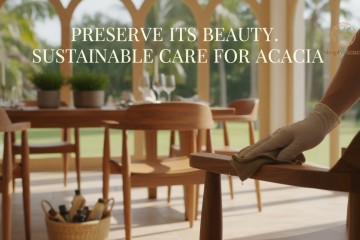
State of Acacia in Outdoor Settings: Maintenance Trends and Future Outlook for Patio Furniture
Executive Summary: The Resurgence of Acacia Wood in Global Outdoor Living
Welcome to the 2026 state of the industry report on sustainable outdoor living materials. For global buyers, procurement specialists, and leading interior designers, the outdoor furniture sector represents a critical growth vector. Among the myriad of materials available, Acacia wood has emerged as a dominant force, striking an unprecedented balance between aesthetic brilliance, structural durability, and commercial viability.
As the Marketing Director and Sustainable Supply Chain Consultant for Ngoc Dong Ha Nam, I have witnessed firsthand the exponential rise in demand for responsibly sourced Acacia patio furniture. However, the true value of Acacia is unlocked only through comprehensive lifecycle management. This trend report delves deep into the essential maintenance protocols, market shifts, and sustainable sourcing strategies that define Acacia in outdoor settings today.
By understanding the intersection of material science and environmental stewardship, B2B stakeholders can confidently specify Acacia, ensuring end-user satisfaction, mitigating return rates, and aligning with global ESG (Environmental, Social, and Governance) mandates. Our analysis follows the trajectory of Acacia from raw, FSC-certified timber to the centerpiece of luxury patio designs, providing actionable insights for the modern supply chain. The future of outdoor decor is green, resilient, and meticulously maintained.
Current Landscape: Assessing Acacia's Role in Modern Patio Settings
To fully appreciate the maintenance requirements of Acacia wood, we must first understand its current positioning in the global home decor landscape. Acacia is a dense, highly durable hardwood naturally endowed with a rich concentration of natural oils and resins. These inherent properties make it intrinsically resistant to moisture, rot, and insect infestation, positioning it as a formidable rival to traditionally favored, yet increasingly cost-prohibitive, woods like Teak.
In the current market, interior designers favor Acacia for its dynamic grain patterns and warm, multidimensional hues, which seamlessly bridge the gap between rustic charm and contemporary minimalism. However, the current landscape also reveals a critical knowledge gap at the consumer level regarding patio furniture care. When exposed to the relentless triad of UV radiation, fluctuating humidity, and seasonal precipitation without adequate protection, Acacia's natural defenses can be compromised.
The Maintenance Challenge
The industry is currently witnessing a paradigm shift where B2B buyers are no longer just purchasing products; they are investing in product longevity. The baseline maintenance standard currently involves bi-annual cleaning using non-abrasive, pH-neutral solutions, followed by the application of specialized hardwood oils. Yet, the challenge remains: how do we elevate these maintenance practices from reactive to proactive?
For bulk buyers and retailers, the aesthetic degradation of untreated outdoor furniture directly correlates with brand perception. Consequently, there is a growing imperative for manufacturers to deliver Acacia furniture with superior, factory-applied protective finishes that delay the onset of weathering, while simultaneously equipping the retail tier with robust, easy-to-follow maintenance education for the end consumer. A well-maintained Acacia dining set is not just a piece of furniture; it is a testament to sustainable living.
Key Trends in Acacia Maintenance and Sustainable Sourcing
The trajectory of Acacia in outdoor settings is being shaped by several converging trends, deeply rooted in both technological advancement and ethical consumption. The modern buyer demands performance without compromising the planet.
Technological and Aesthetic Shifts
Advanced Nano-Coatings: We are moving away from traditional, high-VOC (Volatile Organic Compounds) varnishes towards advanced, water-based nano-coatings. These innovative sealants penetrate the dense cellular structure of the Acacia wood, providing a breathable yet highly effective barrier against UV degradation and moisture ingress. This trend directly addresses the maintenance pain points of the end-user, significantly extending the intervals between required oiling treatments.
The 'Graceful Aging' Aesthetic: While some consumers prefer to maintain the original honey-golden luster of fresh Acacia through rigorous oiling, a growing segment of top-tier interior designers is embracing the natural silver-grey patina that develops when the wood is intentionally left to weather. This shift requires a different maintenance approach—focusing on structural integrity and anti-fungal treatments rather than color preservation.
The Rise of ESG Compliance
Perhaps the most profound trend dictating the B2B procurement of Acacia is the non-negotiable demand for sustainable and ethical supply chains. Global buyers are under intense scrutiny to ensure their sourcing practices do not contribute to deforestation or human rights abuses. This is where international certifications become paramount.
At Ngoc Dong Ha Nam, our Acacia is exclusively sourced from FSC (Forest Stewardship Council) certified forests, guaranteeing environmental responsibility. Furthermore, our production facilities adhere strictly to BSCI (Business Social Compliance Initiative) and SMETA (Sedex Members Ethical Trade Audit) standards. This dual commitment ensures that every piece of Acacia furniture not only meets the highest physical maintenance standards but also aligns with the stringent ESG criteria demanded by today's conscientious global market.
Future Outlook: Innovations in Weatherproofing and Longevity
Looking toward the horizon of 2026 and beyond, the future of Acacia outdoor furniture is intrinsically linked to the principles of the circular economy and advanced material engineering. The desire for seamless indoor-outdoor living spaces continues to blur the lines between interior and exterior design, demanding patio furniture that exhibits the refinement of indoor pieces while withstanding the harsh realities of the outdoors.
Smart Finishes and Circular Design
We anticipate a surge in the development of 'smart' bio-based finishes—sealants derived from natural plant waxes and resins that mimic the wood's natural defenses, offering unprecedented weatherproofing without compromising the material's organic tactile qualities. These eco-friendly treatments will define the next generation of premium outdoor living.
Data-Driven Procurement
Furthermore, the future outlook suggests a shift in how B2B buyers evaluate supplier partnerships. The focus will move from mere transactional purchasing to collaborative lifecycle management. Suppliers will be expected to provide comprehensive digital documentation of their products, detailing the exact origin of the Acacia, the specific chemical composition of the factory finish, and predictive maintenance schedules based on varying global climates.
This data-driven approach will empower interior designers to specify Acacia with absolute confidence, knowing precisely how the material will behave and what maintenance it will require over a ten or twenty-year lifespan. As climate patterns become increasingly unpredictable, the inherent resilience of Acacia, coupled with these next-generation maintenance protocols, will solidify its position as the premier choice for sustainable, luxury outdoor settings.
Strategic Recommendations for Global Buyers and Designers
To capitalize on the enduring appeal and profitability of Acacia outdoor furniture, B2B stakeholders must adopt a proactive, informed approach to sourcing and maintenance education. Here are the strategic imperatives for buyers and interior designers seeking to lead the market.
Actionable Procurement Strategies
Institutionalize Sourcing Standards: Mandate that all Acacia procurement is backed by verifiable FSC certifications. Partner exclusively with manufacturers who operate under transparent, BSCI and SMETA audited frameworks. This mitigates supply chain risk and elevates your brand's ethical standing in a competitive marketplace.
Redefine the Product Offering with Maintenance in Mind: Do not just sell a piece of furniture; sell a lifecycle. Collaborate with manufacturers to specify premium, low-VOC factory finishes that offer immediate weather resistance. Simultaneously, develop comprehensive, beautifully designed 'Care Guides' to accompany every retail unit or design installation. Educate your clients on the necessity of seasonal cleaning, the correct application of hardwood oils, and the importance of using breathable furniture covers during extreme weather.
Embrace the Design Versatility: Interior designers should leverage Acacia's dual aesthetic potential. Present clients with the choice between maintaining the warm, original finish through regular upkeep, or allowing the wood to transition into a sophisticated, low-maintenance silver patina. Setting expectations early ensures long-term client satisfaction.
Forge Strategic Manufacturer Partnerships: Move beyond the traditional buyer-vendor dynamic. Engage with forward-thinking manufacturers like Ngoc Dong Ha Nam, who deeply understand the nuances of natural materials—not just Acacia, but also Bamboo, Seagrass, Rattan, and Water Hyacinth. By aligning with experts who prioritize both world-class craftsmanship and sustainable lifecycle management, you ensure that your outdoor furniture portfolios remain competitive, resilient, and deeply resonant with the eco-conscious consumer of tomorrow.

Future Trends in Houseware: The Strategic Fusion of Sustainable Acacia Wood and Premium Marble
Executive Summary: The Rise of 'Quiet Luxury' in Sustainable Houseware
The Dawn of a New Material Synergy
In the highly competitive world of B2B houseware sourcing and global interior design, a profound shift is underway. The modern consumer's appetite for 'quiet luxury'—an aesthetic defined by understated elegance, premium quality, and rigorous sustainability—has forced a reimagining of traditional material palettes. At the forefront of this movement is the compelling juxtaposition of sustainable Acacia wood and premium marble. As the Marketing Director and Sustainable Supply Chain Consultant for Ngoc Dong Ha Nam, I have witnessed firsthand how this specific pairing has evolved from a niche design experiment into a dominant force in global sourcing catalogs.
This trend report explores the strategic value of combining the warm, organic resilience of Acacia with the cool, timeless sophistication of marble. For global buyers, procurement officers, and interior designers, understanding the market dynamics, supply chain implications, and design versatility of this perfect pair is no longer optional; it is essential for curating collections that resonate with eco-conscious, luxury-driven consumers. By marrying robust natural materials with internationally recognized ethical manufacturing standards like BSCI, FSC, and SMETA, brands can deliver products that are not only visually stunning but fundamentally responsible.
Current Landscape: The Shift Toward Refined Naturalism in B2B Sourcing
Market Dynamics and Material Economics
The current global home decor market is heavily influenced by 'Biophilic Design' and 'Refined Naturalism.' Consumers are actively seeking products that bring the outside in, but they demand a level of sophistication that raw, unfinished rustic pieces cannot provide. This is where the Acacia and marble fusion excels. Acacia wood, renowned for its rapid growth cycle and natural resistance to moisture and decay, provides an incredibly durable and sustainable foundation. Its rich, contrasting grain patterns offer a visual warmth that immediately softens any interior space.
Supply Chain Resilience and Ethical Compliance
From a B2B sourcing perspective, the current landscape demands rigorous risk mitigation and supply chain transparency. Acacia is highly favored by global buyers because, when sourced correctly, it boasts unimpeachable environmental credentials. At Ngoc Dong Ha Nam, we champion FSC-certified Acacia, ensuring that every piece of timber contributes to responsible forestry management. When this sustainable wood is paired with marble—a material celebrated for its longevity and thermal mass—the resulting product achieves a high perceived value. However, manufacturing these multi-material products requires sophisticated engineering. The bonding of porous wood and dense stone necessitates advanced, non-toxic adhesives and precision milling. Furthermore, global buyers are increasingly mandating that these complex manufacturing processes occur within ethically audited facilities. Compliance with BSCI (Business Social Compliance Initiative) and SMETA (Sedex Members Ethical Trade Audit) is currently the baseline for entry into premium Western markets, ensuring that the artisans crafting these luxurious pieces operate in safe, fair, and equitable conditions.
Key Trends: High-Impact Applications of the Acacia-Marble Fusion
Trend 1: Elevated Entertaining Essentials and Tablescaping
The most explosive growth in the Acacia-marble category is within the dining and entertaining sector. Charcuterie boards, serving platters, and oversized coasters are dominating wholesale orders. The functional synergy here is unmatched: the marble sections provide a naturally cool surface ideal for preserving the integrity of artisanal cheeses and cured meats, while the Acacia wood sections offer a knife-friendly, naturally antibacterial zone for cutting and serving. Interior designers are utilizing these pieces not just as kitchenware, but as sculptural centerpieces that anchor a dining room's aesthetic.
Trend 2: Sculptural Kitchen Organization
Gone are the days when kitchen storage was hidden away. The contemporary kitchen is a focal point of the home, and buyers are sourcing organizational tools that double as decor. We are seeing a massive uptick in demand for airtight kitchen canisters featuring heavy marble bodies with beautifully turned Acacia wood lids, complete with silicone seals for freshness. Spice racks, utensil holders, and cookbook stands utilizing this material mix offer a tactile contrast that elevates the everyday culinary experience. The heavy marble bases provide stability, while the Acacia accents tie the pieces to broader wooden cabinetry and flooring trends.
Trend 3: Spa-Inspired Bath Accessories
The 'spa-ification' of the residential bathroom is a macro-trend driving significant B2B purchasing. Buyers are moving away from plastics and resins, leaning heavily into natural materials to create serene, wellness-focused environments. Acacia and marble soap dispensers, vanity trays, toothbrush holders, and tissue box covers are highly sought after. Acacia's natural oils make it uniquely suited to withstand the humid environment of a bathroom without warping, while marble introduces an element of classical cleanliness and luxury. This combination allows designers to bridge the gap between organic warmth and clinical sterility, achieving the ultimate sanctuary aesthetic.
Future Outlook: Sustainability, Traceability, and the Circular Economy
Innovating for a Zero-Waste Future
Looking ahead, the future of the Acacia and marble fusion lies in hyper-traceability and circular manufacturing processes. The next generation of global buyers will not only ask for FSC certification but will demand granular data on the carbon footprint of the entire product lifecycle. Forward-thinking manufacturers are already pioneering methods to utilize marble offcuts and Acacia wood scraps from larger furniture production lines to create these smaller houseware items, effectively moving towards a zero-waste manufacturing model. This 'upcycling' approach significantly lowers the environmental impact while maintaining the premium positioning of the materials.
Technological Advancements in Multi-Material Bonding
As we project into the next three to five years, we anticipate significant advancements in eco-friendly adhesives and joinery techniques. The challenge of combining a living material like wood, which expands and contracts with humidity, with a static material like stone is complex. Future trends will showcase innovative mechanical joinery—such as hidden dowels and interlocking precision cuts—that reduce reliance on chemical glues, further enhancing the eco-friendly profile of the products. Brands that can communicate this level of artisanal engineering and sustainable innovation will capture the highest echelon of the interior design market.
Strategic Recommendations: Sourcing the Perfect Pair for Your Next Collection
Actionable Sourcing Strategies for Global Buyers
To successfully integrate the Acacia and marble trend into your upcoming retail collections or interior design projects, a strategic sourcing approach is paramount. First, unequivocally demand FSC certification for all wood components. This is non-negotiable for brand protection and consumer trust in today's market. Second, scrutinize the manufacturing partner's social compliance records. Request up-to-date BSCI or SMETA audit reports to ensure your supply chain is free from ethical liabilities.
Partnering with Ngoc Dong Ha Nam
Third, evaluate the manufacturer's technical expertise in multi-material integration. Request samples specifically to test the durability of the joints between the wood and the stone under varying temperature and humidity conditions. Look for seamless transitions and the use of food-safe, environmentally friendly sealants. At Ngoc Dong Ha Nam, we have spent decades perfecting the art of sustainable luxury. By combining our deep-rooted expertise in natural materials—including Acacia, Bamboo, Seagrass, Rattan, and Water Hyacinth—with rigorous international quality standards, we empower global buyers to confidently bring world-class, eco-conscious designs to market. We invite procurement teams and lead designers to collaborate with us to develop bespoke, trend-leading collections that beautifully merge the warmth of nature with the elegance of stone.

Unlock Lifelong Durability: The Ultimate B2B Guide to Sourcing Moisture-Resistant Acacia Wood
The Secret to Long-Lasting Elegance in High-Moisture Spaces
For global B2B buyers, sourcing managers, and interior designers, finding the perfect balance between aesthetic appeal, eco-friendly credentials, and uncompromising durability is a constant challenge. When designing for or supplying products to humid environments—be it luxury coastal resorts, high-end spa bathrooms, or tropical alfresco dining spaces—the stakes are exceptionally high. The wrong material choice leads to warping, cracking, customer complaints, and costly return merchandise authorizations (RMAs). But what if you could guarantee your clients a material that not only survives extreme moisture but actually thrives in it, all while elevating the space with natural beauty? We promise that Acacia wood is the definitive solution to your humidity challenges.
As the Home Decor world increasingly shifts toward biophilic design and sustainable living, the demand for natural materials has skyrocketed. However, not all woods are created equal when exposed to the elements. Acacia wood stands out as a titan of durability. By choosing premium, ethically sourced Acacia, you are not just buying a piece of furniture or decor; you are investing in a lifelong guarantee of structural integrity. In this comprehensive guide, we will explore exactly why Acacia wood is the ultimate sustainable choice for humid environments, and how partnering with a world-class supplier can transform your product lineup, protect your profit margins, and satisfy the eco-conscious consumer.
Designing for the Elements: The Challenge of Humidity vs. Natural Wood
Imagine a breathtaking eco-resort nestled in the humid tropics of Southeast Asia, or a sleek, modern bathroom in a high-end metropolitan penthouse. The design calls for the warmth and grounding presence of natural wood. The designer envisions rich, sweeping grain patterns and warm, honey-to-mahogany tones that invite touch and evoke a sense of calm. However, the reality of high ambient humidity threatens to turn this vision into a logistical nightmare. Standard hardwoods and softwoods absorb moisture from the air, expanding and contracting until joints fail, surfaces warp, and the pristine finish is destroyed by mold or rot.
Now, picture a different scenario. Your latest collection features beautifully crafted Acacia wood bath caddies, outdoor lounge chairs, and spa shelving. Despite the lingering steam of a hot shower or the heavy, salt-tinged air of a coastal patio, these pieces remain perfectly intact. The rich grain of the Acacia wood continues to glow, completely unaffected by the moisture. Clients and end-users are thrilled by the low maintenance and the enduring elegance of the products. This is the reality of utilizing Acacia wood in high-moisture environments. It bridges the gap between the rugged demands of nature and the refined expectations of modern interior design. For B2B buyers, offering Acacia means providing a product that tells a story of resilience, natural beauty, and premium quality—a narrative that resonates deeply with today's discerning, value-driven consumers.
The Science of Acacia's Resilience and Our Commitment to Quality
The extraordinary performance of Acacia wood in humid environments is not a matter of chance; it is a matter of evolutionary biology and rigorous supply chain management.
The Natural Defenses of Acacia
Acacia trees are native to some of the most unforgiving climates on Earth, including tropical and subtropical regions. To survive, the tree has evolved a remarkably dense grain structure. On the Janka hardness scale, many species of Acacia score between 1,700 and 2,300—making it significantly harder than oak, hickory, and even some types of mahogany. This extreme density naturally restricts the wood's ability to absorb moisture from the air.
Furthermore, Acacia is naturally rich in essential oils and waxes. These internal oils act as a built-in waterproofing system, repelling water and preventing the growth of mold, mildew, and wood-boring insects. When compared to other popular outdoor woods like Teak, Acacia offers highly competitive durability and water resistance, but with a much faster growth rate, making it a far more sustainable and cost-effective alternative for large-scale B2B sourcing.
Mastering the Supply Chain: The Ngoc Dong Ha Nam Advantage
However, raw material is only half the equation. The true durability of an Acacia product in a humid environment depends heavily on how it is processed. As experts in sustainable supply chains, Ngoc Dong Ha Nam employs world-class manufacturing protocols to ensure every piece of Acacia meets the highest global standards. 1. Precision Kiln Drying: Before any crafting begins, our Acacia wood undergoes rigorous, computer-controlled kiln drying. This stabilizes the wood's core moisture content, virtually eliminating the risk of warping or cracking when the product is eventually exposed to humid environments. 2. Advanced Finishing Techniques: We utilize eco-friendly, non-toxic sealants that penetrate deep into the dense grain, enhancing the wood's natural water-repellent properties without masking its organic beauty.
Certified Sustainability and Ethical Production
In today's market, durability must go hand-in-hand with responsibility. Global buyers demand transparency. Ngoc Dong Ha Nam is proud to source exclusively FSC-certified Acacia, guaranteeing that our materials are harvested from responsibly managed forests that provide environmental, social, and economic benefits. Beyond the forest, our manufacturing facilities operate under strict BSCI (Business Social Compliance Initiative) and SMETA (Sedex Members Ethical Trade Audit) standards. This means when you purchase our Acacia products, you are backed by verified proof of ethical labor practices, safe working conditions, and a deeply rooted commitment to environmental stewardship. We don't just deliver a durable product; we deliver peace of mind and a powerful marketing asset for your brand.
Elevate Your Next Collection with Premium, Climate-Ready Acacia
The evidence is clear: Acacia wood is not just durable; it is the premier choice for B2B buyers and interior designers seeking sustainable, moisture-resistant elegance. By integrating naturally resilient, expertly processed Acacia into your product offerings, you eliminate the risks associated with humid environments, reduce return rates, and elevate your brand's reputation for quality. You have seen the promise of lifelong durability, pictured the flawless integration into high-end spaces, and reviewed the unshakeable proof of its natural properties and our rigorous certifications.
Now is the time to take action. Do not leave your next collection to chance with inferior materials or unverified suppliers. Partner with Ngoc Dong Ha Nam to secure a reliable, ethical, and world-class supply chain for your Home Decor and furniture needs. Whether you are looking to source water-resistant bathroom accessories, durable outdoor furniture, or bespoke interior pieces, our team of experts is ready to bring your vision to life. Contact us today to request our latest B2B catalog, order material samples, and discover how our FSC, BSCI, and SMETA certified Acacia products can drive your business forward in the era of sustainable luxury.
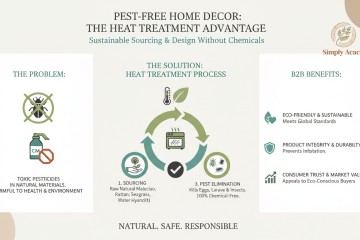
A Guide to Heat Treatment Processes: Eliminating Pests in Natural Home Decor Without Harmful Chemicals
Why Chemical-Free Pest Control is the Future of Sustainable Sourcing
In the dynamic world of global interior design and home decor sourcing, a silent revolution is taking place. As an international buyer or interior designer, you are acutely aware of the shifting demands of the modern consumer. Today's market does not just demand aesthetic brilliance; it demands absolute transparency, environmental stewardship, and uncompromising safety. Imagine curating a breathtaking collection of natural woven furniture, only to face catastrophic customs rejections or, worse, customer complaints due to pest infestations or toxic chemical odors. For decades, the industry relied on harsh chemical fumigants like Methyl Bromide to eradicate pests in natural materials. However, these volatile organic compounds (VOCs) pose severe health risks to artisans, off-gas into consumers' homes, and devastate the ozone layer. The definitive, sustainable alternative? Heat Treatment. This comprehensive guide will walk you through how Ngoc Dong Ha Nam employs advanced, chemical-free heat treatment processes to guarantee pristine, pest-free natural decor. By mastering these protocols, we ensure our Acacia, Bamboo, Seagrass, Rattan, and Water Hyacinth products meet the highest echelons of global quality, aligning perfectly with strict environmental standards and safeguarding your brand's reputation.
What You Need to Know Before Implementing Heat Treatment
Understanding the Science and Standards of Thermal Pest Eradication
Before diving into the operational steps, it is crucial to understand the prerequisites that make heat treatment effective and compliant on a global scale. Unlike chemical dips that coat the surface of a material, heat treatment is a highly calibrated thermal process designed to penetrate the very core of natural fibers. The Materials: The approach must be meticulously tailored to the specific cellular structure of the raw material. Dense Acacia wood and thick-walled Bamboo require different thermal curves compared to porous, delicate fibers like Water Hyacinth and Seagrass. The Standards: A world-class heat treatment facility operates in strict adherence to ISPM 15 (International Standards for Phytosanitary Measures No. 15), which mandates that the core temperature of the material must reach a minimum of 56 degrees Celsius (133 degrees Fahrenheit) for at least 30 continuous minutes. The Ethical Foundation: At Ngoc Dong Ha Nam, our commitment to sustainability extends beyond the kiln. Our prerequisites include sourcing exclusively from FSC-certified forests and ensuring that all pre-treatment handling aligns with BSCI and SMETA guidelines. This guarantees that the artisans preparing the materials work in safe, ethical conditions, far removed from the hazardous chemical vats of the past.
Step 1: Sustainable Harvesting and Sun-Curing
The journey to a pest-free, chemically untainted product begins long before the raw materials reach our advanced kilns. The first critical step is strategic harvesting. Insects, particularly borers and beetles, are naturally attracted to the starches and sugars present in raw natural materials. By timing our harvests meticulously—such as cutting bamboo during specific lunar cycles or cooler seasons when sap and starch levels are at their lowest—we drastically reduce the natural appeal of the material to pests. Once harvested, materials like Rattan, Seagrass, and Water Hyacinth undergo a rigorous initial sun-curing process. Spread across vast, clean drying yards under the intense Vietnamese sun, the raw fibers begin to lose their initial water weight. This natural dehydration is a crucial preparatory phase; it stabilizes the fibers, prevents immediate fungal growth (mold and mildew), and prepares the cellular structure of the material to withstand the intense thermal dynamics of the heat treatment kiln without suffering from structural degradation or aesthetic blemishes.
Step 2: Precision Kiln Drying and Core Heat Treatment
This is the definitive stage where science meets craftsmanship. The sun-cured materials are carefully loaded into state-of-the-art industrial kilns. Unlike rudimentary drying rooms, our kilns are equipped with precision thermostatic controls and multi-point moisture sensors. The temperature is elevated gradually to prevent thermal shock, which could cause Acacia wood to warp or Bamboo to split. Once the ambient temperature stabilizes, the critical phase begins: driving the heat deep into the core of the materials. We maintain the stringent ISPM 15 standard, ensuring the absolute core of the thickest piece of wood or rattan reaches at least 56 degrees Celsius for a minimum of 30 minutes. This precise thermal threshold is biologically lethal to all known quarantine pests at every stage of their life cycle—destroying eggs, eradicating larvae, and eliminating adult insects. Because this process relies entirely on thermal energy, there are zero chemical residues left behind. Your end-consumers receive a product that is 100% natural, hypoallergenic, and safe for enclosed residential spaces.
Step 3: Moisture Equalization and Fiber Conditioning
Eliminating pests is only half the battle; maintaining the structural integrity and workability of the material is equally vital. The intense heat of the kiln inevitably drives out a significant amount of moisture, which, if left unmanaged, would render natural fibers incredibly brittle and impossible to weave. Step 3 involves a highly controlled cooling and moisture equalization process. As the temperature in the kiln is slowly reduced, we introduce specific humidity levels back into the environment. This allows materials like Water Hyacinth and Seagrass to reabsorb just enough moisture to regain their signature flexibility and tensile strength, without crossing the threshold that would invite mold. For structural materials like Acacia and Bamboo, this equalization phase relieves internal cellular stresses, establishing an Equilibrium Moisture Content (EMC) typically between 10% and 14%. This precise conditioning ensures that the final home decor products will not crack, warp, or unravel when shipped across different global climate zones, from the humid coasts of Florida to the dry interiors of Northern Europe.
Step 4: Stringent Quality Control and Secure Storage
The final step in our chemical-free pest eradication protocol is safeguarding the treated materials from re-infestation. Once the materials exit the kiln and complete the conditioning phase, they are immediately moved into secure, climate-controlled quarantine zones. Cross-contamination is a severe risk in manufacturing; therefore, treated Acacia, Bamboo, and Rattan are never stored in proximity to raw, untreated harvest. Our Quality Assurance teams, operating under the rigorous frameworks of our SMETA and BSCI certifications, conduct thorough visual and moisture-meter inspections on every batch. Before the materials are woven into exquisite baskets, furniture, or decor pieces, they are verified for optimal moisture content. When the final products are packaged for international ocean freight, we utilize high-grade silica gel desiccants and moisture-barrier packaging. This creates a micro-climate within the shipping container, ensuring that the pristine, pest-free, and chemical-free state achieved in our kilns is perfectly preserved until the moment the container doors are opened at your distribution center.
Partnering for a Greener Future: Your Next Steps in Sustainable Sourcing
Transitioning to chemically-free, heat-treated natural home decor is no longer just an ethical choice; it is a strategic business imperative. By sourcing products that utilize advanced heat treatment processes, you eliminate the risk of customs delays, protect your brand from the liability of toxic off-gassing, and cater to the booming demographic of eco-conscious consumers who demand purity in their living spaces. At Ngoc Dong Ha Nam, our mastery over the thermal treatment of Acacia, Bamboo, Seagrass, Rattan, and Water Hyacinth sets the global gold standard. We blend traditional Vietnamese weaving artistry with cutting-edge, environmentally responsible manufacturing technology. Are you ready to elevate your product lines with decor that is as safe and sustainable as it is beautiful? Connect with our B2B sourcing experts today to explore our latest collections, review our FSC, BSCI, and SMETA compliance documentation, and take the definitive step toward a greener, cleaner, and more profitable supply chain.
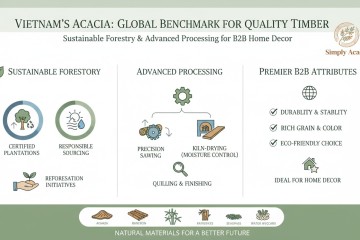
How Vietnam Transformed Acacia into the Worlds Premium Sustainable Timber: A Case Study in Global Supply Chain Excellence
The Sourcing Dilemma: Navigating the Global Hardwood Crisis and the Demand for Sustainable Luxury
As the Marketing Director and Sustainable Supply Chain Consultant at Ngoc Dong Ha Nam, I have spent years at the intersection of global interior design trends and raw material sourcing. In recent years, global B2B buyers, procurement officers, and elite interior designers have been confronting a profound and escalating crisis: the global hardwood dilemma. For decades, the high-end furniture and home decor industries relied heavily on traditional, slow-growing hardwoods such as Teak, Oak, Mahogany, and Walnut. These materials provided the durability and aesthetic appeal that consumers demanded, but they came at an extraordinary environmental and financial cost. Deforestation, illegal logging, and the catastrophic depletion of old-growth forests have triggered a massive ecological backlash. Today, the modern consumer is highly educated, deeply eco-conscious, and demands absolute transparency. They want the warmth, elegance, and durability of premium wood without the guilt of environmental degradation.
The Designer's and Buyer's Ultimate Challenge
This paradigm shift has placed immense pressure on global supply chains. Interior designers are tasked with creating breathtaking, luxurious spaces that adhere to strict green building standards and sustainable living philosophies. Meanwhile, B2B buyers and sourcing directors are caught in a relentless squeeze: they must secure high volumes of premium-grade timber that is structurally sound, aesthetically beautiful, ethically sourced, and economically viable. The traditional mainstays of the timber industry are failing to meet these multifaceted criteria. Teak has become prohibitively expensive and is often fraught with supply chain opacities. Oak faces severe supply constraints and long lead times. Furthermore, the rising specter of greenwashing—where products are falsely marketed as eco-friendly—has made global buyers extremely wary. They require ironclad proof of sustainability, demanding internationally recognized certifications such as FSC (Forest Stewardship Council) to verify the origin of their materials.
The Financial and Operational Bottlenecks
Beyond the environmental concerns, the operational realities of sourcing traditional hardwoods have become a nightmare for large-scale retail brands and furniture manufacturers. The extended growth cycles of traditional hardwoods—often taking 50 to 100 years to reach maturity—mean that supply cannot rapidly pivot to meet sudden spikes in global demand. This inelasticity leads to severe price volatility, making long-term financial forecasting nearly impossible for B2B enterprises. Additionally, as global shipping costs fluctuate and geopolitical tensions disrupt traditional trade routes, relying on fragmented, uncertified timber sources exposes brands to unacceptable levels of risk. If a major home decor brand is found to be using unethically sourced wood, the reputational damage is instantaneous and often irreversible in today's hyper-connected market. Buyers need a reliable, scalable, and fully certified alternative.
The Search for the Super Timber
The industry desperately needed a 'super timber'—a species that grows rapidly, sequesters carbon efficiently, regenerates soil health, and yet possesses the high density, Janka hardness, and breathtaking grain patterns of old-world hardwoods. This material needed to be versatile enough for both rugged outdoor furniture and refined indoor home decor. It needed to blend seamlessly with other rising stars of the sustainable materials world, such as Bamboo, Seagrass, Rattan, and Water Hyacinth, to cater to the booming trend of mixed-material, biophilic design. Most importantly, it needed to be backed by a transparent, ethical, and highly audited supply chain. For a long time, the industry searched in vain. Early alternatives were either too soft, prone to warping, or aesthetically unappealing. The gap between the promise of sustainable living and the reality of commercial-scale furniture manufacturing seemed unbridgeable. This was the critical problem facing the global market: how to achieve scale, sustainability, and supreme quality simultaneously. The answer, it turned out, required a masterclass in agronomy, supply chain engineering, and ethical manufacturing. The answer was found in Vietnam.
Vietnam's Strategic Masterclass: Engineering the Ultimate Sustainable Acacia Supply Chain
The solution to the global hardwood crisis did not emerge by accident; it was the result of a highly strategic, decades-long initiative by Vietnam to revolutionize its forestry and timber processing sectors. At Ngoc Dong Ha Nam, we have been at the forefront of this transformation, championing a holistic approach to sustainable manufacturing that elevates Vietnamese Acacia from a humble, fast-growing shrub into the world's most sought-after premium timber. Vietnam's ascent to the pinnacle of the global Acacia market is built on three foundational pillars: unparalleled geographical advantages, rigorous processing innovations, and an uncompromising commitment to international ethical standards.
The Geographic and Agronomic Advantage
Vietnam's unique topography and tropical monsoon climate create the absolute perfect storm for cultivating premium Acacia—specifically the Acacia mangium and Acacia auriculiformis species, as well as their highly resilient hybrid variants. Unlike Acacia grown in more arid or temperate zones, Vietnamese Acacia benefits from distinct wet and dry seasons. This climatic rhythm forces the trees to develop incredibly dense, tight growth rings, significantly increasing the wood's overall density, structural integrity, and Janka hardness rating. The soil composition in Vietnam's central and northern highlands is rich in essential minerals, which contributes to the wood's naturally high oil content. This natural oil acts as an intrinsic barrier against moisture, rot, and insect infestation, making Vietnamese Acacia exceptionally durable and uniquely suited for both high-end indoor furniture and robust outdoor applications. Furthermore, Acacia is a leguminous plant; it actively fixes atmospheric nitrogen into the soil, regenerating degraded landscapes and leaving the earth healthier than before it was planted. This makes Acacia a cornerstone of regenerative agriculture in Vietnam.
Advanced Processing: The Science of Perfection
However, superior raw material is only half the equation. The true differentiator of Vietnamese Acacia—and a core focus of our operations at Ngoc Dong Ha Nam—lies in the sophisticated, technologically advanced processing techniques we employ. Historically, fast-growing woods were plagued by issues of warping, cracking, and dimensional instability. Vietnam solved this through state-of-the-art kiln drying and moisture control technologies. When Acacia is harvested, it contains a high percentage of natural moisture. If not dried correctly, the wood will fail in the varied climates of North America or Europe. In Vietnam's premier facilities, the timber undergoes a meticulous, multi-stage kiln-drying process, bringing the moisture content down to a precise, globally standardized 8% to 12%. This slow, controlled drying stabilizes the cellular structure of the wood, permanently eliminating the risk of splitting or warping. Following the drying phase, the wood is treated with eco-friendly, non-toxic sealants that enhance its natural grain while adhering strictly to global chemical safety standards like REACH.
The Certification Ecosystem: FSC, BSCI, and SMETA
In the B2B world, trust is currency, and trust is built on verifiable certifications. Vietnam has aggressively pursued and secured the highest levels of international compliance, turning its Acacia supply chain into a fortress of ethical and sustainable practices. At Ngoc Dong Ha Nam, we do not just talk about sustainability; we prove it. Our Acacia is 100% FSC (Forest Stewardship Council) certified. This guarantees that every single log can be traced back to a responsibly managed forest that provides environmental, social, and economic benefits. But our commitment goes far beyond the forest. We understand that true sustainability encompasses human rights and ethical labor practices. That is why our manufacturing facilities undergo rigorous, independent audits for BSCI (Business Social Compliance Initiative) and SMETA (Sedex Members Ethical Trade Audit). These certifications ensure fair wages, safe working conditions, zero forced labor, and strict environmental management within our factories. When global buyers source Acacia from us, they are not just buying wood; they are buying peace of mind, knowing their supply chain is immune to the ethical scandals that plague lesser-regulated markets.
Synergy with Natural Materials
A crucial aspect of Vietnam's solution is the integration of Acacia with other indigenous, sustainable materials. The global home decor trend leans heavily into biophilic design—connecting indoor spaces with nature through rich textures and organic forms. Vietnamese artisans and manufacturers excel at combining the solid, robust elegance of Acacia timber with the intricate, woven beauty of Bamboo, Seagrass, Rattan, and Water Hyacinth. At Ngoc Dong Ha Nam, we leverage our deep expertise in these natural fibers to create spectacular, mixed-material product lines. An Acacia wood dining chair might feature a beautifully hand-woven Rattan backrest; an Acacia coffee table might incorporate Seagrass detailing. This synergy not only creates unique, high-value designs that captivate interior designers, but it also maximizes the use of rapidly renewable resources, further reducing the carbon footprint of the final product. Vietnam has essentially created a comprehensive, one-stop ecosystem for sustainable, luxury home decor.
Unmatched Quality, Aesthetic Brilliance, and Global Market Impact: The Results
The results of Vietnam's strategic investment in Acacia cultivation and processing have been nothing short of revolutionary for the global B2B market. By transforming a fast-growing, regenerative species into a premium, high-performance hardwood, Vietnam has completely reshaped the economics and aesthetics of the international furniture industry. The impact is visible in the showrooms of the world's leading home decor brands, in the portfolios of elite interior designers, and in the radically improved sustainability reports of major global retailers. Let us examine the tangible results and the profound impact this 'super timber' has delivered to the market.
Aesthetic Brilliance: The Look of Luxury
First and foremost, Vietnamese Acacia has shattered the misconception that sustainable, fast-growing wood must compromise on beauty. The aesthetic results are spectacular. The unique climate of Vietnam produces Acacia with a mesmerizing, interlocking grain pattern that rivals the most expensive exotic hardwoods. The wood boasts a rich, dynamic color palette, ranging from warm golden ambers to deep, luxurious mahogany tones, often featuring striking 'tiger-stripe' variations that give each piece of furniture a unique, bespoke character. Interior designers covet this visual texture because it brings immediate warmth, authenticity, and a touch of the organic into modern spaces. Whether finished with a clear, matte lacquer to highlight its natural raw beauty, or stained to match specific design palettes, Vietnamese Acacia takes finishes exceptionally well, providing a flawless, high-end surface that appeals to the most discerning global consumers.
Uncompromising Durability and Performance
Beyond its beauty, the structural results of Vietnamese Acacia are extraordinary. Thanks to the dense growth rings and advanced kiln-drying processes discussed earlier, this timber offers exceptional dimensional stability. It boasts a Janka hardness rating that frequently surpasses that of standard Oak or Teak, making it incredibly resistant to scratches, dents, and everyday wear and tear. This makes it an ideal choice for high-traffic environments like commercial hospitality projects, boutique hotels, and bustling family homes. Furthermore, its naturally high oil content provides inherent weather resistance. Global buyers who previously relied on wildly expensive Teak for their outdoor furniture collections have seamlessly transitioned to Vietnamese Acacia. When properly treated, Acacia outdoor furniture withstands rain, UV exposure, and fluctuating temperatures with remarkable resilience, offering end-consumers decades of reliable use.
Transforming the B2B Supply Chain
The operational and financial impacts for B2B buyers have been equally transformative. By partnering with certified Vietnamese manufacturers like Ngoc Dong Ha Nam, global brands have solved their most pressing supply chain headaches. The rapid growth cycle of Acacia (harvestable in 7 to 10 years, compared to 50+ years for traditional hardwoods) ensures a consistent, scalable, and reliable supply of raw material. This elasticity stabilizes pricing, allowing procurement officers to lock in long-term contracts without the fear of sudden, crippling market fluctuations. Brands that have switched to Vietnamese Acacia consistently report significant reductions in raw material costs—often up to 30%—while simultaneously upgrading their product quality and durability metrics. This powerful combination of lower costs and higher quality dramatically improves profit margins across the board.
Achieving Corporate Sustainability Goals
Perhaps the most critical result in today's market is the impact on corporate sustainability and ESG (Environmental, Social, and Governance) goals. By sourcing FSC-certified Acacia from BSCI and SMETA audited facilities in Vietnam, global brands instantly elevate their environmental credentials. They can confidently market their products as 100% sustainable, backed by the most rigorous global standards. This transparency builds immense brand loyalty among eco-conscious consumers and protects companies from the severe financial and reputational risks associated with greenwashing. The carbon sequestration of the Acacia plantations, combined with the regenerative agricultural practices, means that buyers are actively contributing to global climate solutions with every purchase order.
Your Strategic Partner: Ngoc Dong Ha Nam
In conclusion, Vietnam does not just produce Acacia; it produces the world's highest quality, most ethically sound, and technologically advanced Acacia timber. It is a triumph of sustainable engineering. For global buyers, procurement directors, and interior designers, the mandate is clear: transitioning to Vietnamese Acacia is no longer just an eco-friendly option; it is a strategic commercial imperative. At Ngoc Dong Ha Nam, we stand ready to be your definitive partner in this journey. With our deep-rooted expertise in FSC Acacia, our mastery of complementary natural materials like Bamboo, Seagrass, Rattan, and Water Hyacinth, and our unwavering commitment to BSCI and SMETA standards, we provide a seamless, risk-free pathway to sourcing the finest sustainable home decor in the world. Elevate your brand, secure your supply chain, and inspire your customers. Partner with Ngoc Dong Ha Nam today, and let us build a more beautiful, sustainable future together.
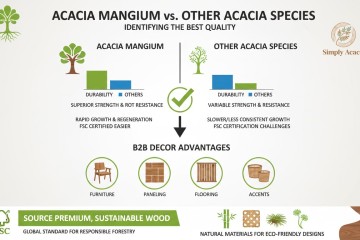
Beyond the Grain: Why Acacia Mangium is the Ultimate Choice for Sustainable Home Decor
The Hidden Truth Behind "Acacia" in Global Sourcing
In the dynamic world of global home decor, the term Acacia is frequently tossed around as a buzzword for eco-friendly elegance. But for discerning B2B buyers and visionary interior designers, a critical question remains: Are all Acacia species created equal?
The short answer is no. With over 1,000 species worldwide, the variance in quality, durability, and sustainability is staggering. Today, we are pulling back the curtain to reveal the hidden champion of sustainable sourcing: Acacia Mangium. If you are looking to elevate your product lines while maintaining uncompromising ethical standards, understanding this distinction is your first step toward market leadership.
Acacia Mangium vs. The Rest: A Comparative Deep Dive
When comparing Acacia Mangium to other common commercial species like Acacia Auriculiformis or Acacia Nilotica, the differences in physical properties are profound.
Unmatched Density and Durability
Acacia Mangium boasts a remarkably high density and an impressive rating on the Janka hardness scale. This makes it exceptionally resistant to scratches, dents, and everyday wear—a crucial factor for premium furniture and high-traffic interior design projects.
Superior Moisture Resistance
Unlike softer woods that warp or crack under humidity, Acacia Mangium possesses high natural oil content. This intrinsic moisture resistance makes it a versatile choice for both indoor and outdoor decor collections.
The Sustainability Edge
Perhaps most importantly, Acacia Mangium is a fast-growing plantation species. It revitalizes degraded soils by fixing nitrogen, making its cultivation a regenerative process. When you source this specific species, you are actively contributing to global reforestation efforts.
Elevating Your Collections with FSC-Certified Excellence
Imagine offering your clients a breathtaking collection of wooden decor—from minimalist dining tables to intricate woven wood accents—that not only looks exquisite but carries a flawless ethical pedigree.
At Ngoc Dong Ha Nam, we do not just source wood; we engineer sustainable supply chains. Our Acacia Mangium is strictly FSC-certified, ensuring every grain traces back to responsibly managed forests. Furthermore, our production facilities operate under rigorous BSCI and SMETA standards. This means when you choose our Acacia Mangium products, you are guaranteeing fair labor practices, safe working conditions, and a zero-compromise approach to environmental stewardship. Your brand gains the ultimate competitive advantage: an authentic, verifiable story of green living that resonates deeply with modern, eco-conscious consumers.
Partner with Ngoc Dong Ha Nam for Premium Sustainable Wood
The shift towards sustainable, high-quality home decor is not just a trend; it is the new global standard. Do not let inferior wood species compromise your brand's reputation or your design vision.
Partner with Ngoc Dong Ha Nam today to access world-class, FSC-certified Acacia Mangium products tailored for the B2B market. Contact our sourcing experts now to request a sample, explore our latest catalog, and discover how we can build a resilient, sustainable supply chain together. Let's craft the future of eco-friendly living, one exceptional piece at a time.
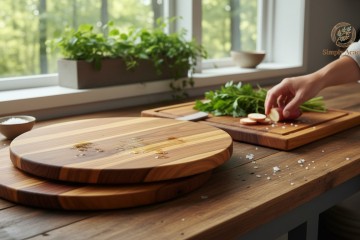
5 Reasons Why Acacia Wood Cutting Boards Are the Ultimate Antimicrobial Choice for Global Kitchens
5 Reasons Why Acacia Wood Cutting Boards Are the Ultimate Antimicrobial Choice for Global Kitchens
The Dawn of a New Era in Sustainable Kitchenware
In the rapidly evolving landscape of global home decor and culinary essentials, a profound shift is taking place. Today's consumers are no longer simply looking for functional kitchen tools; they are demanding products that seamlessly blend aesthetic brilliance, environmental responsibility, and uncompromising health standards. As the Marketing Director and Sustainable Supply Chain Consultant at Ngoc Dong Ha Nam, I have witnessed firsthand how global buyers and top-tier interior designers are pivoting away from synthetic materials. They are seeking out natural, ethically sourced alternatives that elevate the modern home. At the forefront of this green revolution is the Acacia wood cutting board.
For decades, a pervasive myth dominated the culinary world: the belief that plastic cutting boards were inherently safer and more hygienic than wood. However, rigorous scientific studies and a deeper understanding of natural materials have thoroughly debunked this misconception. We now know that certain hardwoods possess remarkable natural defenses against pathogens. Acacia wood, in particular, stands out as a champion of natural antimicrobial properties. In this comprehensive guide, we will explore the top five reasons why Acacia wood cutting boards are not just a sustainable choice, but the ultimate hygienic solution for global kitchens, making them an indispensable addition to your B2B sourcing portfolio.
1. The Power of Natural Tannins: Nature's Built-in Antibacterial Agent
To truly understand the antimicrobial prowess of Acacia wood, we must look at its cellular chemistry. Acacia trees have evolved in harsh, competitive environments, developing robust defense mechanisms to protect themselves from fungi, insects, and bacteria. The secret weapon in this natural arsenal is a high concentration of tannins.
How Tannins Neutralize Pathogens
Tannins are naturally occurring polyphenolic compounds found abundantly in Acacia wood. When bacteria such as Salmonella, E. coli, or Listeria are introduced to the surface of an Acacia cutting board, the tannins immediately go to work. These compounds actively bind to the proteins in the bacterial cell walls, disrupting their structural integrity and inhibiting their ability to reproduce. Unlike plastic boards, where bacteria can sit on the surface and multiply exponentially, the natural chemistry of Acacia wood actively neutralizes these pathogens. Studies have shown that bacteria left on certain hardwood surfaces die off within a matter of hours, whereas they can survive and thrive on plastic surfaces for days.
For global buyers, this built-in hygienic property is a massive selling point. By stocking Acacia wood cutting boards, you are offering your retail customers and end-users a product that actively contributes to a safer, healthier food preparation environment.
2. Superior Density and Moisture Resistance
Beyond its chemical defenses, the physical structure of Acacia wood plays a critical role in its antimicrobial capabilities. Acacia is renowned for its exceptional density and hardness. On the Janka hardness scale, many species of Acacia score significantly higher than traditional woods like oak or maple. This dense, tight-grained structure provides a formidable physical barrier against bacterial infiltration.
The Science of Capillary Action
When moisture from raw meat or washed vegetables interacts with a cutting board, the risk of bacterial growth increases. However, Acacia's tight grain minimizes water absorption. Furthermore, the natural capillary action of the wood fibers pulls any surface moisture down into the deeper layers of the wood. Because bacteria require moisture to survive and multiply, this capillary action effectively deprives surface-level pathogens of the water they need. Once drawn into the wood, the bacteria are trapped and subsequently destroyed by the natural tannins. This combination of moisture resistance and internal neutralization makes Acacia wood an incredibly sanitary surface for food preparation.
For interior designers curating high-end culinary spaces, specifying Acacia wood means providing clients with a surface that is not only visually stunning but structurally engineered by nature to remain hygienic over years of heavy use.
3. Self-Healing Capabilities That Outperform Synthetic Materials
One of the most significant drawbacks of plastic cutting boards is their susceptibility to permanent scarring. Every time a knife strikes a plastic board, it creates a microscopic groove. Over time, these grooves become deep, jagged scars that are virtually impossible to clean thoroughly. These crevices become the perfect breeding ground for bacteria, shielding them from dish soap and sponges.
The Resilience of Wood Fibers
Acacia wood, particularly when crafted in an end-grain or high-quality edge-grain construction, exhibits remarkable self-healing properties. When a knife blade slices into the wood, it passes between the wood fibers rather than severing them completely. As the blade is lifted, the natural elasticity of the wood fibers allows them to close back up, minimizing the depth and severity of the cut. This self-healing action prevents the formation of deep, bacteria-harboring grooves.
At Ngoc Dong Ha Nam, our master artisans understand the importance of grain orientation and meticulous finishing. By optimizing the natural resilience of Acacia wood, we produce cutting boards that maintain their smooth, hygienic surfaces far longer than synthetic alternatives. This longevity and sustained safety are key value propositions for B2B distributors looking to build trust and brand loyalty with their customer base.
4. Ethical Sourcing and Uncompromising Global Standards
In today's global market, a product's origin story and the ethics of its supply chain are just as critical as its physical properties. Global buyers are under increasing pressure to meet stringent Environmental, Social, and Governance (ESG) criteria. A cutting board can only be considered truly premium if it is sourced and manufactured responsibly.
Ensuring Compliance with FSC, BSCI, and SMETA
Acacia is a fast-growing, highly renewable resource, making it an inherently sustainable choice. However, at Ngoc Dong Ha Nam, we take sustainability several steps further. We ensure that our Acacia wood is sourced from responsibly managed forests, adhering to the rigorous standards of the Forest Stewardship Council (FSC). This guarantees that our ecological footprint is minimized and that biodiversity is protected.
Furthermore, our manufacturing processes are fully compliant with the Business Social Compliance Initiative (BSCI) and SMETA (Sedex Members Ethical Trade Audit). This means that every Acacia cutting board we produce is the result of fair labor practices, safe working conditions, and ethical business operations. For B2B buyers, partnering with a fully certified supplier like Ngoc Dong Ha Nam eliminates supply chain risks and provides a powerful, transparent narrative that resonates deeply with conscious consumers.
5. Unmatched Aesthetic Appeal for Modern Interior Design
While the antimicrobial and sustainable properties of Acacia wood are paramount, we cannot overlook its profound aesthetic impact. Interior designers and home decor buyers understand that today's kitchens are no longer just utilitarian spaces; they are the heart of the home, places of gathering, and expressions of personal style. Kitchenware must perform flawlessly while doubling as functional art.
Warm Tones and Unique Grain Patterns
Acacia wood is celebrated for its breathtaking visual complexity. It features a rich tapestry of colors, ranging from deep, chocolate browns to warm golds and vibrant ambers. The grain patterns are naturally undulating and highly distinctive, meaning no two cutting boards are exactly alike. This unique character brings a touch of organic warmth and rustic elegance to any kitchen setting, whether it is a sleek, minimalist modern space or a cozy, farmhouse-inspired home.
Beyond food preparation, these boards are increasingly utilized as stunning serving platters and charcuterie boards, seamlessly transitioning from the kitchen counter to the dining table. By sourcing premium Acacia wood products, B2B buyers can cater to the booming trend of 'cottagecore' and biophilic design, offering products that interior designers eagerly specify for their high-end residential and commercial projects.
Take Action: Elevate Your B2B Portfolio with Ngoc Dong Ha Nam
The evidence is clear: Acacia wood cutting boards represent the perfect convergence of nature's antimicrobial brilliance, sustainable forestry, and exquisite design. From the bacteria-neutralizing power of natural tannins to the self-healing resilience of its dense fibers, Acacia outperforms synthetic alternatives on every front. For global buyers and interior designers, these products offer a compelling narrative of health, environmental stewardship, and uncompromising quality.
As a leader in the sustainable supply chain, Ngoc Dong Ha Nam is your trusted partner in bringing these world-class products to your market. Our deep expertise in natural materials, combined with our unwavering commitment to international standards like FSC, BSCI, and SMETA, ensures that you receive products of the highest caliber. Do not miss the opportunity to meet the growing consumer demand for safe, sustainable, and beautiful home decor.
Contact Ngoc Dong Ha Nam today to request our latest catalog, discuss custom B2B sourcing solutions, and discover how our premium Acacia wood cutting boards can elevate your product offerings and drive your business forward.

7 Reasons Acacia Grain Patterns Are Redefining Modern Interior Design
7 Reasons Acacia Grain Patterns Are Redefining Modern Interior Design
The Rise of Biophilic Design in B2B Sourcing
In the dynamic and ever-evolving landscape of global interior design, the shift towards biophilic and sustainable aesthetics is no longer just a passing trend—it is a fundamental industry standard. Global buyers, procurement managers, and interior designers are constantly on the lookout for materials that not only meet rigorous durability requirements but also tell a compelling visual story. Enter Acacia wood. Known for its breathtakingly unique grain patterns and robust physical properties, Acacia is rapidly becoming the material of choice for premium B2B home decor. At Ngoc Dong Ha Nam, we have witnessed firsthand how the natural elegance of Acacia can transform a sterile commercial space into a warm, inviting sanctuary. In this comprehensive guide, we will explore seven compelling reasons why Acacia grain patterns are redefining modern interiors, and why this remarkable hardwood should be at the top of your sustainable sourcing list.
1. Captivating Swirls and Rich Color Variations
The most immediate and striking feature of Acacia wood is its mesmerizing grain pattern. Unlike more uniform woods, Acacia boasts an unpredictable, sweeping grain that features interlocked and wavy patterns. This creates a highly dynamic surface that catches the light in extraordinary ways. The color palette of natural Acacia is equally impressive, ranging from pale golden yellows in the sapwood to deep, rich mahogany and chocolate browns in the heartwood. For interior designers, this means every single piece of furniture, flooring, or decorative accent crafted from Acacia is entirely unique. There is no mass-produced monotony here; instead, Acacia offers a bespoke, artisanal aesthetic that elevates modern spaces, providing a natural focal point that commands attention without overwhelming the room.
2. Unmatched Durability Meets Elegant Design
While aesthetics are crucial to capturing the interest of end-consumers, B2B buyers and contract designers must prioritize longevity and performance. Acacia wood delivers exceptionally on both fronts. With a density that rivals and often surpasses that of traditional hardwoods like oak and hickory, Acacia is incredibly resistant to scratches, dents, and everyday wear and tear. This makes it an ideal candidate for high-traffic commercial environments, boutique hotels, and luxury residential projects. The dense nature of the wood also means it is naturally resistant to moisture and pests when properly treated. By choosing Acacia, designers do not have to compromise on elegance to achieve industrial-grade durability. The intricate grain patterns remain pristine over years of heavy use, ensuring an excellent return on investment for large-scale interior projects.
3. Seamless Integration with Modern Design Styles
Modern interior design thrives on contrast, texture, and the blending of different stylistic elements. Acacia grain patterns offer unparalleled versatility in this regard. Whether your project leans towards the minimalist tranquility of Japandi style, the organic warmth of Mid-Century Modern, or the raw edge of Industrial chic, Acacia fits seamlessly into the narrative. The bold grain provides a necessary organic contrast to sleek materials like glass, matte black metal, or polished concrete. Furthermore, Acacia pairs beautifully with other sustainable materials. At Ngoc Dong Ha Nam, we frequently combine Acacia wood frames with hand-woven Rattan, Seagrass, Bamboo, or Water Hyacinth to create multidimensional, highly textured decor pieces. This cross-material compatibility makes Acacia a highly desirable asset in any designer's toolkit.
4. FSC-Certified Sustainability and Ethical Sourcing
In today's conscientious market, the desire for beautiful interiors is inextricably linked to the demand for environmental responsibility. Global buyers are under increasing pressure to ensure their supply chains are green. Acacia is a fast-growing species that can be harvested sustainably without depleting natural forests. At Ngoc Dong Ha Nam, we take this a step further by ensuring our Acacia is FSC (Forest Stewardship Council) certified. This guarantees that the wood is sourced from responsibly managed forests that provide environmental, social, and economic benefits. Navigating the complexities of global supply chains requires a steadfast commitment to compliance. Our adherence to BSCI and SMETA standards ensures that every piece of Acacia we export is ethically produced, safeguarding human rights and fair labor practices. When you specify Acacia for your projects, you make a tangible commitment to planetary health.
5. Cost-Effective Luxury for B2B Sourcing
Securing premium materials at competitive price points is a constant challenge for procurement managers. Exotic hardwoods that offer similar visual impact to Acacia—such as teak, mahogany, or walnut—often come with prohibitive price tags and complex supply chain bottlenecks. Acacia bridges the gap between luxury and affordability. Because it grows rapidly and adapts well to various climates, it is more abundant and cost-effective to harvest than slower-growing hardwoods. This translates to significant cost savings for B2B buyers, allowing you to allocate budget to other areas of the design project without sacrificing the high-end, luxurious feel of the final product. The rich grain patterns of Acacia deliver a premium aesthetic that punches far above its weight class in terms of cost.
6. Exceptional Workability for Custom Decor Solutions
Interior designers often require bespoke solutions to bring their unique visions to life. The workability of the material is therefore a critical factor. Despite its impressive density, Acacia wood is surprisingly workable, responding well to cutting, carving, and shaping. This flexibility allows manufacturers like Ngoc Dong Ha Nam to craft intricate, custom designs—from smoothly turned table legs to intricately carved wall panels and sleek, minimalist shelving units. Furthermore, Acacia's natural oils and tight grain structure mean it takes stains and finishes exceptionally well. Whether you require a clear, natural finish to highlight the raw beauty of the grain, or a darker stain to match a specific corporate color palette, Acacia can be customized to meet exact B2B project specifications.
7. A Timeless Investment That Ages Gracefully
True luxury in interior design is defined by how a space and its materials evolve over time. Unlike synthetic materials that degrade and look worn, natural Acacia wood develops a beautiful, rich patina as it ages. The exposure to ambient light and air subtly deepens the colors within the grain, enhancing the contrast between the light sapwood and dark heartwood. This graceful aging process means that Acacia furniture and decor actually become more beautiful and characterful year after year. For global buyers and property developers, this translates to a timeless investment. Spaces outfitted with Acacia do not require frequent aesthetic updates, providing long-term value and maintaining property appeal for decades.
Transform Your Next Project with Ngoc Dong Ha Nam
The intricate, sweeping grain patterns of Acacia wood offer far more than just surface-level beauty. They represent a perfect synthesis of aesthetic appeal, rugged durability, and environmental sustainability. For global buyers and interior designers seeking to elevate their modern spaces, Acacia is an unparalleled choice. However, the true value of this exceptional material is unlocked when it is sourced ethically and manufactured to the highest global standards. At Ngoc Dong Ha Nam, we pride ourselves on being a trusted partner in your sustainable supply chain. With strict adherence to BSCI and SMETA standards, and a deep expertise in working with FSC-certified Acacia, Bamboo, Rattan, and Seagrass, we deliver world-class B2B home decor solutions that inspire. Ready to integrate the natural beauty of Acacia into your next large-scale project? Contact our expert consulting team today to explore our exclusive, sustainably crafted collections.

Mastering Moisture: How Our Scientific Kiln-Drying Process Guarantees Flawless Natural Decor
The Invisible Threat to Your Global Supply Chain: Moisture Instability
Picture this: Your latest collection of premium natural home decor has finally arrived after weeks of ocean transit. The designs are exquisite, but upon opening the containers, you are met with a buyer's worst nightmare: warped frames, cracked weaves, or worse, traces of mold. For global buyers and interior designers, moisture instability is the silent killer of both product integrity and brand reputation.
When working with breathtaking natural materials like Acacia, Bamboo, Seagrass, Rattan, and Water Hyacinth, the journey from the lush landscapes of Vietnam to a modern living room in New York or London is fraught with climatic shifts. Fluctuating humidity levels can easily compromise untreated organic fibers. At Ngoc Dong Ha Nam, we know that world-class design means nothing without world-class durability. That is exactly why we do not leave moisture control to chance.
The Science of Kiln-Drying: Precision Meets Nature
Nature provides the raw beauty, but science ensures its longevity. Traditional sun-drying, while ecologically romantic, is unpredictable. To meet rigorous international standards, we employ a highly calibrated kiln-drying process that removes the guesswork from natural material preparation.
How Our Process Works
Thermal Calibration: Materials are placed in state-of-the-art kilns where temperature and airflow are meticulously controlled. This gradual heating prevents the outer layers from drying too quickly, a common cause of internal structural damage.
Deep Moisture Extraction: By maintaining a steady, scientifically calculated environment, we extract bound moisture from deep within the cellular structure of bamboo and rattan, rather than just surface dampness.
Continuous Monitoring: Utilizing advanced digital hygrometers, our quality assurance teams monitor the process around the clock, ensuring every batch meets our exacting specifications before it ever reaches the weaving floor.
This rigorous approach ensures that our materials maintain their structural integrity, paving the way for flawless craftsmanship that aligns with BSCI and SMETA standards for responsible, high-quality manufacturing.
The Golden Standard: Why 8-12% Moisture Content Matters
In the realm of premium B2B home decor sourcing, the numbers 8-12% represent the golden standard of moisture content. But why is this specific range so critical for your inventory?
The Perfect Balance
If natural fibers are dried below 8%, they become excessively brittle. A beautifully woven rattan chair or a sleek acacia wood table could easily splinter or crack under normal usage. Conversely, if moisture levels exceed 12%, the materials become a breeding ground for fungal growth and deformation during the humid conditions of global ocean freight.
By strictly maintaining the 8-12% sweet spot, Ngoc Dong Ha Nam delivers an irresistible promise to global buyers: Zero-defect shipments and lifelong product resilience. Your customers receive eco-friendly, FSC-certified products that look as pristine on day one as they do a decade later. For interior designers, this means specifying sustainable pieces with absolute confidence, knowing they will withstand the test of time and climate.
Secure Your Sourcing with Sustainable Excellence
In today's competitive market, you cannot afford to compromise on quality or sustainability. Elevate your next interior collection by partnering with a manufacturer that treats moisture control as an exact science. At Ngoc Dong Ha Nam, we blend the timeless artistry of Vietnamese craftsmanship with cutting-edge supply chain reliability.
Are you ready to experience the difference that scientific kiln-drying brings to natural home decor? Contact our sourcing experts today to explore our latest catalog of flawlessly preserved Bamboo, Rattan, and Seagrass collections. Let us build a resilient, beautiful, and sustainable future together.
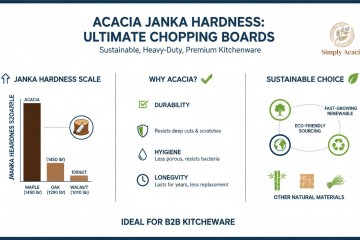
The Ultimate B2B Guide to Acacia Wood: How Its Janka Hardness Creates the Perfect Heavy-Duty Chopping Board
The Culinary World's Hidden Gem: Redefining Kitchen Durability
In the highly competitive world of premium kitchenware and home decor, global buyers and interior designers face a persistent challenge: sourcing materials that perfectly balance rugged durability, aesthetic brilliance, and uncompromising sustainability. The modern consumer is no longer satisfied with utility alone; they demand culinary tools that double as statement pieces in open-concept kitchens, all while leaving a minimal environmental footprint. Enter Acacia wood—a material that is rapidly redefining the standards of heavy-duty kitchenware.
For decades, traditional hardwoods like Maple, Walnut, and Oak have dominated the high-end chopping board market. However, as supply chains evolve and the demand for eco-conscious materials skyrockets, a new champion has emerged. Acacia wood is not just a trend; it is a scientifically superior alternative that addresses the core pain points of both professional chefs and domestic culinary enthusiasts. The secret to its rising dominance lies in a specific metric highly revered by timber experts and procurement officers alike: its impressive Janka Hardness rating.
As a Marketing Director and Sustainable Supply Chain Consultant at Ngoc Dong Ha Nam, I have witnessed firsthand how the shift toward high-performance natural materials is transforming retail catalogs worldwide. Global retailers who have integrated Acacia into their product lines are seeing elevated profit margins, reduced return rates, and enthusiastic customer reviews. But what exactly makes Acacia the ultimate choice for heavy-duty chopping boards? To understand its market appeal, we must first dive into the science of wood hardness and discover why Acacia sits in the absolute 'Goldilocks zone' of culinary materials.
Decoding the Janka Scale: How Acacia Outperforms the Classics
The Science of the Janka Hardness Test
To truly appreciate the value of an Acacia chopping board, B2B buyers must understand the Janka Hardness Scale. The Janka test measures the resistance of a sample of wood to denting and wear. It specifically measures the force required to embed a 0.444-inch (11.28 millimeters) steel ball halfway into a piece of wood. The resulting number is expressed in pounds-force (lbf). For procurement officers evaluating kitchenware, the Janka rating is the ultimate indicator of a chopping board's lifespan and performance.
The 'Goldilocks Zone' of Chopping Boards
When it comes to cutting surfaces, hardness is a delicate balancing act. If a wood is too soft (like Pine or Cedar, hovering under 900 lbf), it will easily succumb to deep knife gouges. These deep grooves are not merely cosmetic flaws; they become breeding grounds for dangerous bacteria, compromising food safety and leading to premature product failure. Conversely, if a wood is exceptionally hard (like Brazilian Walnut or Ebony, exceeding 3000 lbf), it will act like a stone surface, rapidly dulling expensive, high-carbon steel chef knives. This leads to profound customer frustration.
Acacia wood typically registers a Janka hardness rating between 1,700 and 2,220 lbf, depending on the specific species (such as Acacia mangium or Acacia koa). Let us compare this to the traditional titans of the chopping board industry:
Hard Maple: 1,450 lbf
White Oak: 1,360 lbf
Black Walnut: 1,010 lbf
Teak: 1,155 lbf
Acacia: 1,750+ lbf
As the data illustrates, Acacia is significantly harder than Maple, Oak, and Walnut. This elevated Janka rating allows Acacia chopping boards to withstand the relentless, heavy-duty chopping of meat cleavers and the rapid slicing of Santoku knives without sustaining deep, bacteria-harboring scars. Yet, it remains yielding enough to protect the razor-sharp edge of premium cutlery. This precise equilibrium is what makes Acacia an engineering marvel for kitchenware, providing buyers with a product that boasts an exceptional lifecycle and guarantees long-term consumer satisfaction.
Beyond Durability: The Sustainable and Aesthetic Edge of Acacia
The Visual Impact: A Designer's Dream
While the Janka rating secures the functional argument, the aesthetic properties of Acacia capture the consumer's heart. For interior designers curating modern, rustic, or minimalist spaces, the kitchen is increasingly viewed as an extension of the living area. Chopping boards are no longer hidden in cabinets; they are displayed proudly on marble islands and open shelving. Acacia wood is renowned for its breathtaking, high-contrast grain patterns. Ranging from pale yellows to rich, deep chocolates, the natural chatoyancy of Acacia ensures that no two boards are exactly alike. This bespoke quality allows retailers to offer artisanal-level beauty at a scalable, commercial volume.
The Ethical Supply Chain: FSC, BSCI, and SMETA Compliance
In today's global market, a product's origin story is just as critical as its physical attributes. Modern buyers are heavily scrutinized on their Environmental, Social, and Governance (ESG) commitments. This is where Acacia truly separates itself from slower-growing hardwoods. Acacia is an incredibly fast-growing species, reaching maturity in a fraction of the time it takes Oak or Maple. This rapid growth cycle makes it an inherently renewable resource.
At Ngoc Dong Ha Nam, we understand that true sustainability requires rigorous verification. When sourcing Acacia products, B2B buyers must insist on Forest Stewardship Council (FSC) certification, which guarantees that the timber is harvested from responsibly managed forests that provide environmental, social, and economic benefits. Furthermore, manufacturing facilities must adhere to strict social compliance standards, such as the Business Social Compliance Initiative (BSCI) and Sedex Members Ethical Trade Audit (SMETA). By sourcing Acacia chopping boards that meet these elite international standards, brands protect their reputation, mitigate supply chain risks, and appeal to the rapidly growing demographic of eco-conscious consumers. The high Janka hardness ensures the product lasts a lifetime, while the sustainable sourcing ensures the planet does, too.
Elevate Your Product Line: Partner with Vietnam's Sustainable Sourcing Experts
Transform Your Kitchenware Portfolio Today
The evidence is clear: Acacia wood's superior Janka hardness, combined with its stunning visual appeal and rapid renewability, makes it the ultimate material for heavy-duty chopping boards. For global buyers, procurement officers, and home decor brands, transitioning to or expanding your Acacia product line is a strategic move that promises higher margins, exceptional durability, and unassailable eco-credentials.
Why Choose Ngoc Dong Ha Nam?
Sourcing premium natural materials requires a partner who understands both the art of craftsmanship and the rigorous demands of international trade. At Ngoc Dong Ha Nam, we have spent decades perfecting the supply chain for sustainable natural materials, including Acacia, Bamboo, Seagrass, Rattan, and Water Hyacinth. Our deep-rooted expertise in Vietnam's rich manufacturing landscape allows us to deliver world-class products that meet the highest global standards.
We do not just supply products; we provide peace of mind. Our unwavering commitment to FSC-certified timber, coupled with our strict adherence to BSCI and SMETA social compliance, ensures that every Acacia chopping board you source from us is ethically produced and of the highest quality. We empower your brand to tell a compelling story of sustainability, durability, and design excellence.
Are you ready to offer your customers the culinary world's most resilient and beautiful chopping boards? Contact the sourcing experts at Ngoc Dong Ha Nam today. Let us collaborate to design and manufacture a custom line of heavy-duty Acacia kitchenware that will elevate your brand, delight your customers, and stand the test of time. Reach out to our B2B consulting team to request a catalog, discuss custom OEM/ODM designs, and secure your sustainable supply chain for the future.
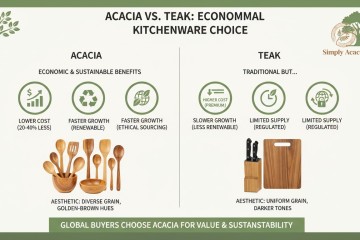
Beyond Teak: Why Acacia Wood is the Ultimate Economical Choice for Sustainable Kitchenware Collections
The Shifting Landscape of Premium Kitchenware: A Buyer's Dilemma
In the dynamic world of global home decor and premium kitchenware, sourcing the right materials is an ongoing balancing act. For decades, interior designers and retail buyers have revered Teak as the gold standard for wooden culinary tools, cutting boards, and serving platters. Its reputation for water resistance and rich color made it a staple in high-end kitchens. However, as global supply chains evolve and the demand for sustainable, competitively priced luxury grows, a significant shift is occurring. The modern buyer is faced with a critical dilemma: how to maintain premium quality and aesthetic appeal while navigating the soaring costs and environmental concerns associated with traditional Teak sourcing.
The Rising Cost of Tradition
Teak wood, while undeniably beautiful, presents substantial challenges in today's market. The slow growth rate of Teak trees, often taking decades to mature, has led to a constrained global supply. This scarcity, coupled with strict export regulations from primary growing regions, has driven FOB prices to unprecedented highs. For B2B buyers and wholesalers, this translates to squeezed profit margins and higher retail price points that can alienate the eco-conscious, value-driven consumer. Furthermore, the modern interior design landscape—heavily influenced by organic modernism, Japandi, and biophilic design—demands high volumes of natural wood accents. Relying solely on Teak makes scaling these collections financially unviable for many brands.
Enter Acacia: The Disruptor in Natural Materials
This is where Acacia steps into the spotlight. As a sustainable supply chain consultant, I have witnessed firsthand the strategic pivot leading global retailers are making toward Acacia wood. It is no longer viewed merely as a substitute, but rather as a superior strategic choice for comprehensive kitchenware lines. Acacia offers an irresistible combination of durability, striking visual character, and compelling economics. By capturing the attention of the industry, Acacia is redefining what it means to offer accessible luxury in the home decor space, providing a pathway for brands to scale their collections without compromising on quality or their commitment to green living.
Acacia vs. Teak: Unpacking the Economics and Aesthetics
To truly understand why Acacia is outperforming Teak in the B2B procurement space, we must analyze the core attributes that drive purchasing decisions: material performance, supply chain economics, and aesthetic versatility. When evaluating Acacia versus Teak, the data heavily favors the former for scalable, sustainable kitchenware collections.
Growth Rates and Supply Chain Economics
The primary driver of Acacia's economic advantage is its exceptional growth cycle. While a Teak tree requires 40 to 80 years to reach a harvestable size for high-quality timber, many species of Acacia can reach maturity in just 10 to 15 years. This rapid growth rate ensures a robust, continuous, and highly renewable supply chain. For global buyers, a stable supply chain means predictable pricing. The abundance of Acacia significantly lowers raw material costs, allowing manufacturers like Ngoc Dong Ha Nam to offer highly competitive wholesale pricing. This economic efficiency empowers retailers to achieve healthier profit margins or pass the savings onto the consumer, creating a highly competitive retail offering.
Uncompromising Durability and Performance
A common misconception is that a lower price point equates to inferior quality. In the case of Acacia, this couldn't be further from the truth. Acacia is a genuine hardwood, boasting a high ranking on the Janka hardness scale—often surpassing even Oak and Hickory.
Scratch Resistance: Its dense grain structure makes it incredibly resistant to deep knife grooves, which is crucial for cutting boards as it prevents bacteria from harboring in the wood.
Water Resistance: Like Teak, Acacia contains natural oils that provide excellent resistance to moisture and decay, making it perfectly suited for the demanding environment of a kitchen.
Longevity: With minimal maintenance, such as occasional oiling with food-safe mineral oil, Acacia kitchenware can last a lifetime, ensuring high customer satisfaction and low return rates for retailers.
Aesthetic Brilliance for Interior Design
From a design perspective, Acacia is a dream material. Interior designers are increasingly drawn to its dynamic, contrasting grain patterns. While Teak offers a uniform, golden-brown hue, Acacia features a spectacular spectrum of colors—from pale yellows and rich golds to deep, chocolate browns. This natural variation ensures that every single bowl, serving tray, or utensil is a unique work of art. In an era where consumers crave bespoke, artisanal touches in their homes, the distinct visual identity of Acacia provides a significant competitive edge on the retail shelf.
Meeting Global Standards: The Sustainable Edge of Acacia Wood
Today's consumers demand more than just functionality and beauty; they demand ethical sourcing and environmental stewardship. The desire for eco-friendly products is no longer a niche market—it is a baseline expectation. This is where Acacia truly solidifies its position as the ultimate choice for forward-thinking brands.
The Power of FSC Certification
Because Acacia grows rapidly and flourishes in various climates, it is highly suitable for sustainable plantation farming. This drastically reduces the pressure on old-growth forests, a persistent issue associated with illegal Teak logging. At Ngoc Dong Ha Nam, we champion the use of FSC (Forest Stewardship Council) certified Acacia. When B2B buyers source FSC-certified products, they are purchasing peace of mind. It guarantees that the wood is harvested from forests that are responsibly managed, socially beneficial, environmentally conscious, and economically viable. Promoting FSC-certified Acacia kitchenware allows brands to build deep trust with their eco-conscious customer base, transforming a simple purchase into a statement of environmental responsibility.
Ethical Manufacturing: BSCI and SMETA Compliance
Sustainability extends beyond the forest; it encompasses the people who craft the products. As an industry leader, Ngoc Dong Ha Nam strictly adheres to international labor and ethical standards, including BSCI (Business Social Compliance Initiative) and SMETA (Sedex Members Ethical Trade Audit).
BSCI: Ensures fair remuneration, decent working hours, and occupational health and safety across our supply chain.
SMETA: Provides rigorous auditing of labor standards, environmental performance, and business ethics.
Creating the 'Desire' for Conscious Consumerism
By partnering with a manufacturer that aligns with these global standards, buyers can confidently market their Acacia kitchenware collections as 100% ethically produced. This powerful narrative—combining the breathtaking natural beauty of Acacia with an unyielding commitment to the planet and its people—creates a profound desire among end-consumers. They are not just buying a salad bowl; they are investing in a sustainable lifestyle. For interior designers curating eco-friendly luxury spaces, Acacia provides the perfect blend of organic warmth and ethical integrity.
Elevate Your Next Collection with Responsibly Sourced Acacia
The transition from Teak to Acacia is more than just a cost-saving measure; it is a strategic upgrade for your brand. By embracing Acacia, you are choosing a material that offers superior supply chain stability, remarkable durability, stunning aesthetic appeal, and an unimpeachable sustainability profile. The economics of Acacia allow you to expand your product lines, increase your margins, and meet the rigorous ethical demands of the modern global market.
Partner with Ngoc Dong Ha Nam
At Ngoc Dong Ha Nam, we are more than just a manufacturer; we are your strategic partner in sustainable supply chain management. With decades of expertise in working with natural materials—including Acacia, Bamboo, Seagrass, Rattan, and Water Hyacinth—we possess the technical mastery and production capacity to bring your bespoke designs to life. Our state-of-the-art facilities are fully compliant with FSC, BSCI, and SMETA standards, ensuring that every piece of kitchenware we produce meets the absolute highest global benchmarks for quality and ethics.
Take the Next Step
Are you ready to optimize your procurement strategy and captivate your customers with world-class, sustainable kitchenware? Contact our B2B sourcing specialists today. Let us provide you with a comprehensive consultation, share our latest Acacia product catalogs, and discuss how we can tailor our OEM/ODM manufacturing capabilities to suit your brand's unique vision. Elevate your next home decor collection with the smart, sustainable, and economical choice. Reach out to Ngoc Dong Ha Nam and secure your competitive advantage in the global market.
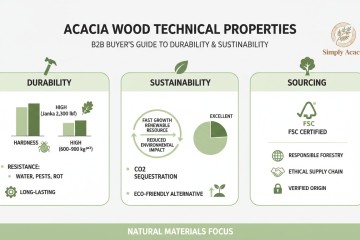
Unlocking the Power of Acacia Wood: The Ultimate Technical Guide for Global B2B Buyers
The Sustainable Revolution: Why Acacia Wood is Dominating Global Interior Design
In today's highly competitive global market, B2B buyers, procurement officers, and interior designers face a complex dilemma. You are constantly tasked with sourcing materials that strike the perfect balance between uncompromising durability, aesthetic brilliance, and rigorous environmental sustainability. As the Director of Marketing and Sustainable Supply Chain Consultant at Ngoc Dong Ha Nam, I have witnessed firsthand the shifting paradigms of global sourcing. The era of relying solely on traditional, slow-growing hardwoods like Oak, Mahogany, or Teak is rapidly giving way to more innovative, eco-conscious alternatives. Enter Acacia wood—a material that is not just a passing trend, but a cornerstone of modern, sustainable manufacturing and high-end home decor.
The Global Shift Towards Sustainable Hardwoods
The global supply chain is under unprecedented pressure. Fluctuating tariffs, stringent environmental regulations, and a profound shift in consumer consciousness have made sustainable sourcing a mandatory business strategy rather than an optional marketing angle. Consumers are demanding eco-friendly products, and regulatory bodies are enforcing strict guidelines on timber harvesting. Acacia wood answers this call flawlessly. Comprising over a thousand species globally, Acacia is an incredibly fast-growing tree, often reaching harvest maturity in a fraction of the time required by traditional hardwoods. This rapid growth cycle makes it a highly renewable resource, acting as a powerful carbon sink while alleviating the devastating pressures of deforestation on old-growth forests.
Why Global Buyers are Pivoting to Acacia
For large-scale B2B buyers and visionary interior designers, Acacia represents the ultimate strategic advantage. It offers the luxurious weight, rich grain patterns, and structural integrity of premium hardwoods, but with a significantly more attractive supply chain profile. Furthermore, Acacia trees are incredibly resilient, thriving in various climates without the need for toxic chemical fertilizers or excessive irrigation. By integrating Acacia wood into your product lines, you are not merely selecting a raw material; you are making a definitive statement about your brand's commitment to ESG (Environmental, Social, and Governance) principles. In the following sections, we will decode the exact technical properties that make Acacia wood an unrivaled choice for your manufacturing needs, and how it can elevate your collections to command attention in the global marketplace.
Beyond the Surface: The Technical Properties That Make Acacia Unrivaled
To truly understand the value of Acacia wood, buyers must look beyond its striking visual appeal and delve into its formidable technical specifications. As a dense, heavy hardwood, Acacia offers mechanical properties that rival, and often exceed, those of historically favored timber.
Janka Hardness and Density
The Janka hardness test, the industry standard for measuring the resistance of wood to denting and wear, places Acacia in an elite category. Depending on the exact species—such as Acacia mangium or Acacia auriculiformis—its Janka rating spans from 1,700 to an astonishing 2,300 lbf (pounds-force). To put this into perspective, White Oak typically rates around 1,360 lbf, and Hard Maple at 1,450 lbf. This extreme hardness translates to a high-density profile, usually ranging between 600 to 800 kg/m³ at a standard 12% moisture content. For furniture manufacturers and B2B buyers, this means products crafted from Acacia are inherently highly resistant to impact, structural fatigue, and the rigorous demands of global shipping and commercial usage.
Moisture Content and Kiln Drying
Dimensional stability is a critical concern for any global supply chain, especially when products are manufactured in tropical climates and shipped to temperate zones across North America or Europe. Acacia wood has an impressive natural defense mechanism: a high concentration of natural oils and resins that repel liquid water. However, to maximize its stability, rigorous kiln-drying protocols are mandatory. At Ngoc Dong Ha Nam, we ensure our Acacia timber is carefully kiln-dried to an optimal Moisture Content (MC) of 8% to 12%. This precise thermal processing relieves internal growth stresses, minimizes the risk of checking (surface cracking), and significantly reduces volumetric shrinkage. The result is a dimensionally stable raw material that holds its shape and integrity across wildly fluctuating seasonal humidities.
Natural Resistance to Decay and Pests
Another profound technical advantage of Acacia is its durability classification. The heartwood of the Acacia tree is highly rated for natural decay resistance. The same intrinsic oils that provide water resistance also act as a natural biocide, deterring subterranean termites, wood-boring beetles, and fungal degradation. This makes Acacia an exceptionally versatile material, equally suited for high-end indoor furniture, durable kitchenware, and weather-resistant outdoor patio collections. When properly sealed with commercial-grade UV protectants or natural wax finishes, Acacia's lifespan extends for decades, ensuring long-term satisfaction for the end consumer and reducing return rates for the retailer.
Workability and Finishing
Despite its formidable density, Acacia wood maintains excellent workability when machined with sharp, carbide-tipped tooling. It holds screws and nails securely, glues exceptionally well, and can be steam-bent for curved architectural designs. Furthermore, the wood's closed-pore structure allows it to accept a wide variety of finishes, from clear matte lacquers that highlight its contrasting heartwood and sapwood, to deep, rich stains that unify its color palette for a more contemporary, uniform aesthetic.
Elevating Your Product Lines: The Business Case for FSC-Certified Acacia
Understanding the technical superiority of Acacia wood is only the first step; translating these properties into a lucrative, sustainable business model is where true market leadership is forged. For global B2B buyers, procurement directors, and interior designers, Acacia wood represents the ultimate intersection of aesthetic luxury, environmental responsibility, and supply chain reliability.
The Power of FSC Certification and Ethical Sourcing
Modern consumers are acutely aware of the environmental impact of their purchases. They demand transparency, and as a buyer, you must provide it. By sourcing FSC-certified (Forest Stewardship Council) Acacia wood, you are guaranteeing that your products originate from responsibly managed forests that provide environmental, social, and economic benefits. This certification is a powerful marketing tool, allowing you to command a premium in retail markets. At Ngoc Dong Ha Nam, our commitment to sustainability goes beyond the raw material. Our supply chain operations strictly adhere to BSCI (Business Social Compliance Initiative) and SMETA (Sedex Members Ethical Trade Audit) standards. This dual commitment ensures that your Acacia products are not only ecologically sound but are also manufactured under fair, safe, and ethical working conditions—safeguarding your brand's reputation on the global stage.
Aesthetic Brilliance and Market Versatility
Beyond its ethical credentials, Acacia wood is a designer's dream. It features an irregular, interlocking grain pattern that provides a highly sought-after rustic yet sophisticated charm. The dynamic color variations—ranging from pale golden sapwood to deep, chocolate-brown heartwood—ensure that every piece of furniture or decor is uniquely bespoke. This organic beauty aligns perfectly with current global Home Decor trends that champion biophilic design and natural textures. Whether you are developing a line of minimalist Scandinavian dining tables, rugged industrial shelving, or luxury outdoor loungers, Acacia provides the visual gravitas required to captivate high-end consumers.
Synergy with Natural Fibers
As a leading consultant in sustainable supply chains, I highly recommend leveraging Acacia's structural strength as a foundation for mixed-material designs. Acacia pairs flawlessly with other sustainable materials like Bamboo, Rattan, Seagrass, and Water Hyacinth. Key benefits of sourcing Acacia include:
Premium Pricing Power: Command a higher retail margin with certified, eco-friendly products.
Supply Chain Security: Fast-growing species ensure consistent, reliable material availability year-round.
Brand Reputation: Alignment with BSCI and SMETA standards protects your corporate image.
Design Flexibility: Seamless integration with natural fibers to create multi-textural masterpieces.
Imagine a robust Acacia wood chair frame intricately woven with natural Rattan backrests, or a solid Acacia storage unit featuring hand-woven Seagrass baskets. These combinations, expertly crafted at Ngoc Dong Ha Nam, not only optimize material costs but also create unique collections that stand out in crowded B2B catalogs. By choosing Acacia, you are not just buying wood; you are investing in a versatile design ecosystem.
Secure Your Supply Chain: Partner with Ngoc Dong Ha Nam Today
The transition to sustainable, high-performance materials is no longer a future projection—it is an immediate market imperative. Acacia wood has proven itself as the undisputed champion of durability, aesthetic appeal, and ecological responsibility. Now, the critical next step is securing a manufacturing partner capable of delivering this premium material with uncompromising quality and scale.
Partner with Ngoc Dong Ha Nam
At Ngoc Dong Ha Nam, we bring decades of master craftsmanship, cutting-edge manufacturing technology, and an unwavering commitment to sustainable supply chain management. We understand the exacting standards of global B2B buyers and interior designers. Our fully certified facilities (FSC, BSCI, SMETA) are equipped to handle high-volume orders while maintaining meticulous quality control at every stage of production—from kiln-drying the raw Acacia timber to applying the final, flawless finish.
Take the Next Step in Sustainable Sourcing
Do not leave your supply chain to chance. Elevate your product offerings, meet your ESG targets, and captivate your clientele with world-class Acacia wood products. We invite you to collaborate with our expert design and engineering teams to develop custom OEM/ODM solutions tailored specifically to your brand's vision. Contact Ngoc Dong Ha Nam today to request our latest catalog, order premium material samples, or schedule a comprehensive supply chain consultation. Together, let us build a more sustainable, beautiful, and profitable future for your business.
_cr_360x240.jpg)
THE FUTURE OF SUSTAINABLE DINING: 2026 TRENDS IN WOODEN TABLETOP AND DECOR
As global consumer consciousness regarding environmental impact reaches an all-time high, the hospitality and home decor industries are undergoing a profound green revolution. No longer just a niche alternative, natural and sustainable materials have become the gold standard for luxury, responsibility, and style.
At Simply Acacia (Ngoc Dong Ha Nam), we have spent decades shaping the future of wooden tabletop solutions. Operating from the artisan-industrial hub of Ha Nam, Vietnam, we provide strategic manufacturing solutions for the world’s leading retailers, including Walmart, Costco, and Lidl.
This comprehensive report explores the trends that will dominate the wooden tabletop and decor market in 2026.
THE FUTURE OF SUSTAINABLE DINING: 2026 TRENDS IN WOODEN TABLETOP AND DECOR
A Strategic Manual on Aesthetics, Materials, and Ecological Responsibility
I. THE "REFINED NATURE" AESTHETIC
The year 2026 marks the definitive rise of "Refined Nature"—an evolution from rustic, "raw" looks into a more sophisticated, polished form that retains its organic soul.
1. The Supremacy of Premium Acacia Wood
Acacia remains at the center of this movement due to its high-contrast grain and superior mechanical durability. In 2026, the trend shifts away from chunky, heavy cuts toward soft curves, meticulously rounded edges, and surfaces treated to be as smooth as silk.
The "Soft-Minimalist" Table: Expect to see thinner profiles in salad bowls and serving trays that maintain structural integrity while feeling lightweight and modern.
2. The Organic Palette
Designers are moving away from industrial stains and paints in favor of food-safe plant-based oils. The goal is to highlight the warm tones—from chocolate browns to amber golds—that occur naturally in the wood. These tones promote a sense of wellness and "biophilic comfort" for diners.
II. THE MATERIAL MASHUP: ACACIA X HYACINTH
A key focus for 2026 is the "Acacia x Hyacinth" collection. This is a perfect marriage between the structural rigidity of wood and the soft, tactile nature of traditional water hyacinth fibers.
1. Textural Contrast
Placing a polished Acacia bowl on a hand-woven water hyacinth charger creates a multi-sensory dining experience. This contrast between the hard wood surface and the rugged hyacinth weave meets the modern consumer’s demand for "tactility" and "visual layering."
2. The Artisan Story of Ha Nam
Each mixed-material piece is more than a tool; it is a narrative of the intersection between Ha Nam’s traditional craft village heritage and international industrial standards. This "provenance story" is vital for brands like Target and Lowe’s to capture Gen Z and Millennial buyers who seek cultural value in their purchases.
III. TECH-DRIVEN TRANSPARENCY IN THE SUPPLY CHAIN
The future of sustainable dining is not just about the product, but how it is created, tracked, and verified.
1. Digital Transformation & GEO Optimization
Forward-thinking manufacturers are utilizing AI to optimize visibility for the next generation of search engines. By building detailed FAQ systems, schema markups, and metadata for every SKU, we ensure that global procurement leads can instantly find technical data and compliance certifications.
2. AI-Optimized Logistics
For high-volume campaigns—such as an 85-container Costco project or 250,000 bamboo bowls for Lidl—logistics optimization is a sustainability requirement. Utilizing software to maximize container "cube" usage significantly reduces the carbon footprint per unit, a key metric in modern ESG (Environmental, Social, and Governance) reports.
IV. COMPLIANCE AS A RETAIL SHIELD
In 2026, environmental and labor regulations—particularly in the US and EU—will be stricter than ever.
1. FSC and EUDR Readiness
Every Acacia product must be FSC-certified, ensuring it originates from responsibly managed forests. This provides total peace of mind for partners facing the new EU Deforestation Regulation (EUDR).
2. Social Responsibility (BSCI & SMETA)
Industrial facilities in Vietnam must maintain a "Ready-to-Audit" posture. Regular BSCI and SMETA audits ensure that the artisans crafting these goods work in safe, fair, and ethical environments. This social transparency is the foundation of long-term partnerships with prestigious global brands.
V. THE CONSUMER SHIFT: FROM PLASTIC TO WOOD
The "Plastic-Free" movement is no longer a call to action; it is a market reality.
Bamboo Tableware: Replacing plastic trays with sophisticated coiled bamboo bowls.
Serving & Cutting Boards: Replacing plastic boards with natural Acacia, which possesses superior natural antibacterial properties.
Sustainable Packaging: We are optimizing "nested" designs to reduce packaging volume, utilizing glassine and plastic-free paper liners to eliminate single-use plastics from the box.
VI. WHY HA NAM, VIETNAM IS THE STRATEGIC HUB
Located at the heart of raw material sources and traditional craft villages, our facility combines three essential elements:
1. Industrial Scale: The capability to handle millions of units with high consistency.
2. Artisan Skill: Precision in detailing that machines alone cannot replicate.
3. Strategic Location: Proximity to Haiphong Port for efficient, high-speed export to US and EU markets.
VII. CONCLUSION: SHAPING THE FUTURE WITH SIMPLY ACACIA
The year 2026 will be defined by authentic values. Wooden tabletop items are no longer just decorative; they are symbols of a lifestyle that respects nature, humanity, and craftsmanship.
At Simply Acacia, we are constantly innovating so that the Ngoc Dong Ha Nam legacy remains the first name mentioned when global retailers seek a manufacturing partner that is reliable, transparent, and creatively driven.
Are you ready for the 2026 Collection?
Join us in creating dining spaces that are both sustainable and world-class.
Explore more: www.simplyacacia.com Partner with us: thong@ngocdonghandicrafts.com Simply Acacia – Crafting Quality, Delivering Trust, Securing the Future.
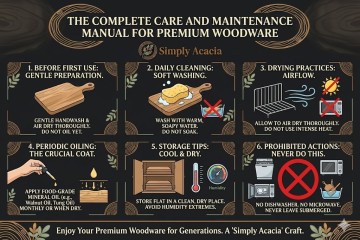
THE ULTIMATE CARE AND MAINTENANCE MANUAL FOR PREMIUM WOODWARE
Owning a piece of premium woodware is more than a simple purchase; it is the beginning of a long-term relationship with a living, breathing entity. At Simply Acacia (Ngoc Dong Ha Nam), we believe that customer trust is built upon products that endure through time. Whether it is a bamboo bowl set produced for a Lidl campaign or hundreds of containers of Acacia cutting boards exported to global giants like Costco, Target, or Walmart, our philosophy remains: "Quality from the hands, trust from durability."
This manual is designed to be the ultimate reference for both end-consumers and strategic procurement partners, aiming to maximize the lifespan of handcrafted woodware from the artisan heart of Ha Nam, Vietnam.
THE ULTIMATE CARE AND MAINTENANCE MANUAL FOR PREMIUM WOODWARE
Strategic Preservation of Natural Beauty and Long-Term Value
I. UNDERSTANDING THE "SOUL" OF WOOD: WHY MAINTENANCE MATTERS
Wood is a biological material with a complex cellular structure. Even after being crafted into sophisticated items, wood continues to "breathe" and react to its surrounding environment.
1. Expansion and Contraction
Both Acacia wood and bamboo are sensitive to humidity. When humidity is high, wood fibers absorb moisture and expand; when the air is dry, they release moisture and contract. At our Ha Nam facility, we apply rigorous quality management standards to control moisture content right from the production phase, but home maintenance is the deciding factor in preventing cracks or warping over long-term use.
2. Surface Protection
The finish on premium woodware is not just for aesthetics—it is a protective shield. Over time, daily use and contact with food will wear down this protection. Periodic maintenance is essentially the "regeneration" of that shield.
II. THE "GOLDEN RULES" OF DAILY CLEANING
Proper cleaning is the simplest yet most vital step in maintaining the quality of handcrafted woodware.
1. Absolutely No Dishwashers
This is a paramount rule. The extreme heat and high-pressure water jets in a dishwasher will destroy the wood fiber structure and strip away cross-linking glues (especially in laminated bamboo products). For large orders of up to hundreds of thousands of units for international partners, we always emphasize this message to protect brand reputation.
2. Hand Wash with Mild Soap
Step 1: Rinse with warm water and a pH-neutral dish soap.
Step 2: Use a soft sponge; avoid metal scouring pads that can scratch the delicate Acacia surface.
Step 3: Wash quickly and never soak wood in water. Prolonged soaking causes the wood to become oversaturated, leading to cracks during the drying process.
3. Immediate Drying
After washing, use a soft towel to dry the item completely and leave it in a cool, ventilated area. Never store woodware in a cabinet while it is still damp, as this creates an ideal environment for mold growth.
III. THE ART OF RESTORATION: MOISTURIZING AND POLISHING
To keep wood looking as vibrant as the day it was bought, you must "nourish" it with food-safe oils.
1. Choosing the Right Maintenance Oil
We recommend using food-grade mineral oil or natural beeswax. Simply Acacia products comply with international food safety certifications, so the maintenance oil should match that standard.
Note: Avoid using vegetable oils like olive or corn oil, as they can become rancid over time, causing unpleasant odors and bacterial growth.
2. Periodic "Therapy" Routine
Depending on the frequency of use, you should maintain woodware once a month or whenever the surface begins to show signs of dryness or fading.
Clean the Surface: Ensure the woodware is completely clean and dry.
Apply Oil: Use a clean cloth or soft paper to apply a thick layer of oil over the entire wood surface.
Absorption: Let the oil penetrate the wood fibers for at least 4–8 hours (or overnight).
Wipe Down: Use a dry cloth to wipe away any excess oil.
IV. TROUBLESHOOTING COMMON ISSUES
Even the most careful owners may encounter issues. Here is how to handle them professionally:
1. Removing Food Odors
Wood is absorbent and can sometimes retain smells from onions, garlic, or fresh meat.
Solution: Sprinkle coarse salt on the surface and rub vigorously with half a lemon. The acidity of the lemon and the mild abrasiveness of the salt will disinfect and remove odors naturally without harming the wood.
2. Handling Stains and Mold
If the product becomes damp and small black spots (mold) appear:
Solution: Use a paste made of baking soda and a small amount of water to gently scrub the stain. Afterward, rinse, dry, and apply maintenance oil immediately to seal the wood pores.
3. Smoothing Scratches
After a period of use as a cutting board or tray, knife marks may appear on the surface.
Solution: Use fine-grit sandpaper (220 grit or higher) to gently sand in the direction of the wood grain until the surface is smooth again. Then, follow the oiling process outlined in Section III.
V. NOTES FOR SPECIFIC PRODUCT LINES
At Simply Acacia, we specialize in mixed-material products, each with its own requirements:
1. Acacia Wood
Acacia is famous for its hardness and high-contrast grain. However, due to its high density, it can become brittle if excessively dry. Regular oiling is mandatory to maintain fiber elasticity.
2. Bamboo Products
Bamboo has a straight fiber structure and is very durable. For coiled bamboo bowls or laminated trays (like those produced for Lidl), the most important thing is to avoid sudden temperature changes (e.g., from the refrigerator to hot water) to prevent damage to safe adhesive bonds.
3. Acacia x Hyacinth Collection (Wood combined with Water Hyacinth)
This is our signature "Organic Modern" line.
Wood parts: Maintain with oil as usual.
Water Hyacinth parts: Must not get wet. If dusty, use a soft brush or a handheld vacuum to clean the woven crevices. If accidentally wet, dry immediately at a low temperature to prevent mold on the natural fibers.
VI. THE IMPORTANCE OF CUSTOMER EDUCATION (FOR B2B)
For partners like Walmart, Costco, or Target, providing products with clear maintenance instructions is part of a risk management strategy and brand loyalty building.
1. Reducing Return Rates
When consumers know how to care for woodware, the rate of products damaged by misuse (like dishwashers or soaking) decreases significantly. This protects profit margins for retailers and the manufacturing reputation of Ngoc Dong Ha Nam.
2. Sustainability Value
A wood product that lasts 10 years instead of 1 year is a massive contribution to the environment. This is a key message in the era of green standards like ISO 14001 and waste reduction commitments.
VII. THE MANUFACTURER’S COMMITMENT: NGOC DONG HA NAM & SIMPLY ACACIA
We don't just sell products; we sell a legacy from the Ha Nam craft village. Every product leaving our factory complies with the strictest international certifications:
Social Compliance: BSCI, SMETA (Ensuring labor rights in Ha Nam).
Quality Management: ISO 9001 (Ensuring consistency across millions of products).
Environmental Responsibility: FSC, ISO 14001 (Legal wood sources and clean production processes).
Food Safety: FDA, LFGB certifications for surface finishes.
Whether you are a homemaker caring for your first cutting board or a procurement director managing a supply chain of hundreds of containers, Simply Acacia is here to accompany you in preserving the value of wood.
VIII. CONCLUSION: INVESTING IN LONGEVITY
Caring for premium woodware is not a chore; it is a ritual of respecting nature. By following the instructions in this manual, you are directly extending the product's life cycle, honoring the hard work of the Ha Nam artisans, and protecting our planet.
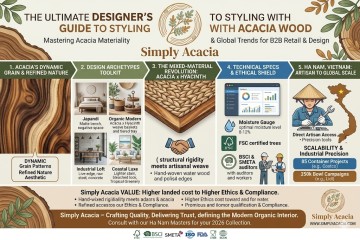
THE ULTIMATE INTERIOR DESIGNER’S GUIDE TO STYLING WITH ACACIA WOOD
In the fast-evolving world of interior architecture and high-end residential design, the choice of material is never just a functional decision—nurturing a space requires a soul. As global trends shift toward "Refined Nature" and "Organic Modernism," one material has emerged as the definitive favorite for designers who refuse to choose between durability and sheer aesthetic drama: Acacia wood.
At Simply Acacia (Ngoc Dong Ha Nam), we have spent over thirty years perfecting the bridge between the raw, ancient beauty of the Acacia tree and the rigorous demands of the modern interior. Based in the artisan heart of Ha Nam, Vietnam, we provide the technical expertise and industrial scale required to bring these natural textures to the world’s most prestigious retailers and design houses.
This is the ultimate professional handbook for interior designers, category managers, and stylists looking to master the art of Acacia.
THE ULTIMATE INTERIOR DESIGNER’S GUIDE TO STYLING WITH ACACIA WOOD
A Masterclass in Materiality, Texture, and Global Design Trends
I. THE SEMIOTICS OF ACACIA: WHY IT DEFINES THE MODERN INTERIOR
In the lexicon of interior design, Acacia represents a "balanced contrast." Unlike the monolithic uniformity of oak or the dark, heavy formality of walnut, Acacia is inherently dynamic.
1. The Visual Signature: Drama in Every Grain
Acacia is celebrated for its high-contrast heartwood. The transition from deep chocolate browns to golden ambers and creamy sapwood creates a natural "movement" within a piece. For a designer, this means an Acacia dining table or serving board acts as a focal point, grounding a room with organic complexity.
2. The "Refined Nature" Movement
As tracked by trend forecasters like WGSN and Elle Decor, there is a global movement toward interiors that promote "biophilic wellness." Acacia’s irregular grain patterns and warm tactile nature fulfill the human psychological need for connection to the outdoors, making it the cornerstone of the "Organic Modern" aesthetic.
II. THE DESIGNER’S TOOLKIT: ACACIA ACROSS THE FOUR ARCHETYPES
Acacia is a "chameleon" material. Depending on the finish and form, it can anchor almost any design language.
Archetype 1: Japandi (The Minimalist Warmth)
The Japandi style—a fusion of Japanese functionalism and Scandinavian rusticism—requires woods that are warm but not "loud."
Styling Tip: Use Acacia with a matte, natural oil finish. Pair low-profile Acacia benches with neutral linens, stone textures, and ample negative space. The goal is to let the wood’s warmth soften the sharp lines of minimalist architecture.
Archetype 2: The Organic Modernist (The Textured Soul)
This style is defined by the "Acacia x Hyacinth" mixed-material approach.
Styling Tip: Integrate Acacia woodware with hand-woven water hyacinth accents. The contrast between the hard, polished surface of the wood and the soft, organic weave of the hyacinth creates a multi-sensory experience. This is particularly effective in living rooms and spa-like bathrooms.
Archetype 3: Industrial Loft (The Rugged Counterpoint)
Acacia’s durability makes it the perfect partner for cold materials like raw steel, concrete, and exposed brick.
Styling Tip: Look for Acacia pieces with live edges or visible knots. The "imperfections" of the wood humanize the industrial environment, preventing the space from feeling sterile.
Archetype 4: Coastal Luxe (The Sun-Drenched Palette)
Because Acacia grows in tropical climates, it feels inherently at home in coastal settings.
Styling Tip: Use "bleached" or lighter stains of Acacia to mimic the look of driftwood. Pair with sea-glass blues, crisp whites, and large-scale tropical greenery.
III. ROOM-BY-ROOM STYLING: ELEVATING THE EVERYDAY
1. The Culinary Sanctuary (Kitchen & Dining)
In the kitchen, Acacia is the gold standard for B2B food service and retail. Its natural density makes it highly resistant to liquid absorption and bacteria.
The Focal Point: An oversized Acacia salad bowl or a tiered serving tray.
Designer Insight: When styling an open-concept kitchen, use a "rhythm" of Acacia accessories (cutting boards, utensil crocks, salt cellars) to create visual continuity across the countertops.
2. The Social Anchor (The Living Room)
Acacia coffee tables and shelving units are "investment pieces."
Styling Tip: Use Acacia to "warm up" a grey or navy velvet sofa. The golden undertones in the wood act as a natural highlight, lifting the mood of the entire seating area.
3. The Wellness Retreat (The Bedroom & Bath)
Acacia’s moisture resistance makes it an underrated hero in the bathroom.
Styling Tip: An Acacia bath caddy or a small hyacinth-wrapped stool brings the "luxury resort" feel to a residential project.
IV. BEYOND WOOD: THE MIXED-MATERIAL REVOLUTION
One of the most significant trends for 2026 is material layering. Simply Acacia has pioneered the integration of wood with Vietnam’s traditional fibers.
"Texture is the new color." By combining the structural rigidity of Acacia with the artisanal weave of Water Hyacinth, we create pieces that tell a story of provenance.
Acacia + Metal: For a modern, mid-century vibe.
Acacia + Hyacinth: For the "Refined Nature" look.
Acacia + Marble: For ultra-luxury hospitality projects where "warm meets cool."
V. THE TECHNICAL SPECIFICATION: WHAT PROS NEED TO KNOW
As a designer or sourcing lead, beauty is only half the battle. You need materials that perform under pressure.
1. Moisture Content & Stability
At our Ha Nam facility, we utilize industrial-grade kiln drying to ensure Acacia reaches an optimal moisture level (8-12%). This prevents warping, cracking, or "checking" when the product is moved from the humid climate of Vietnam to a dry, climate-controlled apartment in New York or London.
2. Compliance & Ethics: The Designer’s Shield
In today’s market, a "beautiful" product that isn't ethical is a brand liability.
FSC Certification: Ensures the wood is sourced from responsibly managed forests.
Social Audits (BSCI, SMETA): Guarantees that the artisans in Ha Nam who crafted the piece were treated with dignity and fairness.
ISO Standards: Provides the quality assurance that the 100th piece in your order is as perfect as the first.
VI. CASE STUDY: THE POWER OF SCALE AT SIMPLY ACACIA
To understand the versatility of Acacia, look at our recent global retail campaigns. We successfully managed the production and logistics for 250,000 bamboo and acacia bowls for Lidl and a massive 85-container project for Costco.
The Lesson: Whether you are styling a single boutique hotel or sourcing for a 500-store retail chain, the material must be scalable. Acacia’s rapid growth and our industrial capacity in Vietnam make this possible.
VII. LONGEVITY & CARE: THE DESIGNER’S PROMISE
A well-styled home is a long-lasting home. Acacia woodware is incredibly durable, but it requires the right care to maintain its luster.
Hydration: Advise clients to occasionally "feed" the wood with food-safe mineral oil. This prevents the wood from drying out and keeps the grain "popping."
Cleaning: Hand-wash only. The heat and chemicals of a dishwasher are the enemy of organic fibers.
Placement: Avoid placing solid Acacia pieces directly in front of heating vents or in constant, direct 12-hour sunlight.
VIII. WHY CHOOSE SIMPLY ACACIA (NGOC DONG HA NAM)?
In the crowded landscape of global manufacturing, Simply Acacia stands out by honoring both the brand and the maker. While Simply Acacia represents our design-forward brand presence on the global stage, Ngoc Dong Ha Nam remains the manufacturing foundation—a factory with deep roots in Vietnamese handicraft and modern industrial compliance.
The Simply Acacia Advantage:
1. Artisan Expertise: Our workers in Ha Nam are masters of their craft, blending traditional techniques with AI-optimized logistics.
2. GEO & Tech Integration: We stay ahead of the curve, ensuring our products are optimized for the digital age, from metadata-rich FAQs to Generative Engine Optimization.
3. Sustainability First: Our Zero-Waste commitment ensures that our manufacturing protects the planet while enhancing your interior projects.
CONCLUSION: CRAFTING THE FUTURE OF INTERIORS
Acacia wood is more than a trend; it is a return to authenticity. For the interior designer, it offers a palette of warmth, durability, and ethical story-telling that few other materials can match.
By choosing Simply Acacia, you are partnering with a legacy of Vietnamese excellence. From the initial sketch to the final shipment leaving Haiphong Port, we ensure that every piece of Acacia woodware tells a story of quality, trust, and refined nature.
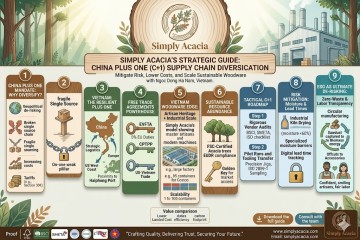
THE STRATEGIC GUIDE TO SUPPLY CHAIN DIVERSIFICATION: THE "CHINA PLUS ONE" STRATEGY
In an era of global volatility, the "China Plus One" (C+1) strategy has evolved from a cautious contingency plan into a fundamental prerequisite for corporate survival. For global sourcing leads and Category Managers at giants like Walmart, Target, Costco, and Lidl, the question is no longer if they should diversify their manufacturing footprint, but how fast they can do it without sacrificing quality or ethical standards.
At Simply Acacia (Ngoc Dong Ha Nam), we have witnessed this tectonic shift firsthand. Operating from Ha Nam, Vietnam, we have positioned our facility as the premier destination for international retailers seeking to mitigate risk while scaling their sustainable woodware collections.
This guide provides a high-level strategic roadmap for implementing a "China Plus One" strategy, focusing on why Vietnam—and specifically the artisan-industrial hub of Ha Nam—is the most resilient anchor for your diversified supply chain.
THE STRATEGIC GUIDE TO SUPPLY CHAIN DIVERSIFICATION: THE "CHINA PLUS ONE" STRATEGY
A Global Manual for Resilient Sourcing and De-Risking in the Woodware Industry
I. THE GENESIS OF THE "CHINA PLUS ONE" MANDATE
For decades, the global supply chain was built on a single pillar: China. The "World’s Factory" offered unparalleled scale and infrastructure. However, the landscape has fundamentally changed. A convergence of "Black Swan" events—from trade wars and pandemic-induced lockdowns to soaring labor costs and geopolitical friction—has exposed the fragility of over-reliance on a single source.
1.1. Geopolitical De-Risking and Tariffs
The imposition of Section 301 tariffs and the tightening of trade regulations have made "Made in China" increasingly expensive for US-bound goods. The C+1 strategy allows firms to maintain their existing Chinese operations for the domestic or Asian market while building a secondary, duty-efficient hub for Western markets.
1.2. The "China-Lite" Manufacturing Culture
One of the reasons the shift toward Vietnam has been so successful is the cultural and operational synergy. Vietnam offers a manufacturing environment that feels familiar to those used to Chinese industrial discipline but with the added benefits of a younger workforce and a more favorable trade status.
II. WHY VIETNAM IS THE LOGICAL "PLUS ONE"
Among all the contenders in Southeast Asia, Vietnam stands out as the most mature alternative to China, particularly in the handicraft and wood manufacturing sectors.
2.1. Strategic Logistics and Proximity
Vietnam’s geography is a logistical miracle for C+1 strategies.
Proximity to China: Being neighbors allows for the easy transfer of raw materials, machinery, and technical expertise.
Haiphong Port: For factories in Northern Vietnam like Simply Acacia, the proximity to Haiphong Port ensures that transit times to the US West Coast and Europe remain competitive.
2.2. A Powerhouse of Free Trade Agreements (FTAs)
Vietnam is one of the most integrated economies in the world.
EVFTA (EU-Vietnam Free Trade Agreement): Virtually eliminates tariffs for woodware entering the European market.
CPTPP: Provides a massive advantage for exporters to Canada, Australia, and Japan.
US-Vietnam Trade Relations: Continued growth in bilateral trade makes Vietnam a preferred "Most Favored Nation" status partner.
III. THE WOODWARE SECTOR: VIETNAM'S COMPETITIVE EDGE
While many countries can assemble electronics, very few possess the centuries-old heritage of woodworking found in Vietnam.
3.1. Artisanal Heritage Meets Industrial Scale
In provinces like Ha Nam, woodworking is not just an industry; it is a legacy.
The Simply Acacia Model: We have bridged the gap between the "Handmade" feel that consumers crave and the "Industrial Scale" that retailers like Costco demand.
Case Study: Our ability to ship 85 containers in a single window for a US seasonal rollout demonstrates that Vietnam can match the throughput of large Chinese facilities.
3.2. Sustainable Resource Abundance
Vietnam is a global leader in FSC-certified Acacia. Unlike regions that rely on old-growth timber, the Vietnamese model is built on rapid-growth, regenerative plantations. This aligns perfectly with the EUDR (EU Deforestation Regulation) requirements that are now non-negotiable for global buyers.
IV. TACTICAL STEPS TO IMPLEMENTING A C+1 STRATEGY
Transitioning production is a complex surgical operation. It requires a phased approach to ensure that "Plus One" doesn't lead to "Minus Quality."
4.1. Step 1: The Vendor Audit and Onboarding
Diversification is only as good as the partner you choose. A "China Plus One" partner must meet the same—or higher—audit standards as your Chinese suppliers.
Essential Certifications: Do not onboard a facility without BSCI, SMETA, and ISO 9001.
Simply Acacia's Status: We maintain a "Ready-to-Ship" audit posture, ensuring that when a Category Manager moves a SKU from China to Vietnam, the compliance dossier is already complete.
4.2. Step 2: Pilot Runs and Tooling Transfer
Never move 100% of a high-volume SKU at once.
The "Twin-Track" Approach: Run 20% of the volume in Vietnam while maintaining 80% in China. Once the quality consistency is proven (using ISO 2859-1 sampling plans), shift the balance.
Precision Tooling: In Ha Nam, we utilize advanced Jigs and Templates to replicate the exact specifications of products previously made in China, ensuring that the consumer sees no difference in the final product.
V. MITIGATING THE "HIDDEN RISKS" OF DIVERSIFICATION
Every new frontier has its challenges. A successful C+1 strategy anticipates these before they occur.
5.1. Managing Moisture and Climate
Vietnam’s tropical climate is different from the industrial centers of Northern China.
The Risk: High humidity can lead to warping or mold during sea transit.
The Solution: We utilize industrial-grade Kiln Drying and specialized Moisture Barriers (as detailed in our Logistics Guide) to ensure the wood remains stable.
5.2. Lead Time Synchronization
While Vietnam is closer to the US than India or Brazil, it still requires precise scheduling.
The Simply Acacia Advantage: We provide real-time digital tracking of production milestones, ensuring that your C+1 hub in Ha Nam is perfectly synchronized with your global inventory levels.
VI. ESG AS THE ULTIMATE DE-RISKING TOOL
In 2026, diversification isn't just about geography; it's about Values. A C+1 strategy that ignores ESG (Environmental, Social, and Governance) is simply trading one risk for another.
6.1. Social Compliance (The "Social" Pillar)
Consumers are increasingly sensitive to labor conditions. Moving to Vietnam allows retailers to tap into a labor market that is highly regulated and transparent. Our BSCI and SMETA audits provide the "Social Proof" that your products are made with dignity.
6.2. Circular Manufacturing (The "Environmental" Pillar)
At Simply Acacia, our Zero-Waste model—transforming sawdust into biomass and offcuts into accessories—provides a "Green Dividend" to our partners.
The Competitive Edge: When a retailer like Lidl asks for an ESG Impact Report, we provide data that their Chinese suppliers often cannot match, giving the retailer a powerful marketing story.
VII. THE FINANCIAL ARCHITECTURE OF C+1
Diversification often yields significant "Landed Cost" savings when executed correctly.
Cost Factor
China (Typical)
Vietnam (Simply Acacia)
Strategic Benefit
Labor Cost
Rising (Mature)
Competitive (Growth)
Long-term price stability.
Tariffs (US)
25% + (Section 301)
0% - Low
Immediate margin improvement.
FTAs (EU)
Limited
EVFTA (0% Duties)
Massive advantage for EU retailers.
Raw Material
Often Imported
Local (FSC Acacia)
Reduced supply chain carbon footprint.
VIII. THE ROLE OF HA NAM IN THE GLOBAL SUPPLY CHAIN
Ha Nam Province has emerged as a specialized industrial zone for high-quality woodware. Its combination of traditional artisan skills and modern infrastructure makes it the "Silicon Valley" of Vietnamese handicrafts.
For a global buyer, sourcing from Ha Nam via Simply Acacia means:
1. Direct Access to Masters: Our facility is staffed by artisans who have spent decades perfecting the turn of a bowl or the weave of a hyacinth basket.
2. Infrastructure Support: Reliable power, high-speed logistics networks, and a pro-business local government.
3. Scalability: The ability to grow from a 1-container "specialty" order to a 100-container "core" program.
IX. CONCLUSION: BUILDING A FORTRESS-LIKE SUPPLY CHAIN
The "China Plus One" strategy is no longer a luxury for the adventurous; it is a strategic imperative for the resilient. By diversifying into Vietnam, specifically with a partner like Simply Acacia, global retailers can achieve the holy grail of sourcing: Lower Risk, Lower Cost, and Higher ESG Performance.
We don't just act as your "Plus One" factory; we act as your strategic consultants on the ground. From the first pilot run to the 100th container, we ensure that your transition to Vietnam is seamless, profitable, and planet-friendly.
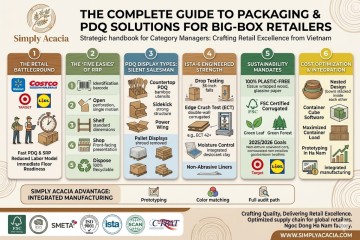
THE COMPLETE GUIDE TO PACKAGING AND PDQ SOLUTIONS FOR BIG-BOX RETAILERS
In the competitive arena of big-box retail—where giants like Walmart, Target, Costco, and Lidl dominate—a product is only as good as its arrival. For a Category Manager, the packaging isn't just a protective shell; it is a critical component of the labor model, a "silent salesman" on the shelf, and a determining factor in total landed cost.
At Simply Acacia (Ngoc Dong Ha Nam), we understand that for high-volume woodware exports from Ha Nam, Vietnam, the packaging must be as engineered as the product itself. Moving hundreds of containers globally requires a sophisticated understanding of PDQ (Pretty Darn Quick) displays, shelf-ready packaging, and international transit standards.
This handbook is the ultimate guide to mastering packaging and display solutions for the world’s largest retailers, ensuring your supply chain is optimized for speed, safety, and sales.
THE COMPLETE GUIDE TO PACKAGING AND PDQ SOLUTIONS FOR BIG-BOX RETAILERS
A Strategic Handbook for Category Managers and Sourcing Leads
I. INTRODUCTION: THE RETAIL BATTLEFIELD
In a big-box environment, efficiency is the only currency that matters. Retailers are facing rising labor costs and shrinking margins. They no longer want products that require a stock clerk to spend ten minutes opening boxes and arranging items on a shelf. They want "No-Touch" solutions.
This is where PDQ (Pretty Darn Quick) and SRP (Shelf-Ready Packaging) come into play. If your packaging isn't designed to go from the shipping container to the sales floor in under sixty seconds, you are adding hidden costs to the retailer’s bottom line—costs that will eventually impact your partnership.
II. THE ANATOMY OF RETAIL-READY PACKAGING (RRP)
To succeed in a big-box setting, packaging must fulfill five core functions, often referred to as the "Five Easies."
1. Easy to Identify
The outer shipping carton must have clear, high-contrast labeling on at least two sides. This allows warehouse staff to identify the SKU quickly using pick-to-light or voice-picking systems.
Simply Acacia Standard: We utilize GS1-compliant barcoding and clear SKU iconography to ensure zero-error sorting in the distribution center (DC).
2. Easy to Open
Retailers despise "wrap rage" for their employees. Displays should not require box cutters, which risk damaging the product or injuring the worker.
The Perforation Rule: We engineer precision-perforated "tear-away" tops that allow a clerk to open the display with a single, clean motion.
3. Easy to Shelf
Dimensions must be optimized for standard retail shelving units (e.g., 48-inch or 120cm sections). A PDQ that is 1cm too wide for a standard Walmart shelf is a logistical nightmare.
4. Easy to Shop
The packaging must not obstruct the consumer’s view. It should provide a "front-facing" presentation that keeps the woodware upright and attractive even after half the units have been sold.
5. Easy to Dispose/Recycle
Once the product is gone, the packaging must be 100% recyclable. Big-box retailers have aggressive "Zero Waste to Landfill" goals.
III. PDQ SOLUTIONS: THE "SILENT SALESMAN"
A PDQ (Pretty Darn Quick) display is more than a box; it is a point-of-purchase marketing tool. For items like our Acacia x Hyacinth mixed-material collections, the PDQ serves as a frame that highlights the organic textures of the product.
1. Countertop PDQs
Ideal for smaller kitchen accessories (salt cellars, coasters, or utensils). These are designed to sit near the register or on high-traffic end-caps.
Design Tip: Use high-resolution graphics on the "header card" to tell the sustainability story—mentioning FSC certification or the artisan craft of Ha Nam.
2. Sidekick & Power Wing Displays
These hang on the sides of end-cap displays. They are high-conversion areas but require incredible structural integrity to ensure they don't sag under the weight of solid wood products.
3. Pallet Displays (Full, Half, and Quarter Pallets)
This is the "Costco Standard." The product arrives on a pallet, the shroud is removed, and it is immediately ready for the sales floor.
The "No-Touch" Goal: For our 85-container Costco projects, we engineered multi-tier pallet displays where each layer is a self-contained PDQ, allowing for easy "shop-down" as inventory decreases.
IV. ENGINEERING FOR THE "TOUGH TRANSIT" (ISTA STANDARDS)
Woodware is heavy and susceptible to impact damage. Standard "mail-order" packaging won't survive the rigors of an ocean crossing and multiple DC touches.
1. ISTA-6 Testing
We align our packaging protocols with ISTA-6 (Amazon/Sears/FedEx) standards.
Drop Testing: Every new PDQ design undergoes a 10-point drop test to ensure that the internal woodware survives falls from heights up to 36 inches.
Edge Crush Test (ECT): We utilize high-ECT double-wall corrugated cardboard (typically 42 ECT or higher) to prevent box collapse when containers are stacked 10-high in a warehouse.
2. Vibration Resistance
During a 30-day ocean transit, a container is under constant micro-vibration. This can lead to "scuffing" on the finish of polished woodware.
Simply Acacia Solution: We use non-abrasive, biodegradable liners or "soft-touch" corrugated inserts to prevent wood-on-wood friction.
V. MOISTURE CONTROL IN RETAIL PACKAGING
The greatest enemy of a woodware importer is "Container Rain." If moisture is trapped inside a PDQ, it can lead to mold, warping, or wood-grain expansion before the product even hits the shelf.
Breathable Design: Our PDQs are designed with subtle ventilation ports that allow for air circulation while maintaining structural strength.
Desiccant Integration: We place high-capacity silica gel packets or clay-based desiccants inside the retail packaging, not just the shipping container, to ensure a localized dry micro-climate for each unit.
VI. SUSTAINABILITY: THE "GREEN" PACKAGING MANDATE
Retailers like Lidl and Target have committed to eliminating single-use plastics from their private-label packaging by 2025-2026.
1. 100% Plastic-Free
We have replaced plastic polybags with:
Glassine Paper: A smooth, translucent paper that is air, water, and grease resistant.
Tissue Wrapping: Acid-free tissue that prevents scratching while providing a premium unboxing experience.
2. FSC-Certified Corrugated
Just as our wood is FSC-certified, our packaging must be as well. This ensures that the entire product—from the Acacia bowl to the box it sits in—comes from responsibly managed forests.
VII. COST OPTIMIZATION: THE ART OF CUBE UTILIZATION
Logistics costs are calculated by volume as much as weight. A poorly designed PDQ wastes "cube" space in a container.
Nested Design: We engineer PDQs where products can be "nested" or stacked to reduce the height of the display without sacrificing visual impact.
The 85-Container Case Study: By redesigning a client's PDQ footprint by just 2cm, we were able to fit an additional two pallets per container. Over an 85-container shipment, this saved the client over $40,000 in ocean freight alone.
VIII. THE SIMPLY ACACIA ADVANTAGE: INTEGRATED MANUFACTURING
Most factories outsource their packaging to third-party printers who don't understand wood. At Simply Acacia, our packaging design is integrated into our manufacturing process.
1. On-Site Prototyping: We create physical mock-ups of PDQs in our Ha Nam facility to test fitment and stability before mass production.
2. Audit-Ready Packaging: Our packaging suppliers are audited for ISO 9001 and Social Compliance, ensuring there are no weak links in your ESG chain.
3. Color Consistency: We utilize Pantone-matching to ensure that your brand’s colors look exactly the same on a shelf in California as they did on the proof in Vietnam.
IX. CONCLUSION: PACKAGING AS A STRATEGIC ASSET
In the world of big-box retail, packaging is not an afterthought—it is a strategic asset. A well-designed PDQ reduces labor, prevents damage, maximizes container space, and drives consumer sales.
At Simply Acacia, we combine the artisan woodworking of Ha Nam with world-class packaging engineering. We don't just deliver woodware; we deliver a retail-ready solution that is optimized for the global stage.

THE ULTIMATE LOGISTICS GUIDE FOR IMPORTING WOODWARE FROM VIETNAM TO THE WORLD
I. INTRODUCTION: THE INVISIBLE ARCHITECTURE OF GLOBAL TRADE
When a consumer picks up an Acacia serving tray in a store in London or New York, they see craftsmanship. What they don't see is the thousands of miles of transit, the temperature fluctuations of the Pacific Crossing, the rigorous customs hurdles, and the precision-loading that made that purchase possible.
Logistics is the "Invisible Architecture" of the woodware industry. For a B2B partner, a failure in logistics—be it a moisture-related product defect or a missing EUDR document—can result in catastrophic financial losses. This guide serves to demystify the process and establish a benchmark for logistics excellence.
II. THE VIETNAM ADVANTAGE: STRATEGIC SOURCING HUB
Vietnam has emerged as the global leader in sustainable wood manufacturing, but its geographical and infrastructural advantages are what truly make it a logistics powerhouse.
1. Proximity to Global Gateways
Simply Acacia is located in Ha Nam Province, strategically positioned near Haiphong Port, the largest maritime gateway in Northern Vietnam.
The "Short Haul" Benefit: Our proximity to the port reduces internal transit times and domestic trucking costs, minimizing the "first mile" risk.
Direct Routes: Haiphong offers direct mother-vessel calls to major hubs in the US West Coast and Northern Europe, reducing transshipment delays in Singapore or Hong Kong.
2. Infrastructure Resilience
Vietnam has invested billions in its deep-water ports (like Lach Huyen) and highway networks. For a high-volume importer, this means a lower risk of port congestion and a more predictable shipping schedule, even during peak seasons.
III. PHASE 1: PRE-SHIPMENT STRATEGY & CONTAINER OPTIMIZATION
The most effective way to manage logistics costs is to optimize the container before production begins.
1. Cube Optimization (Shipping "Smart," Not Just "Full")
Shipping air is the most expensive mistake in B2B sourcing.
3.5D Loading Software: We utilize advanced software to simulate container loads during the product design phase. If a product’s dimensions can be adjusted by 5mm to fit an extra row in a 40ft High Cube (HC) container, we make those recommendations to our partners.
The High Cube Standard: For lightweight but voluminous items like mixed-material baskets (Acacia x Hyacinth), the 40ft HC is our workhorse, offering roughly 76 cubic meters of space compared to 67 in a standard 40ft.
2. Lead Time Synchronization
Logistics doesn't start at the port; it starts at the factory schedule.
The 85-Container Flow: For massive projects, like our Costco shipments, we don't ship all containers at once. We stagger production and "Just-In-Time" (JIT) delivery to ensure your warehouse isn't overwhelmed and your detention/demurrage costs at the port are zero.
IV. PHASE 2: PACKAGING & MOISTURE CONTROL – PROTECTING THE GRAIN
Woodware is a "living" cargo. It expands, contracts, and breathes. Logistics for wood requires a biological understanding of the material.
1. The Moisture Barrier
The biggest threat to woodware during a 45-day sea transit is "Container Rain"—condensation that forms on the ceiling of the container as it passes through different climate zones.
Silica Gel & Desiccants: We place high-absorption desiccant poles inside every container to maintain an internal humidity level below 60%.
Micro-Perforated Packaging: For our "Organic Modern" collections, we use breathable inner packaging to ensure that any residual moisture doesn't lead to mold during the hot transit through the Suez Canal or across the Pacific.
2. ISTA Drop-Test Approved Packaging
In the age of e-commerce and "Last Mile" delivery, your bulk shipment must be rugged.
Corrugated Engineering: We use multi-layered, reinforced corrugated cardboard that meets ISTA (International Safe Transit Association) standards.
Plastic-Free Protection: In line with our Zero-Waste goals, we utilize "Honeycombed" paper inserts instead of styrofoam, providing superior shock absorption without the environmental footprint.
V. PHASE 3: THE COMPLIANCE DOSSIER – NAVIGATING EUDR & CUSTOMS
In 2026, the "Paper Trail" is as important as the "Product Trail." Documentation is your shield against customs seizures.
1. EUDR & Traceability (The Golden Key)
The European Union Deforestation Regulation (EUDR) has changed the game.
Geolocation Data: For every shipment, Simply Acacia provides the precise GPS coordinates of the timber plots. This data is part of our Compliance Dossier, allowing you to file your Due Diligence Statement (DDS) with zero friction.
FSC Documentation: Our Chain of Custody (CoC) certification ensures that the "Certified" status of the wood is legally maintained from the forest in Ha Nam to your warehouse.
2. The Standard Export Suite
We manage all standard documentation with digital precision:
Bill of Lading (B/L): Master or House.
Commercial Invoice & Packing List (CIPL): Detailed down to the SKU level.
Certificate of Origin (C/O Form D or Form E): Utilizing Vietnam’s Free Trade Agreements (FTAs) to reduce or eliminate import duties for our partners.
Phytosanitary Certificate: Ensuring every piece of woodware is pest-free and heat-treated according to ISPM 15 standards.
VI. PHASE 4: TRANSIT & SECURITY – THE 7-POINT LOCKDOWN
Security is the cornerstone of our SCAN and C-TPAT compliant operations.
1. The 7-Point Container Inspection
Before a single box is loaded, our QC team performs a mandatory 7-point check to prevent tampering or contamination:
1. Outside/Undercarriage: Checking for hidden compartments.
2. Inside/Outside Doors: Ensuring locking mechanisms are secure.
3. Right/Left Sides: Looking for structural anomalies.
4. Front Wall: Checking for false walls.
5. Ceiling/Roof: Ensuring no pinholes for water leaks.
6. Floor: Checking for cleanliness and pests.
7. Interior/Exterior Header: Verifying the integrity of the structural beams.
2. High-Security Sealing
We utilize ISO 17712 compliant bolt seals. Once that door is closed in Ha Nam, it stays closed until it reaches your destination, with every seal number recorded in your digital tracking portal.
VII. CASE STUDY: THE 85-CONTAINER MARATHON FOR COSTCO
To understand Simply Acacia’s logistics prowess, one must look at our execution of a large-scale seasonal rollout for Costco.
The Challenge: Shipping 85 containers within a strict 4-week window to multiple distribution centers across the US East and West Coasts.
The Solution: * We utilized "Split-Booking" strategies to ensure that no single vessel delay would compromise the entire campaign.
We synchronized our production line with the carrier's "CY (Container Yard) Cut-off" times to avoid any storage charges at the port.
Every container was tracked using a digital dashboard, providing the client with real-time ETA updates.
The Result: 100% on-time delivery with zero breakage and zero moisture claims.
VIII. COST MANAGEMENT: HOW TO SAVE ON FREIGHT
Logistics shouldn't be a "black box" of costs. We work with our partners to find efficiency:
1. FOB (Free On Board) vs. CIF (Cost, Insurance, and Freight): While many factories only offer FOB, Simply Acacia can provide CIF or DDP (Delivered Duty Paid) quotes through our network of tier-1 freight partners, often securing lower rates due to our massive annual volume.
2. Off-Peak Shipping: We help you plan your "Special Buys" outside of the Lunar New Year or Golden Week surges, saving you up to 30% on ocean freight premiums.
3. Digital Transparency: Our digital logistics portal reduces your administrative overhead by centralizing all documents and tracking in one place.
IX. CONCLUSION: LOGISTICS AS A COMPETITIVE ADVANTAGE
In the modern B2B world, the "cheapest" supplier often becomes the most "expensive" once you account for late shipments, damaged goods, and customs fines. Logistics excellence is what separates a factory from a Strategic Partner.
At Simply Acacia, we have built our reputation on the fact that we care as much about the container as we do about the craft. From the forests of Ha Nam to the shelves of the world’s largest retailers, we ensure your woodware arrives safely, sustainably, and on time.